
The Udachny F1 cucumber is a relatively new hybrid variety, developed specifically for Russia's challenging climate. This domestic hybrid boasts excellent flavor and excellent commercial qualities.
The history of the Udachny variety
The Udachny F1 hybrid was developed in the early 2000s by a group of Russian breeders. Authors: N. V. Nastenko, V. G. Kachainik, and A. V. Kandoba. The variety was approved for cultivation in 2007.

The variety is recommended for cultivation in the Northern, Northwestern, Central, Volga-Vyatka, Central Black Earth, North Caucasian, Middle Volga, Lower Volga, Ural, West Siberian, East Siberian and Far Eastern regions.
Description of the plant and fruits
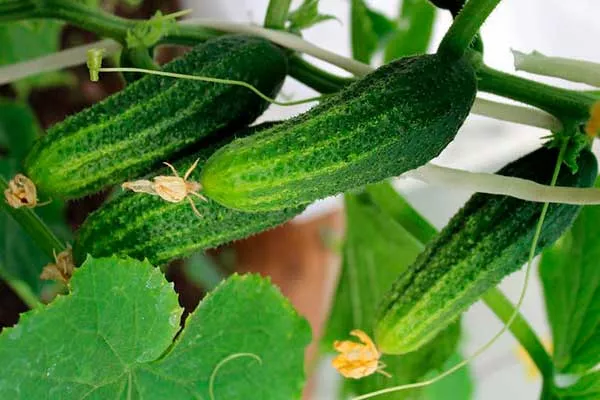
This vigorous plant belongs to the indeterminate growth type and is characterized by moderate branching. The flowering type is predominantly female. Each node contains one to three bright yellow flowers. The leaves are medium-sized, rich green, and have a hairy surface.
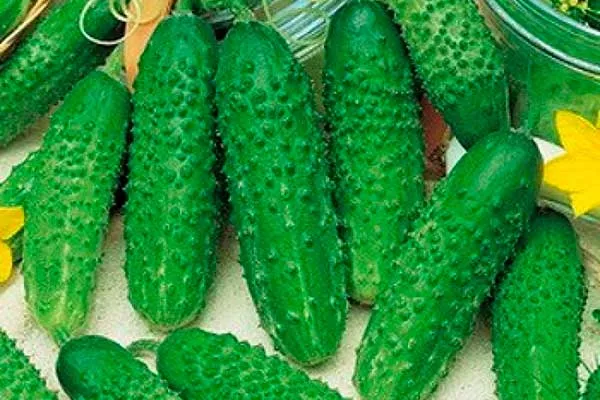
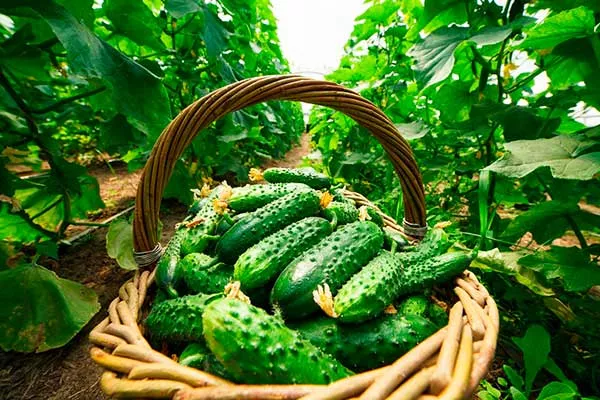
The fruits are short, cylindrical, and reach no more than 10-12 cm in length. Each cucumber weighs 90-110 g. The skin is dark green with short stripes and slight spots. The fruits have a slightly ribbed, bumpy surface. The bumps are spaced widely, and the spines are white.
- ✓ Resistance to sudden temperature changes, making it ideal for the Russian climate.
- ✓ Ability to self-pollinate in the absence of bees, although with less efficiency.
Taste and purpose
The Udachny F1 cucumber has an excellent flavor. Its flesh is firm, juicy, and elastic, with a pleasant crunch. Fresh cucumbers have a rich cucumber aroma. Even overripe cucumbers have no empty spaces or dried-out cavities.

This versatile variety produces fruit suitable for fresh consumption. The "Uchny" cucumber is delicious in salads and pickles, and is also widely used for canning and marinating.
Productivity and ripening time
The Udachny F1 cucumber belongs to the group of bee-pollinated varieties and has a medium ripening period. The first fruits ripen 45-50 days after germination.
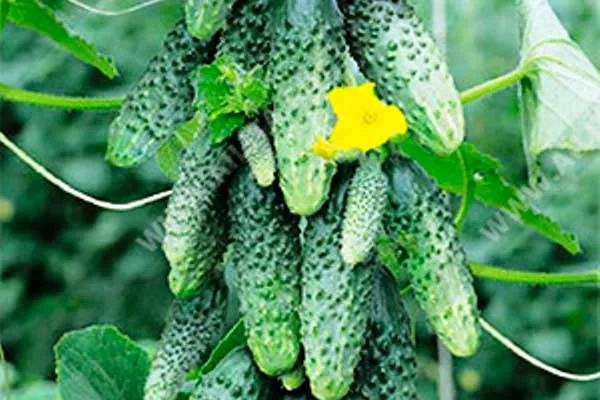
The average yield is about 6 kg per square meter. When growing cucumbers under film, the yield doubles.
Pros and cons
The Udachny hybrid has many advantages that many gardeners have already appreciated. Those considering planting this variety in their garden should familiarize themselves with all its pros and cons.
The downside is that it's pollinated by bees. Although this is more of a characteristic of the variety than a drawback.
Landing features
The Udachny F1 hybrid is grown using seedlings or direct sowing in open ground. To ensure consistent yields, it's important to plant correctly and use high-quality seedlings.
- ✓ Soil pH should be between 6.0-6.8 for optimal nutrient absorption.
- ✓ The soil should have a high water-holding capacity, but at the same time be well-drained.
Landing features:
- Plant in a well-lit area, protected from strong winds. The soil should be loose and nutritious. Fertilize it in the fall, adding humus and compost during digging, and, if necessary, sand in heavy clay soils.
- Before sowing, seeds are soaked and hardened. They are sown for seedlings around April, a month before planting. Generally, timing is determined based on climate conditions. Seedlings are planted and seeds are sown only after the soil has warmed to 16–18°C.
- The planting density of cucumbers in open ground is 4-5 bushes per 1 sq.m., in greenhouses - 2-3 bushes per 1 sq.m.
Care instructions
To produce a high yield and high-quality fruit, cucumbers require specific care. Cucumber beds require watering, fertilizing, weeding, and more.
Care requirements depend on the soil type in which cucumbers are grown. Maintaining optimal temperature and humidity in a greenhouse is essential. Before fruiting begins, maintain a temperature of 22°C to 24°C on sunny days, 20°C to 22°C on cloudy days, and 17°C to 18°C at night.
In addition to watering and fertilizing, greenhouses also require soil amendments around the plants and bee pollination. Weeds are trimmed rather than pulled to avoid damaging the cucumbers' root system.
Features of care in open ground:
- The frequency and amount of watering depend on the growing season. Before flowering, cucumbers are watered twice a week. The recommended watering rate is 4-5 liters per square meter. After fruit set, the beds are watered up to three times a week, increasing the watering rate to 7-8 liters per square meter. In greenhouse conditions, cucumbers are watered approximately twice as often.

- Seedlings planted in the ground are given their first feeding two weeks after planting. Cucumbers sown in the ground are fertilized as soon as the plants develop their first five or six true leaves. Bromine is applied during budding and flowering, and once fruit appears, it is recommended to fertilize cucumbers every five days.
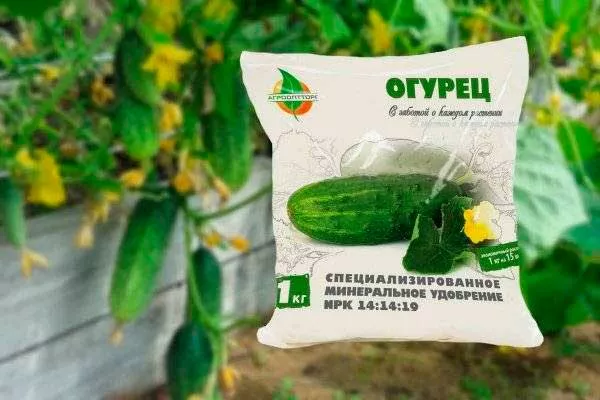
A wide variety of organic and mineral fertilizers can be used to feed cucumbers. At the beginning of the growing season, apply superphosphate, potassium sulfate, and ammonium nitrate. During flowering, apply humus and wood ash. During the fruit ripening phase, apply potassium nitrate, ash, and urea. - The soil in the beds is loosened regularly, taking care not to damage the plant roots. The maximum loosening depth is 3 cm. Weeding is carried out simultaneously with loosening, removing weeds that can attract insect pests and absorb nutrients and water.
- It is recommended to tie plants to a trellis. This is done after 5-6 true leaves have emerged. Staking should be done before midday, in cloudy and cool weather. Use thick ropes, as thin ones can dig into the shoots and damage them.



Diseases and pests
The Udachny F1 cucumber is highly resistant to cucumber mosaic virus, root rot, and powdery mildew. Under unfavorable conditions, the variety can be susceptible to fusarium wilt, which can be controlled with Fundazol or Fitosporin-M.

Also, if agricultural practices are severely violated, the Udachny cucumber can be affected by anthracnose and powdery mildew. The former is controlled with Bordeaux mixture, while the latter is treated with Bayleton or copper oxychloride.
Among the most dangerous insect pests for cucumbers are spider mites, melon aphids, whiteflies, thrips, and nematodes. It's important to detect the insects early and take action, such as spraying the plants with insecticides or using folk remedies.
How to harvest and store crops?
It's recommended to harvest cucumbers in the morning, during dry weather. Avoid picking after rain or dew. They should be cut, not plucked, as this can damage the vines. Store the harvested cucumbers in the shade. Pick cucumbers at least every 2-3 days.
Reviews
The "Dachny" cucumber is a promising, versatile variety that will surely appeal to gardeners and homesteaders. This hybrid will delight them with its yields, excellent flavor, hardiness, and ease of care.