
The Tsar's Cucumber is a true masterpiece among vegetable crops, winning the hearts of many thanks to its superiority and unique flavor. The hybrid's name speaks for itself, emphasizing its regal dignity and splendor. Gardeners proudly grow this variety, and health enthusiasts prize it for its nutritional qualities and exquisite taste.
Introduction to the variety
The Tsar's variety adapts well to a variety of climates and soil types. It can be successfully grown both in open gardens and in protected greenhouses.
- ✓ Soil pH should be between 6.0-6.8 for optimal nutrient absorption.
- ✓ The soil should have a high water-holding capacity, but at the same time provide good drainage.
Thanks to its resistance to various diseases and pest attacks, this variety is an excellent choice for gardeners of any skill level.
Other important characteristics:
- The royal cucumber attracts gardeners with its disease resistance, which allows for minimal maintenance costs.
- It is famous for its excellent taste and long shelf life.
- From the moment the seeds germinate from the ground until the beginning of fruiting, only 45-50 days pass, which indicates rapid growth and the possibility of obtaining a harvest in the early stages of vegetation.
- The hybrid is versatile in cultivation: it is suitable for vegetable gardens, temporary film shelters, as well as for indoor conditions on windowsills or in greenhouses, which ensures a stable harvest in any conditions and all year round.
- The yield of the Tsarsky cucumber is impressive: up to 19-20 kg of marketable produce can be harvested from one square meter, and early harvesting yields around 7-8 kg per meter. The yield of quality vegetables reaches 95%.
Information about origin
The hybrid cucumber, named Tsarsky, was bred by Vladimir Vladimirovich Farber and received permission for cultivation in 1998. The application for approval was filed on December 24, 1996, under number 30010.
Features of bushes, fruits, taste
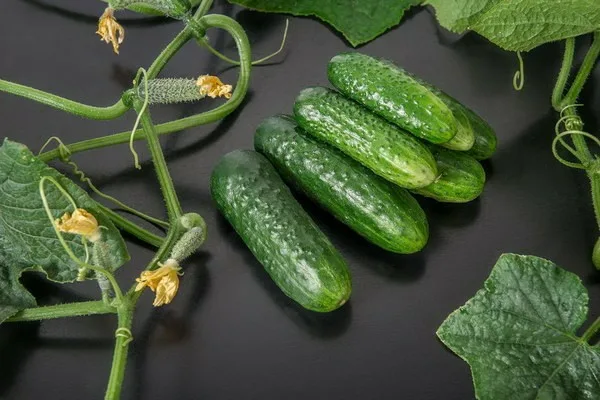
This cucumber variety is parthenocarpic and requires pollination by bees. It is characterized by vigorous growth and is an indeterminate variety. Its vines are medium-length, and its leaves are large, pentagonal and rounded.
Other varietal characteristics:
- Flowering is predominantly female, which promotes the formation of numerous flower clusters and stimulates the active growth of lateral shoots.
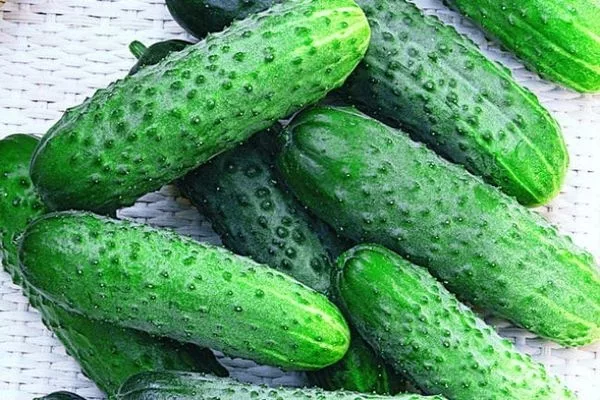
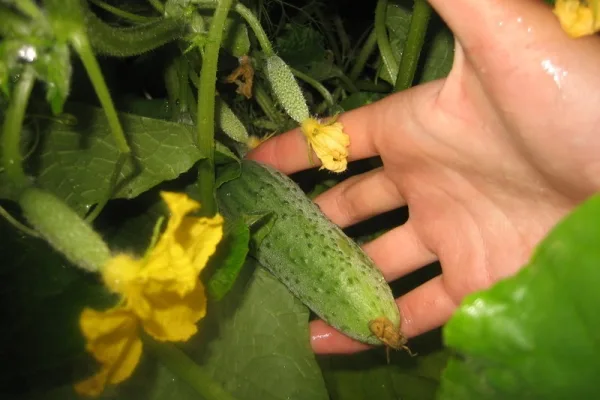
- The fruits reach a length of 8-12 cm and a diameter of 4 cm on average, their weight fluctuates between 80-110 g.
- The cucumber is cylindrical in shape and richly green in color.
- The surface of the fruit is smooth and shiny, with a light waxy coating and barely noticeable ribbing.
- The skin of the Tsarsky cucumber variety is thin but quite tough. It has black, lumpy lesions that are very sparsely spaced.
- The taste of these cucumbers deserves praise – they are juicy and refreshing.
- The flesh has an excellent texture, making the vegetable an excellent choice for culinary use.
Purpose of the variety
Tsar's cucumbers are renowned for their exquisite flavor and impressive size. The fruits of this variety are distinguished by their tender, juicy flesh, which is perfectly complemented by their crisp skin. They are used in salads, appetizers, and for preserves.
Methods for growing the Tsar cucumber
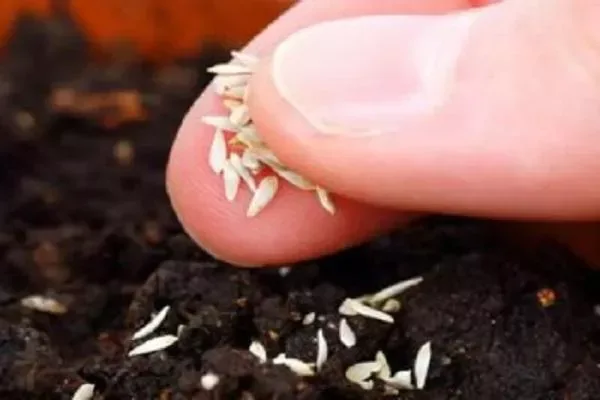
You can grow your own seedlings, buy ready-made ones, or sow seeds directly into the ground. Seedling technology is especially useful for those living in cold climates.
In temperate latitudes, seeds can be sown directly into open ground, but to obtain earlier fruits, the first method is often used.
Key aspects and recommendations
Optimal predecessors for cucumbers include onions, root vegetables, tomatoes, and cauliflower. Late-season cabbage varieties, as well as melons and pumpkins, can deplete the soil and promote the spread of diseases among cucumbers.
There are other subtleties:
- Schematic diagram of the landing. The placement of plants should be organized taking into account the optimal interval of 50 cm by 50 cm or 50 cm by 30 cm.
- Preparing the soil. To plant the Tsarsky cucumber variety, select soil that is rich in nutrients and has good moisture retention. Fertilize the soil with organic and mineral mixtures/preparations.
- Selecting a landing site. Tsar cucumbers prefer sunny locations, so choose open spaces with adequate light. It's important to ensure good air circulation, so space the plants apart.
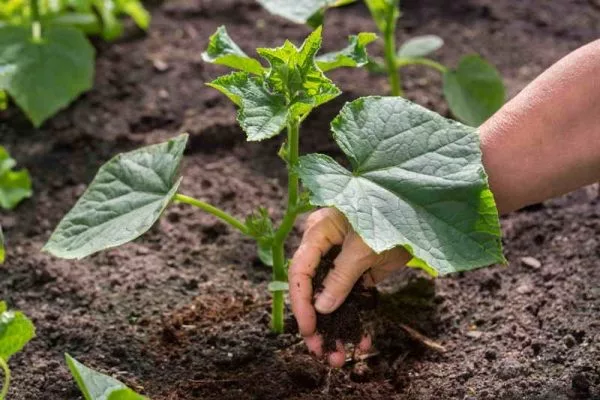
- Growing seedlings. For best results in growing cucumbers, it's recommended to use the seedling method. Before planting the seedlings in the ground, they should be prepared for open ground (or greenhouse) conditions, gradually acclimating them to the outdoor climate.
- Protection from insects and diseases. To protect Tsarsky cucumbers from insect pests and diseases, it is important to regularly inspect the plants, promptly eliminate any pests found, and use appropriate protective measures, including special plant treatments.
The optimal dates for planting, taking into account the climatic conditions of the Central Belt, are as follows:
- for greenhouses with seedling approach – from April 1 to April 10;
- for open space with seedling method – from April 15 to 25;
- for greenhouses with seed sowing – from May 15 to 20;
- for open areas with seed sowing – no earlier than May 25.

Growing in open ground
Tsarsky cucumbers adapt well to open-air conditions. For successful growth, choose sites with full sun, rich soil, and adequate drainage.
Before planting the seeds, thoroughly till the soil using a cultivator or rake, and add organic matter (compost or humus). It is recommended to sow the seeds during the warmer months of the year, when the soil temperature reaches 15-16 degrees Celsius.

Greenhouse cultivation
In order for cucumbers to grow in a greenhouse, it is necessary to create ideal microclimatic conditions for them:
- In northern regions, it is better to use heated greenhouses, and in the absence of heating, you should focus on the soil temperature.
- The greenhouse should be placed on the south or southeast side to provide plants with the maximum amount of sunlight.
- It is important to maintain optimal temperature and humidity parameters, as well as ensure an influx of fresh air.
- To ensure consistently good growth of Tsarsky cucumbers in greenhouse conditions, you can use hydroponics or grow them in containers with a nutrient mixture.
Rules:
- The seedlings are grown in a fertile and airy soil mixture, which consists of two parts humus and one part each of turf soil, sand and peat with the addition of charcoal or fertilizer.
- The pots used should be small, 10-15 cm in diameter, preferably made of peat or plastic.
- During the period before the sprouts appear, the temperature should be maintained at +25-28 degrees, after which it should be lowered to prevent the seedlings from stretching.
For seedlings to be ready for transplanting outdoors, they need 20-30 days of active growth on a bright windowsill. Waiting longer than that can cause the plants to overgrow, which will negatively impact their rooting and, consequently, the yield.
Preparing cucumber beds begins in the fall. At this time, old leaves and weeds are removed from the greenhouse and the soil is tilled. The following steps are performed for cucumber beds:
- Dig the ground to a depth of 35-45 cm;
- Place straw, dried grass or branches on the bottom and then compact them;
- add fresh manure on top;
- cover it all with the remaining soil.
Cucumbers planted in such beds in the spring thrive. If preparation is done in the spring, a layer of soil at least 40-45 cm thick should be left over the fresh manure. Decomposing manure generates heat, which promotes rapid root growth and accelerates plant growth.
Basics of skincare procedures
The Tsar's cucumber prefers abundant moisture, so regular watering is key to its successful growth. These plants require soil that is consistently moist, but not stagnant.
Peculiarities:
- Water the bushes carefully, directing the water to the roots and avoiding contact with the leaves and flowers.
- The frequency of irrigation should be adapted to climate conditions: on hot days, cucumbers may require daily watering, while in cool weather it is sufficient to water them once every few days.
- Cucumbers don't tolerate either overwatering or dry soil. It should be kept moderately moist.
Tsarsky cucumbers are vigorous, fast-growing plants that require nutrition to maintain their vigor. To ensure their harmonious development, periodic fertilization is necessary. However, be careful with the amount of nutrients to avoid overdosing them.
Ideally, fertilize cucumbers 1-2 times a month using a general-purpose mineral fertilizer according to the package instructions. It's best to apply the fertilizer after watering to ensure the roots can effectively absorb all the necessary nutrients.
Risk of diseases and pest infestations
Tsarsky is distinguished by its increased resistance to diseases, but is not immune to the invasion of insect pests and infectious diseases.
The most common threats to this tree include:
- aphids;
- spider mite;
- fruit beetle;
- cytosporosis;
- root rot.
Harvesting and storage
The ideal time to harvest Tsarsky cucumbers is when they reach 8-9 cm in length and are a rich, dark green color. Regular harvesting is essential, as overripe fruits can develop tough skin and lose their refreshing flavor.
Cleaning, preparation and storage rules:
- When assembling, it is advisable to use a sharp garden tool, such as scissors, pruning shears or a knife.
- Cut vegetables carefully, trying not to damage the stem and neighboring fruits.
- Avoid direct contact with the fruit with your hands to prevent damage and further rotting.
- After picking the cucumbers, rinse them thoroughly under cold running water to remove any impurities. Then, let them soak in the water for a short time to absorb the moisture. Afterward, place the cucumbers on a flat surface and air dry.
Do this if you plan to eat vegetables within 2-4 days. - The best storage temperature should range from +2 to +4 degrees.
- The best place for these vegetables is the refrigerator, where they should be placed in a paper or plastic bag to prevent moisture loss.
- For long-term storage, do not wash the cucumbers; instead, place them immediately in a wooden or cardboard container and place them in the cellar, covering them with a damp cloth.
- Avoid placing near fruits or other vegetables that produce ethanol, as this will accelerate their drying out and deterioration in quality.
- It is important to avoid direct sunlight, which can cause vegetables to lose moisture and freshness.
By following these simple tips, you can extend the shelf life of Tsarsky cucumbers and continue to enjoy their freshness and flavor even after the season ends.
Positive and negative qualities
Gardeners consider the need to purchase planting material annually as a negative feature.
Reviews
The Tsarsky cucumber variety is popular not only with gardeners but also with large farmers. This is due to the excellent transportability and shelf life of the fruit. By following simple and standard farming practices, impressive yields can be achieved.