
The Trilogy cucumber hybrid has a distinctive feature: resistance to stress, such as sudden drops and rises in temperature and humidity. This doesn't significantly affect the variety's key advantage—the abundant fruiting of the bush. The hybrid was developed specifically for cultivation in open beds.
Introduction to the variety
The Trilogy variety stands out for its ability to withstand transportation, making it suitable for commercial use. The cucumbers retain their attractiveness and flavor even after long periods of transportation and storage.

The variety does not require pollination, as it forms exclusively female buds capable of setting fruit in the leaf axils.
Trilogy is able to withstand changing weather conditions, so it's not affected by drought, as long as the dry period is short. Cucumbers, which are 90-92% water, can survive short periods without access to water, but to ensure a full harvest, gardeners must provide them with sufficient moisture.
Originators
The Trilogy cucumber is a unique parthenocarpic hybrid that has deservedly earned the respect of gardening enthusiasts thanks to its positive characteristics. This variety was developed by the Dutch company Rijk Zwaan Zaadteelt En Zaadhandel BV.
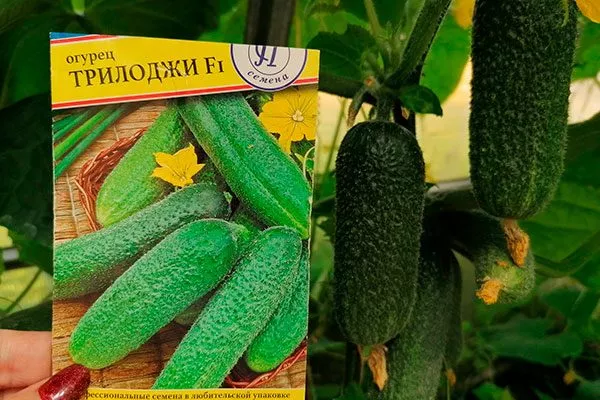
It is intended for agriculture in the northwestern and central regions of Russia. Since 2011, Trilogy has been registered in the state registry; its originators are believed to be E. I. Golovatskaya and M. G. Kudryavtsev.
Characteristic features of the appearance of the plant and fruits
The cucumber belongs to the mid-early gherkin variety and is intended for plant growing and sowing directly in vegetable gardens, but in cool climate zones, planting under temporary film structures is possible.
- ✓ Self-pollination ability thanks to exclusively female buds.
- ✓ High resistance to stress, such as sudden changes in temperature and humidity.
Brief description of varietal characteristics:
- The bushes have moderate branching. The variety is not limited in growth, allowing each leaf node to produce 1-2, and sometimes more, vegetables.
- The vine is medium-sized. Indeterminate plants can reach a height of 135-160 cm, and sometimes the bushes grow even larger. Therefore, trellis support and regular tying are recommended for the plants.
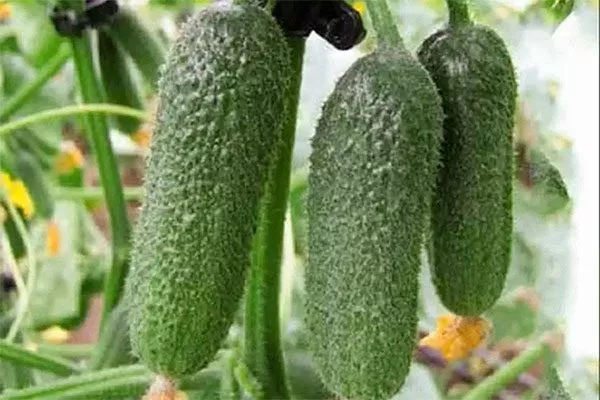
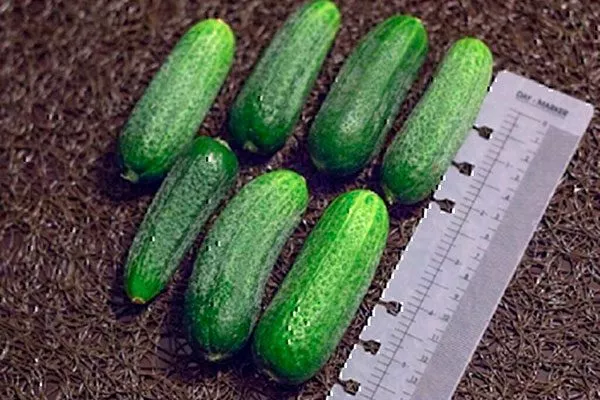
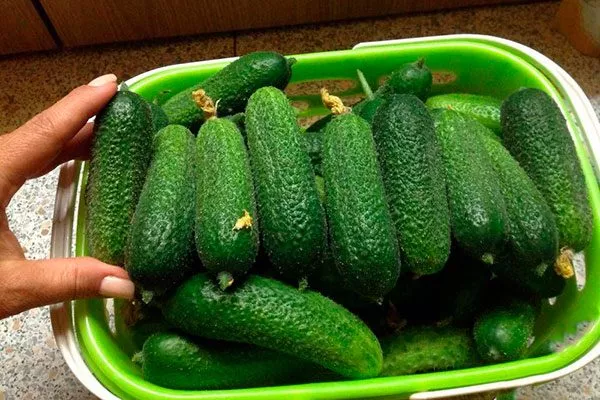
- These vegetables are distinguished by their small length – usually their size ranges from 8 to 11 cm, although sometimes larger specimens are found.
- The shape of cucumbers resembles a cylinder.
- Ripe vegetables are a rich green color with small stripes and spots of light color.
- The surface is decorated with small bumpy formations.
- Small light spines are present.
- The pulp is of medium density, quite juicy and free from voids.
Purpose and taste of fruits
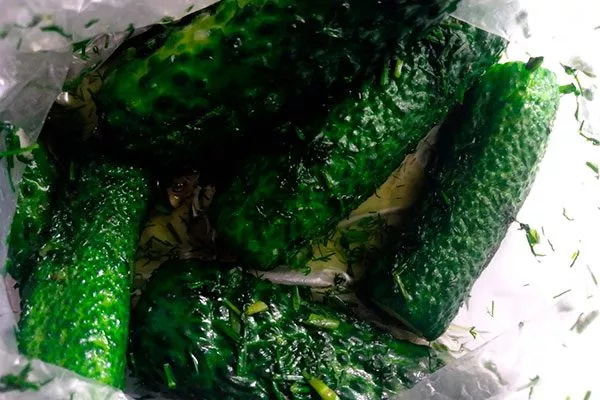
Trilogy cucumbers not only decorate our tables but are also widely used commercially. They are suitable for winter storage, canning, and fresh salads.
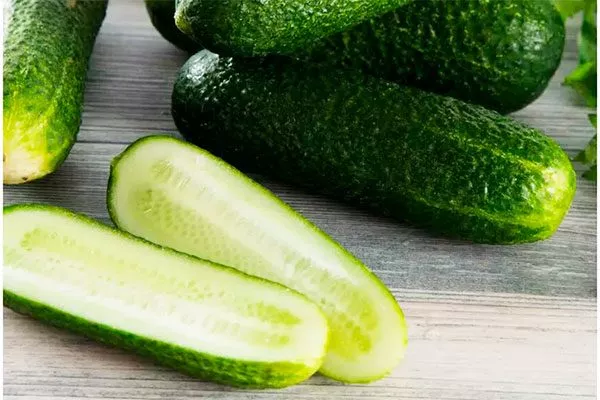
The taste is distinguished by a slight sweetness. Trilogy is particularly popular for its unique aroma, which is difficult to describe in words.
Cucumber is rich in vitamins A, B1, B2, B9 (folic acid), and C, and also contains iron, phosphorus, potassium, sodium, manganese, chlorine, chromium, copper, zinc, iodine, and silver. The calorie content of fresh cucumber per 100 g is 18.4 kilocalories, salted cucumber – 11.2, and pickled cucumber – 16.1.
The composition of cucumber has a beneficial effect on the body:
- supports the functioning of the thyroid gland due to the presence of iodine;
- promotes the restoration of metabolic processes;
- prevents the formation of stones in organs thanks to alkaline salts;
- stabilizes blood pressure.
It is worth considering that if you have some serious stomach diseases, eating cucumber is contraindicated.
Maturation
Trilogy cucumbers reach maturity midseason. From the moment the first green buds appear until harvest, the time from 39 to 55 days passes, with 40-45 days being the average. This depends on several factors:
- climate zone;
- current weather conditions;
- compliance/non-compliance with agrotechnical requirements and standards.
Productivity
Each Trilogy stem produces up to four cucumbers. To achieve the highest yield, experts recommend removing side shoots, as they drain nutrients and interfere with fruit formation. All ovaries located more than 50-60 cm above the ground should also be removed.
With proper care, a single cucumber plant can yield up to 5.5-6.5 kg of cucumbers. Large-scale cultivation yields range from 325 to 665 centners per hectare.
Necessary climatic conditions
This cucumber variety tolerates weather fluctuations well, making it valuable for gardeners. Although a short-term drought won't cause significant damage to the crop, it's important to remember that prolonged lack of moisture can lead to the death of any plant.
Resistance to pests and diseases
This hybrid has a robust defense system. It is resistant to rot, especially in an irregularly humid climate and during the active growth period. However, careful attention to maintaining cleanliness and preventing pest infestations is essential.
An effective protective measure can be growing them together with aromatic plants such as onions or garlic.
What problems may arise:
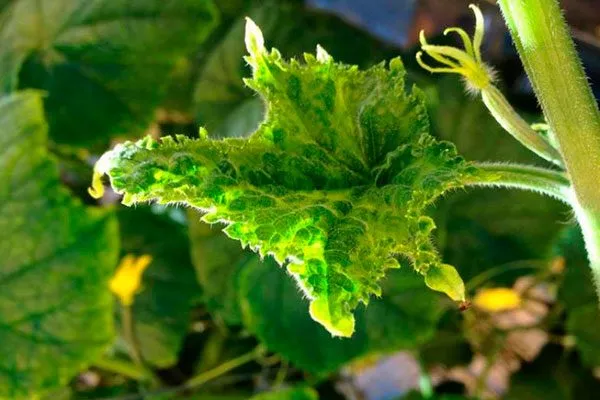
- The hybrid is vulnerable to downy mildew, also known as peronosporosis. This disease occurs in combination with heat and humidity and appears as gray or beige spots on the leaves. If detected in the early stages, treatment with a solution of table salt and soap is sufficient.
Plants should be sprayed twice, with a weekly interval. For severe infestations, chemical treatments such as Ridomil Gold and Cabrio Duo are recommended. - Cucumbers can be susceptible to a bacterial disease that is exacerbated by hot weather and high humidity. Symptoms of this disease include small brown or gray spots on the leaf veins.
Infected parts cannot be saved; they must be completely removed and then destroyed, preferably outside the garden plot. It is then recommended to treat the entire area where Trilogy is growing with a special copper-based product. Afterwards, you can apply a decoction of onion peels for additional plant protection. - Trilogy often falls victim to a serious pest: the melon aphid. This insect feeds on the sap, leading to plant exhaustion and death. Aphids most often appear as a result of dense cucumber plantings or inadequate care.
For minor infestations, you can use a solution made from laundry soap and wood ash dust. If the melon aphid infestation is severe, insecticides such as Decis, Fitoverm, or Strela will be effective.
Growing Trilogy cucumbers
Trilogy is grown using two main methods: growing from seedlings and direct sowing into open ground. The latter method is gaining popularity among vegetable growers. It protects young plants from unexpected late frosts in temperate climates.
- ✓ The optimal soil temperature for sowing should not be below +12°C.
- ✓ The seeding depth should not exceed 2 cm to ensure rapid germination.
Sowing dates
For seedlings, sowing occurs in April-May. Direct sowing into the ground occurs from May 20 to June 12, when the soil temperature at a depth of 4-5 cm exceeds 12-14°C. When grown in greenhouses, sowing begins as early as April.
Best place, preparation
Trilogy thrives especially well in light, loamy or sandy loam soils that are rich in nutrients. It's important to strictly follow crop rotation recommendations when growing this hybrid cucumber. It's best to sow after:
- Luke;
- winter wheat;
- carrots;
- cabbage.
Before planting, thoroughly till the soil and enrich it with organic matter. To do this, dig a trench 40-50 cm deep and add fertilizer.

Sowing rules
To successfully grow cucumbers in a greenhouse, plant 3 plants per square meter. When planting directly into the ground, it is recommended to increase the number of plants to 5-6, with the seeding depth not exceeding 1.5-2 cm. Row spacing should be 65-75 cm, while the spacing between plantings should be 45-55 cm.

The root system requires special attention and care, so when transplanting, seedlings are carefully transferred into new soil, while preserving a lump of soil, which is the optimal way to ensure adaptation and rapid rooting.
How to care further?
Caring for the Trilogy variety requires special attention and expertise to achieve the desired results. This hybrid requires the following:
- In hydration. Avoid overwatering during stem growth, but increase watering twice daily as fruit sets. Use only warm water, and avoid spilling water on leaves and flowers.

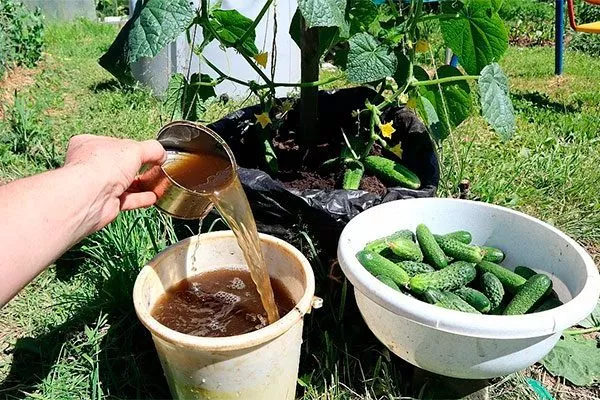
- In nutrition. The root system is located close to the soil surface, so fertilizers should be applied in liquid form, combined with watering. Cucumbers respond to solutions of bird droppings or cow dung, as well as mineral complexes.
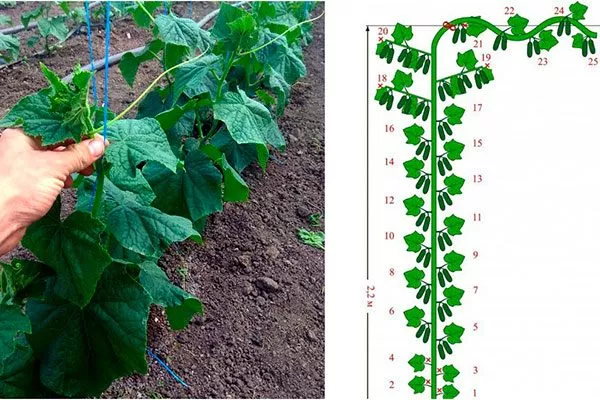
During the growing season, it is recommended to feed the plants 5-6 times at intervals of 2 weeks. - In the formation of the stem. This is done using a special trellis system. All shoots growing up to the trellis are removed, leaving only the ovaries and flowers. At a height of 50-55 cm, a blinding zone is created where the stems are twined around the trellis and pinched.
Always leave two lateral shoots. The number of ovaries is adjusted depending on the plant's condition.

Harvesting and use of the crop
The fruits ripen synchronously, allowing them to be harvested daily. To ensure they retain their marketable appearance, the following storage conditions must be observed:
- maintain the temperature within the range from 0 to +4°C in a dry and cool room;
- avoid sudden temperature fluctuations;
- select for storage only fresh, undamaged and rot-free specimens;
- place them in boxes with sand or in disposable bags.
Positive and negative qualities
The hybrid is popular due to its many advantages:
Reviews
The Trilogy cucumber demonstrates impressive yields when properly cultivated. This variety requires little special care and attention, making it ideal for home gardens. Reviews of the Trilogy cucumber variety fully match the advertised characteristics.