
The Tri Tankista F1 cucumber variety is a cluster hybrid distinguished by its enviable productivity, disease resistance, and excellent flavor. Gardeners note its consistent performance in a variety of climates across the country, especially in temperate zones. This first-generation F1 hybrid has earned recognition for its qualities.
Introduction to the variety
Tri Tankista F1 is distinguished not only by its fruitfulness but also by the simultaneous ripening of its vegetables and their long development period. The fruits of this variety have excellent commercial qualities, store well, are suitable for long-distance transportation, and are widely used in cooking.
Breeding achievements
The Tri Tankista hybrid was included in the register of varieties in 2004 thanks to the efforts of a breeding group headed by A. V. Borisov, O. N. Krylov and T. I. Krylova.
Specificity of bushes and cucumbers
This parthienocarpic variety is an indeterminate plant. The central stem can continue to grow indefinitely, but gardeners typically prune the tops to encourage the development of lateral shoots.
Distinctive features:
- The bushes are quite branched and can reach a height of up to 170-200 cm.
- The leaves are large, rich green, with a wavy edge.
- Over time, female buds appear on the shoots. The flowers form inflorescences and develop in clusters, where 2 to 5 ovaries can form. Clusters of 4 ovaries form at the nodes on the lateral stems.
- Ripe fruits are spindle or cylindrical in shape.
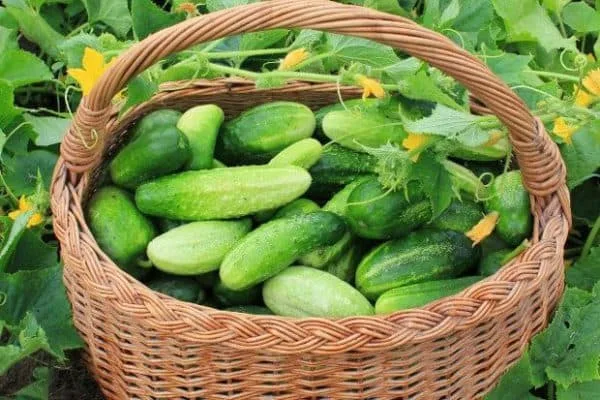
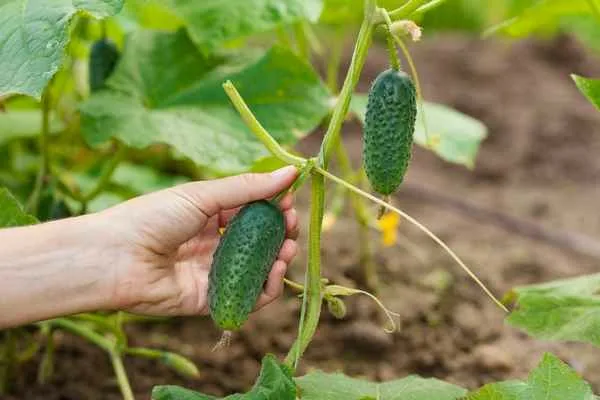
- The hybrid belongs to the gherkin type, with a fruit diameter of no more than 35 mm and each cucumber weighing about 80-110 g. Their length does not exceed 12 cm.
- The fruit bark is strong and has a crisp texture, with small tubercles and whitish spines.
- On cucumbers you can see delicate, elongated light lines.
- The color is rich dark green.
- The pulp is dense, but not watery; seeds are practically absent or develop only until milky ripeness.
- The plant has a moderate number of lateral shoots.

Taste and application
Cucumbers have an attractive appearance, making them suitable for both raw consumption and winter preservation. Their small size allows them to be stored whole in jars.
Fruiting period
The variety belongs to the early type, which means that the time interval between the emergence of sprouts and the beginning of harvesting cucumbers is from 40 to 43 days in the open garden.
In greenhouses, fruit may appear earlier. Cucumbers begin to form on the plants and continue to do so until late autumn.
Productivity
According to producers, 10 to 13 kg of fruit can be harvested from 1 square meter, but only if all agronomic standards are observed.
Features of agricultural technology of the Tri Tankista F1 hybrid
The basic steps in plant care are standard: growing seedlings, caring for plants in a greenhouse or outdoors (keeping them moist, feeding, loosening the soil, shaping the bushes).
Selecting a site
Cucumbers love light, and seeds from cluster hybrids require even more light, so choose areas that receive maximum sun for planting. Some shade is possible, but it should be temporary, for example, only during the hottest part of the day.
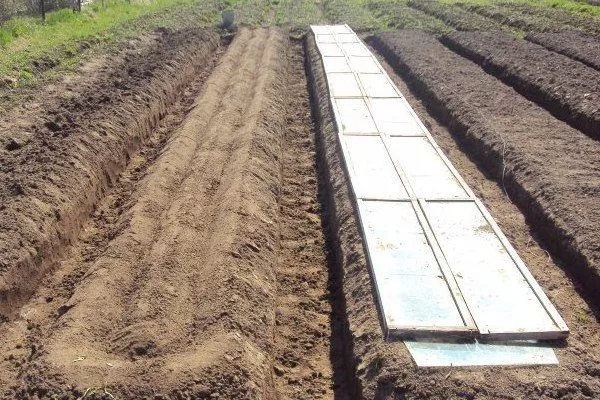
Preparing the beds for cucumbers begins in the fall – first, dig them up, and then add organic matter to the soil – mullein and compost at 5-8 kg per 1 sq. m, as well as superphosphate (according to the instructions).
- ✓ The optimal soil temperature for planting seedlings should not be lower than 14-15°C, which is not mentioned in the article.
- ✓ To prevent root rot, it is necessary to provide drainage and avoid stagnant water, which is critical for this variety.
Wood ash can be an excellent alternative to mineral potassium supplements. It is recommended to apply it in the spring before sowing seeds or transplanting seedlings, adding it to the soil during loosening or directly into the planting holes.
Growing seedlings
Many gardeners prefer to grow cucumbers using seedlings. A month before transplanting them to their permanent location, the seeds are sown in specially prepared containers. This method saves time and encourages early fruiting.
Please adhere to the following rules:
- Use individual 500ml pots or cups or peat pots and tablets.
- The prepared soil substrate can be either store-bought or handmade.
The main components of the mixture are: lowland peat, compost, crushed sawdust (2:2:1), turf, compost, sand (2:2:1), or just compost and peat (1:1). Add a little wood ash to the mixture of any option.
Optimal time for sowing seeds:
- in the center of the country – from April 5 to 10;
- in Siberia and the Urals – from May 10;
- in the North-Western regions – also from the beginning of May.
Water the seedlings every 2-3 days, avoiding the soil from drying out. If the seedlings are growing poorly, consider fertilizing them with complex mixtures or specialized fertilizers such as Agricola. These fertilizers are best applied in conjunction with watering.
Eight to ten days before transplanting to the outdoor garden, begin hardening off the plants, gradually acclimating them to outdoor conditions and moving them outside, onto a veranda, or balcony. During this time, reduce humidity and avoid drafts.
Transplanting
When the soil temperature reaches 14-15 degrees Celsius, you can begin planting seedlings. The following are preferred pre-planting crops for cucumbers:
- tomatoes;
- garlic;
- legumes.
Peculiarities:
- In open ground and cool regions, it is recommended to create warm beds, which promotes faster growth and abundant fruiting.
- When planting in a greenhouse, stick to the single-row method with intervals of 35-45 cm between plants. Avoid crowding by planting no more than 2.5 bushes per 1 square meter.
- In the garden, grow cucumbers spread out, and in greenhouses, use trellises. A suitable option for supporting the vines is a large-mesh net, which ensures easy attachment and plant support.
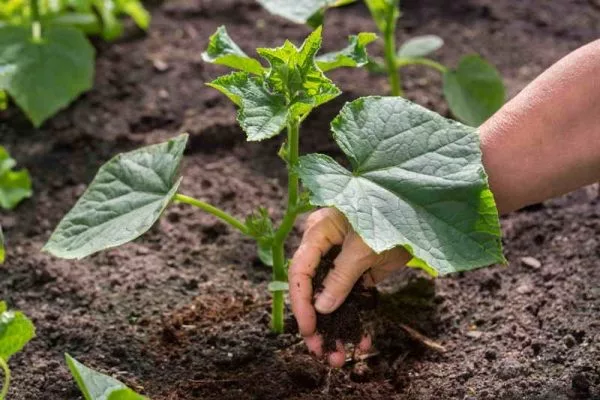
Caring for the Three Tankers F1 cucumber
Care measures for this variety are standard:
- Regularly moisten the soil around the bushes, maintaining a balance between moisture and dryness, avoiding stagnant water and allowing it to dry out completely. The optimal time for watering is morning or evening, using warm water.
- After each watering or rain, it is important to loosen the soil between plants, and during periods of heat and drought, it is recommended to cover the beds with mulch made of dry grass, straw or peat.
- Throughout the growing season, cucumbers are fertilized every 10-14 days, applying both foliar and root fertilizers. Nitrogen-rich fertilizers are preferred before flowering, and low-nitrogen mineral mixtures and organic matter after flowering.
- Regularly remove old, yellowed leaves, pinch back excess shoots, and trim back any vines that are crowding the bushes. All plant debris should be burned away from the garden beds.
- To prevent weeds from growing, pull or weed them as they appear.
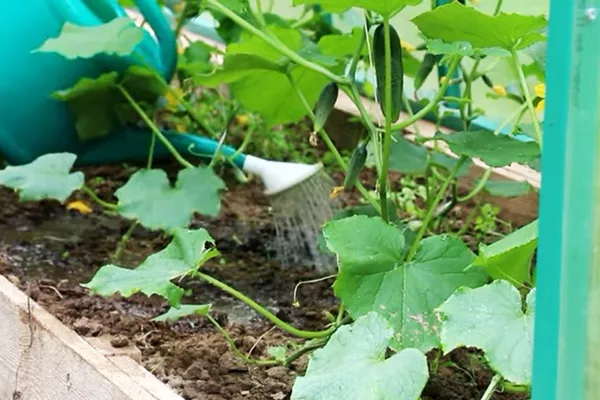
Resistance to diseases and pests
The Tri Tankista variety boasts good disease resistance. It is resistant to cucumber mosaic virus and cladosporiosis. Although it can occasionally be affected by root rot, powdery mildew, and its downy form, these diseases do not affect the yield.
Nevertheless, preventative measures and timely treatment remain important. Copper-containing fungicides and Fitosporin can help combat diseases, as can preventative measures such as moisture management, proper crop rotation, protection from temperature fluctuations, and soil disinfection before planting.
Harvesting and storage
The best time to harvest cucumbers is in the morning, when they are firm and stay fresh longer. Pick the cucumbers gently, pressing them down with your thumb, but using a knife is preferable. Avoid lifting or turning the stems, as they are fragile and can be easily damaged.
During harvest, immediately remove any uneven or diseased fruits and stems, as they interfere with the development of healthy cucumbers. Harvest the main crop after nighttime temperatures drop below freezing, which usually occurs in early September.
Cucumbers are prone to rapid loss of flavor and marketability; they can wilt and spoil. Therefore, it is recommended to store harvested cucumbers at a temperature of 7 to 12°C, but no longer than 15 days. Cucumbers that have been stored for some time are no longer suitable for canning.
Positive and negative qualities
Bouquet-type cucumber hybrids, such as Tri Tankista, are especially popular with gardeners for their ability to produce abundant harvests in small plots. Plants of this variety have increased disease resistance and are rarely affected by fungal and viral infections.
Reviews
Difficulties in growing the Tri Tankista f1 cucumber variety are rare; diseases and pests pose a threat only if the planting site is poorly chosen or the crop is not properly cared for. This hybrid has been popular for many years due to its high yield, versatility, and excellent taste.