
The Temp cucumber is intended exclusively for indoor cultivation, is parthenocarpic, and is a hybridized variety with a maximum germination rate of 97-99%. It is self-pollinating (even without the help of bees), resulting in the absence of large seeds.
Introduction to the variety
Temp stands out among other varieties due to the following characteristics: the absence of a bitter taste in the fruits, the possibility of cultivation in home garden conditions, and innate resistance to diseases.
Originators
The Temp cucumber was conceived in the early 2000s and immediately won the favor of agricultural specialists. The variety is considered a shining example of the success of Russian breeding.
Its creator is a breeder from the company "SEMKO-JUNIOR" Yu. B. Alekseev, who, as a result of his work, developed a shortened hybrid (fruits such as pickles and gherkins) with obvious characteristics of early ripening and abundant yield.
In 2006, it was included in the State Register of the Russian Federation and registered under a patent by the Moscow agricultural firm-originator “SEMKO-JUNIOR”.
Plant characteristics
This hybrid plant grows continuously and has few lateral branches. The leaves on the bushes are typically medium-sized and have a classic green hue.
Flowering is female, with more than three female buds forming at each node. The ovaries of this plant form in clusters.
Description of cucumbers
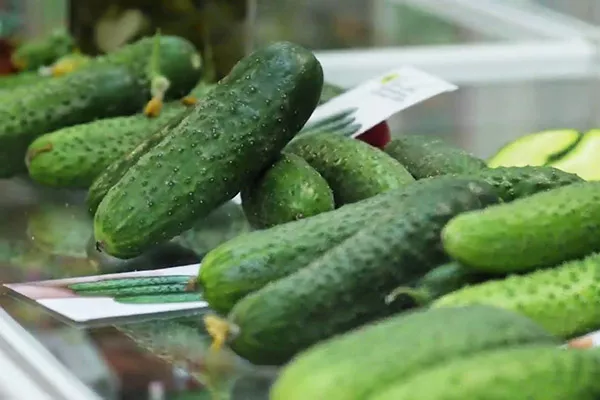
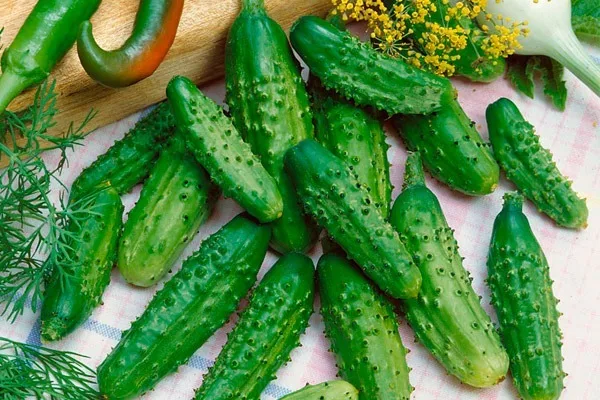
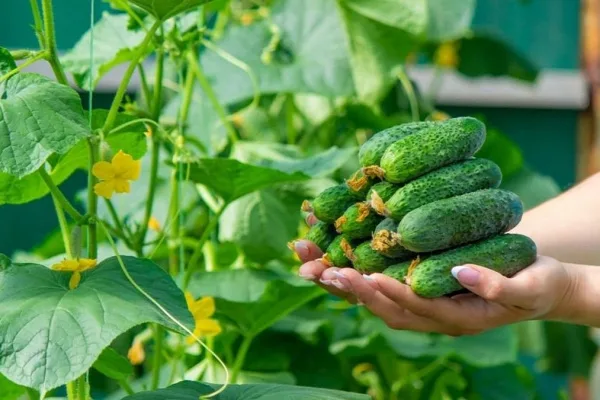
Tempo is a unique hybrid plant that produces excellent gherkin-type fruits. They can be harvested even at the pickle stage. These cucumbers are compact, typically no more than 9 cm long and weighing up to 80 g. The cucumbers have a characteristic cylindrical shape.
- ✓ No bitterness in the fruits even when overripe.
- ✓ Ability to self-pollinate without the participation of bees.
When ripe, the fruits turn green with light-colored longitudinal stripes. They are distinguished by a bumpy skin with small white spines, but are pubescent.
Temp is considered a first-generation hybrid, meaning its superior characteristics to the base varieties are not passed on to subsequent generations. Therefore, collecting seeds from this variety is not recommended, as they will not retain the hybrid's unique qualities.
Taste and purpose
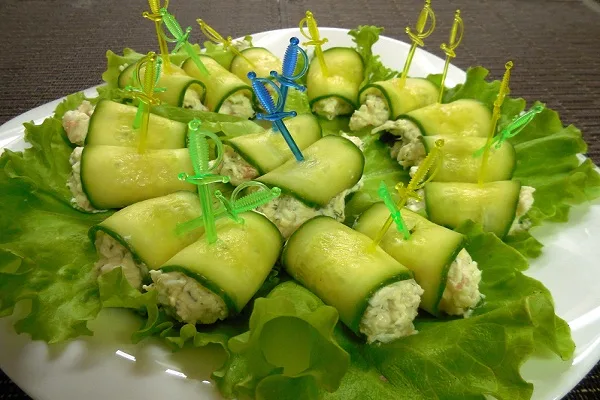
Cucumbers lack a sharp, unpleasant bitterness, but offer a balanced sweetness and freshness that makes them particularly enjoyable. These vegetables are recommended for use in salads, but can also be used for pickling or canning. They are also excellent eaten fresh.
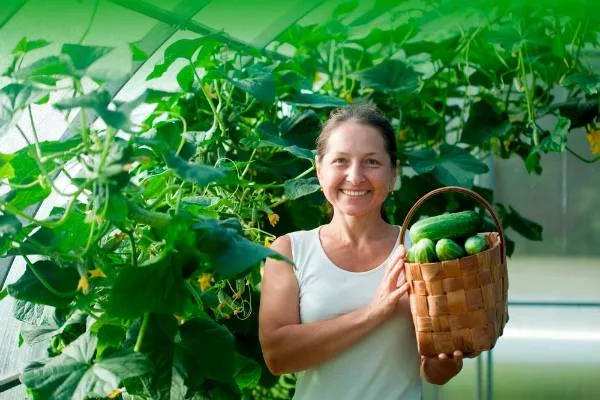
Temp is an ideal choice for indoor gardening. It thrives especially well in greenhouses, whether plastic or glass. Thanks to its parthenocarpic properties, this variety promises impressive results even when grown on balconies or windowsills.
Composition, benefits
The calorie content of cucumbers does not exceed 13 kcal per 100 g of product. This amount contains:
- 0.8 g protein;
- 2.4 g carbohydrates;
- 0.1 g fat.
Cucumbers aren't just refreshing; they're also rich in nutrients. They contain organic acids, various vitamins, macro- and microelements, alpha-tocopherol, and more, which is why they offer a number of beneficial effects:
- quench thirst;
- help cope with heartburn;
- remove toxins, waste, heavy metal salts and excess water;
- improve digestion processes;
- prevent fat accumulation;
- lower cholesterol levels;
- normalize blood pressure;
- treat dementia;
- restore the appearance of hair and nails;
- relieve pain from gout and arthritis;
- improve the general condition of joints;
- help cope with hangovers and remove toxins that occur when drinking alcohol;
- lower uric acid levels;
- regulate kidney function.
When ripe, the yield
Cucumbers are known for their rapid growth period, during which they reach maturity and begin producing tasty, high-quality fruit. The process from germination to harvest takes no more than 40-43 days. The period during which the plant actively produces fruit is quite long.
This hybrid cucumber is characterized by high yield and fruit production. If all growing recommendations and agricultural requirements are followed, you can get 12 to 14.5 kg of fruit per square meter of plot. If you harvest cucumbers before the pickles form, the yield can be around 6-8 kg.
Resistance to cold and heat
Temp F1, which enjoys a well-deserved reputation for its high yield, lacks drought tolerance, according to experienced gardeners. This cucumber can withstand high temperatures, even up to 50 degrees Celsius, but this is only possible with regular watering. A lack of regular watering leads to a halt in fruiting and the rapid death of the plant.
Like most cucumber varieties, Temp F1 is not frost-tolerant. The lowest temperature limit at which the plant can be damaged is around 10 degrees Celsius.
Advantages and disadvantages
The Temp cucumber is gaining popularity among many farmers thanks to its numerous advantages. Therefore, it's worth analyzing the main reasons for its popularity:
Despite the many advantages that Tempo has, it is worth considering its limitations:
Landing
The Temp F1 cucumber variety, praised for its ease of cultivation, adapts well to partial shade and produces a bountiful harvest. However, for best results, it's recommended to choose sunny locations.
- ✓ The soil temperature for sowing seeds should not be below +16°C.
- ✓ To prevent fungal diseases, pre-planting treatment of the greenhouse with fungicides is mandatory.
Growing rules
Planting requirements are standard, but the hybrid has its own nuances that are important to consider and understand. Pay attention to the following:
- Follow crop rotation principles: replanting cucumbers in the same spot for two or even three years is not recommended. They should not be planted on soil previously occupied by squash, cabbage, or pumpkin.
- Ideal predecessors for cucumbers are tomatoes, potatoes and eggplants.
- The soil doesn't require any special conditions, but it's preferable to pre-fertilize it by adding 20-30 kg of compost and 400-500 g of wood dust per square meter. According to the State Register, the hybrid is best grown in a greenhouse.
Therefore, before planting seedlings, treat the soil and all surfaces (walls, ceiling, structures) with fungicides such as Hom, Skor, or Bordeaux mixture to protect plants from fungal infections. - The location of the beds is not critical; they can be oriented either along or across the plot/greenhouse.
Seeds
In central Russia, the ideal time for sowing seeds is late May or early June, taking weather conditions into account. For optimal plant growth and development, soil temperatures between 16 and 19°C are required.
To grow in a greenhouse using the seed method, follow this planting scheme:
- the seeding depth should be 2.5-3.5 cm;
- a gap of 60-80 cm should be left between rows of plants;
- between the plants themselves – 10-20 cm.
The sowing procedure is as follows:
- Prepare the area by digging to a depth of 10-15 cm. If the beds are in greenhouse boxes, the soil should be replaced with fresh soil. The plant prefers a soil mixture of sod, peat, and compost in a 1:1:1 ratio. Add 250-300 g of ash and 25-30 g of superphosphate to each bucket.
- Create furrows on the prepared bed and water them with warm, settled water.
- Place the seeds in the grooves, cover with a layer of substrate, and then mulch with peat no more than 1.5-2 cm thick.
To maintain humidity until the seedlings germinate, use a spray bottle or watering can with a diffuser to avoid damaging the planting material.
Seedlings
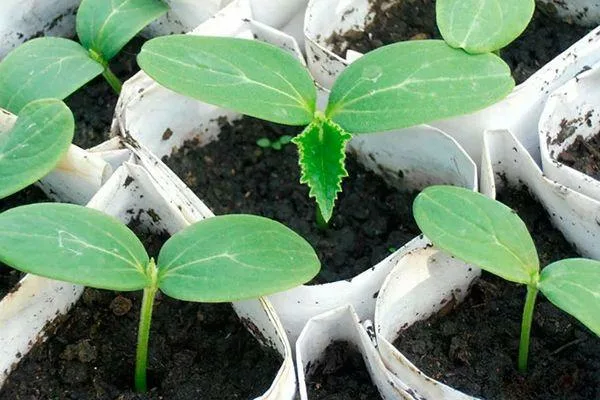
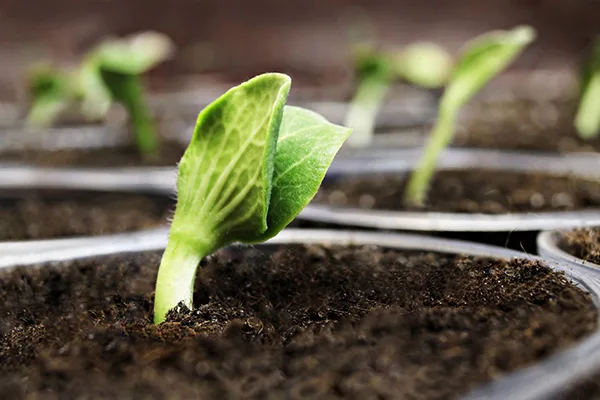
Direct seeding allows you to harvest your first crop 1-2 weeks earlier than usual. To begin, the seeds are rooted in wooden boxes or other containers filled with moist soil, and after a month or a month and a half, the grown shoots are transferred to a sheltered location, such as a greenhouse.
Caring for seedlings requires the following activities:
- Drip irrigation of the soil when it begins to dry out in the top layer, using settled water.
- Maintaining the temperature during the day within the range of +19…+22°C and +17-19°C at night.
- Apply fertilizer two weeks before repotting. It's best to make a solution of 20 g potassium sulfate, 30 g superphosphate, and 10 liters of water, which is poured directly near the roots.
- A week before transplanting, harden off the seedlings by placing them in a room with a temperature of 13 to 16°C for a couple of hours daily. Once they've acclimated, move the containers outside.
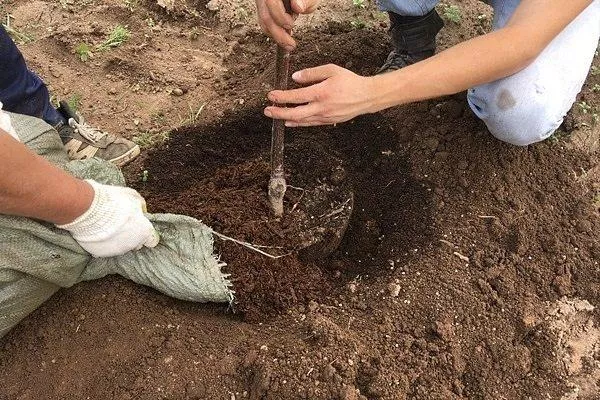
- To plant the plants, make holes 2-4 cm in diameter larger than the root system of the seedling bush, irrigate them, carefully place the seedlings in them, then sprinkle with a light substrate and lightly compact to ensure stability.
Aftercare of cucumbers
The Hybrid Temp cucumber variety is easy to care for, but achieving a high-quality harvest requires a competent approach, including a number of agricultural practices:
- Moisturizing. Keep the soil in the bed constantly moist, but not waterlogged. Rules:
- During the flowering period, turn the plants every two to three days, using 8-12 liters of water per 1 sq. m.
- Once the vines begin to produce fruit, increase watering to daily.
- In cold weather, cucumbers should be sprayed no more than once every 4-5 days.
- The key condition is to use only settled warm liquid for moisturizing.
- It is best to carry out the procedure in the morning or evening.
- Top dressing. To stimulate fruiting, it's recommended to fertilize cucumbers weekly, but once every two weeks is also acceptable. It's best to use specialized cucumber mixes or biological fertilizers such as Biohumus or Biomaster. Other recommendations:
- You can use a solution of mullein or bird droppings.
- During the period of intensive budding, spray with vinegar liquid or Bud or Ovary.
- Top dressing can be either root or foliar, but in any case it should be done in the evening or early morning.
- Always moisten the soil before applying fertilizer.
- Processing of the near-trunk area. Thoroughly weed and loosen the soil around shrubs after watering to avoid compaction. However, be careful not to damage the roots. When loosening, remove weeds, which can be a source of infestation and pest infestation.
- Providing air exchange. Providing fresh air for plants is crucial, so regular ventilation of the greenhouse is essential. An alternative is to install a powerful ventilation system.
- Mulching. This care method can be helpful, but it's not required. It simplifies the process of growing cucumbers, reducing the frequency of watering, tilling, and soil cultivation.
Fresh grass clippings, straw, or rotted wood chips can be used as mulch. Over time, mulch can be washed away by watering and rainfall, so it should be renewed periodically to maintain its effectiveness.
How to properly shape a bush?
When growing Temp F1 bushes, it's advisable to restrict their growth to a single stem. This process should begin approximately two weeks after transplanting the plants into the greenhouse/garden.
Follow these steps:
- On the section from the first to the fourth leaf, remove all ovaries and lateral shoots that grow in the axils.
- Starting from the fifth leaf, leave one ovary on each leaf blade, removing the remaining side shoots.
- Along the stem, in the range of 100 to 150 cm, trim off excess branches, leaving two leaves for every second leaf node.
- When the stem reaches 150 cm, it is necessary to remove the lateral shoots above the third and fourth leaves, leaving 3-4 ovaries.
- When the stem exceeds the height of the crossbar, it should be twined and directed downwards.
Possible difficulties
When growing hybrid cucumbers, gardeners face a number of problems:
- A potassium deficiency causes unsightly, pear-like shapes in the fruit. To remedy this, treat the fruit with an ash solution.
- If plants are growing poorly, or the leaves are turning yellow and drying out, this may indicate a nitrogen deficiency. Simply spray the plants with nitrophoska.
- A lack of fruit set may be due to high temperatures in the greenhouse and excess nitrogen. To prevent this, ventilate the greenhouse more frequently and avoid overdosing on nitrogen.
- Cucumber wilting can be caused by overwatering or, conversely, insufficient soil moisture. It's important to establish a proper watering regime.
- If small holes appear on the leaves, this could be a sign of sunburn. To protect the plants, cover the greenhouse for shade.
Collection and storage
Harvesting the first cucumbers begins 40 days after planting. Although the hybrid doesn't develop bitterness while on the vine, gardeners recommend harvesting the vegetables when they reach 6-7 cm in length to free up the vines for new cucumbers.
The best time to eat or pickle cucumbers is immediately after harvesting. However, you can extend their shelf life by a few weeks by carefully wrapping them in a bag and refrigerating them without tying them. Another option is to store the harvest in a cool cellar.
Resistance to diseases and pests
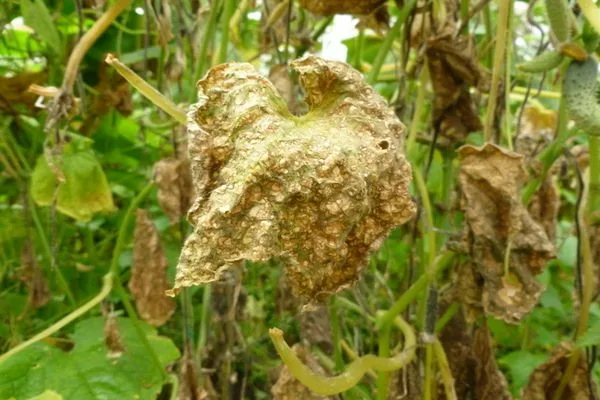
The hybrid has excellent resistance to diseases and pests, including cladosporiosis, downy and powdery mildew, and viral infections. Aphids may appear in greenhouses with high humidity, but cucumbers are not affected by them.
Some gardeners prefer to carry out prevention using natural remedies prepared according to the following recipes:
- Mix 250-300 g of wood ash and 25-30 g of soap shavings per 5 liters of water. After thoroughly mixing, spray the bushes.
- Grind the head of garlic with the peel in a meat grinder, add 5 liters of hot water, and let sit for 24 hours, covered. Then strain.
- Chop 3-4 hot peppers, add to 5 liters of water and leave for 48 hours.
Remember that to repel pests, you can bury onion peels between the rows of cucumbers.
Reviews
By following simple care and planting methods, the Temp F1 hybrid variety can yield a bountiful harvest of exquisite, high-quality gherkins. This hybrid is resistant to adverse weather conditions, as well as major garden pests and diseases, making it suitable for beginning gardeners.