
Taganay cucumbers are a sprinting hybrid variety from Ural breeders, distinguished by their intense branching and fast-growing main stem. Fruiting begins very early, and one square meter of planting area can yield over 12 kg of dark green, large-tuberculate, cylindrical fruits. What makes them so appealing and how to cultivate them properly?
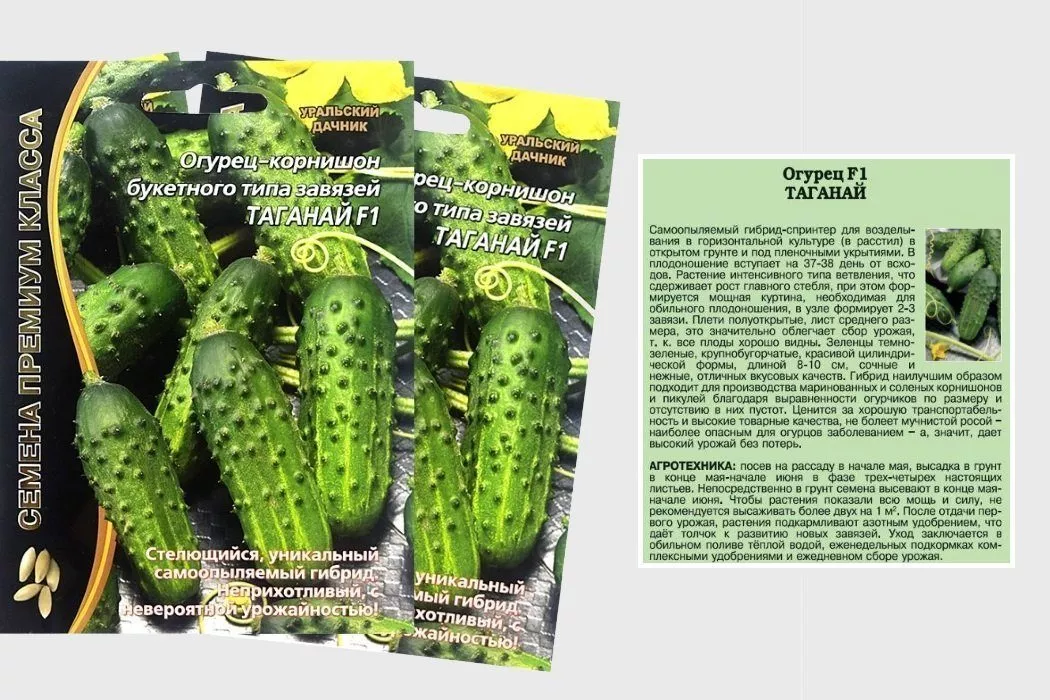
Cucumber seeds "Taganay"
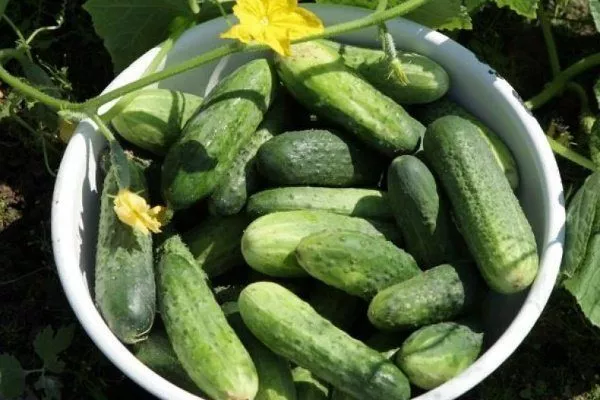
Cucumbers of the Taganay variety
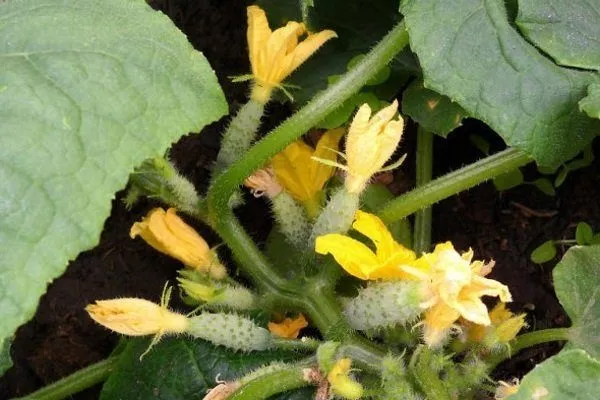
Taganay grows quickly and begins to bear fruit in just 35 days.
Description of the variety
The Taganay F1 cucumber is a domestic hybrid, an early variety that begins bearing fruit 37-38 days after germination. With proper care, the seedlings develop rapidly, earning the variety the nickname "sprinter." Its characteristics will be discussed separately.
Bushes
The key features of the variety are as follows:
- bunch (bouquet) form of fruiting;
- rapid development;
- setting of fruits in abundance.
Thus, 4-6 ovaries can form in one inflorescence, with each node forming 2-3 ovaries.
The plant is characterized by abundant branching, so the main stem is unable to grow rapidly. However, this facilitates the formation of a vigorous clump, necessary for abundant fruiting. Consequently, numerous ovaries ripen within the plant's small internodes, which distinguishes Taganay from other varieties and hybrids.
The bushes have semi-open vines and medium-sized leaves, making harvesting quite easy. This also reduces the risk of injury to the plant, making it suitable for open-air cultivation. This allows the plant to grow freely on the ground without any support. In a sunny bed, the cucumbers will spread out as evenly as possible and thrive.
There is no need to thicken the crops, because if you leave them more free space, they will grow to their full potential.
Fruit
Ripe cucumbers have the following characteristics:
- color - dark green;
- length – from 6 to 8 cm (cucumbers do not outgrow);
- form - beautiful cylindrical;
- weight – on average 110 g;
- skin - thin and bumpy with white spines;
- taste - pronounced, without bitterness.
It's worth noting that this hybrid boasts uniform fruit sizes. Therefore, the large, knobbly gherkin-type cucumbers, uniform in size, can be used for canning without culling, including in small jars. They are also suitable for making pickles. Hollow fruits are rare, so pickled and salted cucumbers are of excellent quality.
Cucumbers tolerate long-distance transportation well and retain their marketable appearance.
Table of characteristics
The main characteristics of the hybrid variety can be found below:
| Parameter | Description |
| General description | Self-pollinating early-ripening variety for universal cultivation |
| Originator | Chelyabinsk Breeding Station. LLC "SSPK Agrofirma MARS", Chelyabinsk Region. |
| Cultivation regions | It can be grown in all regions and areas of Russia, including Siberia and the Urals, as it tolerates adverse climatic conditions well – continuing to grow even on cloudy days and during drought. |
| Growing methods | It can be grown both outdoors and under plastic film. Outdoors, the plant produces fruit until the first frost, while in a greenhouse or hotbed, it produces fruit year-round. |
| Disease resistance | The variety is resistant to powdery mildew, one of the most serious cucumber diseases. This helps gardeners avoid crop losses. |
| Productivity | When grown outdoors, one square meter of planting area can yield approximately 12 kg of fruit, while in a greenhouse, the yield can reach over 15 kg. The seed producer himself claims that with proper care, a single plant can yield approximately 30-40 kg of cucumbers per season. |
- ✓ Self-pollinating ability, making the variety ideal for growing in greenhouses.
- ✓ High resistance to powdery mildew, which reduces the need for chemical treatments.
This hybrid variety is highly productive, so planting just 2-3 plants is enough for a family and winter storage. It's an excellent option for gardeners with limited space but who want to grow several vegetables on their plot.
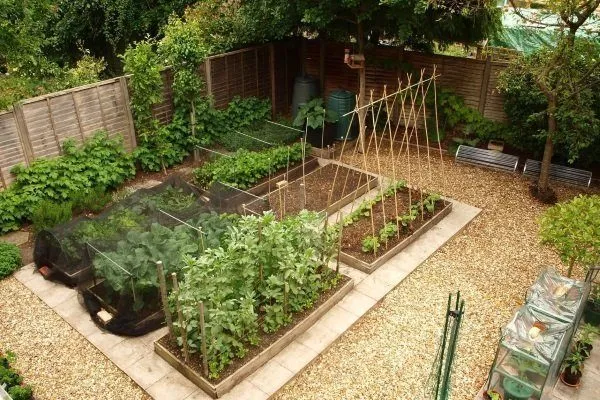
Agricultural technology
Taganay is a capricious variety, so to get a good harvest you need to know the following rules:
- There are two ways to grow cucumbers: from seedlings and from seeds. Planting crops for seedlings The seeds should be sown between March and April, and planted in the ground in May. In this case, the first harvest can be obtained as early as June.
- For this variety, it's best to choose beds with loose, airy soil. They should be dug over beforehand, removing all remaining weeds, and then fertilized with organic and mineral fertilizers. Ash and ammonium nitrate are recommended for fertilizer, but they should be applied sparingly to avoid reducing the yield and degrading the quality of the cucumbers. Critical conditions for successful cultivation
- ✓ The soil temperature for planting should not be below +13°C to avoid stress on plants.
- ✓ The optimal air humidity for Taganay cucumbers is 70-80%, which promotes better fruiting.
To prevent diseases in seedlings next season, garden soil should be disinfected and cleared of plant debris starting in the fall.
- Plantings should not be too dense. The optimal pattern is no more than two plants per square meter.
- Hydride can and should be grown in a spreading manner, however, this method is only acceptable in the case of a regular garden bed. If it grown in a greenhouse, the bushes need to be tied up.
- To ensure effective development, the hybrid requires proper care. During the period of fruit set and ripening, it requires frequent watering with warm water, fertilizing, pruning, and pest control.
Planting methods
Hybrid sprinters require adherence to a number of planting guidelines. These guidelines depend on whether the cucumbers are grown from seedlings or transplants. We'll examine each option separately.
Through seedlings
The transplanting process is very stressful for many seedlings. They become accustomed to growing in one environment, so after transplanting to a permanent location, they have difficulty adjusting to new conditions. To make the seedlings' adaptation process as easy as possible, it's best to use disinfected and fertilized garden soil for sowing seeds.
In any case, the seedling substrate and the soil in the garden bed should be similar in quality and characteristics. If, however, the variety's characteristics are not taken into account when transplanting and seedlings grown in light, fluffy soil are planted in clay soil without fertilizer, fruiting will be delayed, the number of ovaries will be low, and yields will suffer.
To prevent such consequences, the bed should be dug up in advance and fertilized:
- rotted manure, compost – 6-8 kg per 1 sq. m;
- ash – 200-300 g per 1 sq. m;
- ammonium nitrate – 2-3 tsp per 1 sq. m.
Seedlings with 3-4 true leaves can be transplanted into such soil. If the seeds are sown for seedlings in early March, then transplanting the seedlings into the ground can begin as early as late May or early June.
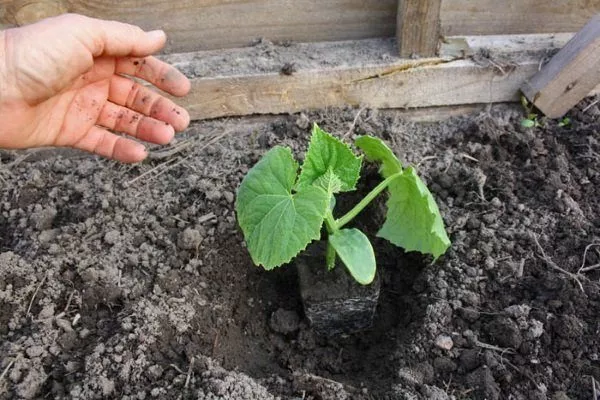
On planting day, the weather must be sunny and windless, allowing the soil in the bed to warm to 13–15°C. These conditions will provide comfortable conditions for the seedlings, minimizing the stress of the change in growing location. However, if transplanted during extreme heat, wind, or heavy rain, the seedlings may die completely, unable to adapt to the new location.
So, on the right day, the seedlings can be transplanted into the beds, following this scheme:
- the distance between bushes in a row is 40-60 cm;
- passages between rows – 70-80 cm.
Taganay F1 is a climbing plant that grows freely without support or trellises, but requires sufficient space to thrive. Crowded plantings significantly increase the risk of disease, especially in humid climates.
Direct seeding
In temperate climates, work can be carried out in the last ten days of May, so that the first harvest of cucumbers can be obtained in the first week of July. When sowing seeds directly into prepared soil, the following parameters should be taken into account:
- growing place – sunny, protected from drafts;
- the soil temperature in the greenhouse or in the garden bed is within the range of +13…+15°C;
- seeding depth – 6-7 cm.
After planting the seed, the area should be watered generously with warm water.
Caring for seedlings and harvesting
In order for the plant to bear fruit abundantly, it is necessary to provide it with proper care, which consists of the following:
- WateringBefore and after planting, water the seedlings exclusively with warm water. This procedure should be thorough and regular – once every 3-4 days, morning or evening. However, in hot and dry weather, the frequency of watering should be increased, and on rainy days, reduced.
- WeedingAfter moistening the soil, weed it as needed, carefully removing all weeds so as not to damage the plant's root system.
- Formation of bushesThis is one of the key conditions for properly growing cucumbers. The hybrid should be introduced into a single stem by cutting off the first 3-4 lower internodes. The shoots and flowers emerging from these should also be removed. Subsequently, one leaf should be left on each node, from where the "bunch" will emerge.
- Tying upThe plant forms a single, strong vine, so it doesn't require support. However, a trellis can be used to arrange the stems more comfortably in a greenhouse or open garden bed. This also makes harvesting much easier. In any case, it's crucial to ensure free air circulation between the bushes to prevent excess moisture from accumulating around them. Otherwise, the plant may be susceptible to dangerous diseases.
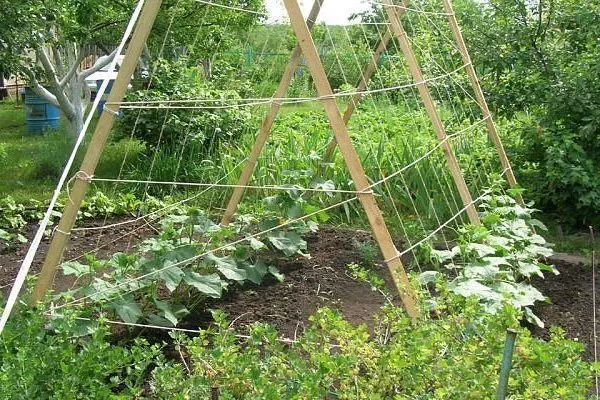
Experienced gardeners also recommend taking preventative measures against diseases, as well as getting rid of pests and parasites.
With proper agricultural practices, the first harvest can be achieved as early as June. Ripe, dark-green fruits should be picked daily, otherwise they will inhibit the growth of unripe cucumbers and prevent new ovaries from forming.
Pros and cons of the variety
Many gardeners grow Taganay for fresh consumption and winter preserves. However, some cultivate the hybrid in larger quantities for subsequent sale. The variety's popularity stems from its following advantages:
- has high yield rates – about 12-15 kg of fruit per 1 sq. m;
- develops quickly – the first harvest can be collected 37-38 days after emergence;
- is distinguished by a long period of fruit production - after the first ovaries appear, the crop bears fruit throughout the entire season until the first frost;
- in greenhouse conditions it bears fruit all year round;
- has excellent taste and versatility in use - the fruits can be served fresh or used for canning;
- It is not dependent on weather conditions – the variety can be grown in areas with unfavorable climates (dry or rainy summers, extreme heat, cloudy weather – all this will not affect the development and fruiting of the crop).
As for the disadvantages of the hybrid, the following can be highlighted:
- The importance of proper care for seedlings, without which it will not be possible to obtain a bountiful harvest.
- Another relative disadvantage is the need for daily harvesting. Without it, the crop will not be able to produce fresh ovaries.
- Plant seeds need to be purchased annually, as self-prepared planting material will not produce a high-quality harvest.
Video: Secrets of Growing Taganay Cucumbers
In the following video, an experienced gardener will share her secrets on how to properly grow the long-vine cucumber hybrid from "Uralsky Dachnik":
Taganay cucumbers are an early hybrid variety suitable for cultivation in both southern and northern regions. Factors such as drought or heavy rainfall will not affect the quality or quantity of the harvest. With proper farming practices, you can harvest a bountiful crop of crisp, beautifully cylindrical cucumbers as early as 37-38 days. They can be enjoyed fresh or used for winter preserves.