
The Suzdal F1 cucumber stands out for its ability to produce a consistent harvest right up until the first frost and its cold resistance. This hybrid doesn't require pollinators and is easy to grow. The fruits can be harvested as gherkins or left to reach full maturity.
Description of the variety
The Suzdal cucumber is an ideal choice for gardeners seeking a bountiful harvest of juicy and delicious cucumbers. It doesn't require strict growing conditions and boasts excellent flavor.
Basic information:
- The variety is parthenocarpic, which means it can produce fruit without pollination – it doesn’t even require bees.
- Cucumber is genetically protected from cladosporiosis and powdery mildew, and also exhibits tolerance to downy mildew, which reduces the risk of infection.
- The plant belongs to the early maturing varieties, with a ripening period of 35-40 days.
- The yield of cucumbers of this variety reaches 9-11 kg per 1 square meter, which is a high figure for hybrids.
- This variety does not have strict requirements for soil type and can grow successfully on both light and heavier soils.
Originators
In the early 1920s, in Suzdal, Vladimir Oblast, Russian agronomist Evgeny Shvartsman worked on developing a new cucumber variety. Its unique flavor and superior quality quickly won the hearts of local residents and led to its widespread distribution throughout Russia.
Over time, the Suzdal variety has undergone various breeding improvements, which have contributed to its refinement and adaptation to modern conditions. Today, the Suzdal cucumber is the result of the work of experts from the Vegetable Crops Selection Research Institute and the Gavrish agricultural firm, who introduced it to the public in 2005.
Official registration was recorded in 2006. Among the authors of the variety, one can highlight such specialists as Gavrish S. F., Portyankin A. E., Shamshina A. V. and Shevkunov V. N.
Varietal qualities
Suzdal is characterized by an indeterminate growth type, which implies its constant development and fruiting throughout the season.
Other varietal characteristics:
- These plants have moderate branching and medium-sized, green-hued leaves. They require shaping due to their moderate climbing habit and predominantly produce female flowers.
- Each node produces about four fruits, which are localized in bunches.
- Cucumbers are characterized by a medium-short length from 8 to 12 cm and a weight of about 70-100 g each.
- The fruits are oval in shape with a tuberculate surface, on which the tubercles are located quite sparsely.
- The skin colour is dark green with white linear stripes extending up to one third of the length.
- The spines on the surface are white, and the skin is thin and pleasant to the taste.
- The pulp is dense, without voids, which makes them ideal for consumption.
- Suzdal cucumbers are renowned for their unique flavor, making them ideal for both raw consumption and incorporation into a variety of culinary creations.
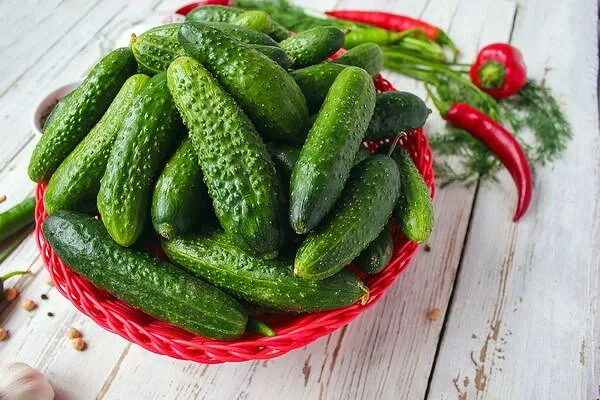
This variety is versatile: it can be eaten fresh, used for canning, or cooked:
- Refreshing cucumber juice is an excellent choice for quenching your thirst on a hot summer day.
- Solyanka with Suzdal cucumbers is a hearty and filling soup, and the cucumbers add a refreshing flavor, making this dish a true gem of Russian cuisine.
- Pickled Suzdal cucumbers are another favorite delicacy. The cucumbers are marinated in vinegar or a special brine with garlic, dill, mustard, and other spices, giving them a crisp texture and flavor.
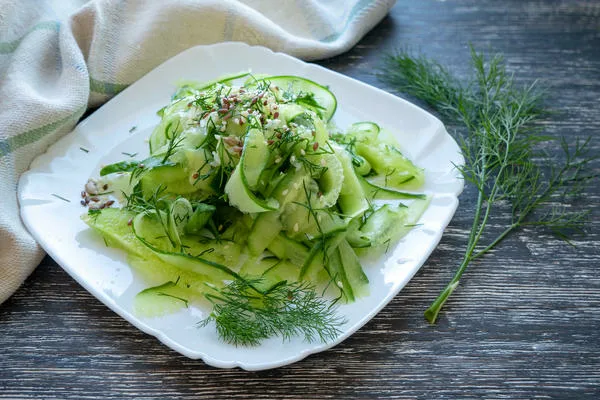
- Suzdal cucumber salad is a simple yet juicy salad that's quick and easy to prepare.
Utility
The Suzdal cucumber is deservedly popular thanks to its excellent taste and numerous beneficial properties:
- These cucumbers are rich in vitamins, including vitamin C, which strengthens the immune system, vitamin K, which supports bone health, and B vitamins, which help prevent cardiovascular disease.
- Cucumbers are a source of important minerals: potassium, magnesium and copper, necessary for the normal functioning of the heart, muscles and nervous system.
- Hydration and detoxification – thanks to their high water content, cucumbers promote hydration and help eliminate toxins and waste. They are effective for cleansing the kidneys and urinary tract.
- These vegetables act as a natural diuretic, improve digestion and stimulate metabolism.
- Skin health – cucumbers are widely used in cosmetology. They promote hydration and refreshment, reduce acne and inflammation. They also help tighten pores and prevent wrinkles.
Pros and cons
The variety requires frequent watering, and annual seed purchases are required for planting. These are the only drawbacks of the plant.
Landing
Cucumbers prefer warm, sunny conditions: ideal daytime temperatures of 25-30°C and nighttime temperatures of 18-20°C are ideal for their development. To ensure maximum growth and fruiting, it's important to locate the greenhouse on the south side, with plants spaced 50 cm apart on all sides.
- ✓ Optimum soil temperature for sowing seeds: +15-16°C.
- ✓ Plant spacing: 50 cm on all sides.
Seedlings
The growing period for cucumber seedlings is extremely short, lasting only 20-25 days. It is recommended to sow seeds for seedlings starting April 20th. To do this, the seeds are germinated and then placed in individual pots without picking.
Important nuances:
- The soil for filling the containers must be rich in nutrients, loose, and able to pass moisture.
- Before sowing, the seeds should be hardened by placing them in a cold place (for example, a refrigerator) for a week, turning them periodically.
- The pots are treated with a solution of potassium permanganate, and the seeds are planted 1 cm deep.
- Before the sprouts appear, cover the pots with film (or glass) and place them in a warm place with a temperature of +28-30°C.
- After the first shoots appear, reduce the temperature to 22-24°C on sunny days and 18-20°C on cloudy days. If this is not possible, reduce watering.
- It is important to maintain moderate humidity in the trunk area - avoid over-watering, especially in conditions of insufficient light and high temperatures, as this can lead to stem elongation.
In the greenhouse
This variety is ideal for growing in greenhouses covered with plastic film. For successful cucumber growth, select a site that receives full sunlight and is protected from strong winds.
The soil should be light, rich in nutrients, and well-drained. Before starting work, it's necessary to cultivate the soil: remove weeds and loosen it. A small amount of mineral fertilizer is recommended.
Recently, the so-called warm cucumber bed has become increasingly popular, especially in cooler climates. It's easy to set up, and its effectiveness has already been confirmed by many amateur gardeners.
The process of creating a warm bed includes the following steps:
- Initially, dig a trench at least 30-40 cm deep and 60-80 cm wide, and the length will depend on your preferences.
- Place branches on the bottom, then cover them with sawdust and place a layer of straw on top.
- Next, fill the trench with manure diluted in warm water.
- Add a layer of soil on top.
- Before planting seedlings or seeds, pour boiling water over the soil a few days before and cover with film.
- Dig a trench 30-40 cm deep and 60-80 cm wide.
- Place branches on the bottom, then sawdust and a layer of straw.
- Fill the trench with manure diluted in warm water.
- Add a layer of soil on top.
- Before planting, pour boiling water over the soil and cover with film.
There are several methods for creating raised beds, but they all have in common the use of manure as a fertilizer and heat source.
Peculiarities:
- Preparing the beds in the greenhouse for cucumbers should begin in advance, and not on the day of planting.
- If the greenhouse structure is spacious and allows for the allocation of funds, then an irrigation system can be provided at the preparation stage.
- While the beds are being prepared, you can start growing cucumber seedlings from the selected seeds.

Into open ground
This variety is not suitable for outdoor cultivation, but it is quite suitable in the southern regions of the country. In this case, it is recommended to sow cucumber seeds in the spring, when the soil temperature reaches 15-16°C. The procedure is standard and identical to greenhouse conditions.
Care nuances
Plants can be trained sideways to spread along the ground or raised vertically, secured to supports and nets, or formed into tents. Corn or sunflowers are often used as support for cucumbers, planted nearby.
The care procedures are classic, but there are some subtleties:
- This cucumber hybrid requires special attention to its watering regime: water the bushes daily in the evening, carefully pouring small amounts of water at the base of the plant.
In greenhouse conditions, watering is carried out only by drip irrigation, following the same schedule. - Three weeks after transplanting, apply potassium fertilizer to the seedlings. Fertilize 3-5 times during the growing season, depending on the soil's depletion level. It's important to provide the plant with nutrients at the following times:
- At the initial stage, use nitrogen compounds such as urea or organic matter in the form of slurry or chicken manure;
- during the budding period, add phosphorus mixtures, for example, Superphosphate;
- During fruit formation, feed the plant with potassium and nitrogenous agents.
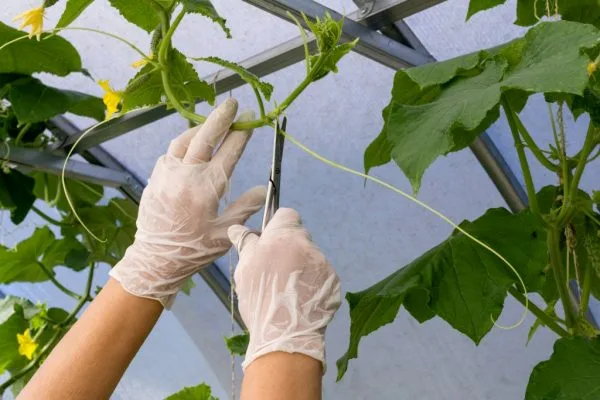
- Leaves that do not produce ovaries in their axils should be removed. After harvesting, trim off the lower leaves. The upper part of the plant is usually left untouched, as it does not exceed the height of the support.
- The hybrid is characterized by good resistance to most diseases, but to prevent the spread of major diseases, it is necessary to follow agricultural practices: avoid over-watering the soil, adhere to crop rotation, and regularly remove weeds.
- Insect pests are rare on this hybrid. If pests are detected, they can be effectively controlled with commercially available insecticides.
Harvesting
Suzdal cucumbers are known for their early ripening, so it's important to harvest them regularly to avoid overripening and preserve their crisp texture and rich flavor. The optimal harvesting schedule is every 1-2 days.
Cucumbers should be harvested when the fruit reaches its optimal size and shape. Frequent harvesting promotes vigorous fruiting.
Storage and transportation
To ensure cucumbers retain their freshness and original appearance, maintain humidity levels between 80-95%. At storage temperatures between 6 and 8ºC, the vegetables retain their quality longer, preventing yellowing and remaining firm.
Using polyethylene film with a thickness of approximately 30-40 microns significantly simplifies the storage process. It helps reduce moisture evaporation when vegetables are stored in film-lined boxes, weighing 10-12 kg each. Placing opened bags of cucumbers weighing approximately 2-3 kg in refrigerator trays can improve their shelf life.
Reviews of the variety
The Suzdal F1 cucumber is a parthenocarpic hybrid distinguished by enviable productivity. It boasts early harvests of high-quality fruit, making it an ideal choice for vegetable growers. Thanks to its excellent flavor and excellent transportability, this variety is in high demand commercially.