
The Sprinter cucumber is a high-yielding variety, ideal for pickling and canning. It is renowned for its aromatic flavor, early maturity, and long fruiting period. This variety can be successfully grown both outdoors and in various types of greenhouses.
Introduction to the variety
The Sprinter F1 cucumber is a parthenocarpic hybrid characterized by female flowers and a weakly branched, indeterminate growth habit. It is known for its rapid ripening: from the appearance of the first green shoots after sowing to harvesting, it takes approximately 40-45 days, with fruiting being abundant and prolonged.
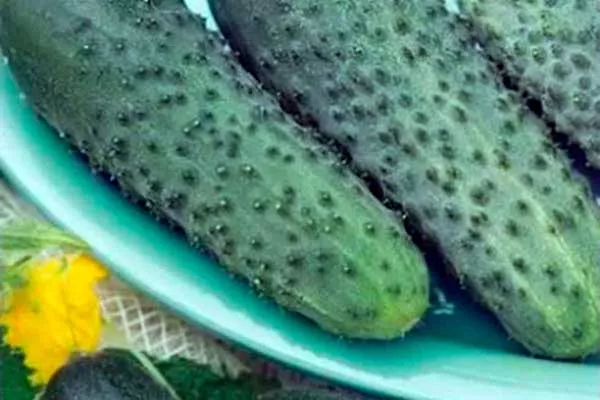
This variety is particularly cold-hardy and can withstand temperature fluctuations between day and night without losing quality. Sprinter bushes are relatively resistant to cucumbers' main enemies, downy mildew and powdery mildew. Yields reach 7-9 kg per square meter, making it one of the most sought-after among gardeners.
Originators
This variety is registered in the State Register of the Russian Federation for cultivation in greenhouses and temporary film protective structures on private farms. Cultivation permit number 67742 was issued on November 11, 2015.
Sprinter was added to the register of approved varieties in 2017 and is permitted for use in all regions of the country. The cultivar's originator is AGROFIRMA POISK LLC.
Characteristic features of the appearance of the plant and fruits
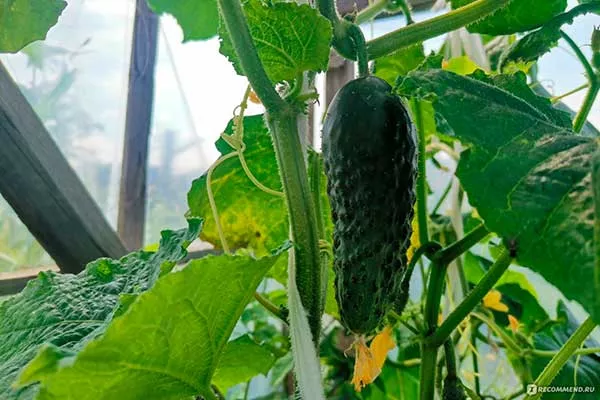
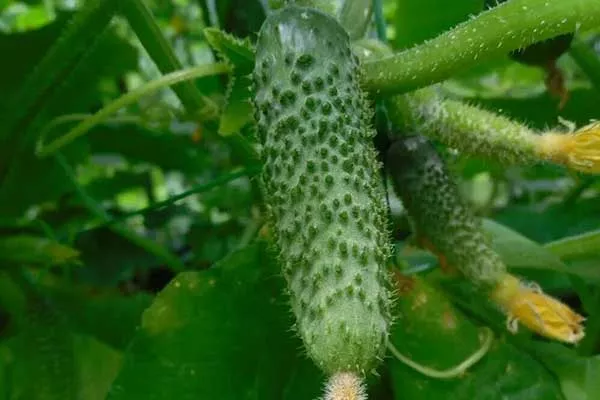
The plant has a well-developed branching system. The leaves are deep green, and each bunch produces about 5 cucumbers. Fruit characteristics:
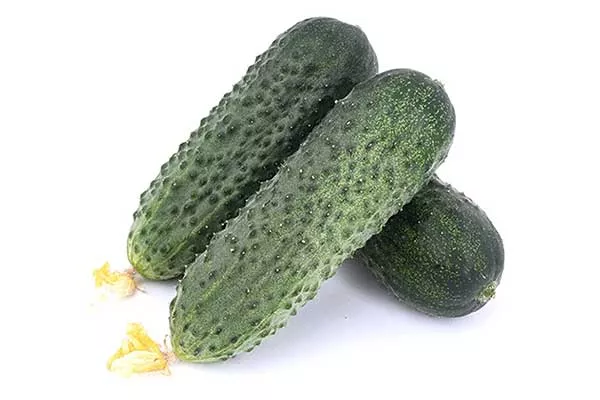
- the fruits reach a length of 10 to 12.5 cm and weigh from 90 to 115 g;
- the shape resembles a cylinder;
- color - dark green with characteristic lighter strokes;
- The surface of the fruit is covered with large tubercles, and the spines are whitish in color.
Advantages and disadvantages
This hybrid appeared relatively recently, but has already gained popularity among our gardeners. This is due to a number of positive qualities:
Sprinter is unpretentious, resistant to low temperatures, and has resistance to a number of diseases, making it a reliable option for any growing conditions.
But there is also a downside: the seeds contained in the fruits are not capable of germinating due to the hybrid origin of the variety.
Growing
Cucumbers love light and moisture, but they don't tolerate bright sunlight. Planting and care are fairly standard, but it's important to consider some varietal characteristics:
- Selecting soil. For cucumbers, you need to choose soil that is fertile, sufficiently loose, retains moisture well and has a neutral acidity.
Cucumbers especially love soil mixtures with a high organic content: manure, rotted grass, peat or compost. - Site preparation. It occurs in the pre-winter period, when ammonium nitrate is added and the soil is dug up.
- Deadlines. Seeds for seedlings are sown in April, and cucumbers are transplanted to a permanent location in May or early June.
- Scheme. To ensure cucumbers grow well, it is recommended to plant them with a spacing of 30-45 cm between plants and 70-80 cm between rows.
- Predecessors. The best crops for cucumbers include parsley, beans, peas, corn and onions, while eggplant, zucchini, carrots, cucumbers, squash, peppers, tomatoes and pumpkin are undesirable predecessors.
- Illuminance. Cucumbers require a lot of light, so it is recommended to install phytolamps for artificial lighting of seedlings.
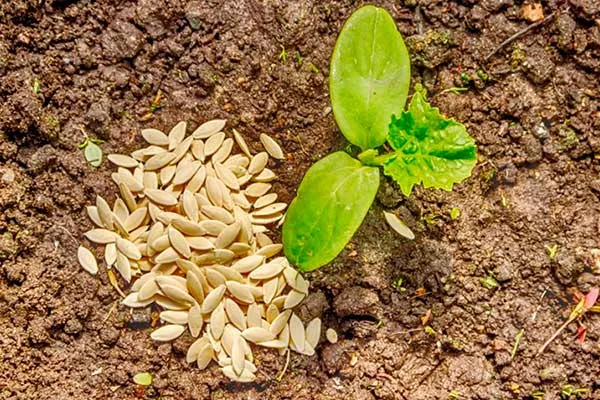
- Sowing seeds. Cucumber seedlings should be sown a month before they are expected to be planted outdoors. To stimulate growth, the seeds are pre-soaked and germinated using standard methods.
- ✓ The soil pH level should be strictly within 6.0-6.8 for optimal nutrient absorption.
- ✓ The organic matter content in the soil should exceed 4% to ensure high yields.
Agricultural technology
It's recommended to plant 5-8 cucumber plants per square meter. To plant seedlings or sow seeds in the beds, make holes 2-4 cm deep. Warm the holes with hot water. You can compact the soil around the holes with a mixture of black and red pepper to repel insects and pests.
Further steps for caring for the bushes are simple:
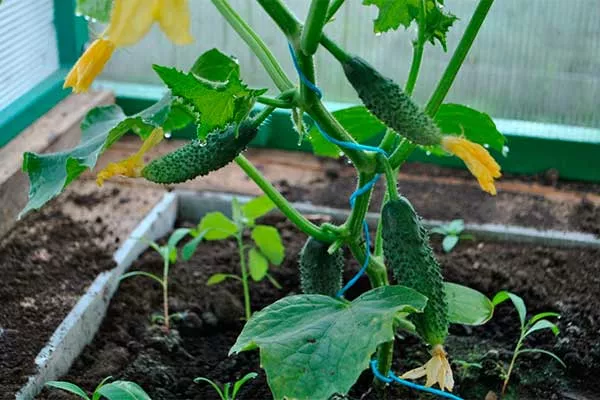
- Plant formation. It is important to regularly support the shoots as they grow, using support structures such as trellises, barrels, or tall neighboring plants such as corn and sunflowers, planted beforehand.
When the cucumber has 6-7 leaves, shorten the main stem to encourage branching and increase yield.

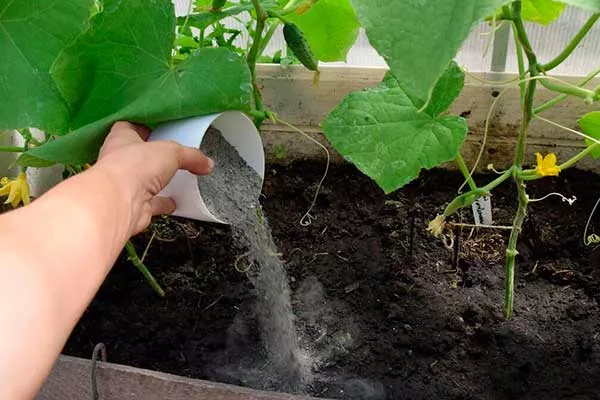
- Fertilizer. Apply the fertilizer 5-6 times throughout the growing season. The first application is when the second leaf appears, and the second at the beginning of bud formation. The next three to four applications are recommended during fruit set and harvest, every two to three weeks.
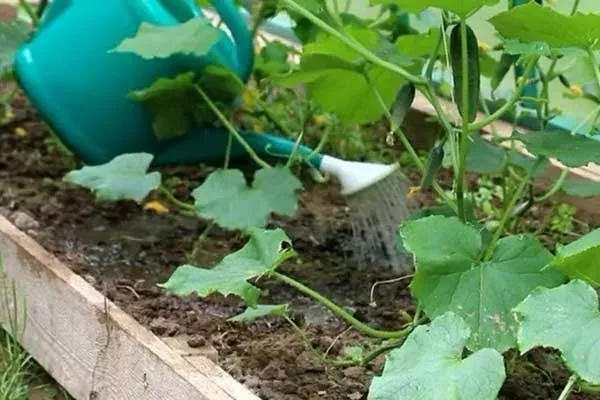
- Watering and humidity. It's best to water cucumbers with warm water. In open ground, it's best to water in the evening; in a greenhouse, in the morning. Water every 6-9 days before flowering, and every 3-4 days during fruiting. Direct the water so it doesn't fall on the leaves or stems to avoid possible sunburn.
Reviews
The Sprinter cucumber is no different from others, although it has a pleasant flavor and lacks the hollow, large seeds typical of some varieties. The seeds remain soft and translucent, but they cannot germinate and produce a new crop. Therefore, they must be purchased every season.