
When growing cucumbers in the vast Ural region, gardeners must consider many nuances, the most important of which is the fickle weather. These heat-loving vegetables are demanding in terms of temperature, humidity, and soil, but a wide variety of varieties allows you to choose those suitable for the Ural region. If you plan to plant vegetables in a greenhouse, choose varieties that don't require pollination. Cold-hardy cucumbers are recommended for open garden beds.
Varieties and hybrids for open ground
The Ural climate varies depending on the region: winds blow from the north and south, and severe frosts occur. Greenhouse conditions are ideal for growing cucumbers in this region. In a greenhouse, they are protected from the wind and receive maximum sunlight and warmth. However, thanks to the efforts of breeders (both Russian and Dutch), hardy hybrids have been developed that ripen in the open ground.
| Name | Disease resistance | Soil requirements | Ripening period |
|---|---|---|---|
| F1 squad | Resistant to bacterial wilt and susceptible to powdery mildew | No data | 45-50 days |
| Firstborn F1 | No data | No data | 39-40 days |
| Artek F1 | Ash resistant | Demanding to feeding | 40 days |
| Bumblebee F1 | High immunity | No data | 40-45 days |
| Pirouette F1 | Resistant to rot, cladosporiosis, cucumber mosaic virus | No data | 40-45 days |
| Miranda F1 | Resistant to many diseases except angular leaf spot | No data | 45 days |
| Tumi F1 | Tolerant to fungal and bacterial pathogens | No data | 50 days |
| Fontanelle F1 | Disease resistant | No data | 50-55 days |
| Ajax F1 | Resistant to tobacco mosaic virus and ash rot | No data | 40-50 days |
| Firefly | Susceptible to false ash and bacterial blight | No data | 40-50 days |
| Meringue F1 | Resistant to false ash and bacterial diseases | No data | 40-50 days |
| Octopus F1 | Resistant to powdery mildew and cladosporiosis | No data | 45 days |
| Falcon F1 | Resistant to powdery mildew and bacterial wilt | No data | 40 days |
| Sheet F1 | Not susceptible to brown spot, less resistant to other diseases | No data | 40 days |
| Neptune F1 | No data | No data | 55 days |
| Trilogy F1 | Resistant to cladosporiosis, affected by downy mildew | No data | 50-60 days |
- ✓ The optimal soil temperature for planting cucumbers in the Urals should be at least +15°C.
- ✓ To protect from wind and frost, it is recommended to use temporary shelters made of agrofibre.
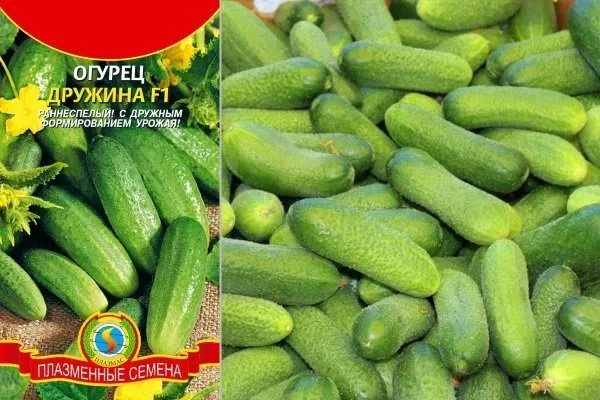
F1 squad
An early-ripening variety developed at an experimental station in Western Siberia in the 1990s. It ripens 45-50 days after full germination. It is pollinated. The crop forms uniformly. The cucumbers are approximately 10 cm long, oval or ovoid, and weigh from 90 to 130 g. Gardeners consider the taste excellent, and the cucumbers are suitable for canning. Mature cucumbers do not turn yellow and are resistant to bacterial wilt, but are susceptible to powdery mildew.
The F1 designation in the name indicates that this is a first-generation hybrid, resulting from crossing two other varieties. They inherit the best traits from their parents: strength, endurance, and productivity.
Firstborn F1
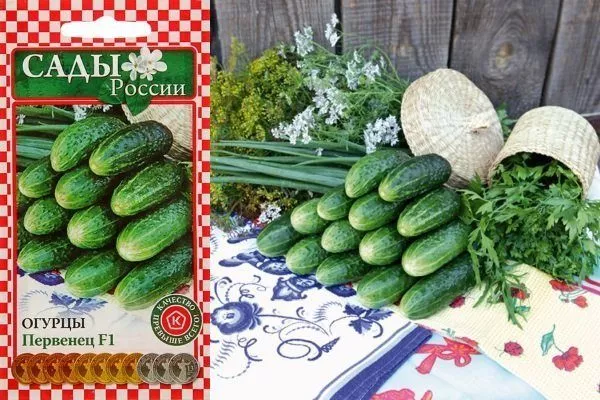
One of the earliest hybrids, ripening in 39-40 days, it stands out for its exceptionally uniform, powerful yield and high marketability. 10-13 kg of cucumbers can be harvested per square meter. The plant has short stems, so it is best planted densely, 50x50 cm apart.
- ✓ Requires dense planting due to short shoots.
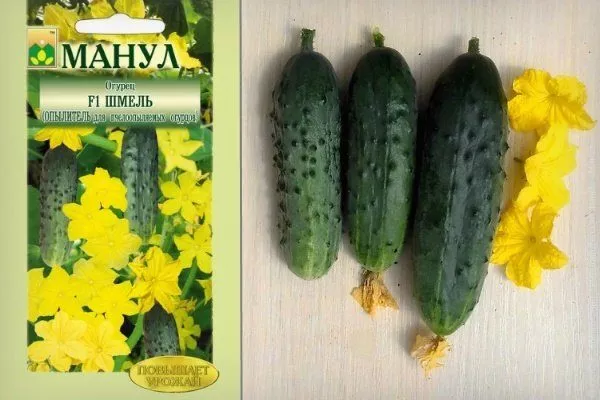
- ✓ It is recommended to use the hybrid variety Shmel as a pollinator.
The hybrid variety Shmel is a suitable pollinator. The fruits of Pervenets are dark in color, with prominent stripes, and are small in size (9 cm). The skin is coarsely bumpy.
Artek F1
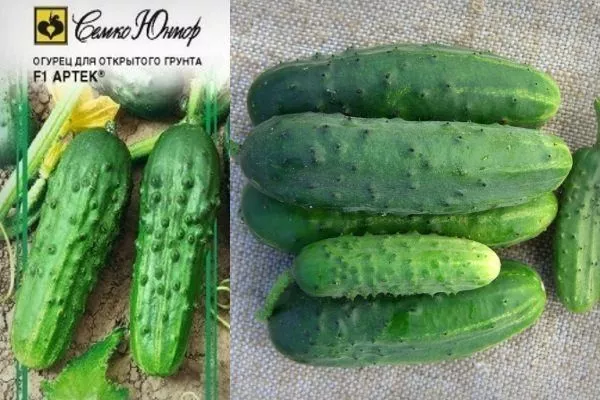
A gherkin-type hybrid variety, intended for open ground and planting under cover. Its main advantage is its high yield, at least 11 kg/sq. m. This bee-pollinated hybrid bears fruit early. The bush is medium-sized, with gherkins up to 10 cm long. They are not bitter, ideal for pickling, and do not turn yellow.
Among the advantages of Artek are its resistance to ash and other diseases, and long, successful fruiting. Among the disadvantages, it is noted that it is demanding of top dressing.
Bumblebee F1
A young, hardy hybrid, developed in 2013 for cultivation throughout Russia. It is often planted to boost the yields of other varieties. Shmelya grows tall, up to 2 m in length. The fruits are neat, 10-13 cm each, dark green with light stripes. The flavor is rated as excellent. Cucumbers ripen in 40-45 days, yielding an average of 4 kg per square meter.
The advantages of this hybrid include high immunity, good transportability, and shelf life. However, film shelters are recommended for the Shmel during the winter.
Pirouette F1
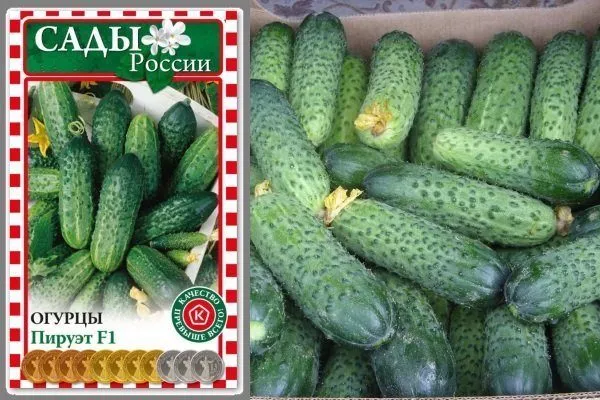
The result of breeding work by VNIIO Gavrish, it forms medium-sized bushes with few branches. Four to five ovaries form in the axils. Over 12 kg of cucumbers are harvested per square meter. The fruits are medium in length and weight, cylindrical in shape, and moderately dense inside.
Pirouette is suitable for canning and is also good in salads. It resists common diseases, including rot, cladosporium, cucumber mosaic virus, and others, and tolerates adverse environmental conditions. Downy mildew does not affect the yield.
Miranda F1
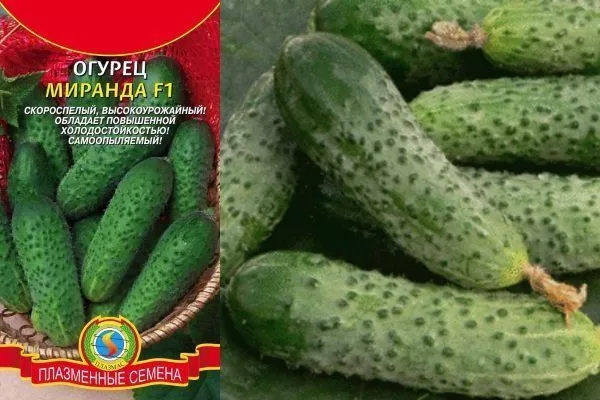
Developed in Russia in the 1990s, this versatile variety is an early hybrid—ripe fruits can be harvested 45 days after germination. It requires no pollination and can be grown in greenhouses, although it is distinguished by its increased cold tolerance. The bushes are tall, densely foliated, with one to three ovaries. Miranda fruits are medium-sized (about 11 cm), with white spines.
The hybrid is noted to have increased resistance to many diseases, except for angular leaf spot.
Tumi F1
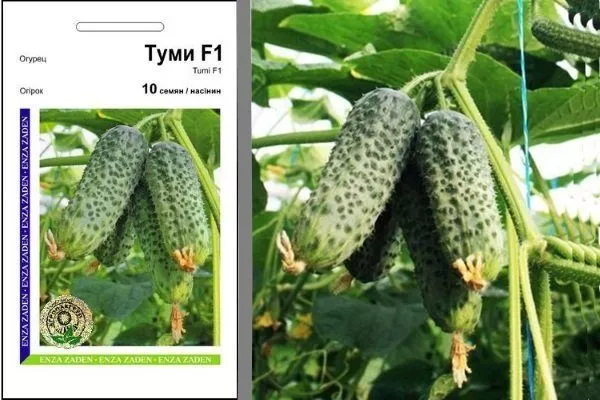
A versatile, early-ripening, pollinated hybrid from Holland, producing fruit in 50 days (on average). A high early yield is a distinctive feature of Tumi. Under favorable conditions, yields reach 300-400 centners per hectare (up to 20 kg per square meter).
This hybrid is vigorous, easily tolerates adverse weather conditions, and is tolerant of fungal and bacterial pathogens. The fruiting bodies resemble gherkins in shape, but are longer. They are crisp and have a vibrant aroma. Each fruit weighs 100 g.
Fontanelle F1
A Soviet-bred hybrid variety with a proven track record of excellent flavor, disease resistance, and shelf life. It's mid-season—the first harvest is expected in the first half of June and continues through the end of summer.
A minimum of 5 kg of cucumbers are harvested from one square meter of open beds. The cucumbers are 11-12 cm in size and weigh 90-110 g. They are light-colored, have sparse stripes, are crisp, and do not taste bitter. They are suitable for pickling.

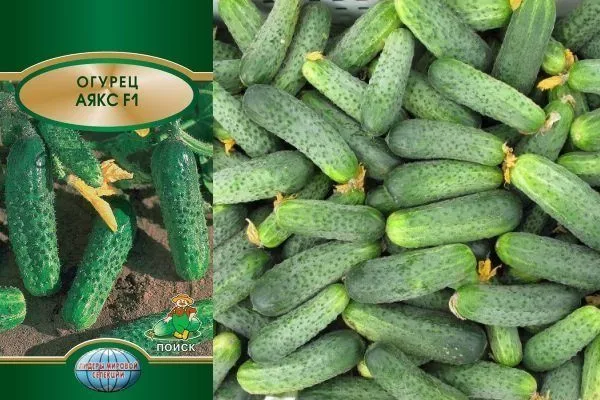
Ajax F1
An early-ripening cucumber hybrid bred in Holland. It takes about 45 days from sowing to harvest. A single square meter yields no more than 10 kg of vegetables. Ajax produces gherkin-type cucumbers, small and bumpy, but with high commercial quality and excellent flavor.
This hybrid is resistant to tobacco mosaic virus and powdery mildew. It tolerates cold well.
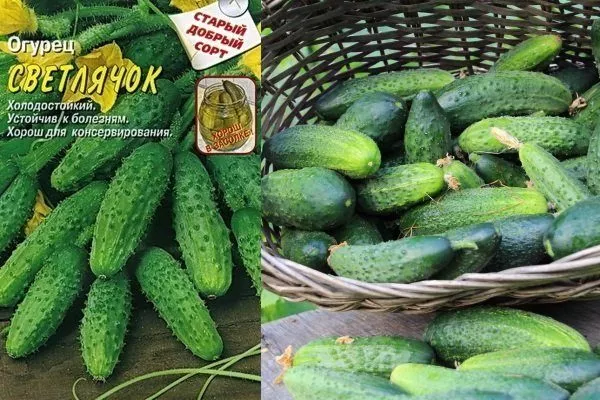
Firefly
A mid-season variety bred in Siberia. The bushes are spreading and climbing. The fruits are approximately 13-14 cm in size and weigh up to 115 g. According to gardeners, this variety is ideal for pickling and canning.
Firefly is susceptible to false ash and bacterial blight. In the Ural region, marketable yields are no more than 4 kg per square meter.
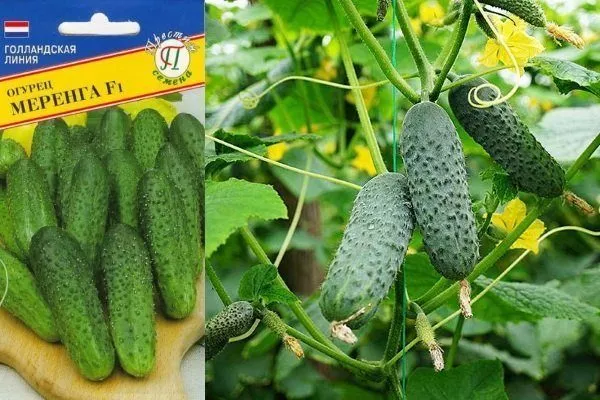
Meringue F1
A versatile hybrid from the Netherlands, distinguished by its good, consistently high yield. The harvest is ready 40 days after the first shoots emerge. Cucumbers 8-10 cm long emerge from tall, moderately open bushes. Their flesh is not bitter, a genetic trait.
Cucumber hybrid Meringue Resistant to false ash and bacterial diseases. Outdoors, yields can reach up to 12 kg per square meter; indoors, up to 15 kg/sq. m.
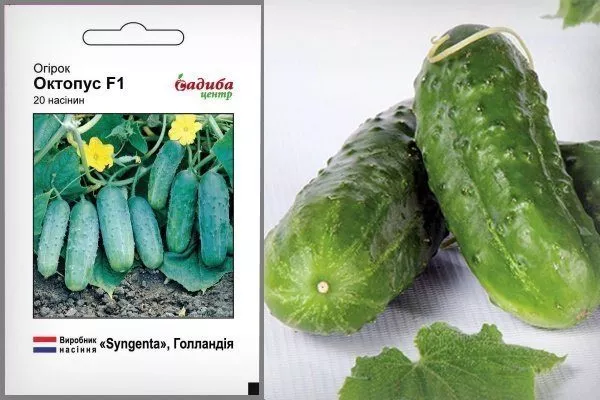
Octopus F1
This cucumber variety, bred in Holland, is prized for its excellent flavor. It ripens mid-early, with ripe gherkin-shaped fruits appearing in 43-48 days. They are neatly shaped and marketable, thornless, and have green, bumpy skin.
This hybrid easily survives both drought and cold. Cucumbers are stored at temperatures of 3-8 degrees Celsius. It is resistant to powdery mildew, cladosporiosis, and other diseases.
Falcon F1
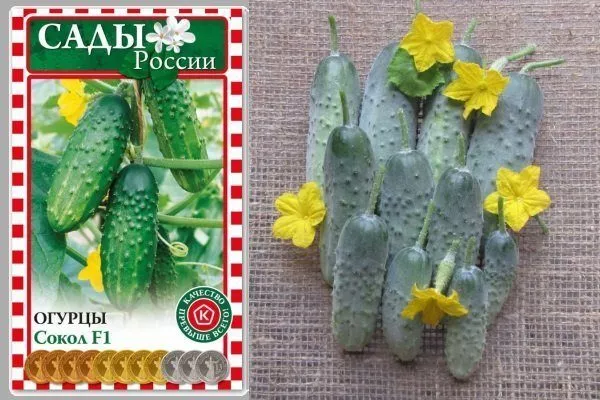
An early-ripening cucumber hybrid, developed in Crimea as a crop for all regions of Russia, particularly in the Urals. The bush is medium-sized, with few branches. The fruiting bodies are oval, tuberculate, and firm. They weigh between 80 and 115 g. The cucumbers have an excellent, crisp flavor and are suitable for pickling and canning.
Sokol is highly resistant to powdery mildew and bacterial blight. It produces a bountiful harvest even in unfavorable conditions.
Sheet F1
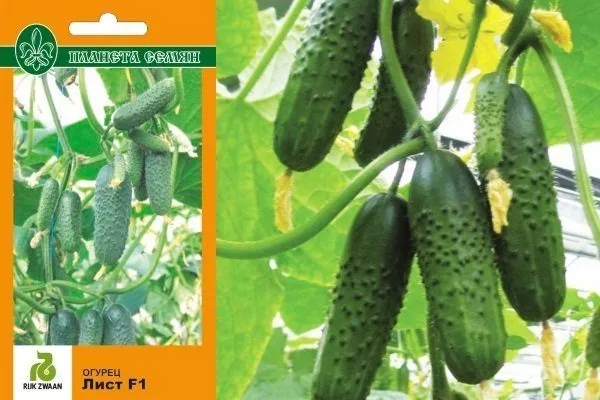
An early gherkin cucumber, ideal for growing in garden beds. It's versatile. The fruits have a strong aroma, thin skin, and attractive appearance. They weigh between 65 and 100 g. The plant's leaves are small and relatively resistant to bacterial blight. The bush is compact.
The hybrid is not susceptible to brown spot, and is less resistant to other diseases (common mosaic, powdery mildew).
Neptune F1
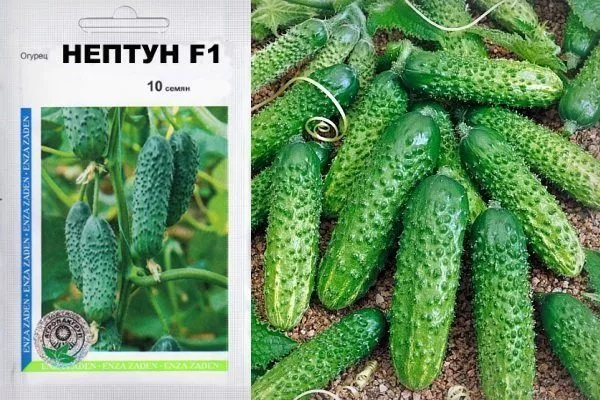
A robust hybrid, pollinated by bees and suitable for open-field cultivation, even in cold climates. Early maturing, it produces a bountiful and uniform harvest from mid-July. Neptune's fruits are exceptionally marketable: smooth and neat, weighing 70-90 g. They are not bitter. The surface is bumpy and matte. The harvest is 100% marketable.
Trilogy F1
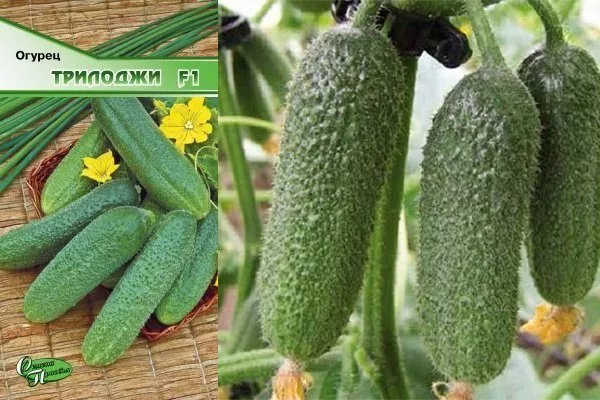
A Dutch hybrid, suitable for cultivation in the central and northwestern regions of Russia. It forms a low-growing bush, but the central stem grows without restriction. The fruits are ready for harvest in 50-60 days. The cucumbers are cylindrical, large, 10-14 cm long. They are ideal fresh and have a strong aroma.
Trilogy tolerates diseases well and is resistant to some fungi (cladosporiosis), but is susceptible to downy mildew. One drawback is its inability to be stored for long periods.
Comparative table of varieties and hybrids for open ground
| Variety/hybrid | Ripening time, days | Average fruit weight, g | Average yield, kg/sq.m | Pollination type |
| Squad | 45-50 | 100 | 4-5 | bee-pollinated |
| Firstborn | 40 | 50-60 | 11-12 | bee-pollinated |
| Artek | 40 | 75 | 11-12 | bee-pollinated |
| Miranda | 45 | 110 | 6-7 | parthenocarpic |
| Bumblebee | 51 | 100-110 | 3-5 | bee-pollinated |
| Pirouette | 40-45 | 110-120 | 11-13 | parthenocarpic |
| Tumi | 40 | 100 | 17-20 | parthenocarpic |
| Fontanelle | 50-55 | 100 | 15-23 | bee-pollinated |
| Ajax | 40-50 | 90-100 | 8-10 | bee-pollinated |
| Firefly | 40-50 | 80-110 | 3-5 | bee-pollinated |
| Meringue | 40-50 | 90 | 9-11 | parthenocarpic |
| Octopus | 45 | 90 | 10-12 | bee-pollinated |
| Falcon | 40 | 90-110 | 6-8 | bee-pollinated |
| Sheet | 40 | 80-90 | 7-9 | parthenocarpic |
| Neptune | 55 | 80 | 7-9 | bee-pollinated |
| Trilogy | 55 | 65-70 | 5 | parthenocarpic |
The most productive hybrids
Some cucumber hybrids have proven themselves to be the most resilient and produce excellent yields, both in the harsh conditions of the Ural region and in greenhouses.
| Name | Disease resistance | Soil requirements | Ripening period |
|---|---|---|---|
| Zozulya F1 | Resistant to rot, spotting, cucumber mosaic virus | No data | 47 days |
| Arina F1 | Poor resistance to diseases and parasites | No data | 40-55 days |
| Hercules F1 | Resistant to cucumber mosaic virus and common spot | No data | 50-60 days |
| Emelya F1 | Tolerant to root rot, ash | No data | 40-45 days |
| Satin F1 | Disease resistant | No data | 40 days |
| Masha F1 | Resistant to cladosporiosis, powdery mildew, cucumber mosaic virus | No data | 40 days |
| F1 Director | Resistant to diseases, but not pests | No data | 45 days |
| Maresa F1 | Resistant to powdery mildew, cucumber mosaic virus, and cladosporiosis. | No data | 38-40 days |
| Kalistrat F1 | No data | No data | 40-45 days |
| Unique F1 | No data | No data | 40 days |
Zozulya F1
A popular hybrid among Russian gardeners, developed by Russian breeders back in the 1970s. It boasts consistently high yields (12-17 kg/sq. m) and a flavor without unpleasant bitterness. Cucumbers Zozulya They do not require pollination; ovaries form on the bushes on their own.
Originally bred for greenhouses, it is planted indoors, and yields decline in harsh conditions. This hybrid is early maturing. The fruits are large, uniform, and long (up to 25 cm), and ripen simultaneously.
Zozulya is resistant to diseases that develop in the humid environment of greenhouses: rot, spotting, cucumber mosaic virus.

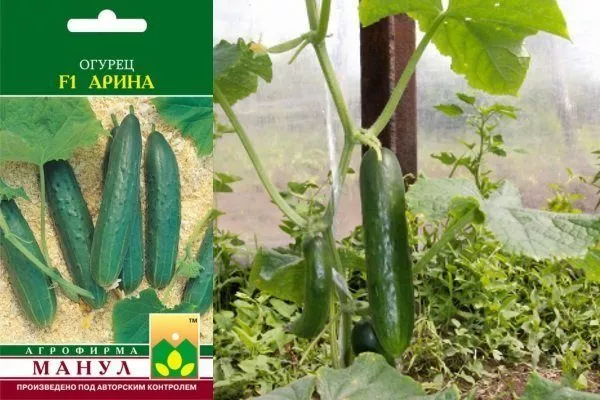
Arina F1
An easy-to-grow hybrid bred domestically, resistant to low temperatures and low light, and requiring no pollination. Recommended for growing in fall and winter shelters.
The bush grows up to 2-3 meters in length, forming numerous lateral shoots. Cucumbers are abundant, reaching a weight of 180 g and up to 20 cm in length. The cucumbers have thin skin and are seedless. They are good for canning and salads. This hybrid is early maturing, ripening in 35 days under favorable conditions.
Disadvantage: poor resistance to diseases and parasites (rot, powdery mildew).
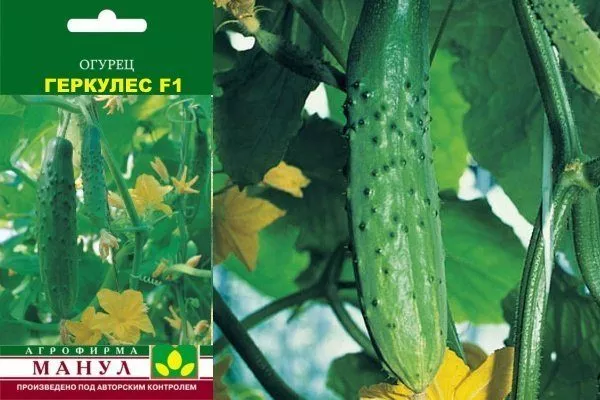
Hercules F1
A greenhouse variety suitable for outdoor cultivation (pollination required). Late-ripening. From germination to the first ripe fruits, it takes 51-59 days or longer.
This salad hybrid is characterized by large cucumbers, weighing up to 170-175 g and reaching 15-17 cm in length. The fruit is spindle-shaped. Hercules produces excellent yields, up to 30 kg/sq. m with proper care.
The plant is resistant to cucumber mosaic virus and common leaf spot. It grows well in shade.
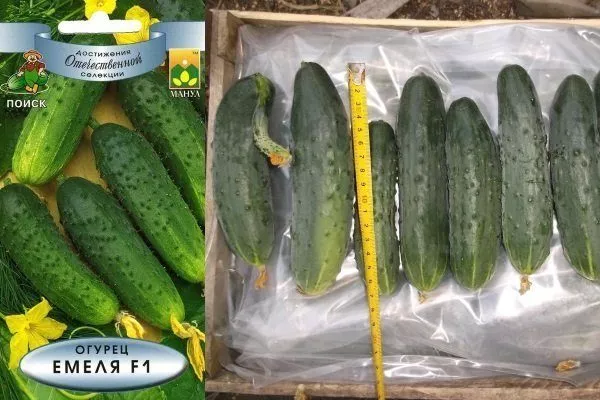
Emelya F1
A productive, cold-hardy hybrid ideal for salads and pickling. Recommended for growing in greenhouses and under plastic covers. The bushes produce an unlimited number of vines.
The cucumbers ripen quickly, within 1.5 months. The fruits are medium-sized, up to 15 cm long. Emelya is tolerant of root rot and ash-leaved rot and produces excellent yields—up to 30 kg/sq. m under ideal conditions, but in the Urals, these figures are lower due to the climate.
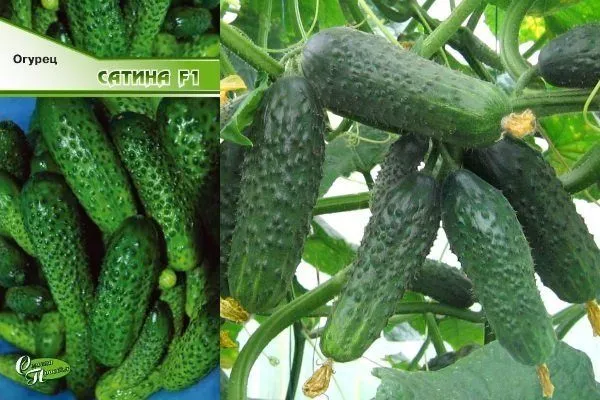
Satin F1
A hybrid variety bred in Holland. An early-ripening hybrid that grows in any soil. Disease-resistant. Forms a medium-sized, branched bush with large leaves. Cucumbers are cylindrical, short, and light in weight (up to 110 g). The flesh is juicy, the seeds are small, and the cucumbers are good for canning because they are completely hollow.
You can also harvest gherkins and pickles—very small cucumbers less than 5 cm long. The harvest is done in several stages: the majority in the first "flux," and the rest over the next 1.5 months.
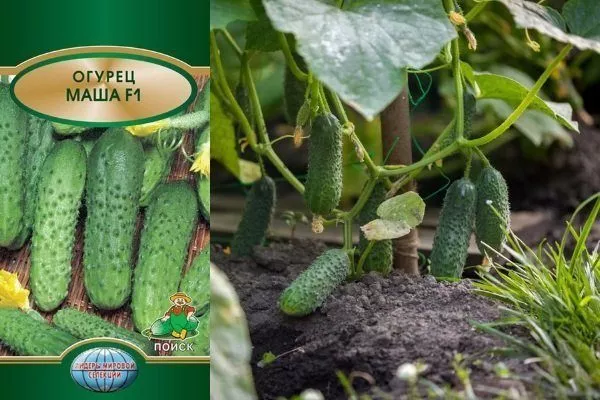
Masha F1
A self-pollinating hybrid variety recommended for growing in open beds. It's also suitable for greenhouses. The bushes produce only female flowers, with 6-7 flowers per ovary.
Disease resistance is normal, yield is more than 10 kg/sq.m in the open air. Ripening time cucumbers Masha One of the earliest (from 36 days depending on the planting type). The fruits are small, up to 100 g in weight and 8-11 cm in length. They are crisp and have excellent flavor. The hybrid is resistant to cladosporiosis, powdery mildew, and cucumber mosaic virus.
F1 Director
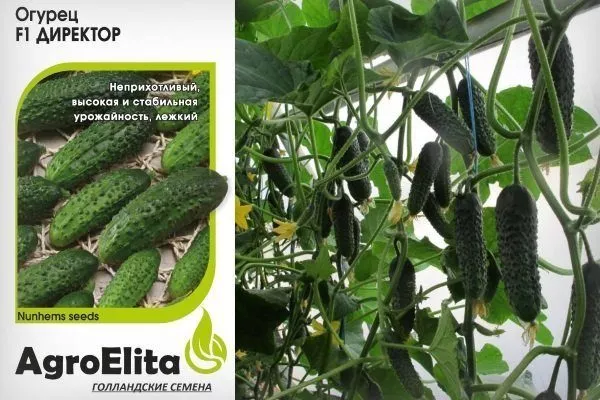
A mid-season salad hybrid. It was developed in Holland as an open-air crop but gradually migrated to greenhouses. Insects do not participate in pollination. Tall, densely leafy bushes produce neat cucumbers; they reach up to 14 cm in length, have dark green skin, and medium-crisp flesh. The flesh is free of voids, making this hybrid ideal for pickling.
When grown privately in open ground, cucumber yields are low—around 4 kg/m2. In greenhouses, this figure rises to 17 kg/m2. Director is resistant to diseases, but not pests.
Maresa F1
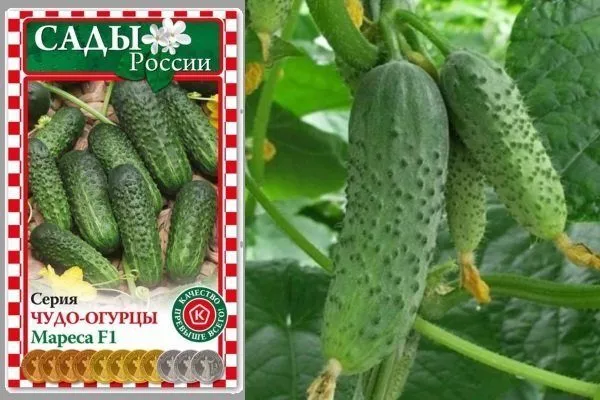
A hybrid variety characterized by early maturity and high yields. It can be planted both outdoors and indoors, with harvesting from June to August.
Maresa is an easy-to-grow variety, resistant to powdery mildew, cucumber mosaic virus, and cladosporiosis. Its bushes are tall, and the fruits are uniform and marketable, 10-14 cm long. The cucumbers are bitter-free, suitable for processing, and excellent in salads.
Kalistrat F1
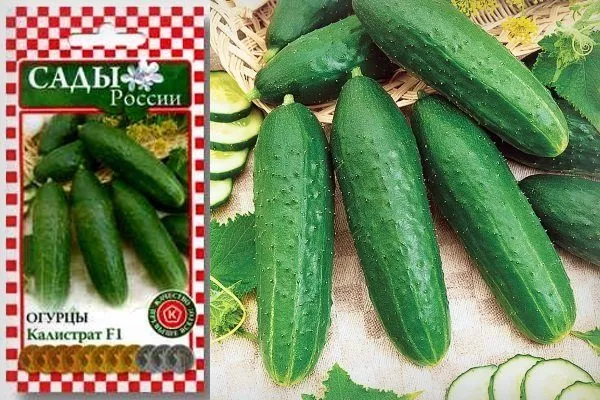
This hybrid variety produces an excellent yield in any weather conditions, ranging from 8-16 kg/sq. m from the first month of fruiting. When planted in April-May, the first cucumbers can be harvested from July until September. Overripe cucumbers do not turn yellow.
The fruiting bodies are large, each 9-11 cm long. The color is dark, with lighter short stripes. The cucumbers have a pleasant, refreshing flavor without bitterness. Kalistrat is pollinated; it is recommended to plant Shmel cucumbers nearby.
Unique F1
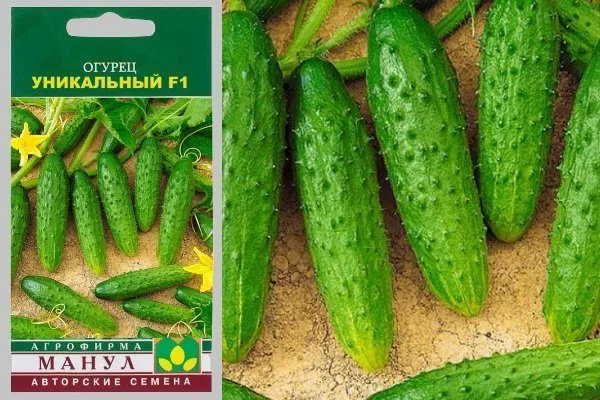
Early-ripening cucumbers for outdoor planting, yielding 11-16 kg per square meter. The plant is vigorous, with cluster-like ovaries, producing up to five at each node. A single plant can produce up to 30 elegant, closely spaced cucumbers. Fruits are up to 16 cm long and weigh at least 100 g. They fully ripen by the 40th day.
The cucumbers are tuberculate, with white spines, and are versatile. It's best to harvest the first fruits when they're young, when they've reached 10 cm.
Comparative table of productive hybrids
| Hybrid | Ripening time, days | Average fruit weight, g | Average yield, kg/sq.m | Pollination type |
| Cuckoo | 47 | 130-250 | 14-16 | parthenocarpic |
| Arina | 40-55 | 70-170 | 12-16 | parthenocarpic |
| Hercules | 50-60 | 150-170 | 22-28 | bee-pollinated |
| Emelya | 40-45 | 120-150 | 12-16 | parthenocarpic |
| Satin | 40 | 90-110 | 12-16 | parthenocarpic |
| Masha | 40 | 80-100 | 11-13 | parthenocarpic |
| Director | 45 | 60-80 | 11-13 | parthenocarpic |
| Maresa | 38-40 | 65 | 11-13 | parthenocarpic |
| Kalistrat | 40-45 | 90-110 | 11-13 | bee-pollinated |
| Unique | 40 | 120-140 | 13-15 | parthenocarpic |
Greenhouse hybrids for the Urals
Cucumber hybrids intended for growing in greenhousesIn the Urals, they are cultivated the same way as in any other region of the country. In greenhouses, it's best to plant bee-pollinated varieties near an open door and ventilate the room regularly, twice a day.
However, greenhouse hybrids for the Urals include those that do not require pollination. These vegetables are distinguished by their resistance to fungal diseases common in the humid environment of greenhouses, such as cladosporiosis, cucumber mosaic, powdery mildew, and others.
| Name | Disease resistance | Soil requirements | Ripening period |
|---|---|---|---|
| Ecole F1 | Tolerates known cucumber diseases, but is susceptible to cucumber mosaic virus. | No data | 43-45 days |
| Voyage F1 | Resistant to adverse weather conditions and diseases | No data | 35 days |
| Odette F1 | No data | No data | 50-55 days |
| Baby mini F1 | No data | No data | 50 days |
| Rhythm F1 | Resistant to cucumber mosaic, tolerates other diseases well | No data | 45 days |
Ecole F1
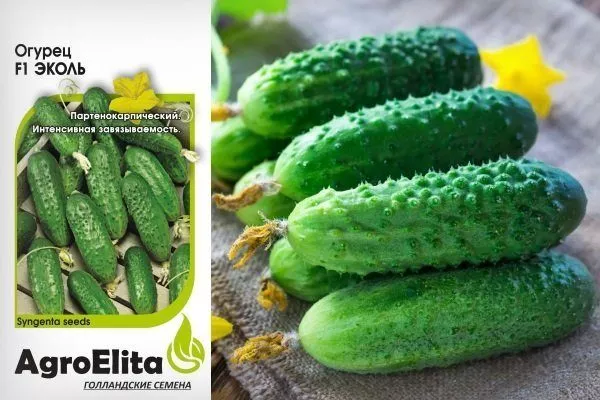
A mid-early hybrid from Holland that requires no bee pollination. It forms a medium-sized bush with short internodes. The cucumbers are a rich green color. They are small in size and suitable for fresh eating and salads.
In open ground cucumber Ecole This variety doesn't boast a high yield, with about 3-4 kg of cucumbers harvested per square meter. In greenhouses, this figure rises to 15-18 kg. It's ideal for harvesting small pickles. It tolerates common cucumber diseases but is susceptible to cucumber mosaic virus.
Voyage F1
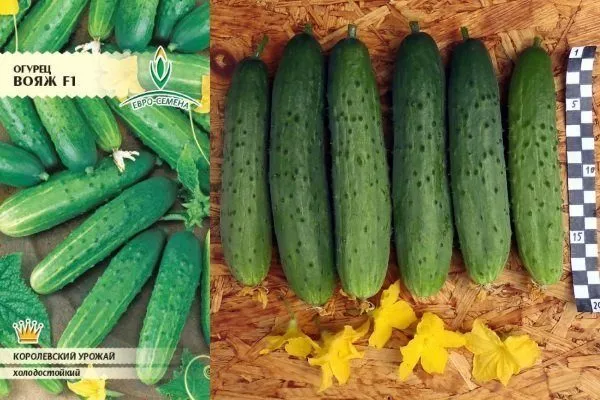
Early-ripening gherkin cucumbers, ripening in just over a month. The cluster setting of the ovaries guarantees excellent yields – up to 4 kg per plant, with 30% more when mulched.
The fruits are medium-sized, with bumps. They are excellent in salads, but are rarely used for pickling due to their thin skin. The hybrid is resistant to adverse weather and diseases, but not all gardeners appreciate the short fruiting period of Voyage.
Odette F1
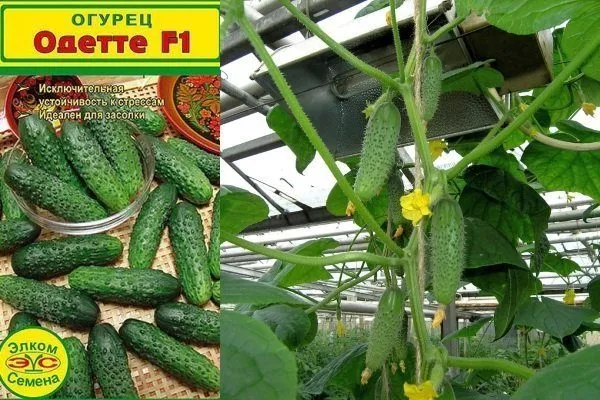
A pickling cucumber native to the Netherlands. Early ripening. Can be grown in greenhouses or indoors – on windowsills, loggias, and balconies. The cucumbers are crisp, free of bitterness, medium-sized (7-10 cm), with small bumps on the skin. The Odette bush is medium-tall, with many side shoots and 2-3 ovaries. A good harvest is harvested between June and August.
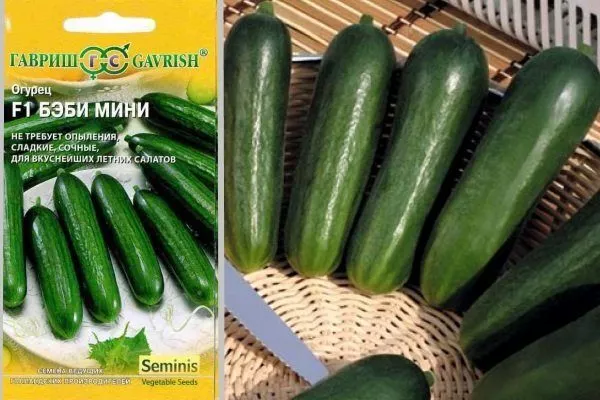
Baby mini F1
A promising hybrid distinguished by its size. The cucumbers grow up to 8-10 cm in length. Their cylindrical shape and weight reach 160 g. Miniature, smooth, aromatic, and seeded, they are perfect for salads. The ovaries are clustered, producing numerous fruits on a single plant.
Yields reach 17 kg per square meter, especially in greenhouse conditions. The hybrid can also be planted outdoors, but the seeds require temperatures of at least 26-27 degrees Celsius for germination.
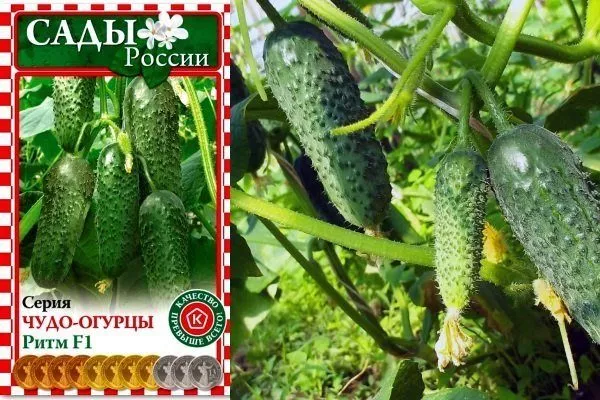
Rhythm F1
This early-fruiting hybrid is pollinated by bees but recommended for greenhouse cultivation. It ripens in 39-41 days. The medium-sized fruits are 11-12 cm long, oval in shape, and have a good flavor. Suitable for fresh consumption, canning, and pickling.
The yield of commercial products is excellent – 96%. The hybrid is relatively resistant to cucumber mosaic virus and tolerates other diseases well.
Comparative table of greenhouse hybrids
| Hybrid | Ripening time, days | Average fruit weight, g | Average yield in greenhouses, kg/sq.m | Disease resistance |
| Ecole | 43-45 | 60-70 | 17-20 | powdery mildew, cladosporiosis |
| Voyage | 35 | 90-110 | 12-14 | powdery mildew, including downy mildew |
| Odette | 50-55 | 80-95 | 13-16 | cladosporiosis, cucumber mosaic, powdery mildew |
| Baby mini | 50 | 150 | 14-15 | Cladosporiosis |
| Rhythm | 45 | 100 | 12-15 | powdery mildew, cladosporiosis |
Self-pollinating hybrids
Varieties of cucumbers that do not require pollination (i.e. parthenocarpic), can be successfully grown indoors anywhere in the Urals. To extend the plant's growing season, its seeds are first planted indoors, and then the sprouted seedlings are placed in greenhouses. This way, a decent harvest can be harvested in a region with short summers.
| Name | Disease resistance | Soil requirements | Ripening period |
|---|---|---|---|
| Marinda F1 | Susceptible to angular leaf spot, anthracnose, and perinospora | No data | 40-55 days |
| Emerald family F1 | Tolerant to many diseases | No data | 40-45 days |
| Herman F1 | Tolerant to cucumber diseases, but suffers from parasites | No data | 38-40 days |
| Courage F1 | No data | No data | 35-45 days |
| Amur F1 | Resistant to rot and mildew | No data | 35-38 days |
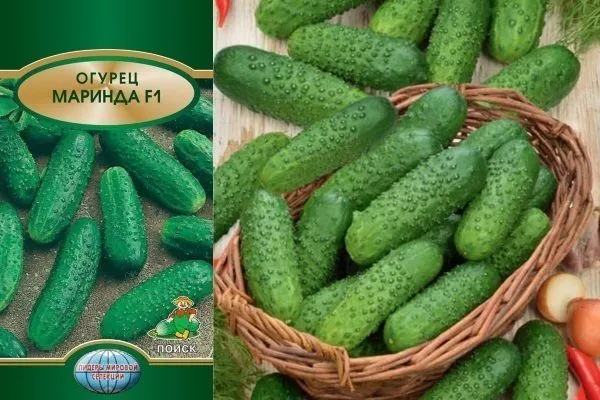
Marinda F1
A cucumber variety popular with gardeners for over 20 years. It boasts good germination, a short growing season, and low maintenance. It thrives in both greenhouses and open ground (though yields are significantly reduced: 5-10 kg/sq. m versus the maximum of 30).
The fruits, weighing up to 80 grams, are oval-shaped and have firm, juicy flesh. They have a long shelf life. Disadvantages of this hybrid include its susceptibility to diseases such as angular leaf spot, anthracnose, and perinospora.
Emerald family F1
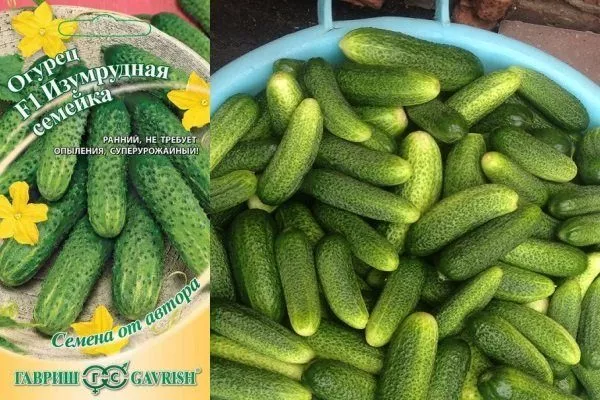
An early hybrid, popular with gardeners for its low maintenance, tolerance to temperature fluctuations, and resistance to many diseases. It produces fruit consistently, although not for long. The bush is vigorous, with cluster-type ovaries, five of which are formed. Cucumbers are large, dark-hued, with stripes, 10-12 cm long.
Medium firmness, crisp flesh, and moderate sweetness. This versatile hybrid is suitable for salads and preserves.
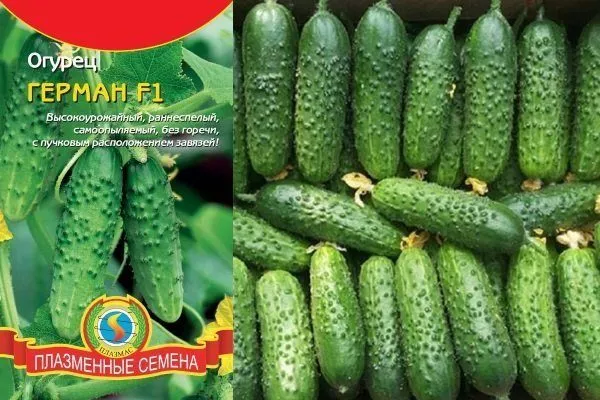
Herman F1
Cucumber hybrid Herman Extremely popular with gardeners and farms. It has been grown in Russia since 2001. It is cultivated both in greenhouses and in open ground. It ripens early. A mature bush grows to a medium size and stops growing on its own.
Four to six flowers form on clustered ovaries. Herman's cucumbers are oval and small—up to 10 cm in diameter and weighing 100 g. The flesh has a slightly sweet flavor. The vegetable is tolerant of cucumber diseases but suffers from parasites. It stores well.
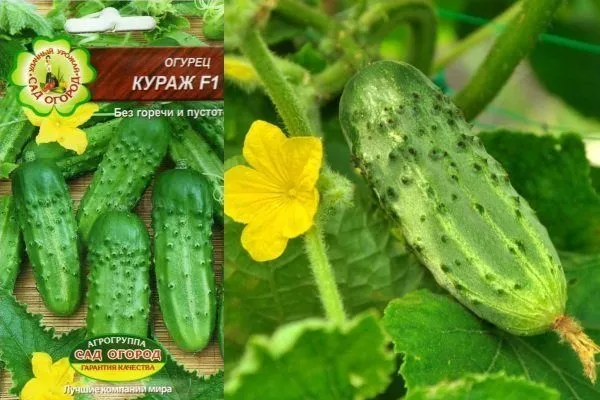
Courage F1
A high-yielding, early-ripening hybrid whose stunning flavor is its main advantage. The cucumbers are crisp and have a distinct aroma. They retain their flavor even after cooking.
Courage Suitable for commercial cultivation, yields reach 7 kg/m2 outdoors and higher in greenhouses. The bush is medium-sized, reaches full maturity after 43 days, and the harvest continues until September.
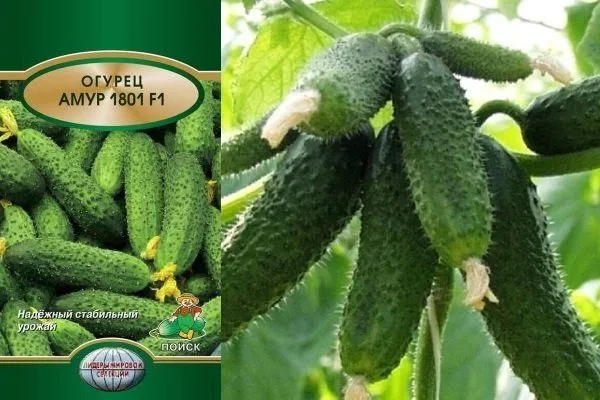
Amur F1
A cold-hardy hybrid bred in Russia, resistant to low temperatures and cucumber diseases (rot, mildew, etc.). Versatile. Gherkins are suitable for salads, canning, and pickling.
Each bush produces several medium-sized cucumbers (up to 14 cm long) that produce fruit abundantly. The cucumbers are oval-shaped and have a non-bitter flavor. Amur It has proven itself in cold regions of Russia. Vegetables ripen quickly and produce high yields, especially in greenhouse conditions.
Comparison table of these hybrids
| Hybrid | Ripening time, days | Average fruit weight, g | Average yield in greenhouses, kg/sq.m | Disease resistance |
| Marinda | 40-55 | 60-70 | 25-29 | spotted mosaic, scab, olive spot, cladosporiosis |
| The Emerald Family | 40-45 | 120-130 | 14-16 | olive spot, powdery mildew |
| Hermann | 38-40 | 80-100 | 12-14 | Cladosporiosis, mosaic, powdery mildew |
| Courage | 35-45 | 120-140 | 6-9 | olive spot, mosaic, powdery mildew |
| Amur | 35-38 | 90-120 | 25-28 | olive spot, mosaic, powdery mildew, root rot |
When choosing a variety, gardeners should consider the region's climate and plant cucumbers with a short growing season. Both greenhouse and open-ground varieties thrive in the Urals. Without a greenhouse, choose the most cold-hardy varieties that can withstand the harsh Ural summers and temperature fluctuations.