
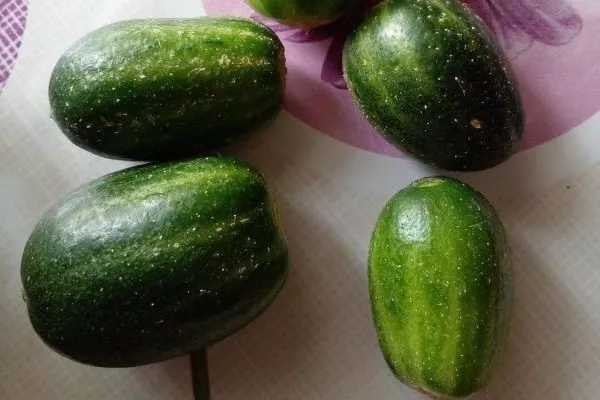
The Smiley cucumber is an unusual Russian-bred variety that offers gardeners a new perspective on a familiar crop. This hybrid produces very small, barrel-shaped fruits, and this is the most important thing to know when planning to plant the Smiley cucumber in your garden.
The history of the Smiley variety
The Smiley hybrid was developed by domestic breeders. This variety was approved in 2015. Authors: S.V. Maksimov, N.N. Klimenko, O.V. Baklanova. The hybrid is suitable for cultivation in the Northern, Northwestern, Central, Volga-Vyatka, Central Black Earth, North Caucasian, Middle Volga, Lower Volga, Ural, West and East Siberian, and Far Eastern regions.
Description of the plant and fruits
The plant is indeterminate, with weak branching. The main stem reaches 2 m in length. The leaves are green and medium-sized. Flowering is mixed. There are more than 5 female flowers per node.
- ✓ The hybrid has high resistance to brown olive spot and powdery mildew.
- ✓ The fruits have a spherical shape, which is a unique feature among cucumbers.
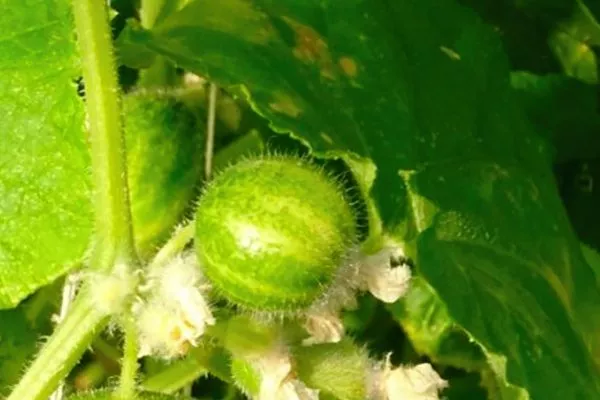
The fruits are short, spherical or barrel-shaped, reaching 5-6 cm in length. The diameter is 3-4 cm. Each fruit weighs 40-70 cm. The color is green, with short stripes. The surface is covered with small, sparse tubercles.
Taste and purpose
The fruit has excellent flavor and is completely free of bitterness. These spherical cucumbers are suitable for fresh eating and make wonderful salads. They are also suitable for pickling, canning, and marinating.
Main characteristics
The Smiley cucumber is a parthenocarpic hybrid with early maturity and high yield. It takes 38-42 days from germination to fruiting.
Pros and cons
This unusual and relatively new hybrid variety with rounded fruits is naturally generating increased interest among gardeners. But before planting this unique variety in your garden, it's helpful to familiarize yourself with all its advantages and disadvantages. Pros:
Cons:
Landing rules
The Smiley hybrid can be grown outdoors, in greenhouses, and in plastic greenhouses. Proper and timely planting is key to achieving a high yield.
- ✓ Soil pH should be between 6.0-6.8 for optimal cucumber growth.
- ✓ The soil must be well-drained to avoid waterlogging and root rot.

Landing features:
- Choose a warm, well-lit site protected from drafts for planting. Avoid low-lying areas where water accumulates and swampy areas.
- Seedlings and seeds are sown in open ground around May. In the south, it's sown earlier, and in regions with short summers, a couple of weeks later. The main guideline for planting is soil warming. The temperature should reach 15 to 18°C.
- The soil is prepared in the fall. Organic matter—peat, humus, compost—is spread over it, along with mineral fertilizers. The soil is then dug to the depth of a shovel blade, and sand, wood ash, and other components necessary for loosening and reducing acidity are added if necessary.
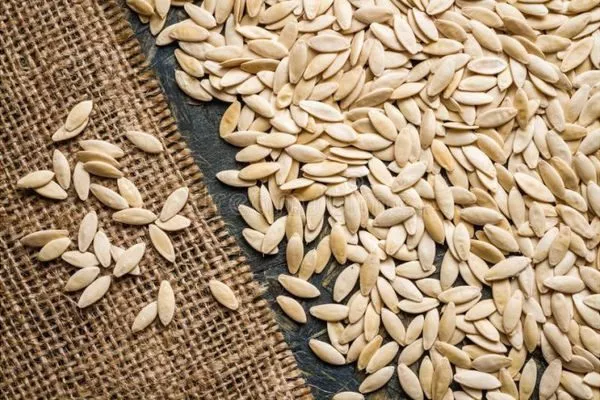
- Before planting, seeds are soaked and hardened. They are sown at a depth of 0.5-1 cm in pots and 1-2 cm in open ground. Two to three seeds are placed in each hole or cup, just in case any fail to sprout.
- The distance between adjacent plants should be at least 20 cm. Between rows - 40 cm. Crops and planted seedlings are covered with film to create a greenhouse effect, accelerate the emergence of seedlings (when sowing seeds) and protect seedlings from recurrent frosts.
Subtleties of care
The Smiley hybrid cannot be called overly demanding in terms of care, but to obtain good harvests, a certain amount of care is required.

How to care for the Smiley cucumber:
- Watering Watering should be regular, but avoid overwatering. Use warm, settled water. The frequency and amount of watering are adjusted based on weather conditions and precipitation. In normal weather, cucumbers are watered approximately three times a week. During droughts and hot weather, water more frequently, sometimes requiring daily watering.
- Top dressing Fertilization is done quite frequently, about five times per season. Organic and mineral fertilizers are applied alternately. Fertilizing with diluted cow manure or bird droppings, as well as fertilizers high in potassium and phosphorus, is especially beneficial.
- Loosening It is recommended to perform this procedure as frequently as possible to prevent crusting on the soil surface. The soil is loosened carefully, taking care not to bury the hoe too deep to avoid damaging the surface roots. Weeding is carried out simultaneously with loosening.
- They mulch Mulch beds with humus, peat, sawdust, or regular grass clippings. Mulch reduces the frequency of watering, tilling, and weeding, as it slows moisture evaporation and inhibits weed growth.
- They are tying up Stems and shoots are attached to trellises stretched along the beds. This staking simplifies plant care and makes harvesting easier.
Prevention of diseases and pests
The Smiley hybrid has good immunity, being resistant to brown olive spot (cladosporiosis), powdery mildew, and even cucumber mosaic virus. However, it is tolerant to downy mildew.

If care rules are severely violated and growing conditions are unfavorable, plants can be affected by fungal and other infections. To prevent these, preventative spraying with fungicides is recommended, such as Skor, Topaz, Fundazol, Abiga-Peak, Previkur Energy, etc.
The hybrid is not susceptible to pests, but they can attack plants if they spread en masse. Insects can also be attracted by weeds in the garden. The most dangerous pests for the Smiley variety are melon aphids, spider mites, and whiteflies. Insecticides such as Fitoverm and Fufanon are used to control pests, while specialized acaricides are used against mites.
Harvesting
Cucumbers are harvested every 2-3 days to stimulate fruit set and prevent them from becoming overgrown. It is recommended to harvest in the morning and evening, as these are the times when cucumbers are tastiest and juicier.
Reviews
The Smiley hybrid will appeal to gardeners who prefer new and unusual varieties. This original variety with small, round cucumbers is not only visually appealing but also delicious. Smiley cucumbers are suitable for any purpose, yet they are relatively easy to care for and undemanding.