
To increase cucumber yields, experienced farmers use green manure. What are green manures, which ones are best for cucumbers, how to grow them, and much more—read on.
The best green manure for cucumbers
Green manures (or green manures) are "tamed" weeds. They enrich the soil with nutrients, improve its structure, and suppress weed growth.
- ✓ Consider the type of soil on your site: lupine and phacelia, which promote alkalinization, are better suited for acidic soils.
- ✓ Pay attention to the growth rate of green manure: for a quick effect, choose white mustard or oilseed radish.
For cucumbers, select fertilizers that quickly develop green mass and completely decompose over the winter. These typically include legumes and cruciferous plants.
| Name | Family | Growth rate | Disease resistance |
|---|---|---|---|
| White mustard | Cruciferous vegetables | Fast | Low |
| Vetch | Legumes | Average | Average |
| Lupine | Legumes | Fast | High |
| Phacelia | Hydrophyllous | Fast | High |
| Sunflower | Asteraceae | Average | Average |
| Oilseed radish | Cruciferous vegetables | Fast | High |
| Rape | Cruciferous vegetables | Fast | Average |
| Buckwheat | Buckwheat | Average | High |
White mustard
Belonging to the cruciferous family, this annual quickly accumulates green mass, leaving no room for weeds, inhibits the development of fungal diseases, and repels slugs, codling moths, and wireworms. The plant can be sown in the fall or spring, but fall sowing reduces the incidence of weeds. cross flea beetle.
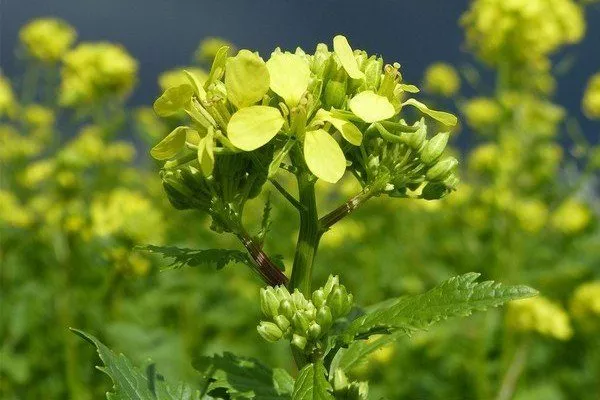
White mustard
Mustard enriches the soil with nitrogen and phosphorus, preventing the leaching of nutrients by rain. However, every crop has its drawbacks. For example, although mustard enriches the soil with nitrogen, it does not accumulate it.
The plant is an excellent preventative remedy for many cucumber diseases, but it is not resistant to certain diseases—clubroot, white rust, powdery mildew, and dry spot (Alternaria). It transmits these fungal diseases to subsequent plants during crop rotation.
It also promotes soil acidification, so dolomite flour, lime, or ash are essential. White mustard can withstand temperatures down to -6°C and can be sown as early as March. When spring-sown, there's no need for watering, as the soil is well-moistened after the snow melts. Plow the grass into the soil a week before planting subsequent crops.
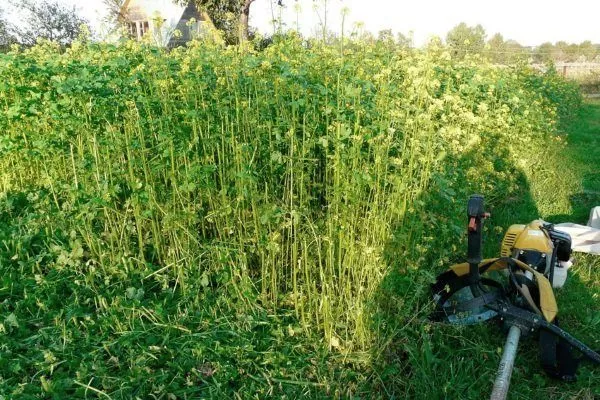
When sown in the fall, it's not incorporated into the soil. This tender grass has time to rot over the winter, so simply mowing it down is sufficient.
Vetch
A member of the legume family, it helps accumulate nitrogen in the soil. Its root system is deep, requiring no digging. As the roots rot in the soil, they leave behind voids that fill with air and water, improving the soil structure.
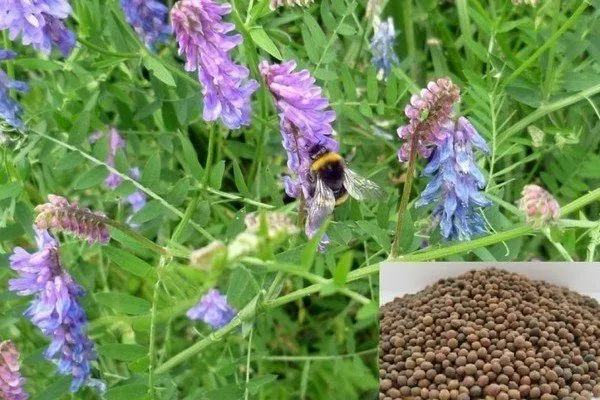
Vetch plant
Vetch disinfects the soil and prevents nematodes and wireworms. The plant is very sensitive to drought. Without sufficient moisture, it quickly becomes coarse and woody. Such shoots take a long time to rot, delaying the planting of primary crops.
Moreover, the crop does not grow in highly acidic and sandy soils. It is good to plant vetch alongside cereal crops, such as oats. Both spring and winter vetch varieties are grown. Winter varieties are sown in the fall. The emerging seedlings overwinter and begin to quickly gain green mass in the spring. Spring varieties are sown in early spring, and as soon as buds begin to appear, the grass is mown.
Lupine
It's an annual plant of the legume family. There is also a perennial lupine species, but annual crops are most often grown as green manure in garden beds.
Typically the following are used for this purpose:
- Yellow lupine. One of the shortest lupines, it rarely reaches 1 m in height. It prefers warm conditions, although it can tolerate some cold. Its flowers are yellow or slightly orange. It is sown in sandy soils.
- Blue lupine or narrow-leaved lupine. One of the most undemanding species. It tolerates light frosts and requires little care. Flowers come in blue, white, pink, and lilac as well. The plant grows to a height of no more than 1.5 meters.
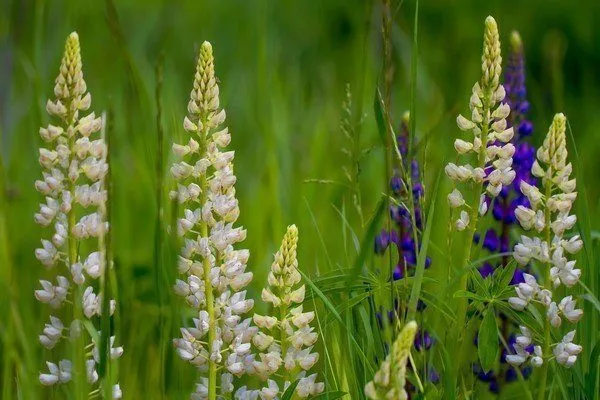
Lupine
Lupines have a very long root system, which penetrates 2 meters deep into the soil. This system draws nutrients into the upper soil layers and does not use up nutrients found in the turf layer, meaning the plant does not deplete the soil.
It perfectly loosens the soil and enriches it with nitrogen. The crop grows in a variety of soils, including acidic and depleted ones. And since most lupine varieties contain alkaloids, they quickly alkalize acidic soils to a neutral pH.
Thanks to the same alkaloids, wireworms leave the area, and the soil microflora is restored. However, lupines don't grow in alkaline soils, and they don't like peat and heavy loams. Lupines are cut before they bloom in large numbers. There's no need to dig the area—the green mass is mown down, and the roots are chopped and covered with soil.
Phacelia
This beautifully flowering, cold-hardy annual belongs to the Aquifolium family. The plant reaches 1 m in height. Its flowers are blue, dark blue, or gray-blue, depending on the species. This flower is an excellent honey plant, and since it does not contain toxic substances, it can be used as livestock fodder.
Phacelia also has advantages as a green manure crop: it suppresses weeds and improves the health of the area, helps combat soil and ground pests such as wireworms, nematodes, and locusts, and prevents root rot and late blight thanks to actinomycetes that colonize the plant's roots and have bactericidal properties.
- ✓ Phacelia not only improves the soil structure, but also attracts beneficial insects, facilitating pollination of cucumbers.
- ✓ Due to its rapid growth, phacelia can be used as an interim crop between cucumber plantings.
Phacelia protects the soil from erosion. Its leaves release large amounts of nitrogen as they decompose. It is disease-resistant and regulates soil acidity.
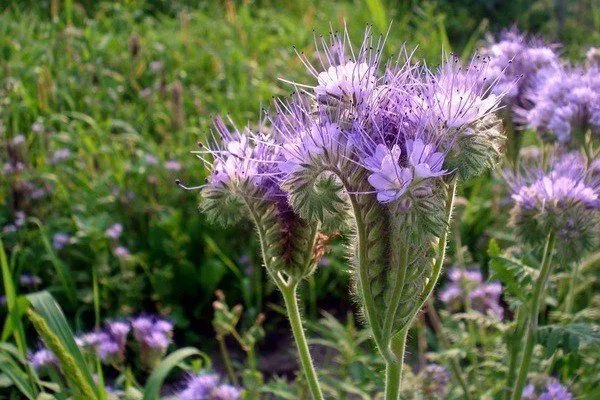
Phacelia
The crop grows in any soil. It thrives in slightly acidic soils, but alkalizes them to a neutral pH, thereby creating unfavorable conditions for perennial weeds such as horse sorrel, couch grass, and chickweed.
Phacelia should not be planted in highly acidic or saline soils or marshy areas—it does not tolerate stagnant water.
It's undemanding in terms of cultivation site—it can grow in sunny or shaded areas. As a green manure, it's sown in early June or late October. Mow before flowering. Avoid allowing the plant to become a weed.
Sunflower
An annual plant of the Asteraceae family. It's rarely used as a green manure because it draws a significant amount of nutrients from the soil. Its coarse stem decomposes very slowly, creating a number of problems when digging the soil.
It's usually planted to protect plants from direct sunlight and wind, or to serve as support for other crops. When using sunflowers as green manure, you'll have to sacrifice their flowers; they need to be harvested while still in bud.
The plant grows in any soil, including acidic and alkaline ones.
Oilseed radish
This annual plant belongs to the cruciferous family. It is also a forage and honey crop. The plant has a powerful root system, the long root system of which draws nutrients to the upper soil layers.
As it rots, the plant turns into fertilizer, rich in humus and organic matter. Radishes can grow in heavy clay soils, while also loosening the soil well and improving its air and moisture permeability.
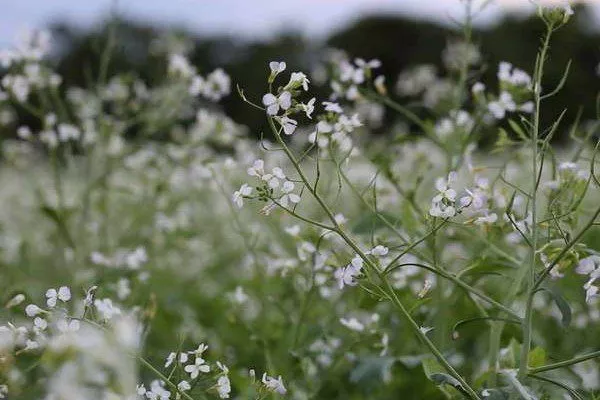
Oilseed radish
Left in place over the winter, it holds back the snow and prevents the soil from freezing too much.
This crop contains many essential oils and emits a specific odor, which prevents the proliferation of various pests in the soil - nematodes, wireworms, and the development of fungal diseases.
The crop tolerates cold, drought, and humidity, preventing weed growth and development. Rotting radishes provide an ideal breeding ground for worms and other beneficial microorganisms.
Oilseed radish does not grow well in acidic soils, so the soil must be limed beforehand, and it requires constant watering.
Rape
Another member of the cruciferous family, it is second only to legume green manure crops in terms of nitrogen accumulation. The plant quickly develops a large amount of green mass, which, when incorporated, enriches the soil with micronutrients and restores its fertility.
Rapeseed is rich in essential oils, which protects plants from harmful insects and pathogenic microflora that cause various diseases. It inhibits weed growth and prevents soil erosion.
Rapeseed does not grow in heavy or acidic soils and does not tolerate stagnant water. It should not be grown in the same place more than once every four years. Winter and spring rapeseed varieties are grown. Spring varieties require less maintenance, but winter varieties are more effective at fertilizing the soil.
Buckwheat
This herbaceous plant of the Buckwheat family has a short growing season, lasting between 70 and 85 days depending on the variety. Its powerful root system perfectly loosens the soil. Its roots, penetrating to a depth of 35 cm, secrete citric, oxalic, and formic acids, which help subsequent crops absorb poorly soluble phosphorus compounds.
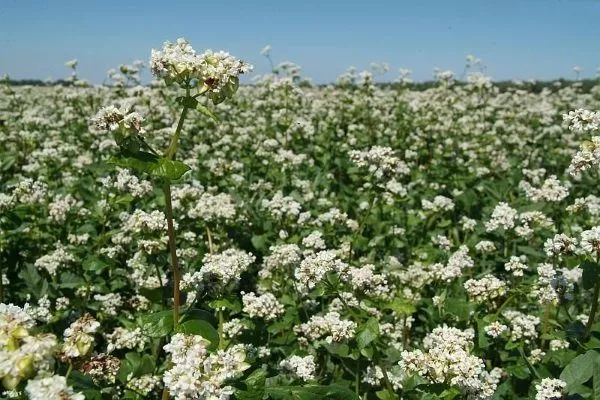
After the residue decomposes, the soil is enriched with potassium, nitrogen, and phosphorus. Buckwheat improves the soil, improves its microflora, and suppresses weed growth. Another advantage of this crop as a green manure is that it can grow in poor, heavy soils with a slightly acidic environment.
What green manure crops are best to grow before planting cucumbers?
Depending on where cucumbers are grown—indoors or outdoors—experts recommend using certain green manures.
In spring, cold-resistant types of green manure are planted in open ground:
- oilseed radish;
- spring rape;
- phacelia;
- mustard.
In the fall, green manure is sown, which quickly gains green mass and rots well over the winter:
- white mustard;
- phacelia;
- oilseed radish.
Legumes are planted in the greenhouse in spring:
- beans;
- peas;
- Vika.
They quickly saturate the soil with minerals. Oilseed radish and white mustard are sown in winter.
Cucumbers are not planted after various types of cabbage and carrots, as well as after related crops of the pumpkin family - squash, pattypan squash, pumpkins, zucchini, watermelons and melons!
Green manure cultivation technology
The technology for growing green manure in open ground and in a greenhouse differs.
In the greenhouse
Green manure is sown in March-April under plastic film, and in polycarbonate greenhouses at the end of February. Three to four weeks before planting cucumbers, they are cut and buried in the soil, or cucumbers are grown directly in green manure. To do this, make small holes in the green manure plantings, add a little humus, and plant cucumber seeds or seedlings. The regrown grasses are cut and placed under the bushes.
After harvesting in late summer or fall, sow oilseed radish and white mustard in empty beds. After germination, the above-ground parts are mown down, leaving the roots in the soil. Over the winter, they will rot and improve the soil structure.
Open ground
Green manure is sown as soon as the snow melts; there's no need to delay sowing. To speed up seed germination, cover the seeds with plastic. Once the first shoots emerge, remove the covering. In a warm spring, when the grass grows 10-15 cm, dig holes in the ground and sow the cucumber seeds. Green manure is trimmed regularly to prevent it from shading the cucumbers.
Watch the video below to see how cucumbers are planted using a cone directly into green manure in open ground:
After harvesting (into the vacated beds), green manure seeds are sown in late August or early fall. This option is preferable, as the cucumbers will grow in fertile, loose soil the following year.
Green manures are an excellent way to restore nutrients, but to ensure the soil is fully saturated with essential minerals, several types of green manure should be planted simultaneously. The key is to choose the right ones, taking into account the soil type and pH level in the area, as well as the crops that will be grown after them.