
Siberian Garland F1 is a relatively new hybrid developed by breeders in the South Urals. These cucumbers are exceptionally productive—the fruits grow in clusters, are numerous, and delicious. Let's learn how to plant and grow these cucumbers yourself.
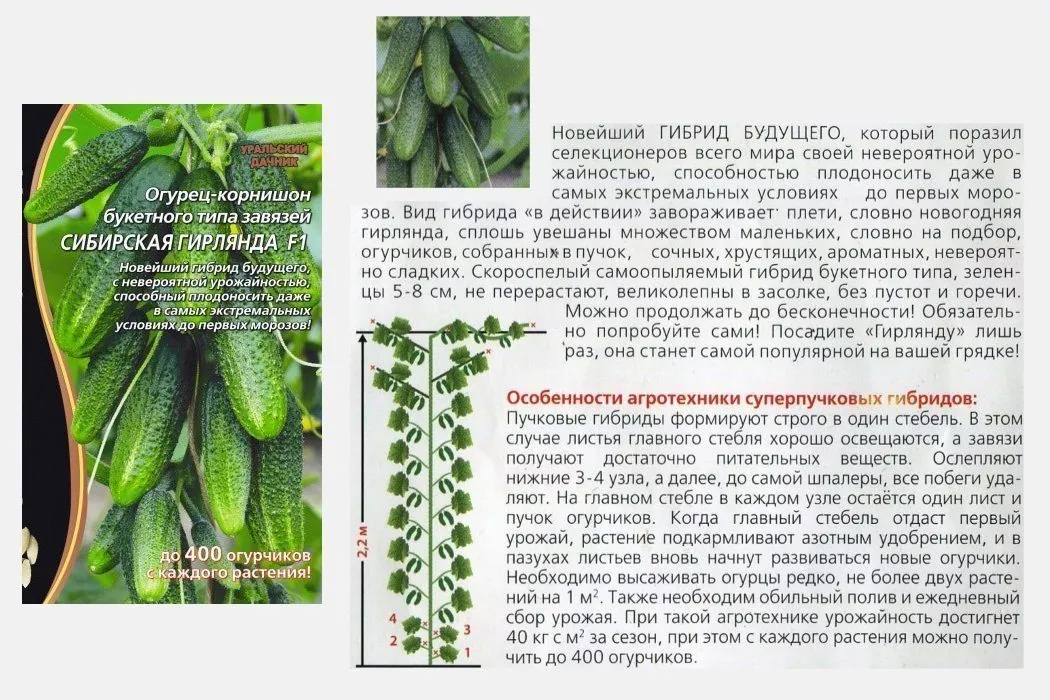
Characteristics and features of growing cucumbers (this information is provided by the manufacturer on the seed packet)
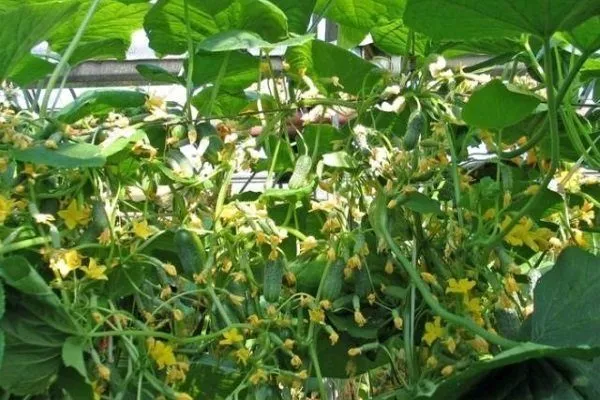
Ripening of cucumbers of the Siberian Garland variety
The Origin of the Siberian Garland
The name includes the designation F1, indicating that "Sibirskaya Girlanda" is a hybrid. Its "parents" are frost-hardy cucumbers and the old "Garland" variety. It was developed by breeders in the Southern Urals. The hybrid was developed in 2013 and has not yet been added to the State Register.
Description of cucumbers
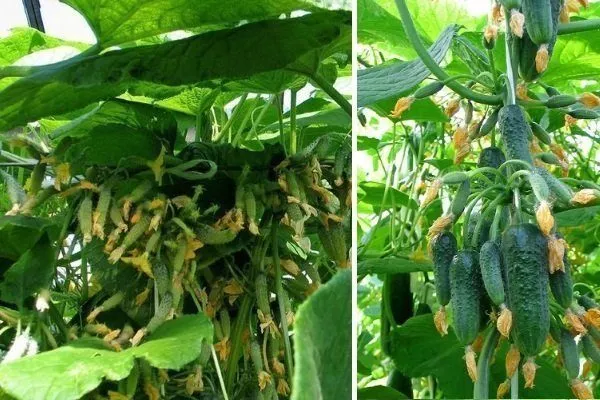
This hybrid is distinguished by its unusual fruit arrangement. Numerous cucumbers grow on a single vine, reminiscent of clusters of grapes.
| Name | Yield (kg per bush) | Ripening period (days) | Disease resistance |
|---|---|---|---|
| Siberian Garland F1 | 20 | 45 | High |
| Garland F1 | 15 | 41-43 | High |
Bushes
The plant is vigorous, bushy, and bears abundant foliage. The stem height is 2 meters or more. The "Siberian Garland" bushes are no different from other hybrid cucumbers. They have a main stem around which the plant grows.
If you look at the bushes more closely, you can notice the following features of the bushes:
- The stem is strong and thick, up to 1 cm in diameter.
- The internodes are short – approximately 8 cm.
- At least three ovaries form in a single node. The maximum number of ovaries reaches several dozen.
- The leaves are ordinary, five-lobed, up to 10 cm in diameter.
- The plant grows well in partial shade. The leaves often conceal the fruits and flowers, making them invisible—you have to search for them under the foliage.
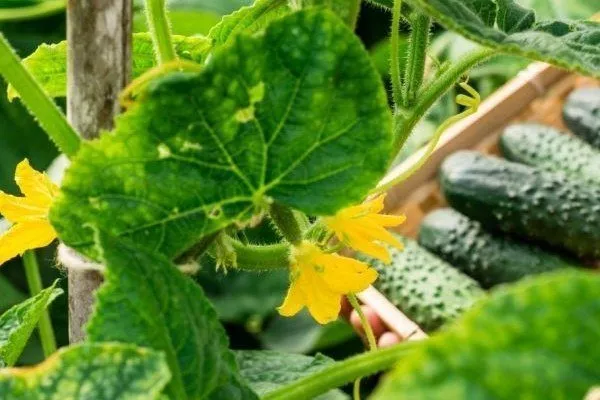
- The flowers are yellow, with six petals. The diameter is up to 4 cm.
Fruit
The fruits of the "Siberian Garland," like all bunch cucumbers, are small, but there are many of them, and they grow in beautiful clusters. Fruit characteristics:
- Length up to 8 cm, rare specimens grow longer.
- Fruit diameter: 10-15 mm.
- Weight – 20-50 g.
- Not prone to outgrowing.
- The color changes from the end to the base – the light green color gradually turns into dark green.
- The surface is covered with tubercles with small, non-prickly white spines.
- They have a characteristic cucumber aroma and a sweetish taste.
- The pulp is juicy, crispy, without bitterness or voids.
Characteristics of this hybrid
The "Siberian Garland" cucumber is a self-pollinating, bunch-type hybrid. It's relatively easy to grow and produces large quantities of cucumbers. Fruiting is extended over a long period, so this variety provides cucumbers until late autumn.
In bunch cucumbers, unlike regular cucumbers, several fruits are formed at once in one node – a “bunch” of fruits grows.
Productivity and fruiting
The cultivar's originator reports that one "Siberian Garland" bush can produce 400-500 fruits—approximately 20 kg. 35-40 kg of cucumbers can be harvested per square meter.
The hybrid is early maturing, so the first cucumbers are harvested just 1.5 months after planting. With proper farming practices, fruiting, once initiated, continues until the cold weather sets in. Cucumbers are so numerous and grow so quickly that they need to be harvested daily. Skipping harvests inhibits the development of new ovaries.
Resistance to diseases and pests
'Siberian Garland F1' is highly resistant to many cucumber diseases. It is virtually unaffected by:
- powdery mildew;
- downy mildew;
- brown spot;
- cucumber mosaic.
However, this hybrid is susceptible to fungal diseases, such as gray rot and root rot. These diseases are usually caused by excessive moisture.
Advantages and disadvantages of a hybrid
Advantages of the Siberian Garland:
- High yields under any weather conditions and growing methods. The hybrid adapts to a variety of climates.
- Self-pollination allows the hybrid to be grown indoors without any problems.
- Long-lasting fruiting. In temperate climates, it continues until October, and in southern regions, until frost.
- Resistance to traditional cucumber diseases.
- No bitterness in taste.
Disadvantages of a hybrid:
- The seeds are expensive. Sellers ask 70-120 rubles for a package of 5 seeds.
- It requires care, without which it's impossible to achieve high yields. But this characteristic is typical of any cucumber hybrid.
- It is necessary to collect the fruit daily to maintain abundant and long-lasting fruiting.
Purpose
A versatile hybrid, its fruit is delicious in any form, raw or canned. Garland cucumbers are delicious in salads, appetizers, and okroshka. They are also suitable for pickling—according to reviews, the resulting preserves are very tasty.
How to prepare soil and seeds?
"Siberian Garland F1" can be grown in any way—from seedlings or seeds, outdoors or under cover. Regardless of the method chosen, preparation is essential: choosing a site, creating the beds, and preparing the planting material.
- ✓ The optimal soil temperature for planting seeds should be at least +18°C, which is critical for germination.
- ✓ To prevent fungal diseases, it is necessary to ensure good ventilation in the greenhouse, especially in the morning hours.
Features of choosing a landing site:
- This hybrid grows best in partial shade. Hot sun negatively impacts plant growth and development—they dry out and produce few fruits. If natural protection is unavailable, the plantings will need to be covered with a canopy. Another option is to plant sunflowers or corn on the sunny side.
- It is prohibited to plant peas next to cucumbers.
- Plots where pumpkins, beets, or zucchini were grown are not suitable. Cucumbers grow well after onions, cabbage, potatoes, and corn.
How to set up a cucumber bed:
- Preparation since autumn. Hay, chopped straw, etc., are spread over the selected area. The layer is 9-14 cm thick. Fresh manure is placed on top, covered with plastic film, and left in this state for the winter. In the spring, the work continues. The plastic film is removed, and a layer of compost is added on top of the manure. Dolomite flour is mixed with compost (150 g per 10 l) into the acidified soil.
- Preparing for spring. The area is dug over, and rotted manure or compost is added, creating a 10-cm-thick layer. Nitrophoska is then added (100 g per square meter). A 10-15 cm-thick layer of soil is added on top of the fertilizer. The bed is watered generously and covered with black plastic, ensuring a tight seal. The cover should remain in place for at least a week.
The next stage of preparation is seed sorting and germination. After selecting the best seeds, they are soaked in a bioactivator disinfectant. This enriches the planting material with micronutrients and prevents the development of fungal diseases. Table 1 shows the seed treatment and preparation for germination.
Table 1
| Bioactive drug | How much to dilute? | Holding time, h |
| Zircon | 1-2 drops in 300 ml of water | 8-18 |
| Azotophyte | 1 teaspoon in 500 ml of water | 1.5-2 |
| Epin | 1 ml in 2 liters of water | 24 |
| Vermisol | dilute in warm water 1:5 | 12 |
Place the treated seeds on a damp cloth, cover with another, and place in a warm place. Sprouts will appear within 1-2 days.
To discard bad seeds, use a salt solution: dissolve 50 grams of salt in a liter of water. Discard any seeds that float to the surface—they're not suitable for planting.
How to plant?
Whether cucumbers are grown outdoors or indoors, heated beds are created for them. Once the soil warms to 15°C, seedlings or seeds are planted.
Growing seedlings
The optimal time to sow seeds for seedlings is late March. Here's the procedure for growing seedlings:
- Disinfected and sprouted seeds are planted in cups filled with a universal substrate. Plant at a depth of 2.5-3 cm. You can prepare the soil mixture yourself:
- turf and forest soil – 1 part;
- peat – 1 part;
- nitroammophoska – 1 tbsp per bucket.
- Cover the cups with light-permeable film. Provide good lighting—if necessary, turn on a backlight. The optimal temperature is 25 to 28°C.
- Water the containers with seeds once every 3-4 days.
- To promote vigorous green growth, seedlings are watered with urea (2 g per 1 liter of water). Each plant requires approximately 100 ml of the solution.
- Once the seedlings emerge, the plastic wrap is removed. A week before planting, the seedlings begin hardening off by taking them outside or into a greenhouse every day.
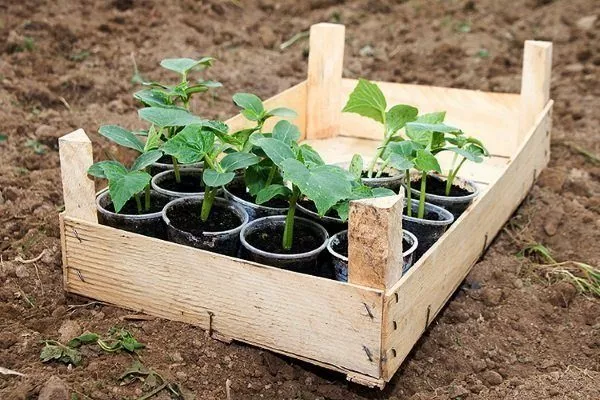
The finished seedlings are removed from the cups along with the soil. The plants are placed in the prepared holes, deepening them to the bottom leaves. The soil is gently compacted. The substrate is watered twice – before and after planting.
Features of planting seedlings:
- Planting density: 2 seedlings per 1 sq. m.
- The distance between bushes is 10-15 cm.
- The width between rows is 12-15 cm.
If the soil has not been properly prepared in advance, then a handful of ash and 5 g of urea are placed in the holes before planting.
Seedless method
Cucumbers can be grown without seedlings, by direct sowing. This method is popular in regions where the soil warms up early—for vigorous germination, temperatures around 18-20°C are required. The minimum acceptable temperature is 16°C. Weather conditions are crucial for cucumber growth. If the daytime temperature reaches 25°C and the nighttime temperature drops below 15°C, cucumbers will not thrive.
The best time to sow cucumber seeds outdoors is late May or early June. By this time, the soil will have warmed up and nighttime temperatures will have reached the desired level.
On trellises, "Siberian Garland" bushes are trained with a single stem, saving space in the garden beds. Planted this way, the plants receive plenty of light and produce good harvests.
Scheme for planting seeds in open ground:
- The interval between seeds is 5-7 cm.
- The distance between rows is 12-15 cm.
Subtleties of care
Cucumbers are one of the most capricious and demanding crops. They love warmth, moisture, and fertilization. "Siberian Garland" is a hybrid whose care is justified by its long and abundant fruiting.
Loosening and weeding
Cucumbers thrive on weeds, so the beds are regularly weeded. Humus, peat chips, and freshly cut greens are used as mulch. It's helpful to loosen the soil around the cucumber beds to improve oxygen supply to the roots.
How to water?
Watering rules:
- The ideal time for watering is morning or evening. If water splashes on the leaves while the sun is shining, it can cause sunburn.
- Before flowering, water every 3-4 days. After fruit set, water every 2-3 days.
- In hot weather, the beds are watered daily.
- Use warm water. Temperature should be between 23 and 25°C. Let the water sit for at least 24 hours.
- The beds are watered with a watering can, a hose, or drip irrigation. Water is poured into the grooves between the plants; watering at the roots is not recommended, as this will wash away the soil, causing the roots to dry out, and reducing the plant's nutritional status.
- To increase humidity in the greenhouse, place barrels of water near the beds. In hot weather, you can mist the inside of the greenhouse. You can also water the cucumbers from above using a watering can and a chalk solution.
The soil around the cucumber stem should remain dry - this will prevent the roots from rotting.
Fertilization
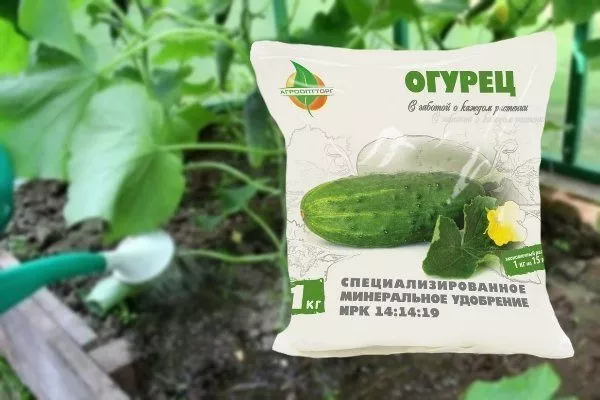
Siberian Garland F1 requires frequent fertilizing—large harvests require a boost. Fertilizers vary—organic and mineral. Chemicals can be replaced with folk remedies.
- The first feeding should be carried out 10 days after the emergence of seedlings, using a urea solution (2 g per 1 liter of water).
- The second feeding should be carried out at the beginning of flowering, using an ash solution (1 glass per 10 liters of water).
- The third feeding should be carried out during the period of active fruiting, using a complex mineral fertilizer according to the instructions.
It is recommended to apply fertilizer once a week, varying the composition. Fertilizers are applied after watering. The frequency and composition of fertilizers according to traditional recipes are listed in Table 2.
Table 2
| When to apply? | Compound |
| After germination and after the plants reach a height of 10-15 cm | Pour boiling water over 1/4 of a bucket of onion peels. Let it steep and water – 200 ml per plant. |
| Once a week. Alternate feedings. |
|
| After fruit formation – every week | Sprinkle the soil with wood ash. Add half a cup of ash per plant. |
Four fertilizer applications are sufficient for cucumbers throughout the season. The fertilizer composition is listed in Table 3.
Table 3
| When to apply fertilizer? | Composition (per 10 liters of water) |
| 2 weeks after planting | Options:
|
| 2 weeks after the first feeding | Options:
|
| A week after harvesting the first fruits | Options:
|
| 10 days after the third feeding | Spray with a solution of soda (30 g), urea (15 g), or an infusion of rotted hay. You can also add an infusion of manure or bird droppings. |
How are bushes formed?
For the 'Siberian Garland,' one stem is left to avoid overloading the plant. Shaping guidelines:
- In the first 3-4 nodes, all flowers and ovaries are torn off.
- Side shoots are pinched off, leaving only the buds. The central shoot is wrapped around the top of the trellis and also pinched off. Pinching off side shoots increases the supply of nutrients to the main stem. This accelerates plant growth and ensures high yields in the later stages.
- The best time to prune bushes is early morning.
- The cuts are disinfected with copper sulfate (10-15 g per 1 l) or crushed activated carbon.
- No more than 7-8 cm of shoot is removed at a time.
- When tying the vines to the trellis, do not position them unnaturally - twist or bend them.
- Dried leaves and shoots are removed immediately so that the plant does not waste nutrients on them.
Diseases and pests
With proper care, "Siberian Garland F1" cucumbers are virtually disease-free. Healthy and strong plants are relatively pest-free, but some plants may still be affected. Table 4 lists cucumber pests and how to control them.
Table 4
| Pest | What harm does it cause? | How to fight? |
| Miner fly | It lays eggs in leaves, and the larvae gnaw passages in them. | Spray with Aktara. Set up sticky traps. |
| Aphid | It settles on stems and the undersides of leaves, sucking the sap from the plant and weakening it. | Spray with Fitoverm, adding 1 tablespoon of liquid soap per 10 liters of water. Apply twice over the course of 10 days. |
| Thrips | Very small insects that suck the juices from plants. They also carry viral diseases. | Spray with Fitoverm every two weeks. Set sticky traps. |
| Spider mite | They cover the leaves with a patina and suck the juices from the green parts of the plant. | Treatment with Akarin and Oberon. These preparations are characterized by minimal toxicity to humans. |
When growing 'Siberian Garland' in greenhouses, the risk of fungal diseases is twice as high as in open ground. Control is standard: treatment with fungicides, copper sulfate, and wood ash solution.
Harvesting and storage
Harvesting begins around the second half of June. Here's how to harvest and store "Siberian Garland" cucumbers:
- The fruits are harvested in the morning or evening, ideally every day.
- Cucumbers are not picked, but rather cut with a sharp knife or scissors. Leave the stems attached. Do not use force when picking cucumbers, nor pull or tug on the branches.
- Fresh cucumbers can be stored for 7-10 days in the refrigerator or in a bag covered with a cloth dampened with water. Moisten the cloth as needed.
- Before storing the fruit, they are cooled - this helps prevent the formation of condensation, which causes rot.
- Cucumbers can be stored in a basement at a temperature of 7-10°C and a humidity of 80-90%. They are stored in wooden or plastic boxes lined with polyethylene film.
What other types of "Garlands" are there?
There's another hybrid cucumber variety, Garlanda F1, which is classified as a bunch cucumber. It was registered in the State Register in 2010. This hybrid's characteristics include:
- early maturing – bears fruit 41-43 days after emergence;
- powerful, weakly branched stems;
- tolerates shade well;
- does not require artificial pollination;
- in one node – 5-6 ovaries;
- cucumbers of small length – 12-14 cm, cylindrical shape;
- weight – 110-120 g;
- the surface is bumpy;
- the taste is good, the purpose is universal;
- high resistance to diseases.
Reviews from gardeners
Siberian Garland is a high-yielding hybrid that promises long and abundant fruiting. However, to achieve a decent harvest, gardeners must invest a lot of time and effort.