
In progress vegetation Cucumbers grow quickly, taking up a significant amount of space in the garden. The vines become intertwined, which negatively impacts fruit formation and complicates vegetable care. In this case, cucumber netting can come to the rescue. It allows for vertical cucumber cultivation, offering numerous advantages. The key is to choose the right netting and install it correctly.
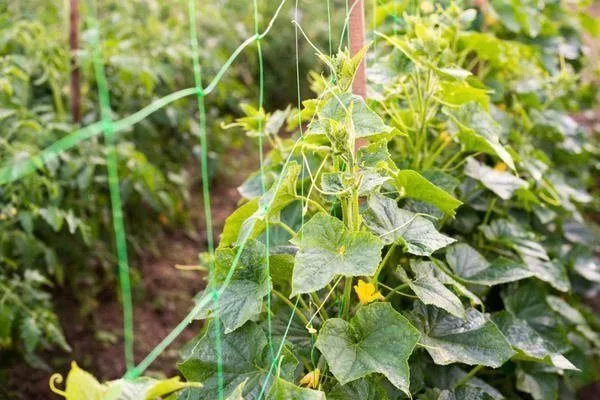
Advantages and disadvantages of artificial mesh
Using netting when growing cucumbers has its advantages and disadvantages.
The advantages of the grid include:
- Space saving. This is especially true for small plots and greenhouses, where multiple vegetable varieties need to be harvested in a limited space.
- Growth support. Cucumbers, as they develop, have the ability to cling to the mesh with their tendrils, which ensures their normal growth.
- Prevention cucumber diseasesFungal diseases often develop in humid conditions, when the roots and above-ground parts of cucumbers are inaccessible to air circulation. Netting ensures that cucumbers are positioned in a way that ensures high aeration.
- Convenience during agricultural activities. Organized beds are accessible from all sides. This makes it easier and more efficient. top dressing, loosening, wateringand other tasks. The fruits are visible, which ensures their high-quality harvesting and prevents overripening.
- Optimal growing conditions. Plants don't touch each other, and vines don't intertwine. Each leaf and fruit receives sufficient sunlight. There's no competition, which stresses the vegetable crop and leads to bitterness in cucumbers and reduces overall yield.
- No mechanical damage to the fruit or plant. Vertical cultivation ensures the ripening of whole fruits, protecting them from damage by animals, insects, or accidental damage during harvesting. Furthermore, cucumbers are protected from contamination since they do not come into contact with the ground.
- The aesthetic appeal of garden beds. Beautiful, well-maintained garden beds are pleasing to the eye and the envy of neighbors.
There are no obvious disadvantages to using cucumber netting. Rather, there are some minor nuances:
- Requires more frequent watering of the area.
- Growing cucumbers vertically shades the surrounding area. This problem can be solved by planting shade-loving crops at the base of the bed.
After the cucumber harvest and season are over, it's recommended to roll up the cucumber netting and store it until spring. This will limit the material's exposure to the elements and preserve its performance properties.
Varieties
| Name | Material of manufacture | Cell size | Service life |
|---|---|---|---|
| Plastic | Plastic | Different | Several seasons |
| Metal | Metal | Different | At least 5 years |
| Trellis | Plastic/metal | 100×100 mm | Depends on the material |
- ✓ Consider the climate conditions in your region when choosing mesh material. Plastic may not withstand strong winds, and metal may corrode in high humidity.
- ✓ Pay attention to the cell size. For cucumbers, the optimal cell size is at least 10x10 cm to ensure free growth and easy harvesting.
Gardeners have a variety of cucumber netting options to choose from. They vary not only in mesh size but also in the material they're made from:
- PlasticThis plastic cucumber support net is lightweight, durable, and wear-resistant. It can be used for its intended purpose in greenhouses or open areas for multiple seasons. This has earned it the attention and popularity of gardeners.
- MetalThe metal frame of this cucumber net is the most durable of all varieties. It allows vertical cultivation of fruits of any size. The netting lasts at least five years.
Disadvantages of metal mesh for cucumbers:- The support is very heavy, so installing it alone is problematic.
- The appearance of rust from contact with water during irrigation.
- Relatively high cost.
- TrellisThe most common type of netting used for growing cucumbers. It's green, with mesh sizes of at least 100 x 100 mm. Trellis netting can be used to create any shape for a garden bed:
- vertical;
- inclined;
- A-shaped.
Features of using trellis mesh- ✓ To form an A-shaped structure, use additional supports in the center of the bed to prevent the mesh from sagging under the weight of the plants.
- ✓ Consider the wind direction when installing the trellis mesh to minimize the load on the structure.
This is achieved using a support structure. Furthermore, additional supports are required if the bed is longer than 10 meters.
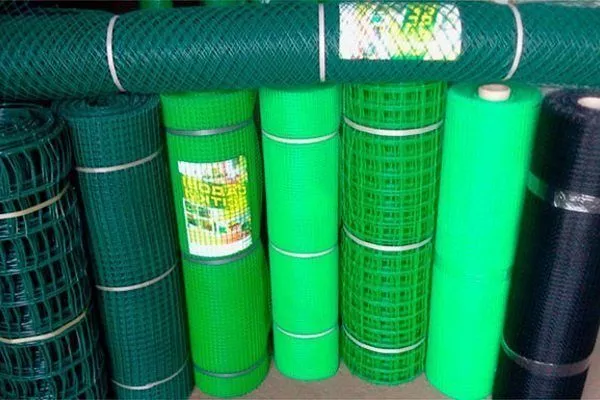
Plastic mesh
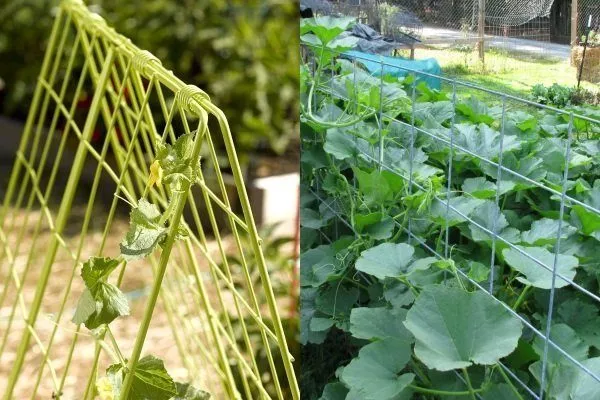
Metal mesh for cucumbers
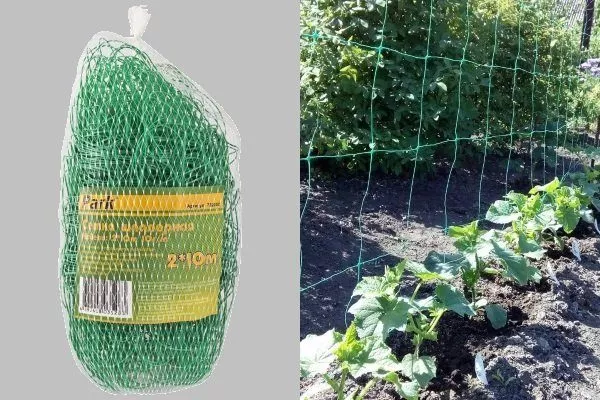
Trellis netting for cucumbers
Step-by-step instructions for installing and assembling the mesh
Installing a trellis structure requires no special knowledge. Even a novice can handle this task.
To ensure that cucumbers receive sufficient sunlight and develop evenly, install the agricultural netting from the east to the west.
To assemble the mesh you will need:
- Support pillars.They can be made of wood, metal, plastic, or even PVC pipes. Drive two posts, about 2 meters long, into the ground to a depth of 35-45 cm at the edges of the bed. Compact the soil around the posts carefully.
If necessary, don't neglect installing additional posts. Keep in mind that they will bear the full weight of the cucumbers and the elements. Only a sturdy structure can withstand gusts of wind. Maintain an even distance between the supports. - Cucumber mesh. Choose it at your own discretion. It is advisable to purchase one with cells at least 10 cm on a side.
- Wooden lath.It is installed along and between the supports to increase the reliability and stability of the structure. The mesh is secured to the slats while being stretched.
- Fasteners. The metal mesh is attached to the rail using pre-welded corners with holes and secured with screws or wood screws. To simplify the job, use a screwdriver.
To tie the trellis mesh to the supports, you will need twine, rope, or plastic cable ties.
To assemble the structure, follow the sequence of actions:
- Mark out the bed and dig in or drive in 2 supports along its edges.
- Lay the netting on the ground surface. Carefully thread it onto the rod using a motion similar to gathering a curtain rod with a ring mount.
- Screw the lath to the support posts on both sides. This will create a "U"-shaped structure.
- Stretch the net from top to bottom, securing it to the support posts with rope. It should be taut enough for ease of use.
- If necessary, secure the mesh to the ground using metal hooks, driving them deep into the ground.
Once the work is completed, the structure is completely ready for use.
Watch this video where an experienced gardener demonstrates how easy it is to install netting for cucumbers yourself:
How to make a mesh with your own hands?
Trellis structures can be made in any shape (tent, arch, lattice, etc.), using available materials such as:
- tree;
- chain-link fencing and other similar materials;
- plastic.
If the supporting devices for cucumbers are to be permanently located, then it will be necessary to replace the soil underneath them annually so that the plants have enough nutrition for growth and vegetation.
A simple design option for vertical growing is to stretch thin wire with a diameter of up to 2 mm between support posts in several horizontal rows.
You can improve the design by placing a beam between the supports and lowering the required number of vertical cords from it. Each cord should be positioned taut. To do this, tie a metal hook to the ends and drive it into the ground. You can also secure the cord to a rail placed along the bed parallel to the top support.
A simple design is made from bicycle rims. Attach one rim to a support post through the center hole above ground level, and the other rim to the end of the post. Thread twine through the spoke holes and tighten it.
If you use your imagination, you can come up with many more devices that will ensure high-quality vertical and horizontal cultivation of cucumbers in various areas, including growing cucumbers in a greenhouse.
The video below shows how to weave a net yourself:
Rules for tying cucumbers
When tying up cucumbers, follow these rules and recommendations:
- Only cucumbers with vines reaching 15-20 cm in length are suitable for staking. Attach them to the net without overstretching. Repeat the staking procedure as additional stems emerge.
- To ensure that the plants are securely attached to the support, arrange the tying points in a staggered pattern.
The staggered method of attaching cucumbers stimulates the growth of lateral vines, slowing down the elongation of the main stem.
- To form a cucumber bush, pinch the main stem at the fifth leaf height. Be careful when doing this, as some hybrids don't require pinching, and doing so will destroy the female inflorescences on which the fruit develops.
- Pinch out cucumbers to reduce the green mass and ensure optimal nutrient consumption from the soil, directing it towards the formation of fruits, and not towards long vines with barren flowers.
- Provide your cucumbers with proper care to get a rich harvest.
- Plant mint, marigolds, or other insect-repellent plants around the support posts.
Watch a video with a gardener explaining how to shape a cucumber bush, how to pinch out side shoots, and how to tie it to a net:
Using cucumber netting systems doesn't require a lot of money or effort, but it makes caring for cucumbers more convenient. This vertical cultivation will also have a positive impact on both the quality and quantity of yield, which will pleasantly surprise the gardener.