
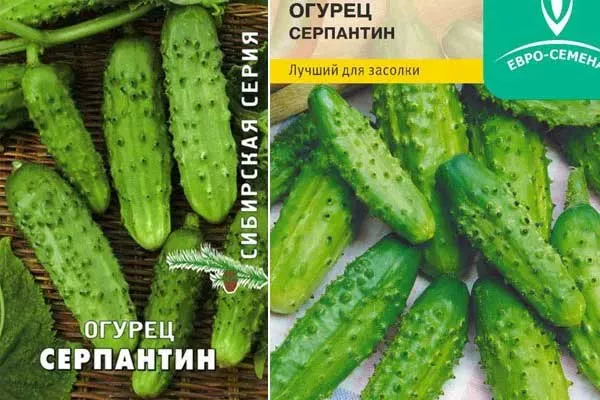
Serpentine is a bee-pollinated cucumber hybrid characterized by its extremely early ripening period. For over 20 years, it has been successfully cultivated by gardeners and large farmers in various regions. It is loved for its low maintenance, generous yield, and excellent flavor.
Introduction to the variety
Serpentine cucumbers ripen very quickly, so they should be picked at least every two days to avoid overripening, which the variety is slightly prone to. Although overripe cucumbers do not turn yellow, they are less valuable than young, green gherkins.
Originators
Serpentine was bred in 1995 by specialists at the West Siberian Experimental Station by crossing several species. We are grateful for this development to N. T. Belonosova, L. G. Savinova, V. G. Vysochin, and A. A. Rybalko. In 1999, the variety was added to the State Register.
External indicators
This indeterminate shrub grows vigorously and produces mixed blooms. The vines can be trained vertically or left horizontally, depending on the gardener's preference.
Description of bushes
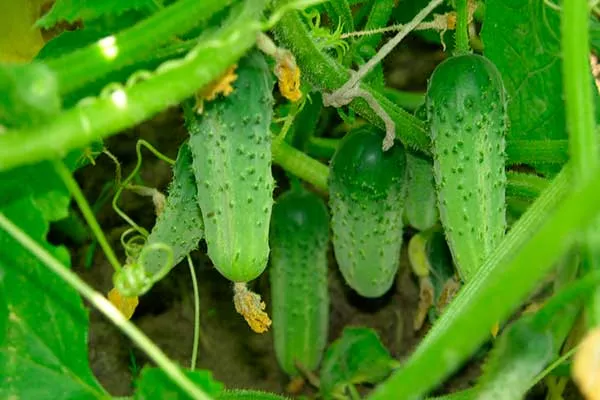
In a greenhouse, the bushes can grow up to 180-200 cm in height, and in a sunny garden, up to 130-150 cm. They are characterized by strong climbing habit and form numerous strong lateral shoots.
Other varietal characteristics:
- the leaves are rich green in color and medium in size with a slightly dissected structure;
- their shape is angular-heart-shaped, and the surface is slightly wrinkled and rough;
- stems of medium foliage;
- The ovaries are formed in bunches.
Characteristics of cucumbers
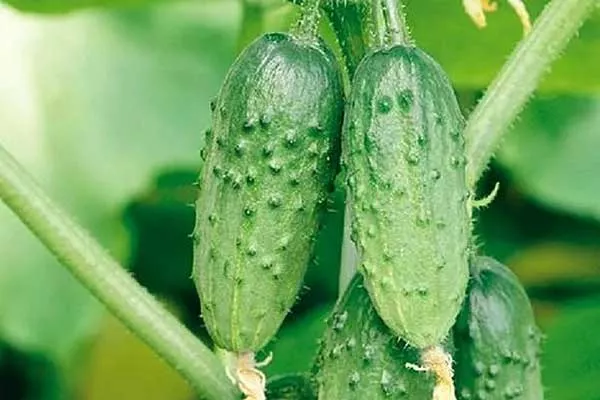
The fruits of the Serpentine variety have a cylindrical, slightly ribbed structure. However, the variety also has other varietal characteristics:
- the average length of a cucumber is about 9-10 cm, the diameter is 3-4 cm, and the weight ranges from 80-120 g, which allows them to be classified as a gherkin type;
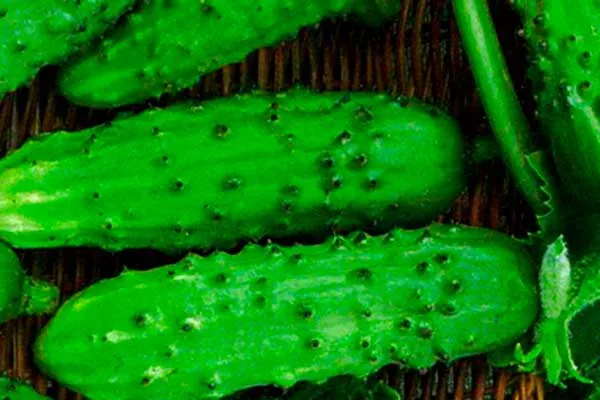
- the skin is thickened, with tuberculate formations, covered with many strong black or whitish spines (depending on the stage of development);
- the color is bright green with small light strokes;
- oval-elongated shape;
- the skin is moderately dense, but not tough;
- The pulp is juicy, crisp, light, and practically seedless.
Taste and purpose
Consumers rate the taste of Serpentine cucumbers as excellent: refreshing, juicy, with a distinct cucumber note. There's no bitterness.
Cucumbers are versatile – they're eaten fresh and in salads. They can also be used for canning and pickling.
When ripe, the yield
It takes 35-38 days from the first sprouts to fruiting, so you can enjoy fresh, tasty cucumbers as early as June.
A single cucumber bush in a garden can yield up to 6 kg of cucumbers, and in greenhouses, the yield is even higher. Due to its good shelf life and transportability, this variety is often used on an industrial scale, yielding approximately 25 kg of fruit per square meter or 130-220 centners per hectare.
Land requirements
Serpentine isn't particularly picky about soil composition. It grows well in black soil, sandy loam, and loamy soils. The most important requirement is a deep water table, as the variety doesn't tolerate excess moisture. To ensure a good harvest, the soil should be fertilized in the fall.
Optimal climate
Cucumbers easily cope with dry periods without losing their fertility. Cold snaps also don't harm mature plants. However, they need a location protected from the wind.
Seed producers
Among Russian producers and sellers of Serpentine seeds, the leading agrofirm is Poisk, while the well-known companies are Aelita, Avtorskie Semena, Uralskiy Dachnik, and Agros.
Positive and negative qualities
Serpentine is suitable for growing outdoors, in greenhouses, and under temporary shelters. This variety is bee-pollinated, so for successful fruit formation, plant nearby honey-producing flowers and plants.
Benefits of this variety include:
Among the disadvantages, gardeners note the presence of prickly spines on cucumbers, which makes the skin rough. Some dislike the excessive climbing habit of the plant.
Planting cucumbers
Planting material is sown in open ground when the soil temperature reaches 14-15 degrees Celsius. Seeds can be sown directly into the soil or onto seedlings to speed up harvesting. It's important to monitor planting timing.
- ✓ Optimum soil temperature for seed germination: +14-15°C.
- ✓ Seeding depth: 2.5-3 cm.
- ✓ Plant spacing: 45-55 cm.
- ✓ Distance between rows: 45-55 cm.
Planting dates
Serpentine is planted outdoors around May, when the soil has warmed up sufficiently. If you prefer seedlings, sow them in containers from late March to early April. These same dates apply to greenhouse growing.
Site preparation
Choose a sunny, draft-free area. Ideal planting beds are those previously used for cabbage, potatoes, peppers, or green manure.
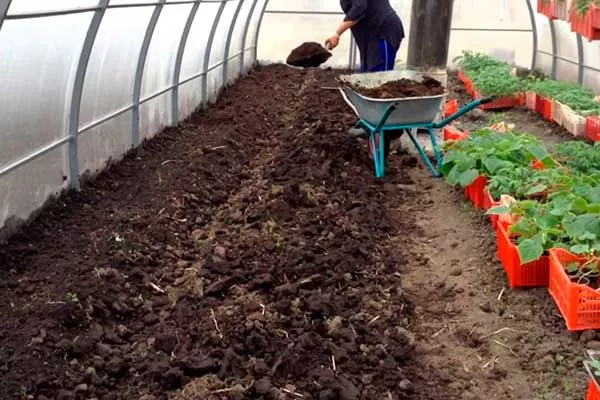
Start preparing your cucumber beds in the fall. Follow these steps:
- Remove weeds along with the roots.
- Dig to a depth of at least 30-35 cm.
- Apply organic and mineral fertilizers. For the former, choose rotted manure or composted manure at a rate of 5-10 kg per square meter, and for the latter, choose charcoal (200 g per square meter).
- In the spring, dig up the soil again and disinfect it with a solution of potassium permanganate.
- After this, form the beds according to the chosen scheme - make longitudinal grooves, fill them with organic matter, sprinkle peat on top and cover with plastic film for warming.
If cucumbers are grown in a greenhouse, all greenhouse structures must be disinfected before planting.
Planting seeds
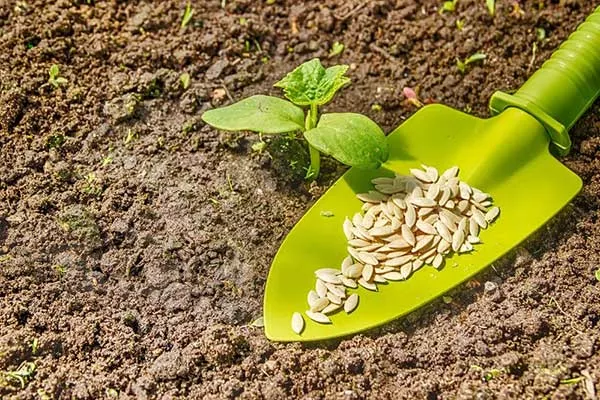
Before planting, the seeds will need to be germinated, but first, treat them by soaking them in a solution of potassium permanganate, then wrap them in a damp gauze cloth and place them in a plastic bag to prevent moisture evaporation.
Growing seedlings
To speed up harvesting, sow the seeds for seedlings. Cucumbers are sown in individual cups filled with store-bought nutrient-rich soil. The seedlings are lightly buried in the soil. Seedlings emerge in 6-9 days.
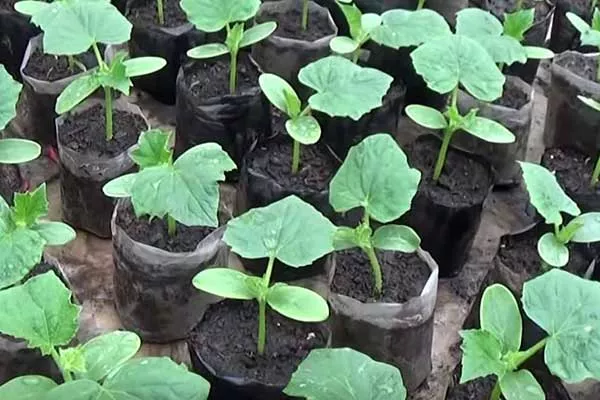
Next, place the containers in a bright, well-lit area. The room temperature where the cucumber seedlings are growing should be between 18 and 22 degrees Celsius. When 2-3 leaves appear, transplant the seedlings to their permanent location.
Planting diagram
A standard pattern is used for sowing Serpentine cucumbers. It goes something like this:
- the distance between plants is 45-55 cm;
- the distance between rows is identical;
- seeding depth: 2.5-3 cm.

This planting pattern provides plants with comfortable conditions for growth and development. Keep in mind that for ease of maintenance, it's important to leave space for walking after every 3-4 rows. The spacing should be 100-120 cm.
Rules for caring for cucumbers
Hybrid plant forms are easy to care for, which is a significant advantage. Serpentine also doesn't have any special requirements, but it's important to follow some varietal recommendations.
Watering
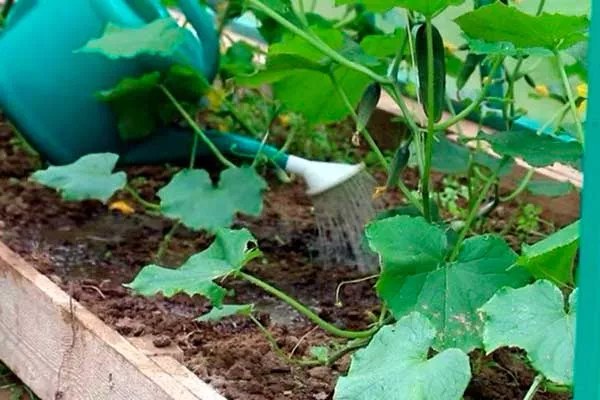
Serpentine does not require excessively frequent watering - excess moisture can cause root rot and the development of various diseases, especially those of fungal origin.
Nuances:
- During budding, moisten the soil under the cucumbers once every 5-7 days.
- When fruiting begins, increase the frequency of watering to 2 times a week.
- Water the plants only with warm water, as cold water is not suitable for cucumbers.
- After the procedure, loosen the substrate under the bushes to break up the hard soil crust and ensure normal oxygen access to the roots.
Garter and shaping of bushes
Serpentine bushes form long, vine-like shoots that need to be trained upward to keep the fruit off the ground. For this purpose, the bushes are tied to special trellises.
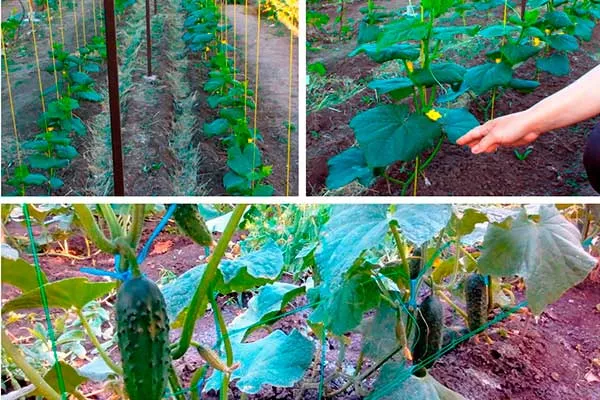
In greenhouses, various materials are used for tying, such as fishing line, mesh, or wire. In open ground, fishing line and specially designed trellises are also used to support cucumber stems.
- First feeding: 2 weeks after germination, using a weak solution of mullein (1:15).
- Second feeding: at the beginning of flowering, with complex mineral fertilizer.
- Third feeding: during the period of active fruiting, again with complex mineral fertilizer.
Top dressing
This variety requires regular fertilization. Apply 4-5 times per season, using a mixture of organic and mineral fertilizers.
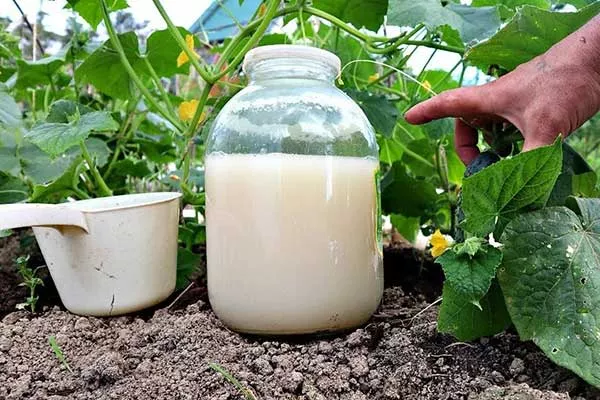
Suitable for feeding:
- weak infusions of chicken manure (dilution 1:25) or mullein (dilution 1:15);
- Among mineral supplements, give preference to complex compositions containing potassium, phosphorus and nitrogen.
Hilling
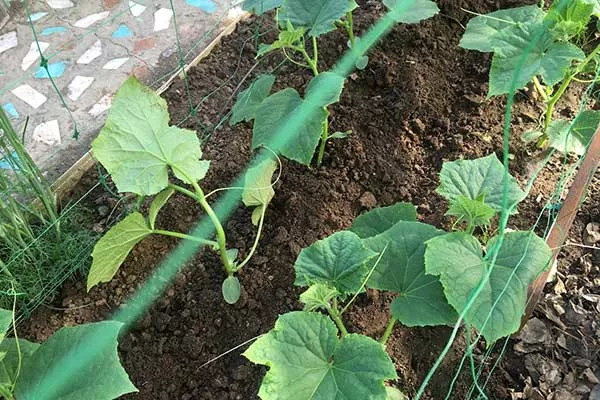
Cucumber bushes are hilled to achieve better fruiting. After watering, rake the soil under the trunk, creating a ridge up to 8 cm high. Hilling with dry soil is not recommended.
Resistance to diseases and pests
This variety has an average immunity. Under favorable climate conditions and proper agricultural practices, it rarely suffers from diseases. However, if these conditions are not met, the risk of infection by the main infections and pests of this crop increases.
The most common problems for Serpentine:
- Powdery mildew. Green parts of plants become covered with whitish spots that spread quickly. The risk of infection increases significantly with high humidity and sudden temperature changes.
Remove infected leaves and shoots, and stop watering and fertilizing the plants. For treatment, spray (once a week until symptoms disappear) with a solution of copper sulfate (30 g per 10 l), baking soda (70 g per 10 l), soap shavings (200 g), potassium permanganate (5 g per 10 l), or treat with Topaz fungicide according to the instructions. - Ascochytosis. It appears on foliage as small, light-colored spots that quickly grow and turn brown. Then, shoots and fruits are affected. Watering with warm water and pre-planting seed disinfection help prevent infection.
To destroy the fungus, use a mixture with copper sulfate and chalk added in equal proportions. - Root rot. It attacks the root system, leading to the death of the entire plant. It is untreatable. Prevention requires proper watering, prompt weed removal, and avoiding overcrowding.
- Aphids, root-knot nematodes and spider mites. To combat aphids, spray the bushes with a soapy solution with the addition of crushed wood ash, as well as infusions of tobacco, onion peels or garlic.
Remove the root-knot nematode from the area along with the top layer of soil at a depth of 50-55 cm, and if this is not possible, pour boiling water or a saturated solution of potassium permanganate over it.
Control spider mites and other insect pests using the specified ash-soap solution or insecticides.
Harvesting and storage
Serpentine cucumbers ripen quickly and uniformly. For canning, pick cucumbers that haven't reached full size. Leaving them on the vine for too long is not recommended. Harvest every two days.
Serpentine cucumbers have an excellent shelf life. They can be refrigerated for up to two weeks without losing their flavor or marketability.
Reviews
The Serpentine cucumber is a new variety developed by breeders. It's ideal for gardeners who prefer to grow varietal crops and harvest their own seeds. Breeders have endowed it with valuable qualities: early maturity and abundant yield.