
Cucumber San'kina Lyubov F1 is a self-pollinating bunch-type hybrid that attracts gardeners not only with its original name, but also with its high yield, combined with unpretentiousness and quick adaptation to growing conditions.
Description of the cucumber Sanka's love
This hybrid cucumber grows as a medium-sized plant with a well-developed root system and bright green leaves. The bush is characterized by sparse branching, so it requires no shaping. The central stem is densely pubescent and can grow up to 2 meters in length.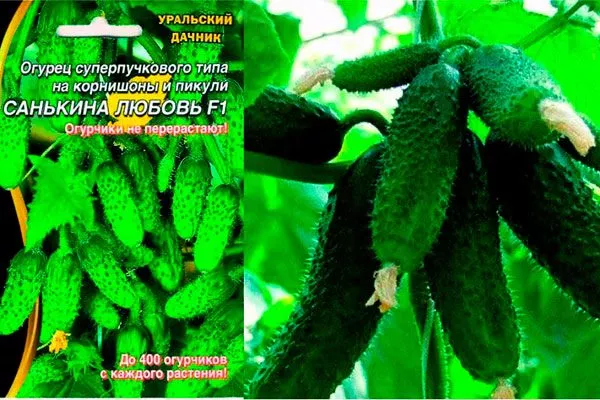
During flowering, bright yellow flowers appear on the bushes. This is a cluster-growing variety, so up to 10-12 cucumbers form in a single node.
Brief description of fruits:
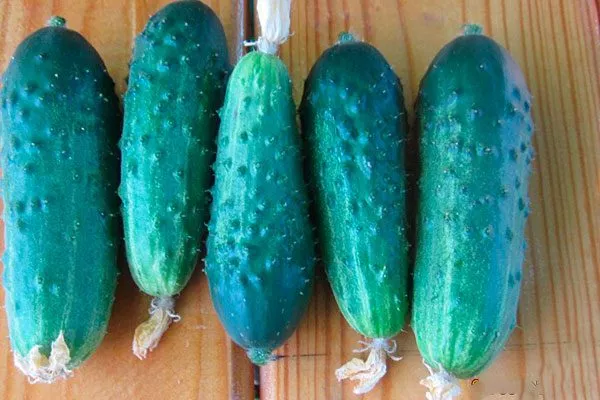
- Fruit color: emerald green with light longitudinal stripes.
- Form: oval or elongated oval.
- Weight: 60-80 g.
- Length: up to 10-11 cm.
- Skin: thin and strong, covered with large bumps with spines.
- Pulp: dense.

Who and when developed the San'kina Lyubov variety?
The hybrid variety San'kina Lyubov was bred in Russia. Originator: Uralskiy Dachnik (a seed producer focused on the Urals and Siberia).
Characteristics
The early-ripening parthenocarpic hybrid San'kina Lyubov can be grown both in greenhouses and open ground. This cucumber has excellent agronomic characteristics, allowing it to be grown in a wide range of climates.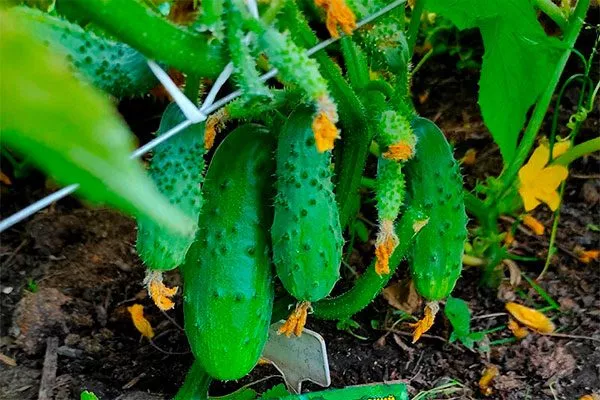
Characteristics:
- Ripening time: early. From germination to ripening of the first fruits takes 40-45 days.
- Fruiting period: The mass harvest of vegetables occurs at the end of June or July (depending on the type of soil and local climate).
- Average yield: 40 kg per 1 sq. m. Up to 400 fruits ripen on one plant.
- Disease resistance: It is virtually immune to cucumber mosaic virus and cladosporiosis (brown olive spot). The variety is tolerant to powdery mildew and downy mildew.
- Drought resistance: Low. The plant requires abundant and regular watering.
Taste and application
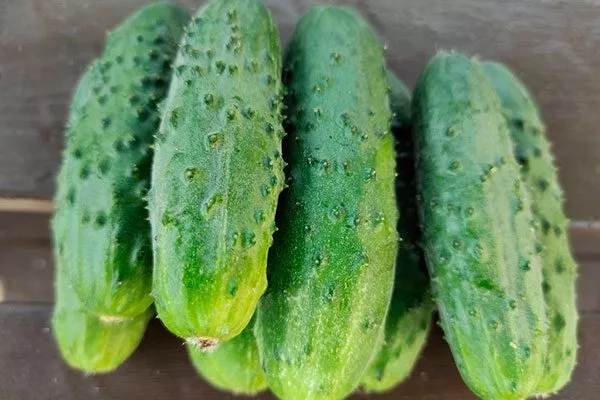
Sankin's Love cucumbers have a rich cucumber flavor, pleasant and refreshing. The flesh is juicy, tender, and crisp, not watery, without any hollows or bitterness, and contains only a few seeds.
This hybrid has a versatile use: its fruits are eaten fresh, salted, pickled, preserved, added to salads, and used in vegetable platters. The fruits retain their shape and flavor after cooking.
Pros and cons
The Sankina Lyubov hybrid has many advantages, but it also has some disadvantages that are useful to know about before planting.
Landing
To get a good cucumber harvest, it's important to plant them correctly. Seeds can be sown directly into the ground or grown as seedlings.
Preparing seeds for planting
Seeds for planting should be purchased; they should not be collected from fruits—this method of propagation does not allow hybrids to inherit varietal traits. Purchased seeds are usually ready for planting and do not require any additional processing. However, it's a good idea to test the seeds for germination and germinate them.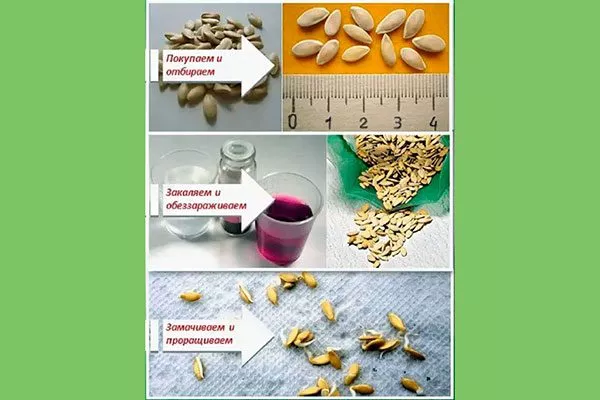
Features of seed preparation:
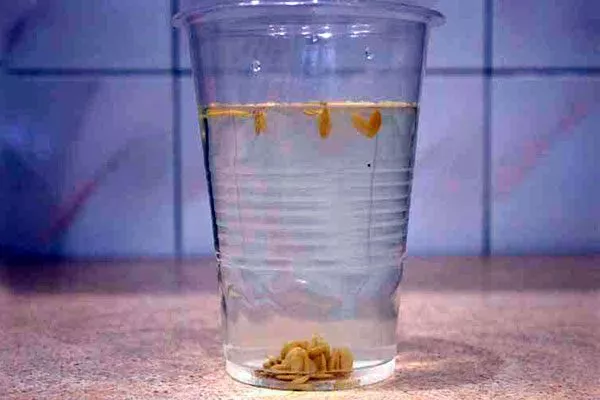
- CalibrationSeeds can be tested for germination by immersing them in a salt solution (30-50 g of salt dissolved in 1 liter of water). Add small amounts of seeds to the solution, stir, and wait for about 10 minutes. All healthy seeds will sink to the bottom, while empty and non-viable ones will float to the surface. Then drain the liquid through a sieve or colander, rinse the good seeds thoroughly in clean water, and be sure to dry them.
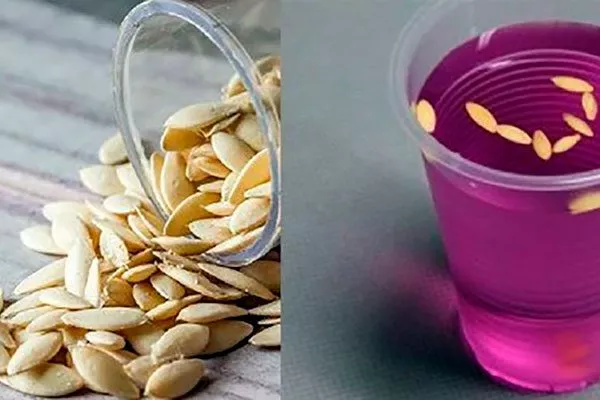
- DisinfectionThis is usually done by the manufacturer, but if in doubt, you can soak the seeds in a solution of potassium permanganate for 20 minutes, or in hydrogen peroxide or boric acid for 10-12 hours. After treatment, rinse the seeds under running water and dry.
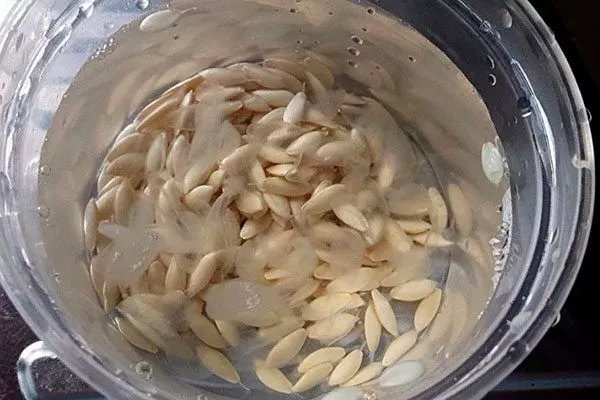
- Soak. It helps the sprout break through the tough seed coat and accelerates the germination process. Seeds can be soaked in plain warm water (25–40°C) or in a growth stimulant solution. If the seeds are coated with a colored coating (pelleted), do not soak them.
Planting dates
Each region has its own timing for planting cucumbers, based on weather conditions, air temperature, and soil temperature. Cucumbers are sown for seedlings 25-30 days before the expected planting date. In temperate climates, sowing begins on April 20th for greenhouses, and from May 1st to 10th for open ground.
Seeds and seedlings are planted in open ground when the daytime air temperature stabilizes at 15 to 20°C. At night, the temperature should not drop below 8°C for sowing seeds, and 15 to 16°C for planting seedlings. By the time of planting, the soil should warm to 18 to 20°C at a depth of 20–25 cm.
Selecting a site
Choose open, well-lit areas for planting cucumbers—flat or slightly elevated. They should be protected from drafts and winds, preferably with an obstruction on the north side—a solid fence or building, tall trees, or dense shrubs—but ensure their shadows don't fall on the cucumber beds.
The soil for cucumbers should be loose, fertile, well-drained, and have a neutral pH of 6.0-7.0. San'kina Lyubov cucumbers grow best in sandy loam, loamy clay, and chernozem soils. Groundwater levels should not be too high, otherwise the cucumbers will rot their roots.
Site preparation
The cucumber plot is prepared in the fall. It is cleared of weeds and plant debris, then dug deeply—to a depth of 20-25 cm. Humus or compost (6-10 kg per square meter) and mineral fertilizers (superphosphate (40-60 g per square meter) and potassium sulfate (20 g per square meter) are added during the digging.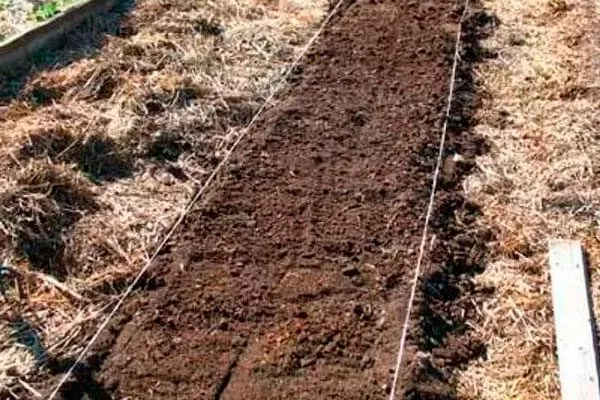
In the spring, the soil is dug over again. If fertilizer wasn't applied in the fall, this omission is corrected. Most importantly, avoid adding fresh manure to the cucumbers—it can stimulate vigorous leaf growth at the expense of fruit development, or even burn the roots.
For cucumbers, prepare beds 1-1.2 m wide and 15-20 cm high. Heated beds can also be created in regions with short, cool summers.
Warm beds are formed in layers:
- drainage (branches or wood chips) - 15-20 cm;
- carbon layer (fallen leaves or straw) - 20-30 cm;
- nitrogen layer (manure or grass) - 20-30 cm;
- fertile layer (soil with compost) - 20-25 cm.
If the groundwater level in the area is too high, it is recommended to construct raised beds or box-shaped beds with a drainage layer at the bottom.
When digging the soil, in addition to fertilizers, other components are also added:
- For overly acidic soils: wood ash, dolomite flour, slaked lime (300-500 g per 1 sq. m).
- In too alkaline soils - high-moor peat (5-8 kg per 1 sq. m).
- For heavy, clayey soils, add sand (8-10 kg per 1 sq. m), for sandy soils, add clay in the same quantities.
Sowing in the ground
Direct sowing of cucumbers into the ground is practiced primarily in regions with warm, long summers. This method allows cucumbers to be grown in open soil without the use of seedlings.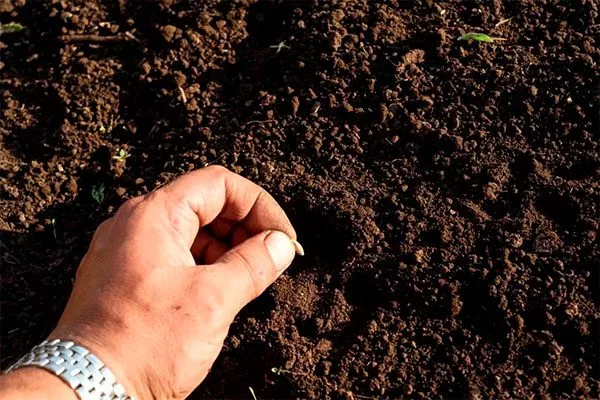
Features of sowing cucumbers:
- Seeds are sown in furrows or holes, pre-watered with warm, settled water. The holes are 2-3 cm deep.
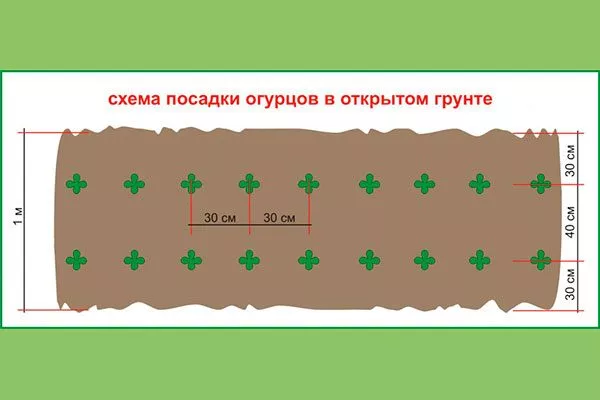
- The optimal planting pattern is 50×50 cm.
- The seeds are planted to a depth of 1.5-2 cm. Sprinkle with soil and lightly compact it with the palm of your hand.
- 2-3 seeds are planted in each hole to increase the germination rate.
- The crops are watered again and then covered with film or agrofibre to create a favourable microclimate for the seeds and retain moisture and warmth.
Optimal germination of cucumbers is observed at air temperatures from +21…+22 °C, soil temperatures from +17…+18 °C.
Sowing cucumber seedlings
Cucumbers are sown for seedlings 25-30 days before the expected planting date. They are often sown directly into individual containers, as cucumbers do not transplant well.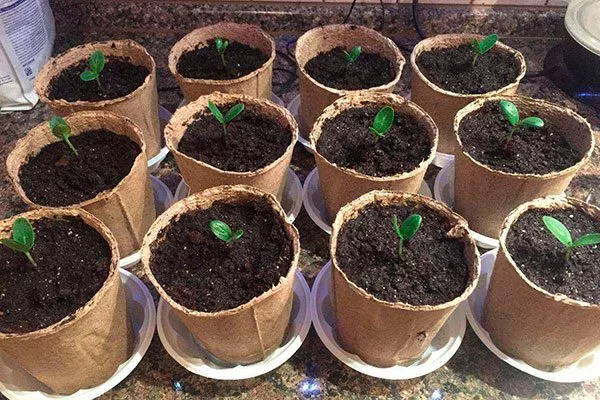
Features of growing seedlings:
- For planting, use 200-500 ml cups with drainage holes.
- The containers are filled with a light, fertile, and breathable substrate. This can be purchased at a gardening store or prepared at home, for example, by mixing high-moor peat, leaf mold, turf, mature compost, and sand (1:1:2:1).
- The soil is leveled and lightly moistened with warm, settled water from a spray bottle.
- Leave 2-3 cm between seeds. Planting depth is 1.5 cm. Planting too deeply can cause the seeds to rot, while planting too shallow can cause them to dry out.
- The planted seeds are watered again with a spray bottle and then covered with plastic film to create optimal conditions for the seedlings. Until germination, the air temperature is maintained at 26–28°C.
- The film is lifted daily to ventilate the crops and prevent condensation. As soon as the seedlings emerge, the cover is removed to prevent them from overheating.
After germination, the temperature is lowered to +20...22 °C, and if the seedlings begin to stretch, to +16 °C.
Caring for seedlings
To grow healthy and strong seedlings that can quickly take root and adapt to a new location, they need to be properly and regularly cared for.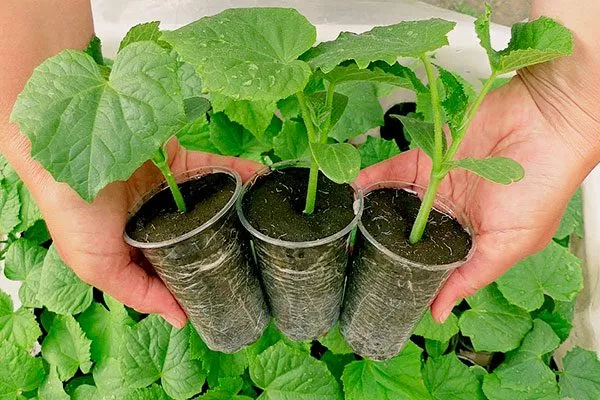
Features of seedling care:
- For the first three days, the seedlings need 24-hour lighting to prevent them from stretching. If they are on a windowsill, rotate the container daily to ensure uniform light distribution.
- Water the seedlings regularly but sparingly. Initially, water every 2-3 days. Once the 2-3 true leaves have formed, water every 2 days. Double the amount of water.
- Water should be applied to the roots, avoiding contact with the leaves. Otherwise, there is a risk of burns and fungal infections. Also, avoid watering seedlings with cold water, as it can promote disease and weaken the immune system.
- If growth is slow, seedlings are first fed with calcium nitrate (1 tablespoon per 10 liters of water). During the second feeding, a complex fertilizer such as Fertika Lux or Agricola can be added. If growth is slow, a third feeding is performed, using a diluted slurry (1:20) or ammonium sulfate.
- Every two weeks, the seedlings are sprayed with Epin, a growth stimulant and stress reliever. It helps plants recover more quickly after transplanting, drought, or cold weather, and stimulates overall development.
- 3-4 days before transplanting, the seedlings are treated with a systemic insecticide (for example, "Aktara", "Apache", etc.) to protect against pests.
Hardening off seedlings
1-2 weeks before planting, seedlings begin to harden off to prepare them for new conditions—outdoors or an unheated greenhouse.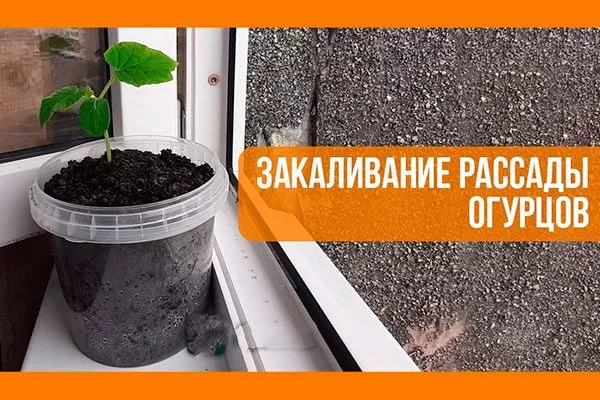
Hardening stages:
- Two weeks before the expected planting, gradually reduce the frequency and amount of watering, as well as the temperature. Regular ventilation is provided.
- After a few days, the seedlings are taken outside for 1-2 hours. They are placed in a draft-free area.
- Five to six days before transplanting, take the seedlings outside for five to six hours. If temperatures remain stable, overnight storage is permitted.
- 1-3 days before planting, the seedlings are taken out for a day so that they can finally adapt to external conditions.
Planting seedlings in the ground
Seedlings should be planted on a cloudy day, either in the morning or evening, as direct sunlight will have an adverse effect on young plants, which are stressed during transplantation. By the time of planting, the plants should have 2-3 fully developed leaves.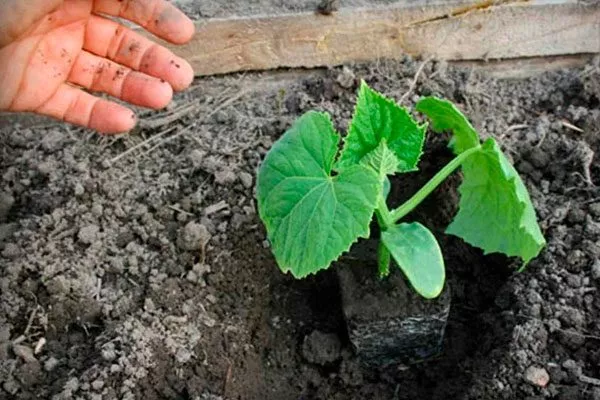
Features of planting seedlings:
- Dig holes or furrows 10-15 cm deep for planting. Two bushes are planted per square meter. The planting pattern, as with direct seeding, is 50x50 cm.
- The seedlings are watered before planting to make it easier to remove the plants from the planting containers.
- Add a couple of handfuls of fertilizer—humus, compost, or peat—to the holes, then water with warm water. It's also recommended to add 200-300 g of wood ash, 30 g each of superphosphate and potassium sulfate.
- Cucumber seedlings are planted using the transshipment method, taking care not to damage the roots or disturb the root ball. The seedlings are planted deep down to the first cotyledon leaves.
- Pour 3-4 liters of warm, settled water under each bush. Once it's absorbed, mulch the soil with humus, peat, or straw.
Care
In order for the San'kina Lyubov F1 cucumber to thrive and bear fruit, it requires specific care—watering, fertilizing, and other agricultural practices.
Watering
The San'kina Lyubov cucumber requires regular and generous watering with warm water. The best time to water outdoors is evening, and in a greenhouse, morning. Before flowering, cucumbers are watered once a week, and during fruiting, once every 3-4 days.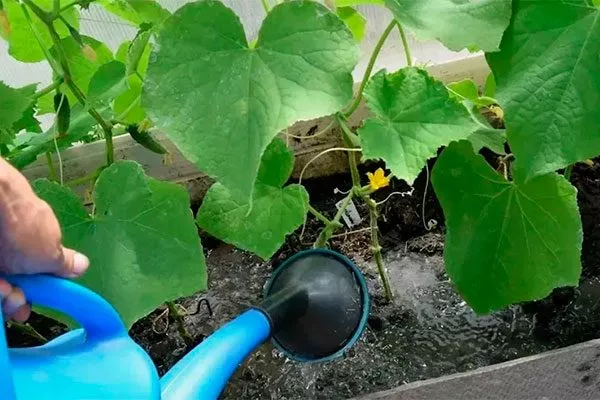
The recommended watering rate after planting is 4-5 liters per square meter; during flowering and fruiting, the water requirement increases to 10-15 liters per square meter. If cucumbers are grown in a greenhouse, it is essential to ventilate it after watering to prevent fungal diseases.
Loosening
After heavy rains and watering, cucumbers are carefully loosened to prevent the formation of a hard crust that would impede oxygen supply to the roots. Loosening should be done to a depth of up to 4 cm. Cucumber roots are located close to the surface, so loosening too deeply can damage them.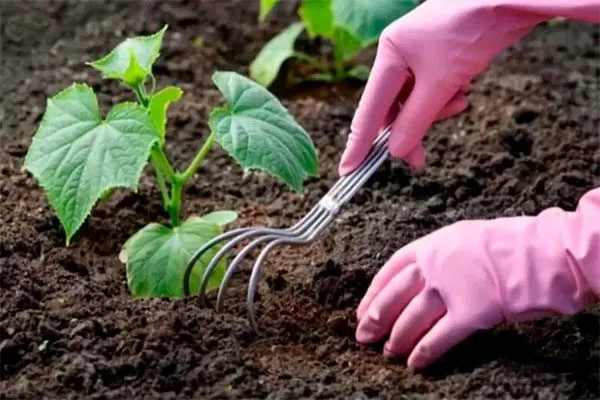
On average, cucumbers are tilled twice a week. Dense loam soils require more frequent tilling, while light sandy loam soils require less frequent tilling. Weeds are removed simultaneously with tilling. To reduce the need for tilling and watering, the beds are mulched with compost or grass clippings.
Fertilizing
The San'kina Lyubov F1 cucumber requires fertilizing during active growth and bush formation, as well as during bud formation and fruiting. The plant prefers organic and nitrogen-based fertilizers. Fertilize once every two weeks. Alternate between organic and complex mineral fertilizers.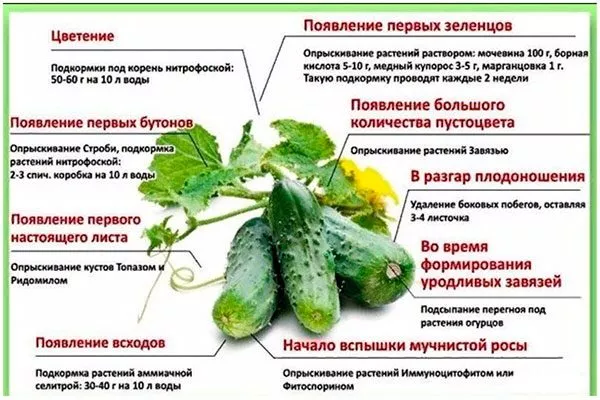
The first feeding is done approximately a couple of weeks after transplanting the seedlings to their permanent location. If the cucumbers were sown outdoors, the first application of fertilizer occurs when the plants have at least 2-3 true (not cotyledon) leaves.
During the season, the Sankin's love hybrid is fed 5-6 times:
- the first feeding - when the second true leaf appears;
- the second - at the beginning of flowering;
- all subsequent ones - at the stage of ovary formation and during the fruiting period.
Garter
The Sankina Lyubov F1 cucumber has very long vines that need to be tied to a trellis or special netting. As they grow, the vines are twisted around the twine upwards toward the trellis.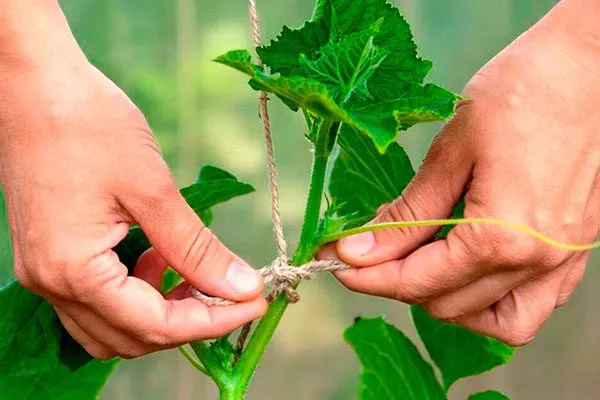
The garter is carried out in 2 places at an interval of 8-10 cm, directing the vines into the empty spaces between the vines - this will prevent the plant from breaking under the weight of the cucumbers.
Pest and disease control
The San'kina Lyubov hybrid has a high immunity, but under unfavorable conditions it can be susceptible to various infections, most commonly fungal and bacterial. Bushes are particularly susceptible to anthracnose and powdery mildew.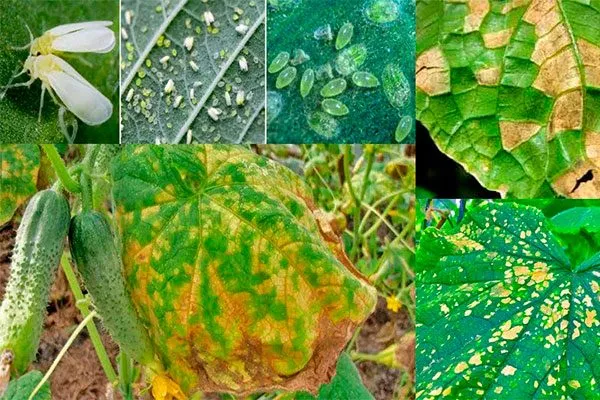
Bushes affected by anthracnose are sprayed with a solution of lime milk and copper sulfate. Fungicides such as Topaz, Fundazol, and Quadris are used against powdery mildew.
Among the pests that attack cucumbers, spider mites pose the greatest threat to the Sankina Lyubov cluster hybrid. Acaricides such as Actellic and Apollo are used to control them.
Cucumbers can also be affected by whiteflies and aphids, which can be controlled with a soap or tobacco solution, as well as insecticides such as Fitoverm, Karbofos, and others.
Harvesting and storage
Cucumber harvesting begins in early June. The fruits ripen very quickly, so they are picked daily to stimulate fruiting. Cucumbers can be harvested at the gherkin and pickle stage. The bulk harvest occurs in late June or July—the timing depends on the growing region and location.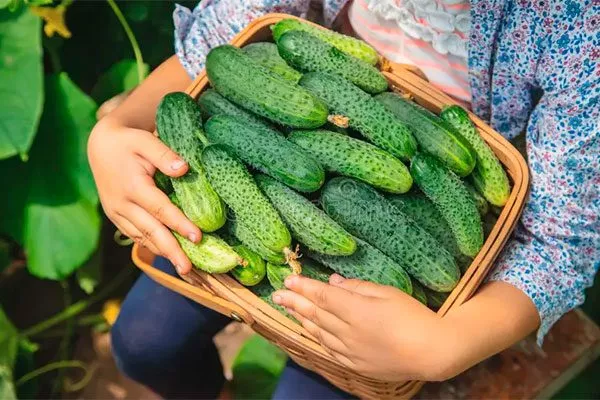
Store the harvested crop in a cool place. To prevent spoilage, cucumbers are placed straight from the garden, without washing, in the refrigerator. Here, they can be stored for about 10 days without losing their freshness or marketability.
Reviews
Summer resident4Timofey K., Voronezh region
The San'kina Lyubov cucumber is an excellent choice for those who love smaller cucumbers. This productive bunch-type hybrid will not only provide you with fresh cucumbers but also allow you to make a variety of preserves, including gherkins.