
Self-pollinating cucumbers, unlike regular cucumbers, do not require insect pollination. There are many such varieties for cultivation in open beds, greenhouses, and all-purpose settings. More details about each variety and their characteristics are further in the article.
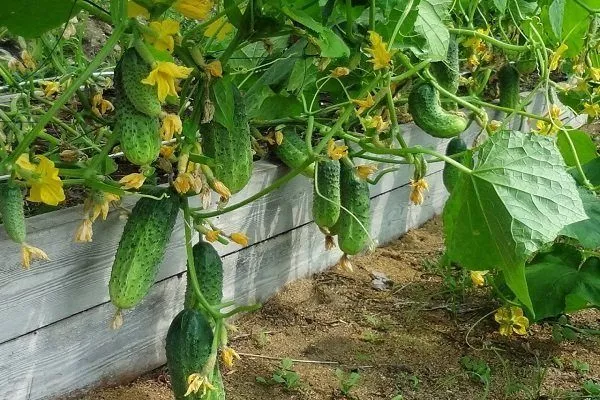
What are self-pollinating cucumbers?
Self-pollinating cucumbers do not require the presence of bees, other pollinating insects, or gardener intervention to form ovaries.
The advantages of such plants:
- Pollination does not depend on the presence of pollinators;
- possibility of early planting of plants;
- increased fertility – an order of magnitude more fruits are set than in conventional pollinated varieties;
- there is no bitterness in the fruits;
- have good resistance to the main cucumber diseases;
- differ from their relatives in their rich, distinct aroma of freshness and delicate taste;
- unpretentious - simple care is enough.
- ✓ The optimal soil temperature for planting should be at least 15°C.
- ✓ Regular watering is necessary, especially during the flowering and fruiting periods, to avoid bitterness of the fruit.
The best varieties for greenhouses
Initially, all self-pollinating cucumbers were intended only for cultivation in greenhouses, where pollinating insects have difficulty reaching them. Even today, they remain the best option for this type of cultivation. They are also grown as a balcony crop.
Comparison table of self-pollinating cucumber varieties for greenhouses:
| Name of the variety | Growing season, days | Fruit length, cm | Fruit weight, g | Yield, kg/sq.m |
| Alliance F1 | 50-55 | 12-15 | 100-125 | 15-17 |
| April F1 | 45-50 | 15-25 | 200-250 | 13-24 |
| Garland F1 | 42-50 | 12-14 | 120-130 | 12-16 |
| Emelya F1 | 38-43 | 12-15 | 120-150 | 12-16 |
| Zozulya F1 | 42-48 | 20-25 | 200-300 | 18-20 |
| Courage F1 | 36-54 | 13-16 | 120-140 | 6-8 |
| Ant F1 | 37-39 | 8-11 | 100-110 | 10-12 |
| Murashka F1 | 43-48 | 11-12 | 90-105 | 10-12 |
| Tempo F1 | 37-44 | 8-10 | 70-80 | 7-15 |
| Name | Disease resistance | Soil requirements | Ripening period |
|---|---|---|---|
| Alliance F1 | High | Average | 50-55 days |
| April F1 | High | Low | 45-50 days |
| Garland F1 | Average | Average | 42-50 days |
| Emelya F1 | High | Low | 38-43 days |
| Zozulya F1 | Average | Average | 42-48 days |
| Courage F1 | High | Tall | 36-54 days |
| Ant F1 | High | Low | 37-39 days |
| Murashka F1 | Average | Average | 43-48 days |
| Tempo F1 | High | Low | 37-44 days |
Alliance F1
The variety is mid-season, developed by the Rostov breeder A. A. Mashtakov.
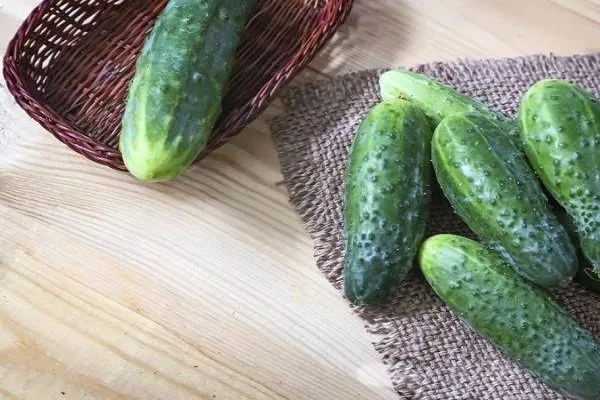
The Dutch variety of the same name is not self-pollinating.
Bred for spring-summer cultivation. It is eaten fresh, but can also be canned or pickled.
The plants are medium-sized and medium-vine, producing 1-3 ovaries per axil. The cucumbers are medium-sized, cylindrical, and green with short white stripes. The cucumbers are covered with small tubercles and sparsely covered with white spines. Under favorable conditions, the yield is excellent, and fruiting is consistent.
Resistant to most diseases. Has an attractive, marketable appearance.
April F1
An early, highly productive variety. Bred for greenhouse planting and as a houseplant or balcony crop.
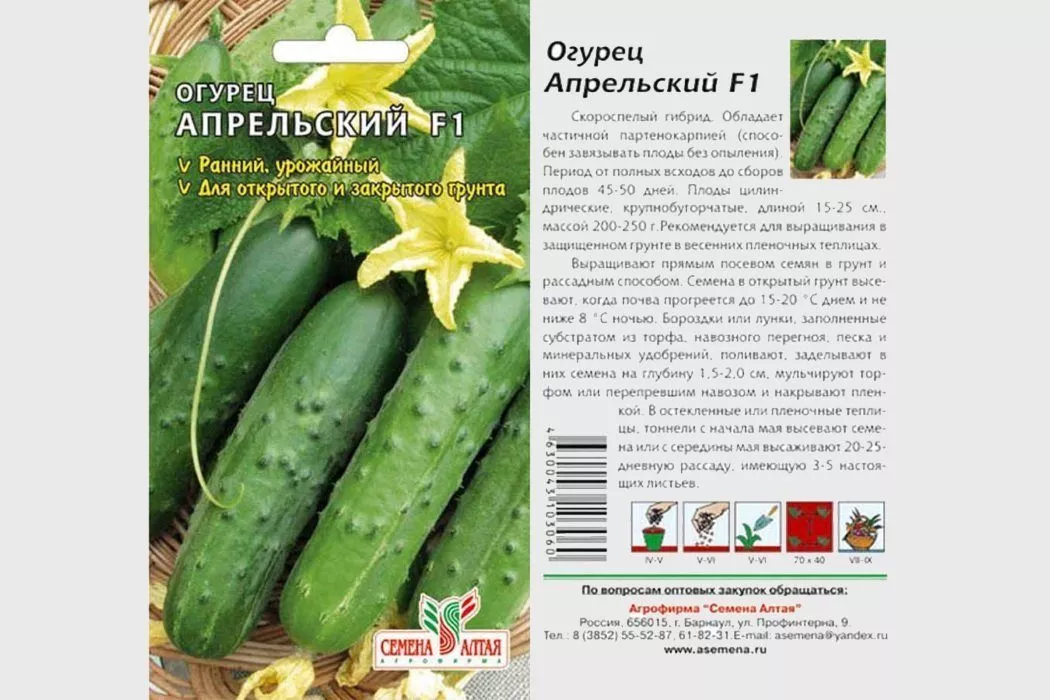
The bush is indeterminate, weakly branched, with limited lateral branching, requiring no shaping. The fruits are bumpy, cylindrical, and green with slight pubescence. When ripe, they do not turn yellow and are not bitter. Most fruits can be harvested in the first month.
Resistant to most common diseases.
Garland F1
An early hybrid variety. Ripens on a windowsill.Live, balcony. Fruits of universal use.
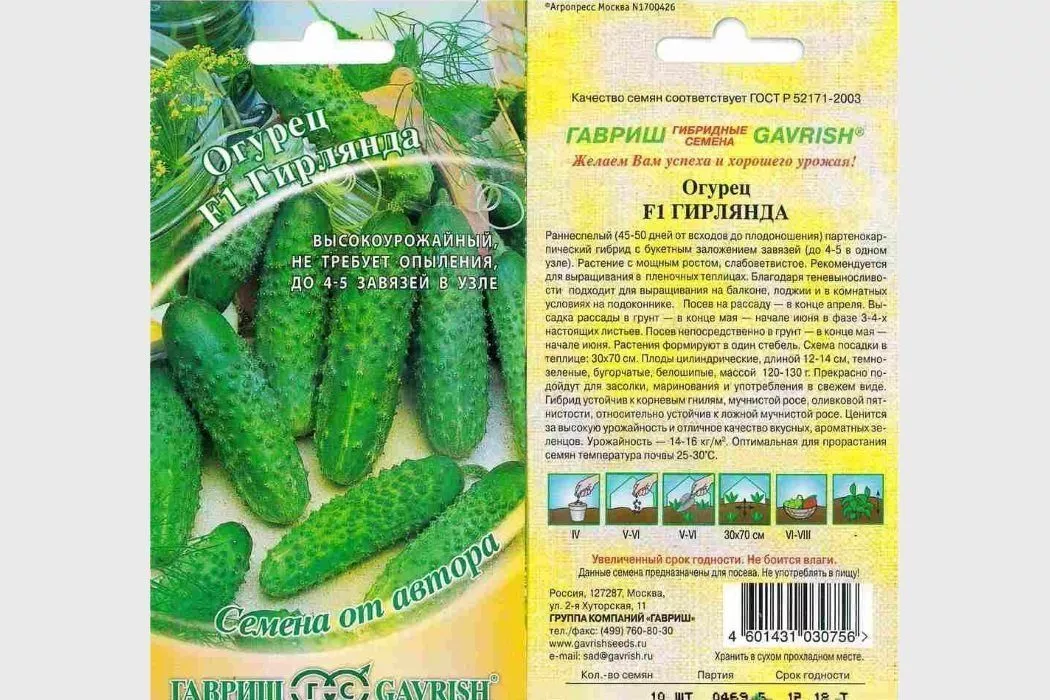
A medium- to vigorous hybrid with few branches and small leaves. Up to five flowers form per node. Barren flowers are rare. The fruits are cylindrical, dark green, with medium-sized tubercles, short light stripes, and white pubescence. The flavor is excellent.
It is immune to powdery mildew and cladosporiosis, and tolerant to cucumber mosaic virus and downy mildew.
Emelya F1
This early-ripening, high-yielding hybrid was developed for indoor cultivation, but is often planted in beds under temporary cover. It grows well on balconies or windowsills. It's eaten fresh, used in salads, and pickled. Overripe fruits can be eaten, as they retain their flavor.
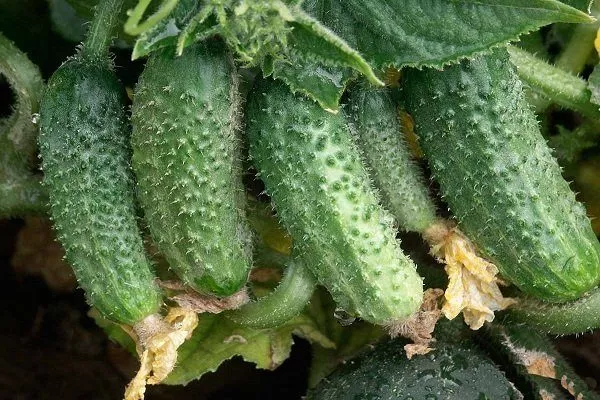
This vigorous plant has shortened internodes, and the bush branches sparingly. The central stem grows continuously. Fruiting also occurs on the lateral stems. Up to 10 fruits can form at a single node. The fruits are typically oval. The skin is tender, bright green with white stripes, covered with large tubercles and white spines.
This hybrid is resistant to most diseases and tolerates transportation and storage well.
Zozulya F1
Cucumber Zozulya F1 – an early, high-yielding hybrid. Due to its size, it's best used in salads, but is also suitable for fresh consumption. It doesn't preserve well when canned (it loses its firmness), so preserves should be eaten as quickly as possible.
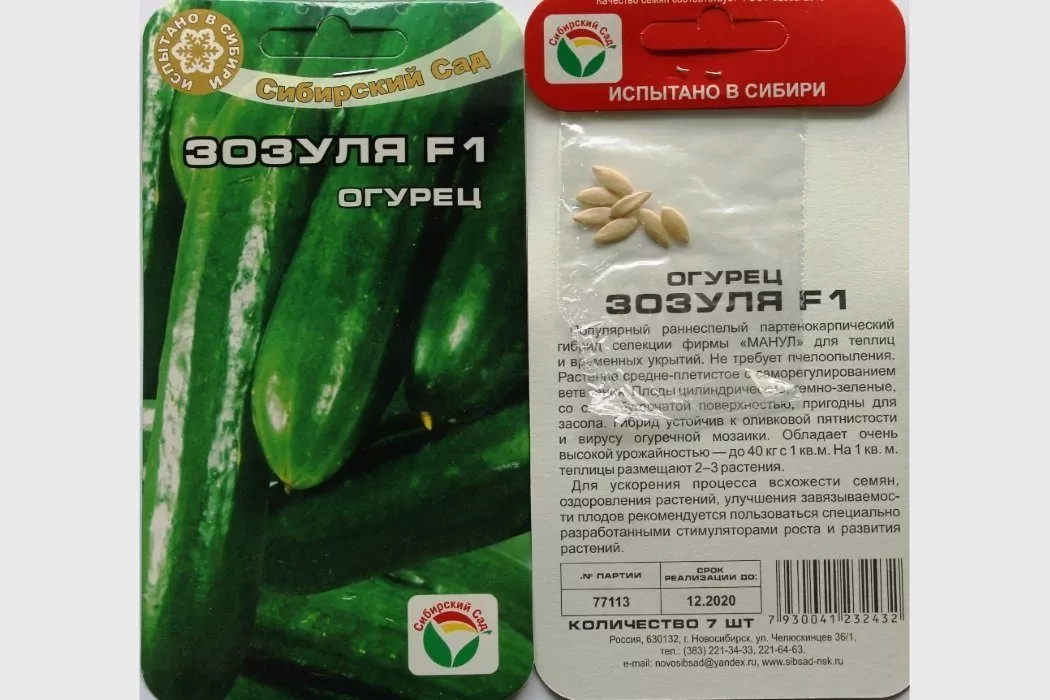
The bushes are weakly twining, the shoots are of medium length, the plant does not require pinching.
Flowers are self-pollinating, but for better ovary formation it is recommended to plant 2-3 male plants per row.
The fruits grow cylindrical, long, and can be curved. The skin is smooth and dark green with sparse but large bumps and white spines. The inside is juicy and firm. The taste is excellent.
It has good resistance to cucumber diseases, except for downy and powdery mildew, as well as to Fusarium wilt.
Courage F1
A varietal hybrid that can be cultivated in the spring-summer and summer-autumn periods. Best variety for the second turn. Cucumbers Courage mCan be used for salting, pickling, fresh salads and even soups.
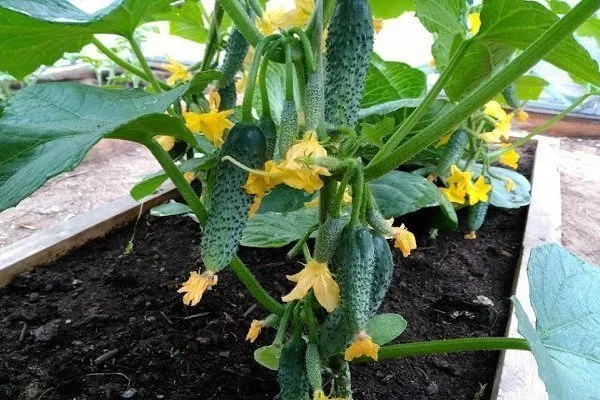
A medium-sized, well-foliated bush with a well-developed root system. Clusters of ovaries (2 to 10) form in the axils. The fruits, covered with small tubercles and white spines, are cylindrical. Inside, they are dense, juicy, sweet, and not bitter.
Resistant to root rot and downy mildew.
Ant F1
An ultra-early hybrid. These cucumbers taste excellent both fresh and canned. The Muravey F1 variety thrives in greenhouses, but it also grows well on a windowsill. It can ripen even with mild frosts, but if the flowers don't receive enough sun, ovaries will fail to form.
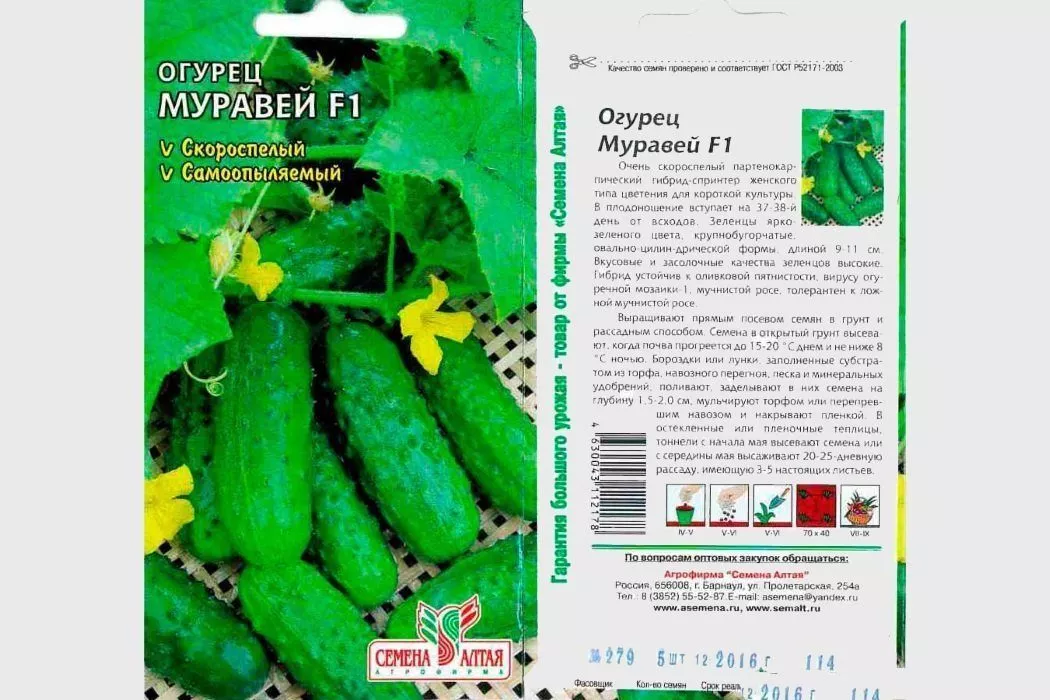
A medium-sized plant with little side shoots. It requires staking. The medium-sized foliage is slightly wrinkled. 3-5 fruits form per node. The cucumbers are cylindrical, smooth, slightly ribbed, and densely covered with large tubercles with white spines. The skin is green, with white stripes that extend to the center of the fruit. The flesh is firm, crisp, and juicy. There are no hollows inside. There is no bitterness at the genetic level.
Resistant to the main cucumber diseases.
Murashka F1
This is an early-ripening hybrid suitable for all-purpose use. Murashka F1 produces high, consistent yields in greenhouses and under cover, but can also be grown indoors on a windowsill or balcony. Fruiting is long-lasting.
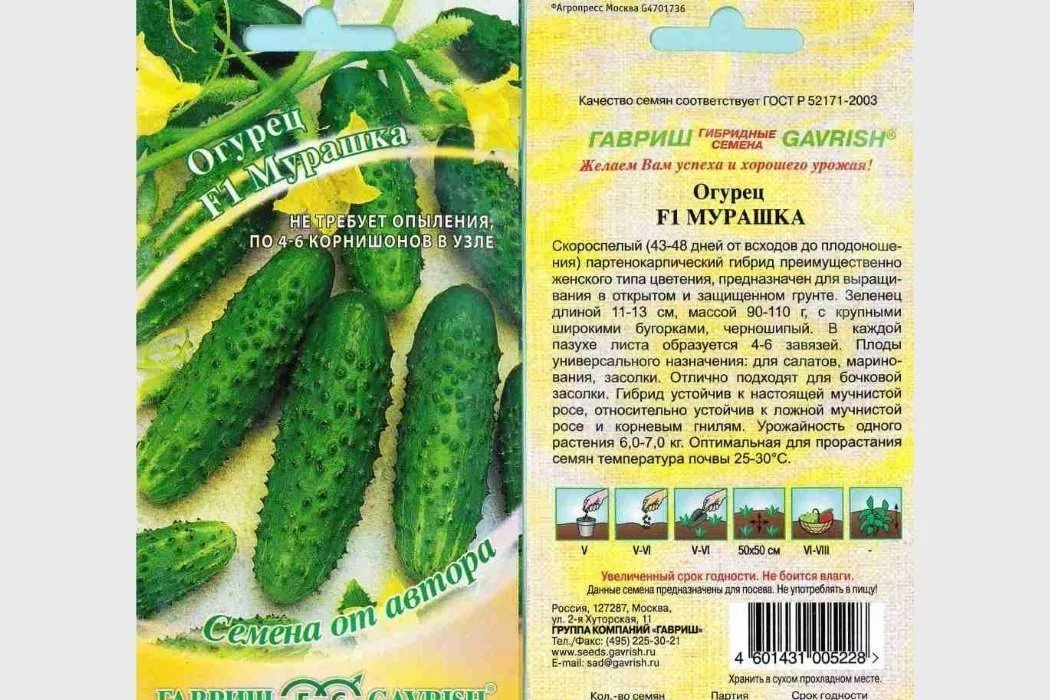
The plant is indeterminate, large, with few branches, which are determinate. Ovaries develop in clusters, with up to 4-6 per node. The fruits have distinct, sparse tubercles and black spines. The pubescence is not very dense. The color is green, lightening from the base to the tip and has light stripes. The flesh is crisp, without bitterness. Fruits that are not picked in time retain their freshness and retain their quality.
Resistant to most common diseases, including powdery mildew and cladosporiosis. Be wary of root rot and downy mildew.
Tempo F1
An early, short-fruited hybrid grown for pickles. Suitable for balconies and windowsills. Suitable for winter preservation and eating directly.
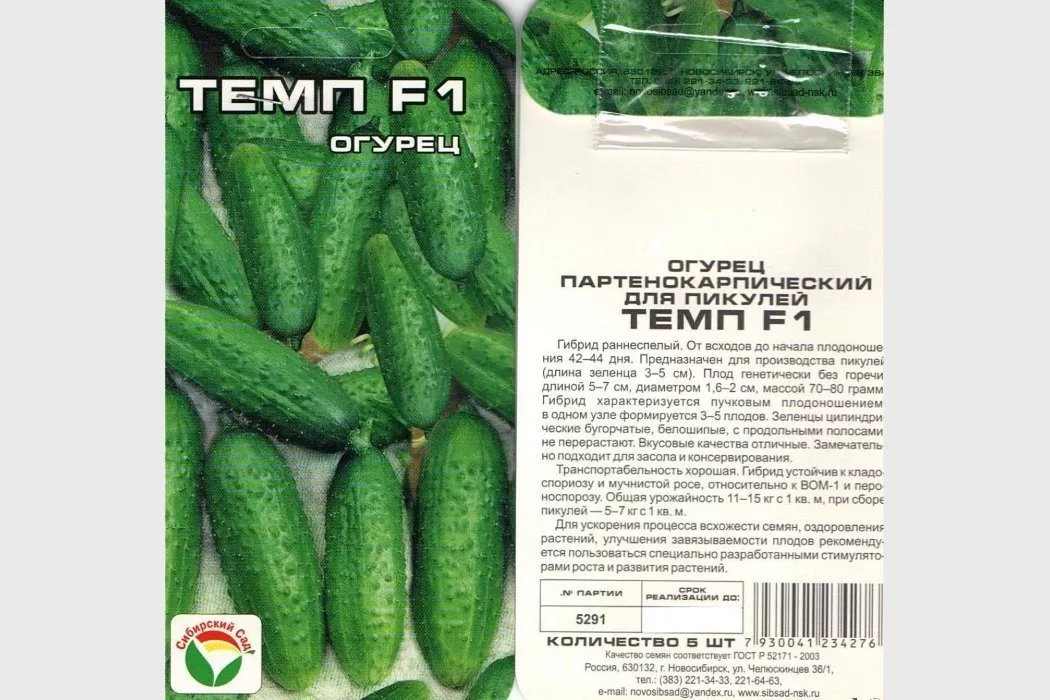
The plant's main growth force is located in the central stem, with sparse branching—the number of side shoots is limited, and the leaves are small. It typically produces clusters of 2-5 cucumbers. The fruits are smooth, cylindrical, and tuberculate with white spines. Light-colored stripes are visible on the dark green skin. The flesh is juicy and aromatic, without bitterness. Ripe cucumbers are juicy, crisp, and flavorful, with a tender rind.
Resistant to most cucumber diseases.
The best varieties for open ground
When growing in open ground it is important:
- resistance to temperature changes, cold winds and high humidity;
- short ripening period - for northern regions and the middle zone;
- self-pollination – in conditions of short summer.
Comparison table of self-pollinating cucumber varieties for open ground
| Name of the variety | Growing season, days | Fruit length, cm | Fruit weight, g | Yield, kg/sq.m |
| Alex F1 | 38-45 | 9-11 | 70-90 | 5-8 |
| F1 Artist | 38-50 | 10-12 | 90-100 | 8-9 |
| Emerald Stream F1 | 44-48 | 28-50 | 150-200 | 5-7 |
| Prestige F1 | 42-45 | 8-10 | 65-95 | 15-25 |
| Shosha F1 | 38-42 | 8-12 | 60-70 | 14-18 |
| Ecole F1 | 40-45 | 8-12 | 60-80 | 3-8 |
| Name | Disease resistance | Soil requirements | Ripening period |
|---|---|---|---|
| Alex F1 | High | Low | 38-45 days |
| F1 Artist | Average | Average | 38-50 days |
| Emerald Stream F1 | High | Tall | 44-48 days |
| Prestige F1 | High | Low | 42-45 days |
| Shosha F1 | Average | Average | 38-42 days |
| Ecole F1 | High | Low | 40-45 days |
Alex F1
An early-ripening hybrid from Dutch breeders. It's used for salads, pickling, and canning. It's grown in open beds; in adverse weather conditions, a temporary plastic cover can be erected.
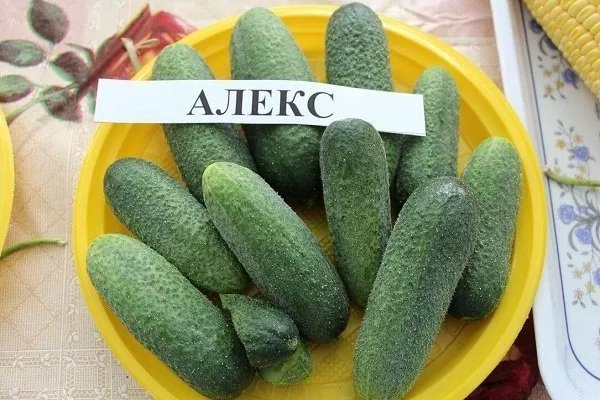
The plant is medium-large. Up to three ovaries appear in a single node. The fruits are cylindrical, with short white stripes running across the dark green surface. The tubercles are small, and the spines are white. They ripen evenly. They require regular harvesting, 2-3 times a week.
Resistance to major cucumber diseases.
F1 Artist
An ultra-early hybrid. It's versatile (the fruit is eaten fresh and preserves well, canned, pickled, and used in salads).

The bush is medium-branched and requires regular shaping and support. The leaves are large. The fruits are cylindrical, short, and green with slight spots and light stripes. The skin is covered with medium-sized pimples and white pubescence. The flesh is crisp and aromatic, without bitterness.
It has good resistance to Cladosporiosis and common mosaic. It exhibits moderate resistance to powdery mildew.
Emerald Stream F1
An early-ripening hybrid. A salad vegetable. It has a long and continuous fruiting period, tolerates temporary cold spells, and grows in shaded beds.
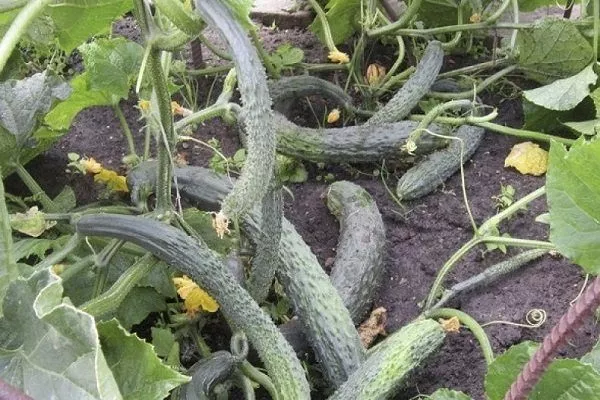
The plant is vigorous, weakly vining, and predominantly produces female flowers. Up to five cucumbers can form on a single bush. A trellis or net should be used to support the fruits and stems. The cucumbers are elongated and cylindrical, sometimes slightly curved, tuberculate, dark green with short light stripes, delicate, thin skin, a small seed chamber, excellent sweet flavor, and very aromatic.
It is recommended to use protective gloves when harvesting, as the thorns are very prickly.
Not susceptible to powdery mildew.
Prestige F1
An early-ripening hybrid. The plant thrives as a balcony crop. The cucumbers are good for eating fresh, in snacks, and pickled for winter.
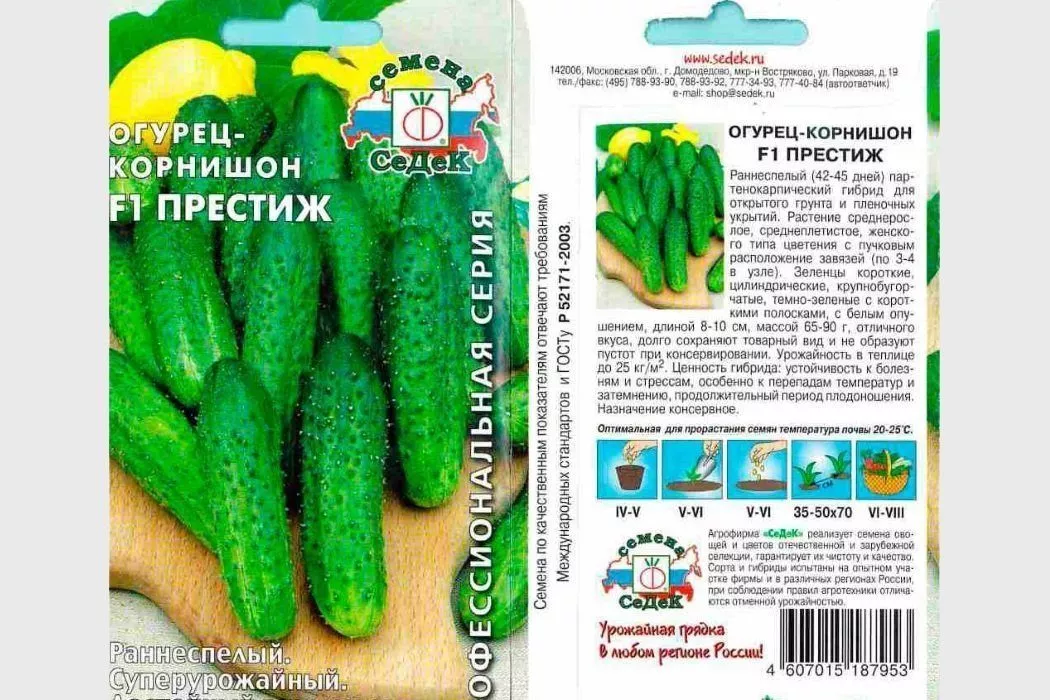
The bushes are medium-sized, with a developed central stem and medium intertwining. The ovaries form in clusters. The leaves are small. The fruits are cylindrical, gherkin-shaped, dark green with light longitudinal stripes. The skin is thin, coarsely tuberculated, and studded with white spines. They have a bright cucumber aroma. The flesh is crisp, without bitterness. The fruit is not prone to yellowing or overgrowth.
Complex resistance to diseases, microbes, bacteria, pests and parasites.
Shosha F1
An early hybrid. Suitable for winter preservation, pickling, marinating, and fermenting, as well as fresh consumption. They are also harvested as gherkins. The fruits retain their quality during transportation. In a cool place, they can be stored for up to two weeks. They can be grown under temporary cover.
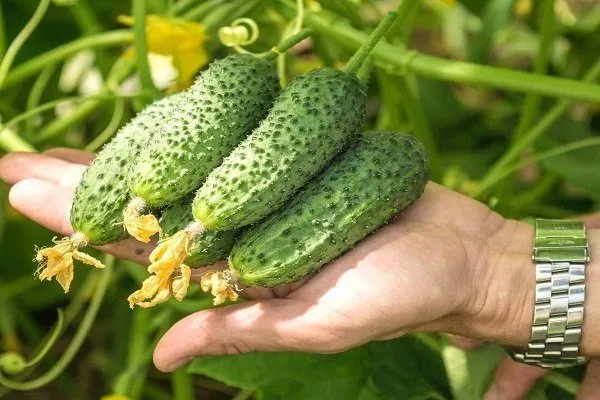
The stem reaches 1.5-2 meters in length, with well-developed leaves and few lateral stems. Each node may contain 1-2 ovaries. The fruits are small, moderately bumpy, slightly white-haired, and elongated cylindrical. The flesh is juicy, dense, and crisp, without bitterness or voids; the seeds do not develop.
It shows resistance to some diseases, in particular, to cucumber mosaic, powdery mildew, and vein yellowing virus.
Ecole F1
A young, early-ripening gherkin-type hybrid. The fruits can be harvested as very small pickles, 3 to 5 cm long. They are grown for fresh consumption and can also be used for preserving, particularly pickled and salted cucumbers. A temporary shelter can be used for growing.
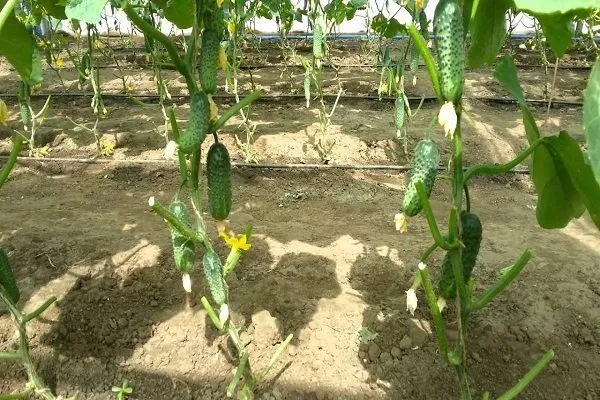
A compact bush with short internodes. Height ranges from 2 to 2.5 m. Shoots twine vertically and have little sideways growth. Leaves are small. Up to 5 cucumbers are formed at each node. Fruits Ecole cucumbers Cylindrical in shape. The surface is bumpy, and the skin is covered with numerous small white spines. The flesh is tender, crisp, without voids or bitterness.
Flaws:
- prickliness of cucumbers;
- If the harvest is not collected on time, the cucumbers will begin to form sideburns.
Developed immunity to major diseases.
Universal varieties
As a result of breeders' work to adapt varieties to different growing conditions, many hybrids have emerged that can be successfully grown both outdoors and indoors.
In open ground, the yield will be slightly lower than in a greenhouse.
Comparative table of varieties of self-pollinating cucumbers for general use
| Name of the variety | Growing season, days | Fruit length, cm | Fruit weight, g | Yield, kg/sq.m |
| Adam F1 | 45-52 | 9-11 | 90-95 | 8-10 |
| Amur 1801 F1 | 45-55 | 8-10 | 95-100 | 9-11 |
| Herman F1 | 40-45 | 10-12 | 70-90 | 8-9 |
| F1 Director | 42-45 | 10-12 | 65-80 | 3-4 |
| F1 conductor | 40-42 | 8-11 | 70-80 | 4-7 |
| Zador F1 | 38-45 | 8-10 | 75-85 | 6-8 |
| Son-in-law F1 | 43-48 | 10-11 | 80-100 | 13-14 |
| Emerald earrings F1 | 42-47 | 8-11 | 100-110 | 12-14 |
| Claudia F1 | 45-55 | 9-12 | 65-90 | up to 25 |
| Connie F1 | 47-50 | 7-9 | 60-80 | 13-16 |
| Grasshopper F1 | 38-39 | 10-12 | 90-110 | 10-14 |
| Tom Thumb F1 | 35-45 | 6-8 | 50-65 | 10-13 |
| Marenga F1 | 37-38 | 8-10 | 80-100 | 10-15 |
| Marinda F1 | 40-48 | 9-12 | 65-110 | 25-30 |
| Maryina Roshcha F1 | 45-50 | 10-12 | 80-110 | 10-12 |
| Matilda F1 | 45-55 | 8-11 | 100-110 | Up to 10 |
| Masha F1 | 37-39 | 9-11 | 80-100 | 10-11 |
| The real Colonel F1 | 40-42 | 10-15 | 100-120 | 10-13 |
| Orpheus F1 | 40-50 | 9-12 | 100-110 | 8-10 |
| Paratunka F1 | 40-43 | 8-10 | 80-100 | 12-16 |
| F1 partner | 45-47 | 9-12 | 58-67 | 3-4 |
| Mother-in-law F1 | 42-48 | 10-13 | 100-120 | 12 |
| Furor F1 | 37-39 | 10-12 | 60-80 | 15-18 |
| Name | Disease resistance | Soil requirements | Ripening period |
|---|---|---|---|
| Adam F1 | High | Average | 45-52 days |
| Amur 1801 F1 | High | Low | 45-55 days |
| Herman F1 | Average | Average | 40-45 days |
| F1 Director | High | Tall | 42-45 days |
| F1 conductor | Average | Low | 40-42 days |
| Zador F1 | High | Average | 38-45 days |
| Son-in-law F1 | Average | Low | 43-48 days |
| Emerald earrings F1 | High | Average | 42-47 days |
| Claudia F1 | Average | Tall | 45-55 days |
| Connie F1 | High | Low | 47-50 days |
| Grasshopper F1 | Average | Average | 38-39 days |
| Tom Thumb F1 | High | Low | 35-45 days |
| Marenga F1 | Average | Average | 37-38 days |
| Marinda F1 | High | Tall | 40-48 days |
| Maryina Roshcha F1 | Average | Low | 45-50 days |
| Matilda F1 | High | Average | 45-55 days |
| Masha F1 | Average | Low | 37-39 days |
| The real Colonel F1 | High | Average | 40-42 days |
| Orpheus F1 | Average | Low | 40-50 days |
| Paratunka F1 | High | Average | 40-43 days |
| F1 partner | Average | Low | 45-47 days |
| Mother-in-law F1 | High | Average | 42-48 days |
| Furor F1 | Average | Low | 37-39 days |
Adam F1
An early-ripening variety. Its value lies in its versatility – it's suitable for both canning and fresh consumption. The fruits are distinguished by their excellent transportability and marketability.
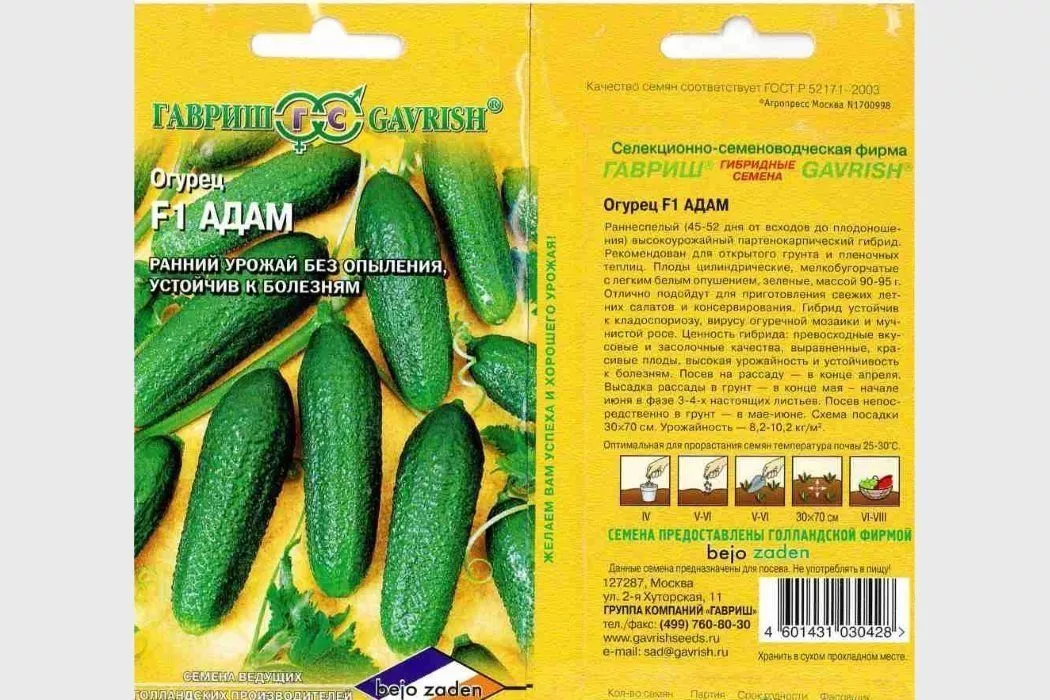
A large bush with dark green leaves. The cucumbers are cylindrical, covered with small tubercles and white pubescence. The color is rich, dark green, lightening toward the tip. The flesh has a pleasant, slightly sweet flavor, is firm, and moderately juicy. The skin is thin.
Shows complex resistance to diseases.
Amur 1801 F1
A mid-early hybrid gherkin cucumber variety. Suitable for fresh salads and canning, it boasts high yields.
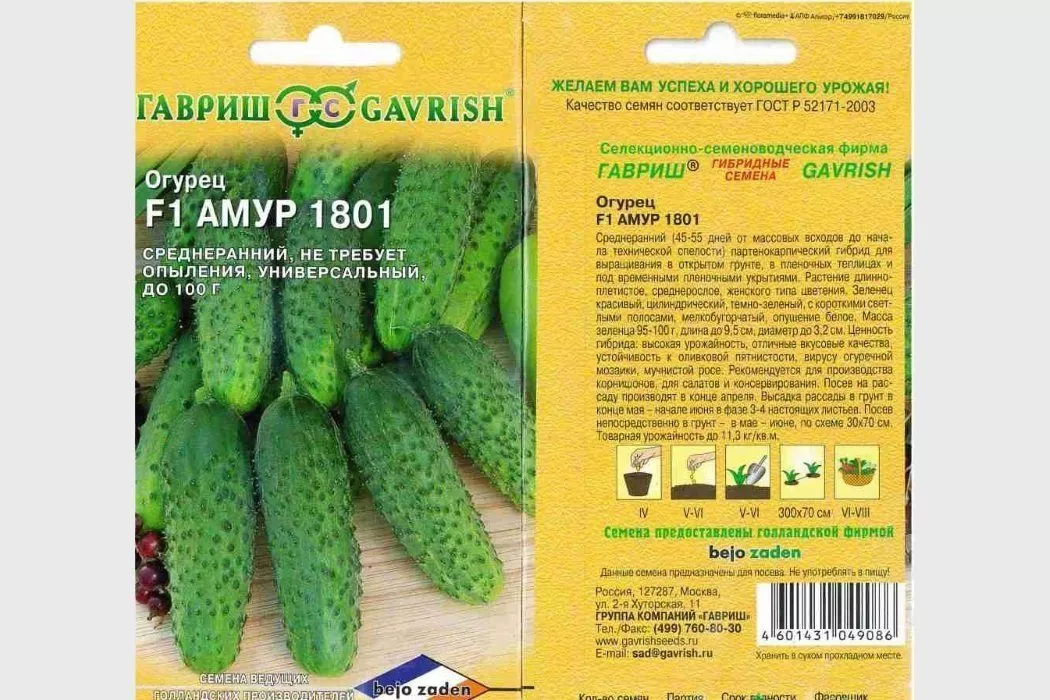
This is a medium-sized, long-vineed plant. The fruit is cylindrical, dark green, with short white stripes, small tubercles, and white pubescence. The flesh is excellent in flavor, without bitterness.
Cucumber Amur resistant to cucumber mosaic virus, olive spot, powdery mildew.
Herman F1
Considered one of the best early-ripening, high-yielding gherkin hybrids. The fruits are suitable for both fresh salads and winter preservation, especially pickling.
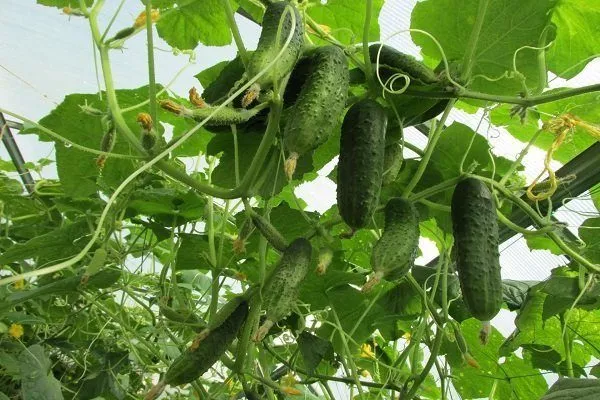
The bush is large, with an open main stem growing at the end, making it easy to care for and harvest. Five to nine fruits form on a single ovary. The fruits are cylindrical, smooth, moderately bumpy, and have light-colored spines. The skin is dark green. The flesh is non-bitter, with a slightly sweet flavor, and is of medium density.
Cucumber Herman is resistant to most cucumber diseases.
F1 Director
A mid-season hybrid. Shade-tolerant and capable of growing in any soil, producing consistent fruit. Its flavor is best revealed in salads.
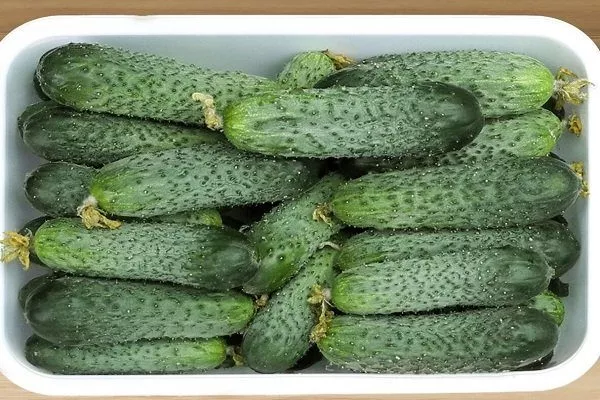
The bush is medium-sized and vigorously vining, with well-developed lateral shoots. The ovaries are clustered. The cucumbers are elongated, regular in shape, with aromatic, juicy flesh, without bitterness, and small seeds inside. The fruits are completely free of cavities. The skin is green, with barely noticeable stripes.
With proper care, you can harvest twice a season. Once fruiting begins, it's recommended to harvest every other day. A drawback is the large number of side shoots, which must be promptly removed.
Good resistance to diseases.
F1 conductor
A relatively new early hybrid. The fruits ripen from spring to September. The plant produces fruit easily, even in unfavorable weather conditions, and is drought-resistant. The greens are excellent in salads and have excellent pickling qualities.
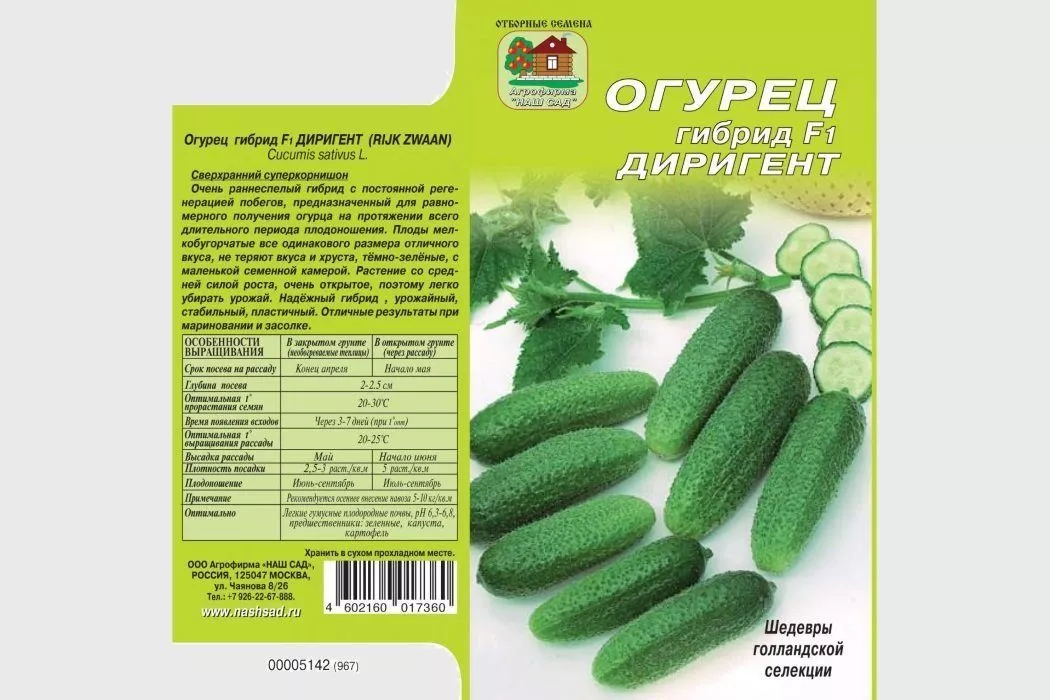
The plant is indeterminate, medium-vigorous, moderately branched, and moderately foliated. It is characterized by constant shoot regeneration. The vines are short, so the plant does not require staking. The leaves are sparse, small, and serrated. Two to three cucumbers form in a single fruiting node. The fruits are cylindrical, green, and unstriped. They have a thin skin. The flesh is crisp, uniform, and not bitter. Cucumbers do not overgrow if harvested late.
The variety is resistant to cucumber mosaic virus, powdery mildew, and brown spot.
Zador F1
An early-ripening hybrid, it's very weather-resistant. Watering, fertilizing, and cultivating the beds are essential for growth. It produces excellent pickled and salted produce. It's also good fresh.
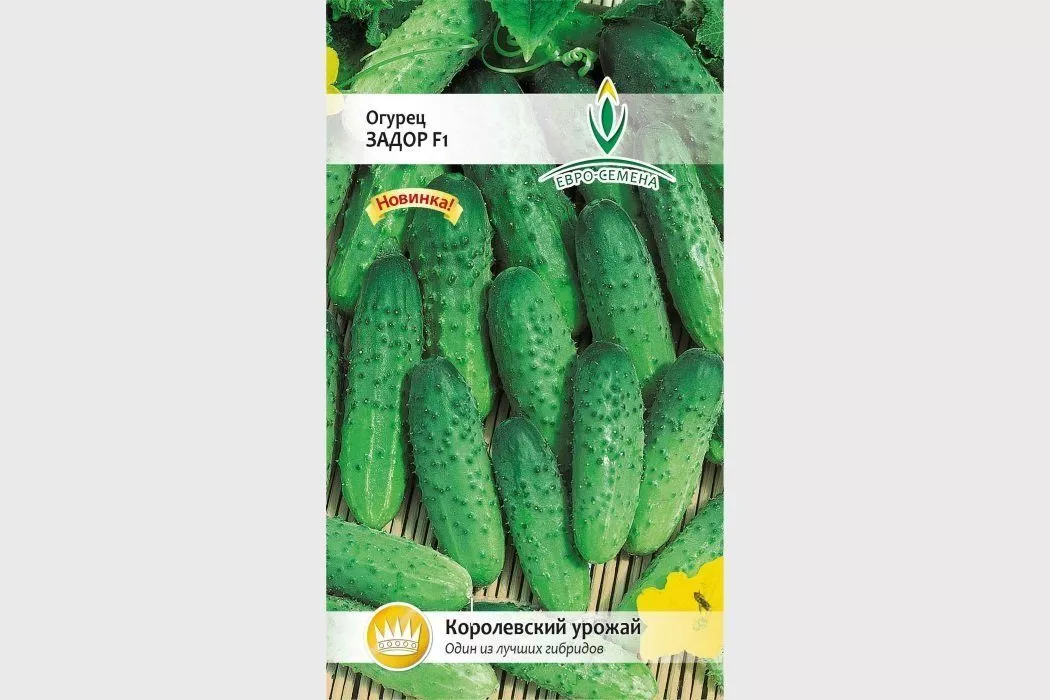
A medium-sized, medium-vine plant, the gherkin is a cylindrical, large-tuberculate, white-haired gherkin. Its main advantages are its lack of internal cavities and the retention of its crispness and elasticity after cooking.
It remains resistant to powdery mildew, so you can get a good harvest.
Son-in-law F1
A very early variety developed by the Russian company Gavrish. It belongs to the gherkin family. It is used in salads, pickled, and marinated.
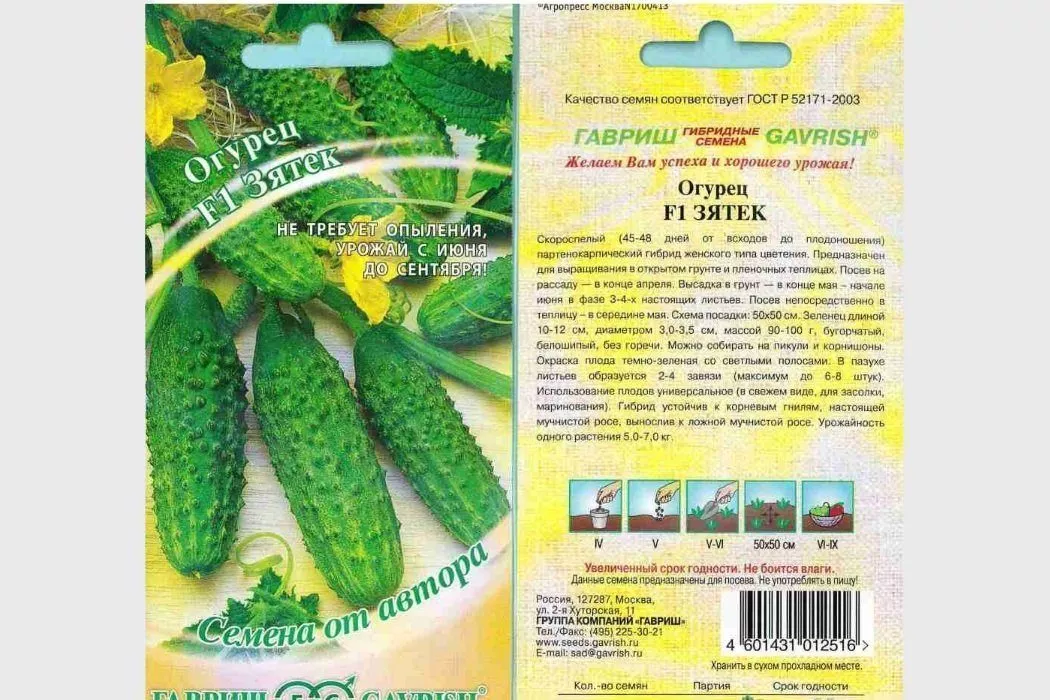
The bushes are medium-sized and trailing, producing 2-6 ovaries per axil. The fruits are short, cylindrical in shape, with tubercles and large spines. The color is green with white stripes. The inside of the fruits is very juicy and crisp, without a bitter taste. The yield is high.
The variety is distinguished by good seed germination, resistance to diseases, and undemanding agricultural practices.
Emerald earrings F1
An early-ripening hybrid. Suitable for pickling pickles (3-5 cm long) and gherkins (5-8 cm). The fruits are versatile in use.
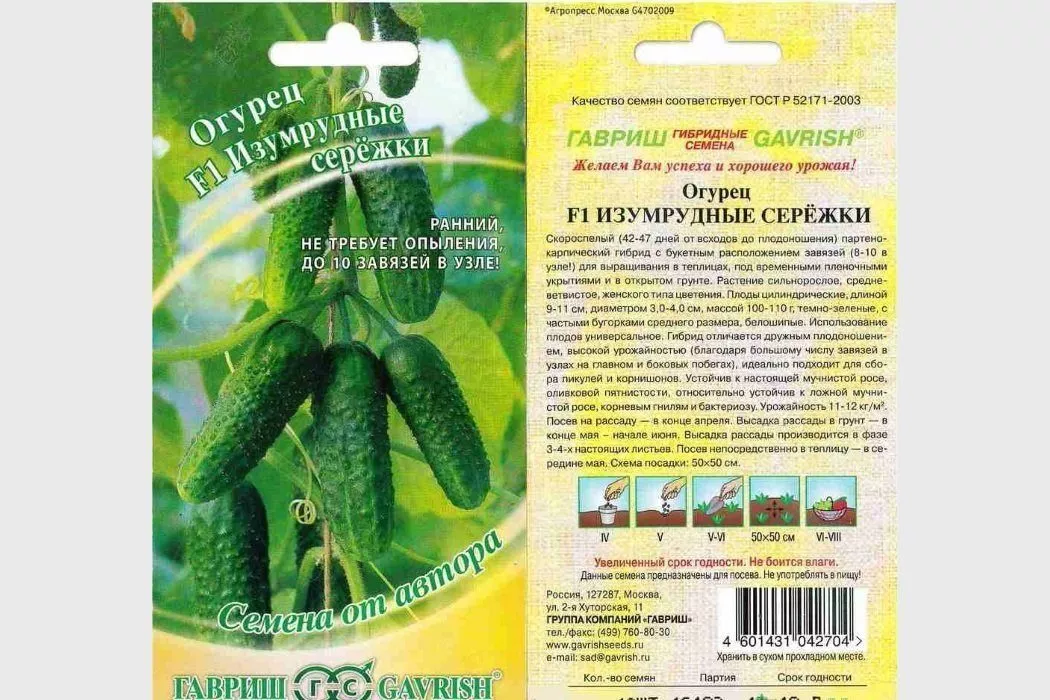
A plant with medium branching and vigor. Ovaries form clusters of 8-10 fruits. Cucumbers resemble a dark green cylinder. The skin has medium-sized tubercles and large spines. Yields are stable, high, and uniform. Fruits are borne on both the main and lateral stems.
Has good immunity.
Claudia F1
An early-ripening vegetable crop. The fruits taste delicious fresh, as well as when pickled and marinated. It is considered one of the most productive varieties. It is characterized by uniform ovary formation and the simultaneous ripening of a large number of fruits, without barren flowers. Fruiting is stable and long-lasting – throughout the entire growing season. The cucumber is a gherkin.
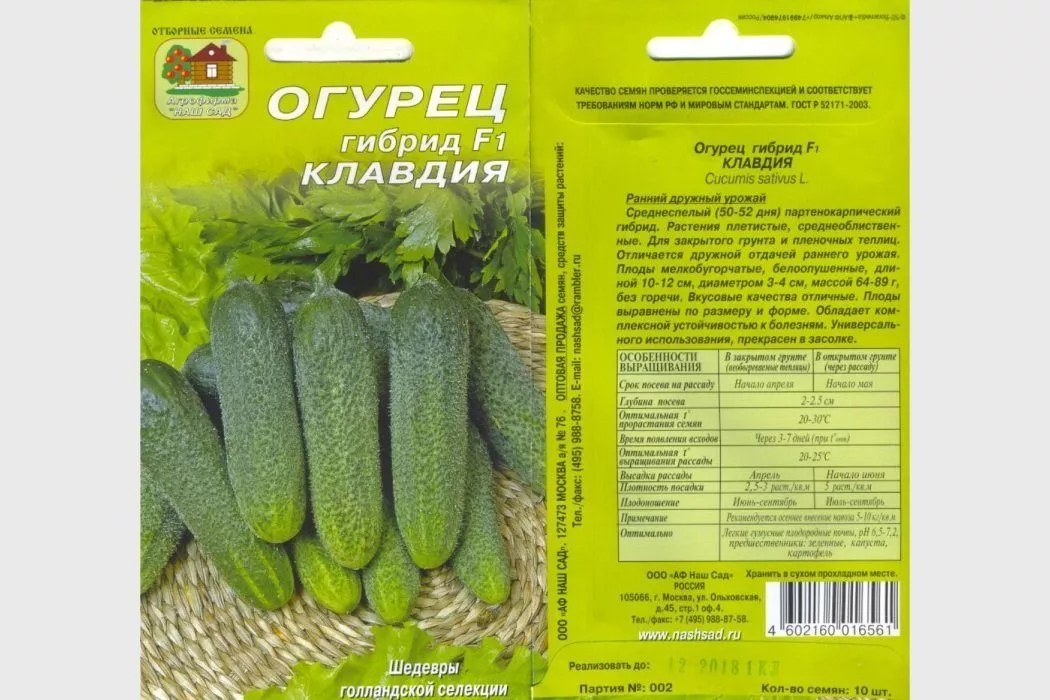
The plant is indeterminate, vigorous, and long-vineed, with moderate foliage. The cucumber skin is tender and thin, often covered with small bumps and white, prickly spines. It has a strong cucumber aroma, and is free of bitterness and hollowness.
Disease resistance is over 70%.
Connie F1
A mid-early, high-yielding hybrid. Gherkin cucumbers are excellent for canning and are indispensable in summer salads. Fruit production continues for 4-5 weeks.
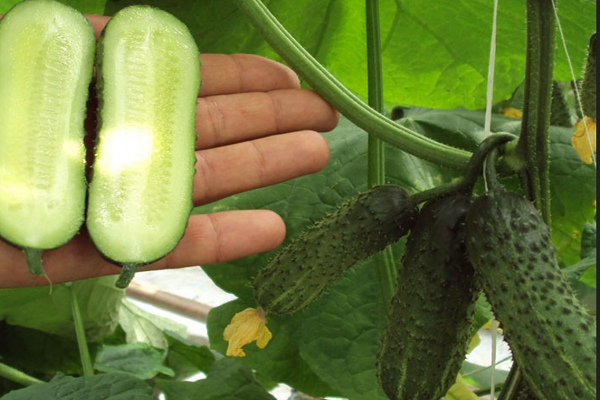
Forms a vigorous, medium-sized, climbing bush with unlimited growth. No sterile flowers. Numerous cucumbers are produced, arranged in clusters of 5-9 per node. The leaves are small, wrinkled, and slightly hairy. The cucumber is cylindrical in shape. The surface is finely tuberculated, with distinct snow-white pubescence. The skin is thin and dark olive. The cucumbers have a characteristic crunch, without bitterness. The taste is good.
The variety is immune to powdery mildew and root rot. It tolerates sudden temperature fluctuations and adverse climatic conditions well.
Grasshopper F1
An early-ripening hybrid. Suitable for salads, pickling, and salting. Bears fruit until autumn frosts.
It has a strong, creeping stem. The leaves are covered with fluff and divided into 5 slightly wavy lobes. From 2 to 6 ovaries can form in the space of a single leaf axil. The fruits are cylindrical or spindle-shaped, bright green with white stripes extending halfway down the fruit, and have a ribbed surface, small, dense tubercles, and white spines. The pubescence is dense. The fruits are not bitter. If harvested late, cavities form inside, and the contents dry out.
Disease resistant. Moderate resistance to downy mildew.
Tom Thumb F1
An early-ripening variety. Gherkin-type cucumbers. They are delicious pickled, salted, and fresh. They transport well and don't bruise or crack.

The bush is tall but has a loose vine. Up to 5-6 fruits form in a single axil. The vines need to be pinched, but not too often. The small, oval cucumbers are covered with small bumps, white spines, and pubescence. The cucumbers are dark green with short longitudinal stripes. The skin is thin. The flavor can be described as slightly sweet, without bitterness. They can become overgrown and turn yellow. Fruiting lasts more than two months.
The plant is not susceptible to most diseases, but is sensitive to downy mildew.
Meringue F1
This variety was developed in Holland. It's extremely early and productive. It tolerates adverse weather conditions well. It's easy to transport and is suitable for salads. Both fully ripened cucumbers and gherkins are used for winter preserves.
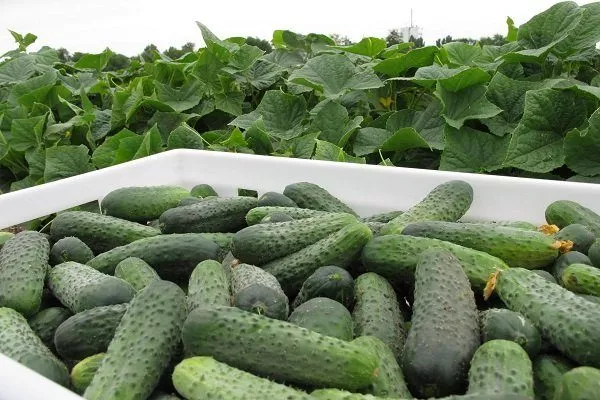
The bushes are medium-sized and open, with small leaves and moderate pubescence. The fruits are cylindrical, dark green, and have large tubercles, producing a good marketable appearance. The spines are white. The flesh is firm and sweet, with a characteristic cucumber aroma. The cucumbers are not prone to overgrowth or deformation, and do not turn yellow.
It is resistant to many fungal, viral and bacterial infections.
Marinda F1
An early-ripening hybrid variety. The gherkin-type fruits are eaten fresh and make an excellent preserve. They are easy to transport and have a long shelf life.
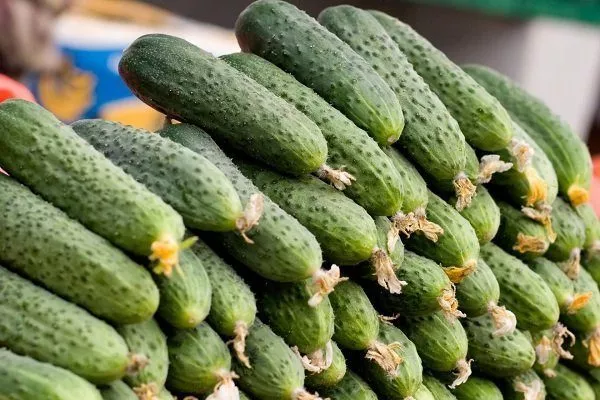
The bush is large and not very vine-like. The ovary is cluster-type. About 8 fruits form per node. It adapts quickly to climate conditions. The foliage is small. The fruits are dark green with frequent large bumps and white spines. The flesh is juicy and dense, the seeds are small, and the skin is thin. They have a bright, fresh aroma and are not bitter or astringent. Fruits that are not picked in time will outgrow their size.
Resistant to the following diseases:
- spotted mosaic;
- scab;
- olive spot;
- Cladosporiosis.
Susceptible to:
- anthracnose;
- downy mildew;
- angular spot.
Maryina Roshcha F1
An early-ripening hybrid that tolerates shaded areas well. This high-yielding cluster gherkin variety is versatile. It is temperature-tolerant and can continue to produce fruit at temperatures close to 0°C. Its fruits are easy to transport. They have excellent shelf life, remaining fresh for up to three months.
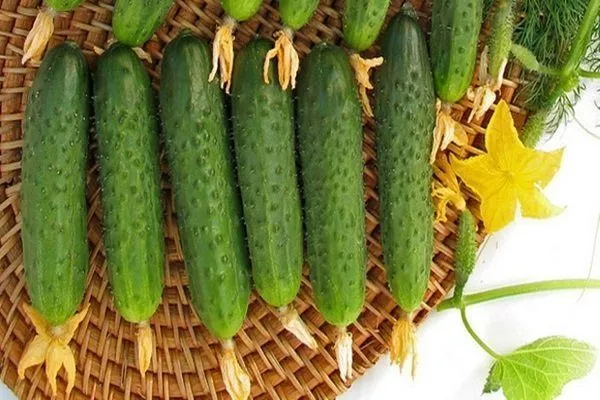
A vigorous cultivar with long vines. Side shoots grow well, requiring the main shoot to be tied to a trellis. Up to five ovaries form at a single node. The fruits are a soft emerald green, with a dense skin covered in white bumps and spines. Up to 12 cucumbers can ripen simultaneously on each bush. The cucumbers are juicy, crisp, and without bitterness.
Highly resistant to powdery mildew, olive spot, cucumber mosaic and all types of root rot.
Matilda F1
A mid-early variety with excellent flavor and attractive appearance. It can be used directly or for winter preservation. The yield is high, depending on growing conditions (garden bed or greenhouse). The fruit can be transported long distances without deterioration in quality.

The bush is medium-sized and has a moderate climbing habit. The cucumbers are short and cylindrical, usually growing in clusters of 6-7. The rough, dark green surface of the fruit is covered with small spines. The flesh is crisp and not bitter.
It has good resistance to major diseases.
Masha F1
Cucumber Masha A hybrid, early-ripening variety of gherkin cucumber. Best used for canning and pickling, but can also be eaten fresh. It ripens evenly.
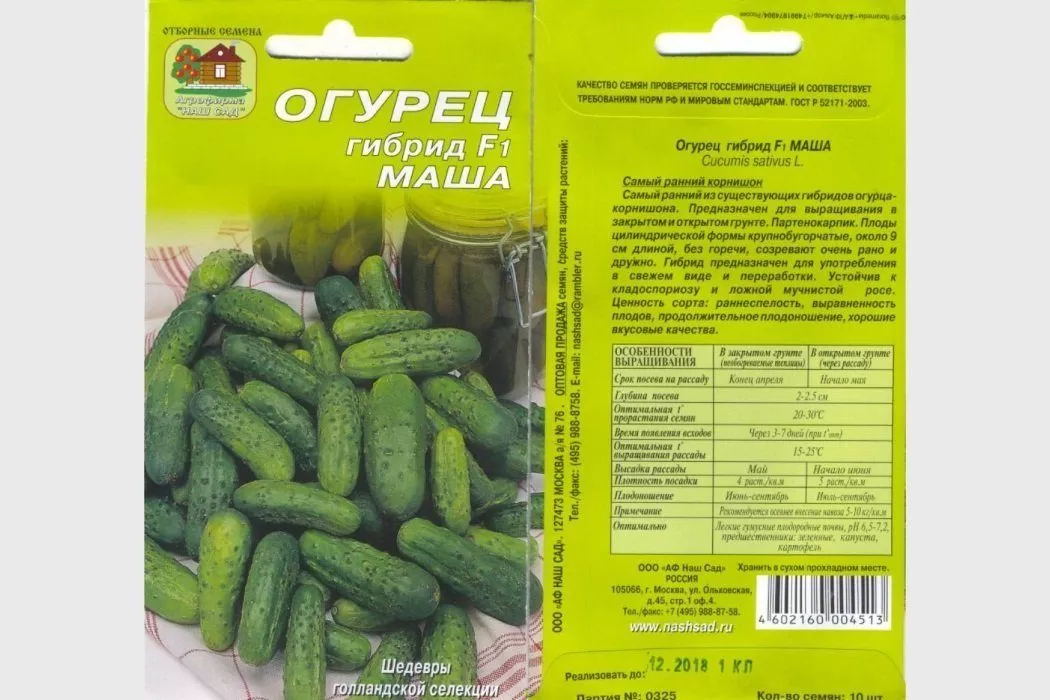
Determinate bushes have a medium vine and open growth habit, making harvesting easier. The leaves are medium-sized and slightly wrinkled. Up to seven ovaries can be found in a single node. The fruits are cylindrical, pimpled, and firm, dark green in color. The skin has light stripes and slight spotting. The flavor is typically cucumber-like, slightly sweet. The fruits are free of bitterness, a genetic trait.
Not sick:
- powdery mildew;
- cucumber mosaic virus.
The Real Colonel F1
This early-ripening hybrid can be grown on a balcony. It produces fruit well until frost. It can be used for pickling, although the fruits are still tastier fresh.
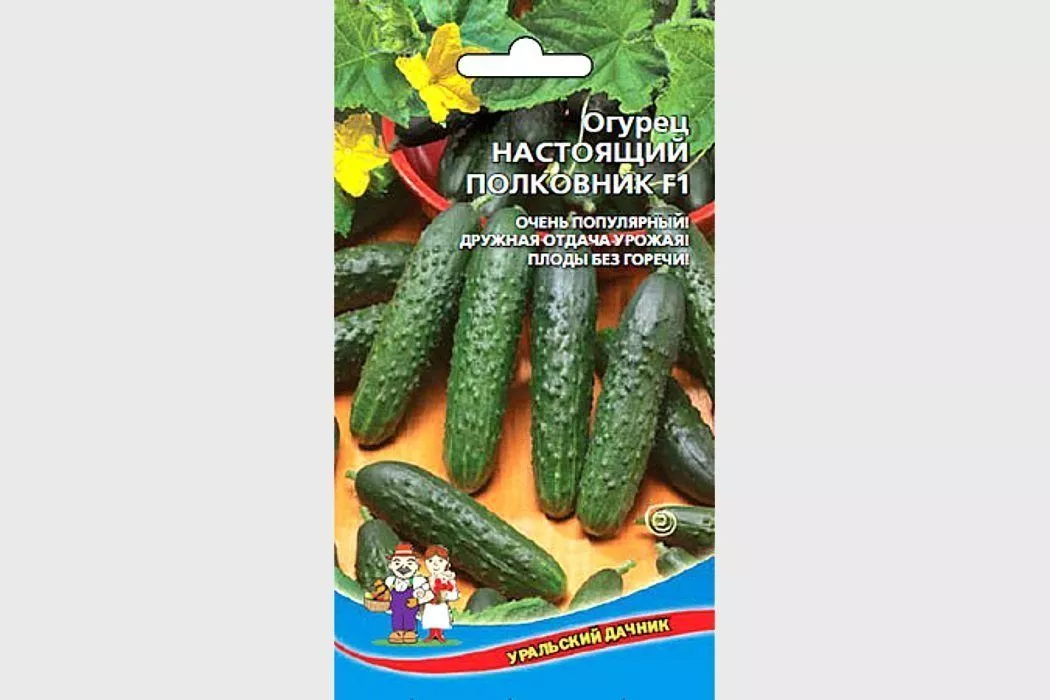
A medium-branched, indeterminate bush. Medium-sized foliage. Fruits are formed 3-4 at a node. The fruits are slightly curved and spindle-shaped, with white spines and dense pubescence. The skin is thin, dark green with faint light stripes, covered with sparse, large tubercles. The flesh is juicy, crisp, and aromatic.
Resistant to cladosporiosis, cucumber mosaic, powdery mildew and root rot.
Orpheus F1
An early-ripening crop. Often grown for pickles. It's recommended to sow when the soil is well-warmed. High yields are achieved with proper care, timely watering, and daily harvesting.
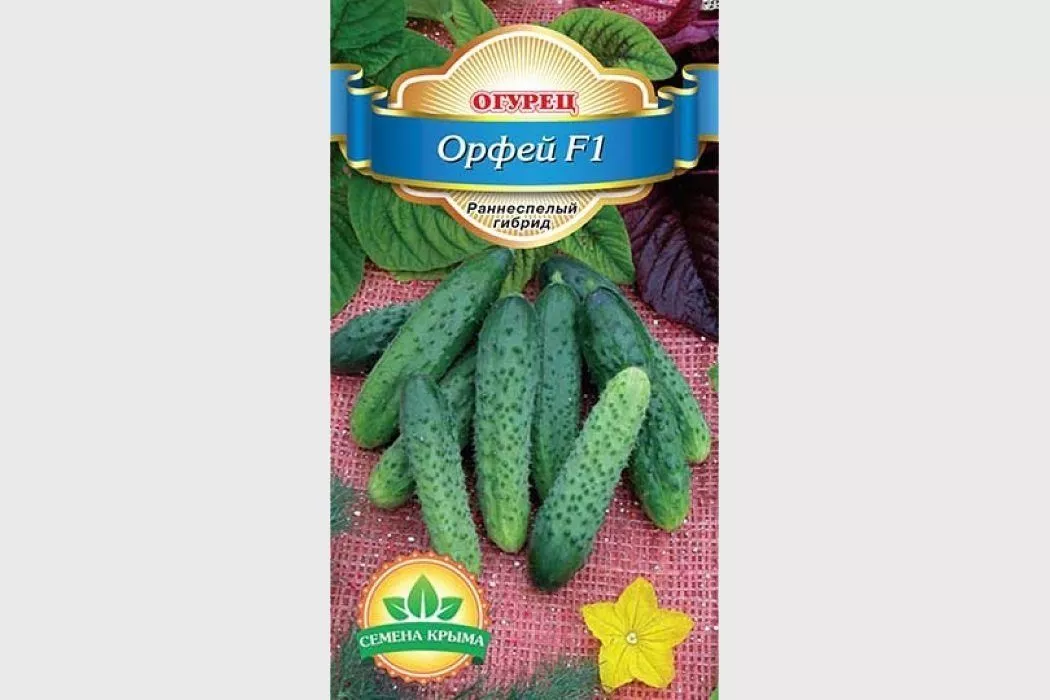
The plant is distinguished by its strong stem and semi-open vine habit, which, together with its small leaves, makes harvesting easier and reduces damage to the plant. It is grown on a trellis or in a mat. The cucumbers are characterized by a regular shape and a smooth surface, green, sometimes gray, with small bumps. The skin is dense, the flesh is crisp, without a bitter taste, and has no air pockets inside, making them ideal for pickling and salting.
Has immunity to diseases.
Paratunka F1
An early-ripening hybrid, these cucumbers are versatile and delicious in any form—from salads to winter preserves. The plant produces a bountiful harvest right up until the first frost. They are also harvested as gherkins.
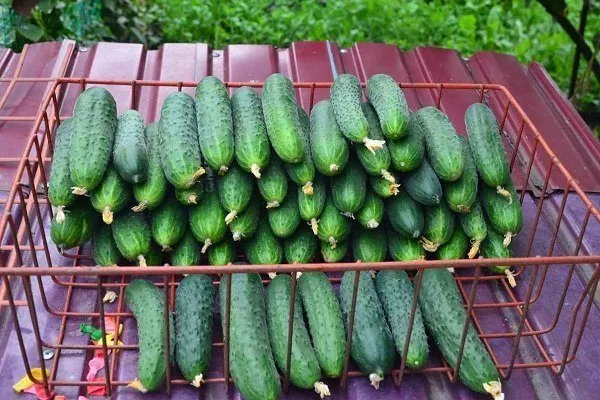
The bush grows up to 2 meters in length, and the vines easily root once they reach the ground. Up to four fruits are usually formed in the axils. The cucumbers themselves are shaped like dark green cylinders with light stripes and white spines. The flesh is not bitter.
It remains resistant to many diseases, even if it grows in unfavorable conditions.
F1 partner
A new, highly productive, early hybrid. The fruits are good for fresh consumption, canning, and pickling.
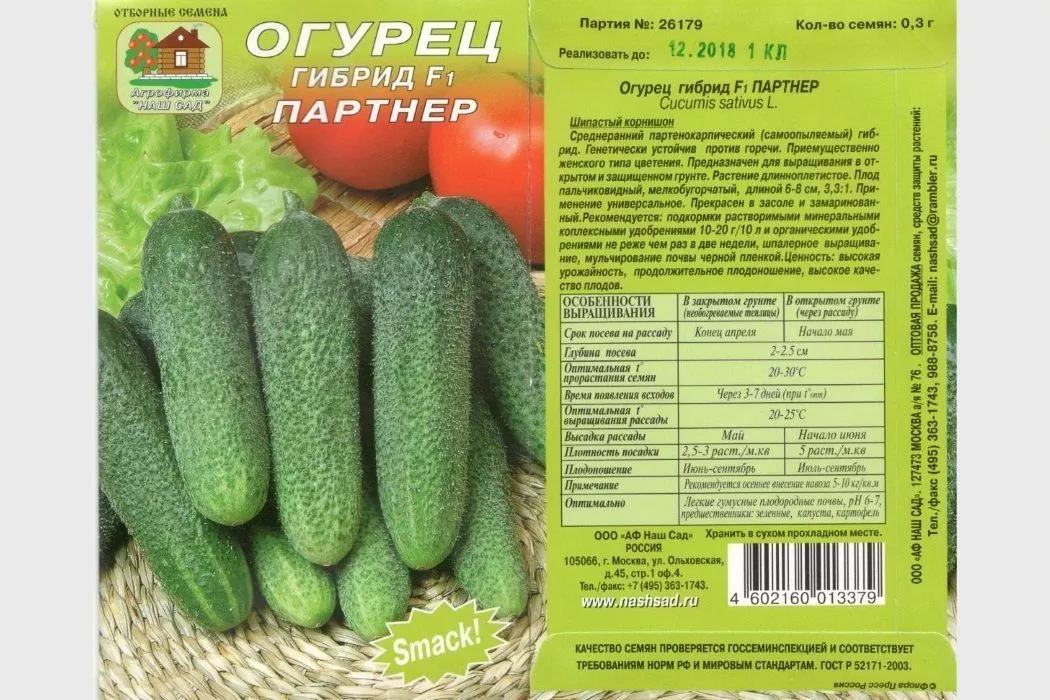
The plant is compact and produces fruit regularly. The cucumbers are dark green, finely tuberculated, and smooth, with dense, soft hairs. Inside, they are firm, crisp, and completely free of bitterness. However, they require regular harvesting.
The variety is resistant to cucumber mosaic virus, powdery mildew, downy mildew, and olive spot.
Mother-in-law F1
A modern domestic hybrid. The cucumbers are harvested at the pickle or gherkin stage, or when they reach technical maturity. It is versatile in use. It is characterized by uniform, long-lasting fruiting and high yields.

The plant is medium-branched with small leaves. Ovaries are arranged in clusters of 3-4 or more in the leaf axils. The fruits are cylindrical, dark green with short, diffuse light stripes. The surface is moderately tuberculate, with loose white or brown pubescence. The cucumbers have a bright aroma and excellent flavor, without bitterness. The flesh is firm and crisp, and the seed chambers are small.
Tolerant to downy mildew. Not susceptible to true powdery mildew.
Furor F1
An early hybrid, also known as "Furo." Suitable for pickling, marinating, and fresh consumption. The fruits are easy to transport and do not turn yellow during storage. They do not overgrow or become overripe.
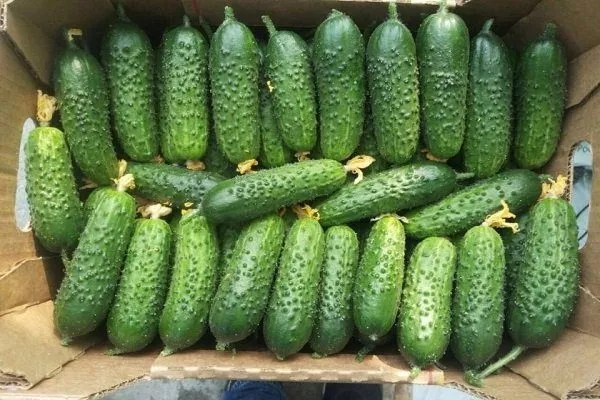
The plant is indeterminate and can reach up to 3 m in greenhouse conditions. Lateral shoots are small. The root system is well developed. The leaves are medium-sized, long-petioled, and slightly corrugated. Up to 5 fruits can develop in a single axil. The cucumbers are small, cylindrical, uniform, and smooth. The color is rich green, without light stripes. The skin is elastic, tender, and thin. The surface is moderately tuberculate, with white pubescence. The flesh is juicy, tender, elastic, and aromatic, without voids. The taste is sweet, without even a trace of bitterness.
The crop is resistant to olive leaf spot, powdery mildew, and cucumber mosaic virus.
Self-pollinating cucumber varieties can be found for any cultivation method—greenhouses, open ground, and even all-purpose varieties. The key is to choose a hybrid that's suited to the region's climate, the gardener's agricultural capabilities, and their specific goals.