
The "Bunch of Splendor" cucumber is a unique hybrid developed in 1913. It boasts high yields, excellent flavor, and the ability to grow in low temperatures (the variety was developed specifically for northern Russia).
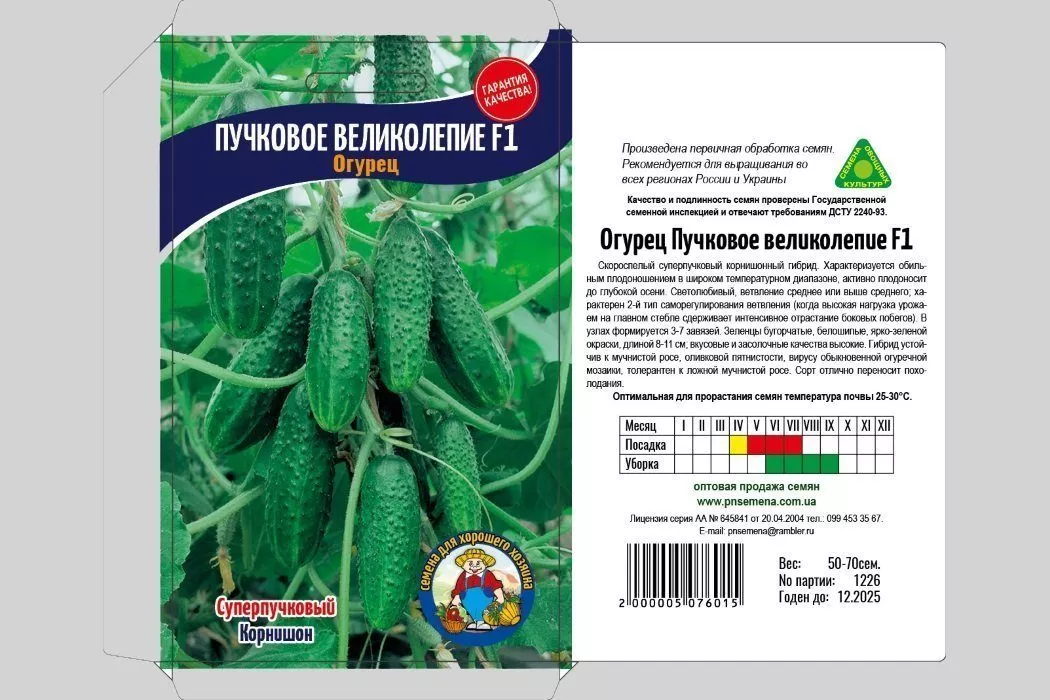
Cucumber seeds of the "Bunch Splendor" variety
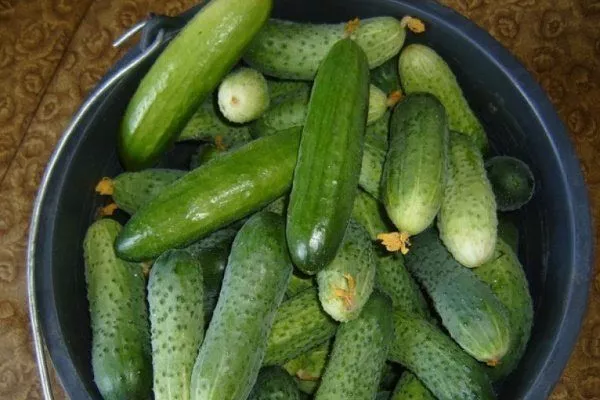
Cucumbers "Bunch Splendor"
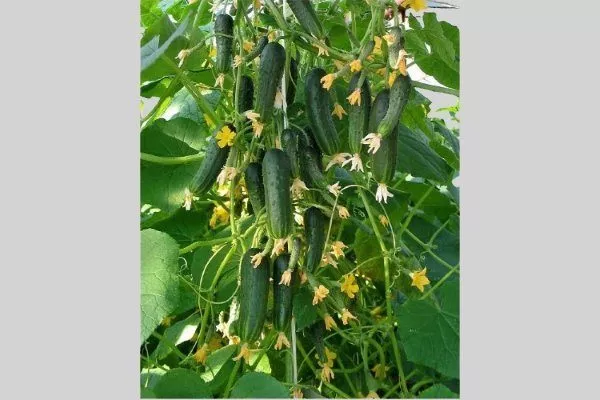
Because the fruits grow in bunches, one bush can produce as many cucumbers as 10 bushes of regular varieties.
Description of cucumbers
The variety is possible grow in a greenhouse, as well as in greenhouses, tunnels, containers, and open ground. Cultivation methods include both seedlings and non-seedling methods. High yields are achieved due to the ability to form bunches. A single bush can yield the equivalent of 10 plants.
- ✓ Optimum soil temperature for planting seeds: not lower than +15°C.
- ✓ The soil pH level should be between 6.0-6.5 to ensure better absorption of nutrients.
The "Bunch Splendor" variety is an early-ripening cultivar, with fruits ripening within 30 days of planting. A distinctive feature is that the flowers are predominantly female, eliminating the need for pollination and producing no barren flowers. A single bunch can produce up to seven gherkins.
- ✓ Bunching ability: up to 7 gherkins in one bunch.
- ✓ No need for pollination due to the predominance of female flowers.
To develop the hybrid, two varieties with superior quality traits were crossed simultaneously. "Bunch Splendor" is a first-generation offspring and belongs to the f1 class. This means that it is completely impossible to obtain seeds at home (seeds must be purchased fresh each year).
General characteristics
Fruit characteristics:
- shape – cylindrical, smooth;
- the tips of the cucumbers are slightly rounded;
- the surface is covered with small tubercles;
- maximum length – 11 cm (hence the gherkin);
- shade – light green;
- longitudinal stripes are present;
- there are small spines and white pubescence;
- the top is tapered;
- fruit weight – 70-85 grams;
- taste – no bitterness, sweet;
- the pulp is juicy with a compact structure, due to which there are no voids;
- There is a crunch and elasticity that is preserved after heat treatment.
What does the bush look like:
- branching type - second;
- there are few lateral shoots;
- blooms in a bouquet;
- in one bunch there are from 3 to 7 ovaries;
- leaves - small green.
This variety is considered indeterminate, meaning the central stem grows tall. This allows the plant to twine like a vine, clinging to its support. Indeterminate varieties do not require pinching.
Productivity
Since Bunch of Splendor is a parthenocarpic hybrid, additional pollination is not necessary. Therefore, the variety is considered high-yielding – up to 40 kilograms of cucumbers can be harvested from one square meter.
Application
Gherkins have a wide range of uses, as the fruit retains its crispness after cooking. Where is the "Bunch of Splendor" used?
- for sale and transportation;
- in the preparation of salads;
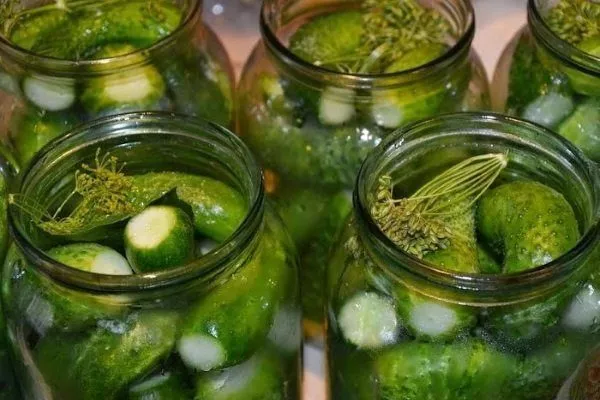
- when salting and pickling;
- in canning for the winter.
Seedling method of cultivation
Method growing cucumbers using seedlings It deservedly receives attention because it allows for earlier harvests. Simply put, it shortens the ripening period. This is because the seed material has been strengthened in favorable conditions.
However, not every variety is recommended for planting from seedlings due to its weak root system. As for the "Bunchy Splendor," the seedling's roots are quite strong and robust, so transplanting the seedlings into open ground is straightforward. The best time to transplant the seedlings is early May.
Seed preparation
The first thing you need to do is prepare the seed material according to the requirements. To do this, follow these steps:
- Combine warm water (not hot) with table salt, add the seeds, and let sit for 15 minutes. After this time, the hollow seeds will float to the surface and should be discarded.
- Next, disinfection is carried out to neutralize pathogenic microorganisms. This means that the plant will be less susceptible to disease while developing seedlings. A weak solution of potassium permanganate (manganese) is used for disinfection. Soak the seedlings in the solution for 20-25 minutes, then remove and rinse with water.
- Wet a piece of gauze, place the seeds on it, and cover with a damp cloth. This will keep the seeds moist throughout the entire process, which will initiate the germination process. Three days is sufficient.
To speed up germination, the moistened cloth with the grains can be placed in a plastic bag and left in a dark place.
Planting seeds and caring for seedlings
The most convenient way to plant seeds is in peat briquettes or pots – there is no need to carefully remove the root system, and the peat acts as a natural fertilizer.
If this isn't possible, plant the seeds in any convenient container. In this case, fill the container with prepared soil. This will require humus, lime, and mineralized fertilizer. Combine all ingredients with soil and place them in the planting container. You can also use store-bought soil.
Rules for sowing seeds:
- level the ground;
- make grooves 1 to 2 cm deep;
- plant seed material;
- cover with soil;
- water with water at room temperature;
- cover with film or glass;
- put in a warm place.
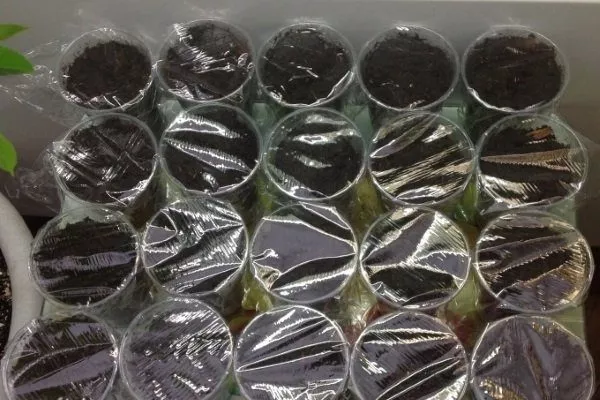
Watering
Once the first shoots appear, remove the protective film and move the container to a sunny windowsill. The room temperature should be 23 degrees Celsius (73 degrees Fahrenheit). From this point on, maintain optimal soil moisture—it shouldn't be wet, but always moist. The water temperature should be 27-30 degrees Celsius (80-86 degrees Fahrenheit).
Water in the morning, focusing on the roots. Avoid getting the leaves wet. Avoid watering with a watering can; a spray bottle is best. Transplant into open ground after 2-3 full-fledged leaves have emerged.
Hardening off seedlings
To help seedlings adapt more quickly to open ground, harden them off. This should be done 2-3 weeks before transplanting. Here's how to harden off:
- take the container with seedlings out to the balcony or open the window and leave for 1-2 hours;
- the next day, the hardening time increases by 20-30 minutes;
- then increase the time daily so that the seedlings are outdoors during the daytime.
Transplanting seedlings into the ground
Before transplanting seedlings, the soil must be prepared. This is done by digging it and adding organic fertilizer (slurry, chicken manure, etc.). The transplanting process is as follows:
- dig holes (depth from 8 to 12 cm);
- moisten the holes with water;
- remove each bush from the container (if in peat pots, then there is no need to remove the plant from them, since planting is carried out together with an organic object);
- place the cucumber root system in the hole;
- sprinkle with earth and compact;
- cover with film (cover at night, during the day the film needs to be removed).
Landing rules:
- the distance between bushes should be 30-50 cm, between rows – 40-50 cm;
- picking is carried out after sunset - this way it is easier for the plant to adapt to new conditions;
- 2 bushes are planted per 1 sq. m;
- watering is done daily in the morning or evening;
- Once the plant is fully established and strong, it is enough to water it every other day or once every 3 days.
Caring for cucumbers
Once the bush has grown, it needs to be trained into a single stem. The fact is that the "Bunch Splendor" produces the largest number of ovaries on the central stem. Using side shoots, however, can reduce the yield. Here's what to do:
- remove shoots (even if there are ovaries) in the lower 4 axils;
- The remaining shoots are removed as they grow.
How to care properly:
- The clustered magnificence prefers high humidity, so it's important to strictly follow watering guidelines. The water should be warm and settled.
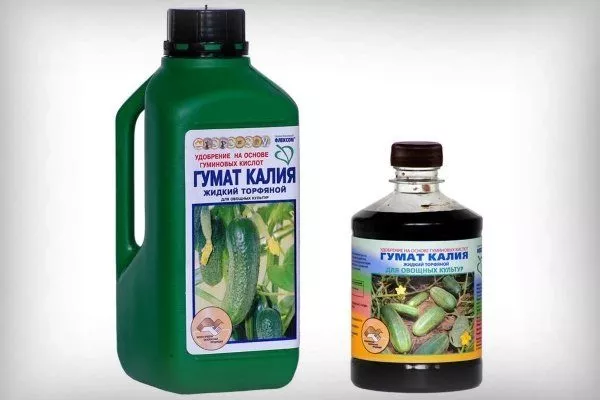
- Fertilizing is essential. The first time is 10 days after transplanting the seedlings to their permanent location. Liquid chicken manure or poultry manure can be used for this purpose. Specialized organic fertilizers purchased at the store can also be used, such as Biud fertilizer, diluted with warm water at a ratio of 1:20. The next feeding should be done 7-8 days later. For this, use a complex fertilizer, such as Potassium Humate or Effecton.
Seedless cultivation method
Planting seeds directly in the ground is convenient, quick, and economical, especially when it comes to a variety like the Bunch of Splendor. This is because the plant was bred for growing in cool temperatures. It's important to note that, unlike with seedlings, the fruit ripening period is delayed by 10-15 days.
What rules should you follow:
- This variety is early maturing, but it's not wise to rush planting the seeds outdoors. It's important to wait until there's no risk of frost. Therefore, the best time to plant them ranges from May 20th to June 10th.
- Before planting, the soil is dug over and fertilized. It's essential to disinfect the soil. Copper sulfate is used for this purpose (15 grams of the substance per bucket of water is sufficient).
- Approximately 10-12 days after planting, the seedlings need to be thinned. Each seedling is assessed for strength (weak seedlings are removed with pruning shears). The next thinning is done after the leaves appear.
- Immediately after sowing, cover the seedlings with plastic film overnight. Do the same during the day if it's cloudy and cold. Don't forget to ventilate the plants periodically.
How to choose a sowing site:
- The cluster magnificence takes root in any conditions, but the place should still be sunny and warm (without wind or drafts).
- The soil should be loose and slightly acidic. If the acidity is too high, add dolomite flour, slaked lime, wood ash, chalk, or organic matter to the soil. To increase the acidity (if it's too low), add an acid (oxalic or citric). To do this, add 2 tablespoons of the substance to 10 liters of water.
- The depth of the groundwater is taken into account. If it is closer to the surface, watering is much less frequent. Otherwise, the risk of root rot increases.
- Sunflowers, corn, green lek, and radishes can be planted next to cucumbers. The first two plants can be used as the main support for a trellis.
- Avoid placing it next to herbs (mint, rhubarb, thyme, coriander).
- It is prohibited to plant this variety after any type of cucumber, pumpkin, squash, melon, or watermelon.
Planting seeds
After preparing the soil, level the surface. Next, make holes 30-50 cm apart. To save space, you can plant the variety in a checkerboard pattern.
4-5 seeds are planted in one hole, 2 cm deep. After this, the crop is watered and covered with film until seedlings appear.
Watering
The soil must be kept moist at all times. Otherwise, the fruit will be dry and dull. And the yield will be significantly reduced. Rules:
- watering is necessary once every 2-3 days depending on climatic conditions;
- water is added early in the morning or late in the evening;
- 25-30 liters of water are required per 1 sq. m;
- the liquid should be warm;
- if there is a drought, then watering is carried out daily, and much less frequently during rain;
- irrigation type – drip;
- After moistening, loosening or mulching is carried out.
Weeding and loosening
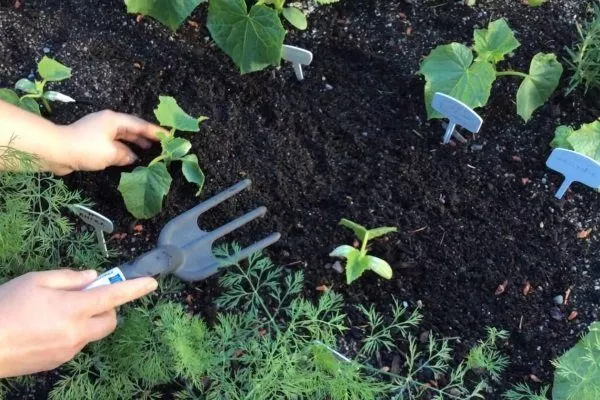
Weeds transmit a huge number of diseases and pests. Furthermore, grass "sucks" nutrients from the borage plant. Therefore, weeding is essential. Loosen the soil weekly. This promotes oxygen supply to the root system.
Pinching out stepsons
To ensure high yields and fruit production, the Bunch Splendor variety requires pinching. This variety self-regulates its bush, so lateral shoots rarely grow. However, for various reasons, this does occur, so it's important to monitor the shoot formation process. As each new shoot appears, it is removed. If the shoots, along with the central trunk, bear fruit, the yield is significantly reduced.
Garter
Many cucumbers don't require staking, but this method isn't suitable for bunch varieties. This is because their central stem grows strongly and lacks lateral shoots. Other advantages of staking the Bunch Splendor:
- significant space savings (with the garter-free method, it is necessary to plant the plants at large distances so that they can freely spread out over the soil surface);
- the light is supplied evenly and is correctly distributed over absolutely all brushes and ovaries;
- the culture is well ventilated;
- convenient for shaping the bush;
- the fruits are collected in their pure form;
- cucumbers do not get wet from moist soil;
- it is easier to loosen and weed;
- a full treatment of leaves and stems is carried out with agents against diseases and pests;
- the harvesting process is simplified;
- The risk of leaf infection is reduced as there is no contact with weeds and soil.
Methods of tying up a bush:
- Horizontally. A support is installed near each plant, along which the stem climbs.
- Vertically. Wooden supports are placed along the sides of the bed and connected with wire, wooden slats, or string. The stem is grasped by these supports.
- Net method. A net is installed near the garden bed, and the plant grows along it.
Top dressing
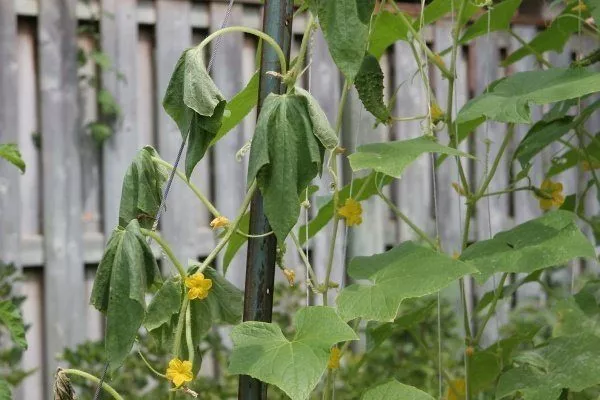
Fertilizing plants is essential, as a lack of nutrients leads to changes in appearance, reduced yield, and increased risk of disease. This is due to the cucumber plant's weak immune system.
It's important to strictly adhere to the dosage instructions (when using products), as an excess of minerals can also have negative consequences. For example, if nitrogen concentrations are too high, foliage will grow rapidly, but fruit development will be stunted. If potassium fertilizer is overused, the plant will wilt, etc.
What you need to do:
- Immediately after transplanting seedlings or after germination when growing without seedlings, treat them with urea. To do this, you only need 10-12 grams of the substance per 10 liters of water.
- About a couple of weeks after planting, fertilize the soil. Add ammophoska (5 grams per square meter is sufficient). Additionally, prepare a solution of superphosphate (60 grams), urea (15 grams), and water (one bucket).
- When the bush is flowering, use nitrophoska, diluted with water at a rate of 40 grams per bucket. Alternatively, use diammophoska (20-25 grams per square meter).
- When the first fruits appear, potassium nitrate will be needed. Use 30 grams per 10 liters of water. It is recommended to apply the fertilizer weekly.
- To ensure active growth of seedlings, liquid manure and chicken droppings are used.
- To strengthen the plant's immunity and root system, a yeast solution is added. It's easy to prepare:
- heat 20 liters of water;
- dissolve 400 grams of fresh yeast in it;
- add 60 grams of granulated sugar;
- mix thoroughly and let ferment for 2-3 hours;
- dilute the resulting liquid in 100 liters of warm water.
- Wood ash is added periodically, either dry or liquid. In the first case, the substance is scattered under the roots; in the second, it is mixed with water (300 grams of ash per 10 liters).
- Herbal cocktails are helpful. Dandelion and nettle are used. Preparation method:
- fill one third of any container with grass;
- pour warm water to the top;
- cover tightly with a lid;
- let it brew for 7-10 days;
- combine with water in a ratio of 1:5;
- add culture.
Pests and diseases of cucumbers Bunch splendor
With proper care and timely preventative treatment of the shrubs and soil, the Bunch of Splendor variety is resistant to diseases and insect pests. However, occasional cases of disease do occur.
Anthracnose
The main cause is excessive soil moisture, so avoid overwatering the plant (the soil should be moist, not soggy). Symptoms include:
- formation of light spots on leaves;
- fragility of the leaf blade;
- the occurrence of ulcers;
- breaking and dying of stems.
For prevention and treatment purposes, the following manipulations are performed:
- Before planting seeds, soak the material in a solution of manganese or the preparation Immunocytophyte;
- disinfect the soil and greenhouse;
- remove affected elements immediately;
- After watering, add Bordeaux mixture (1%) under the root system;
- treat the soil with Abiga Peak (0.5%);
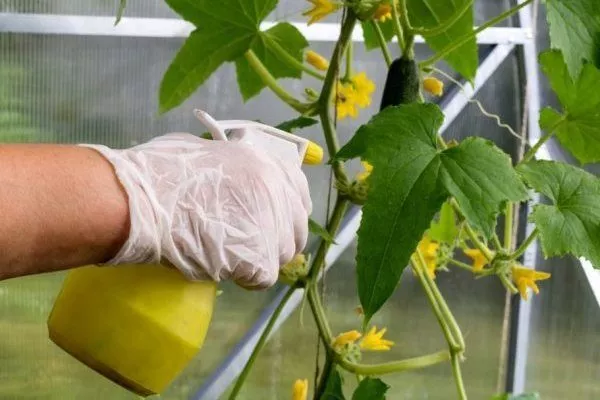
- Spray the trunk and leaves with a solution of Strobi or Quadris.
White rot
The disease occurs as a result of fungal infection. This is facilitated by high air and soil humidity (during prolonged rainfall and cool weather). Symptoms:
- formation of a whitish coating on the leaves;
- presence of mucus;
- rotting;
- fruit damage.
The following methods are used for prevention and control:
- cut off the areas affected by the pathogen;
- apply lime or ash solution to the cut area;
- disinfect the soil;
- If the bushes are planted too densely, thin them out;
- spray with a solution: 10 liters of water, 2 grams of copper sulfate, 10 grams of urea.
Gray mold
The cause is high humidity and sudden temperature changes. Signs:
- the presence of gray spots on the leaves that stick to the touch;
- formation of fluff on the stem and fruits;
- stem rot;
- softening gherkins.
What to do:
- respect the neighborhood (pumpkin, zucchini and similar crops are excluded);
- disinfect the soil using a solution of manganese or copper sulfate;
- in case of frequent rains, cover the plantings with film;
- use an iodine solution (1 part substance, 2 parts water) – treat the soil and plants every 3-4 days;
- For prevention, spray the plants with Trichodermin once every 20 days (100 grams per bucket of water).
Aphid
This insect spreads rapidly throughout the garden, so immediate action is necessary. Aphids can be identified by the following symptoms:
- leaf curling;
- falling of flowers;
- formation of a sticky coating.
What to do to get rid of aphids and prevent their attack:
- Before planting seeds or seedlings, disinfect the soil;
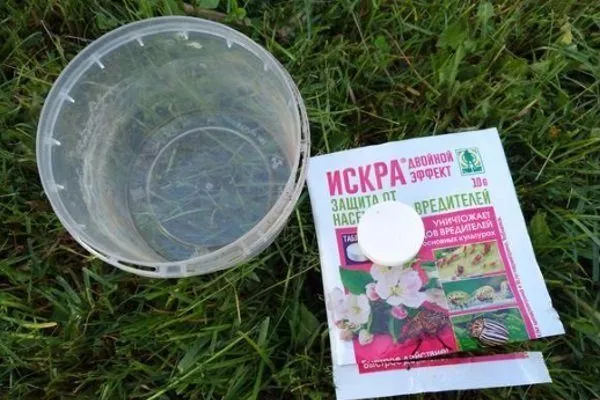
- before the formation of fruits, treat the surface of the leaves with one of the following preparations: Fitoverm (5 ml of solution per 1 liter of water), Aktara (1 gram of the substance per 10 liters of water), Iskra (1 tablet per bucket of water);
- periodically spray with a solution of wood ash (2 kg per 10 liters of water);
- spray the plant with a soapy solution;
- During fruiting, treat with herbal cocktails made from tomato tops, nettles, dandelion, and chamomile.
Whitefly
The insect attacks plants during hot, sunny days and spreads rapidly. How to identify a whitefly infestation:
- a sticky coating forms on the inside of the leaves;
- the leaves wither and fall off;
- growth and fruiting slow down;
- larvae become visible.
Preventive measures and therapy:
- use the Bud preparation for spraying seedlings and saplings when growing without seedlings (10 grams per bucket of water);
- carry out timely loosening of the soil;
- every 10 days, spray the plant with a herbal cocktail (for 1 liter of boiling water you will need 60 grams of the root and leaf parts of the common dandelion);
- use the following preparations: Actellic (1 gram per bucket of water), Confidor (2.6 ml per 10 liters of water), Iskra (1 tablet per bucket of liquid).
Spider mite
Spider mites appear during dry weather, so in such cases, it's especially important to monitor soil moisture carefully. Symptoms include:
- the insect's location is the inner part of the leaves;
- wilting of the bush;
- drying out of the plant.
How to get rid of the pest and prevent its appearance:
- remove weeds that carry insects;
- moisten the soil;
- loosen the soil;
- remove damaged leaves and destroy by burning;
- treat with the following preparations: Fitoverm (1 ml of the preparation per 1 liter of water), Actellik or Aktara (1 gram per bucket of water).
Potential difficulties and problems
Bunch Splendor is a fairly resilient and undemanding variety, but some gardeners periodically encounter certain difficulties. The table below lists the common problems, their causes, and solutions:
| Features of the problem | Reasons | What to do? |
| Excessive stretching of the fetus.
Paleness of the leaf part. Late flowering. A small number of ovaries on the bush. Bad taste. | The main reason for these problems is the lack of lighting. | If the bushes are not tied up, be sure to do so to ensure sunlight penetration.
Plant the variety in a sunny location. |
| Poor plant development.
The presence of bitterness in the taste. Yellowing of leaves. | This happens when water often gets on the leaves during watering. | Water the plant using the drip method, primarily under the root system. |
| Lack of ovaries.
Ovaries falling off. Dryness of leaves. | Reduced plant immunity due to lack of nutrients. | Feed cucumbers with fertilizers in a timely manner. |
| Stem rot. | Overwatering. | Adjust the soil moisture regime. |
| Dryness of leaves.
Yellowness of the plant. | There are several reasons: lack of moisture, root damage, hypothermia. | Increase the amount of water.
Pour a solution of the insecticide preparation under the root. Cover the plantings with film. |
How to harvest and store crops?
The "Bunch Splendor" variety differs from many others in that its fruits can be picked daily over a long period of time. Furthermore, this is essential—if ripe cucumbers are not picked, new ovaries will not appear, and unripe cucumbers will slow their growth. Harvesting should be done in the morning or late evening.
It's best to store this variety in a cool place for 5 days. To extend its shelf life, follow these guidelines:
- Do not wash the fruits before storing them;
- check the cucumbers for dryness (there should be no moisture);
- cut the fruits with garden shears along with the stem;
- inspect for damage;
- Do not allow the size to exceed 11 cm (this will be overgrown and will not store well).

Advantages and disadvantages
Advantages of the Bunch Splendor variety:
- self-pollination;
- the highest level of productivity;
- early maturity (the first harvest can be collected in June-July);
- long fruiting period (more than 3 months);
- the possibility of growing with and without seedlings;
- excellent taste and appearance;
- transportability;
- maintaining crunch after heat treatment;
- fruit elasticity;
- purpose – poor climatic conditions;
- resistance to diseases and high air humidity (with frequent fogs);
- versatility of use.
Cons:
- high cost of seed material;
- the need to buy new seeds every year.
Reviews
Bunch of Splendor cucumbers are distinguished by their very high yields and low maintenance and planting requirements. They tolerate low temperatures, produce fruit for a long time, and offer excellent flavor. They are ideal for retail, as they are not damaged during transportation. The main thing is to tie the plants and strictly follow all expert recommendations.