
The parthenocarpic cucumber hybrid Prestige, characterized by self-pollination, produces high-quality fruit. Its frost resistance and shade tolerance make it ideal for growing in a variety of climates. Created by Russian breeders, the Prestige F1 cucumber is a bouquet variety.
Introduction to the variety
Among the world's diverse cucumber varieties, the first-generation Prestige hybrid stands out for its unrivaled yield in the truest sense of the word (far higher than others), long fruiting period and early ripening, excellent taste, and adaptability to temperature fluctuations.
Originators
The developers of this parthenocarpic variety were scientists Dubinin, Kirillov, and Dubinina from the Sedek agricultural firm. Their achievement was registered in the State Register in 2007.
The variety is suitable for growing both outdoors and in a protected film greenhouse, as well as on a glazed loggia for those who do not have their own plot of land.
Characteristics of the appearance of the plant and cucumbers
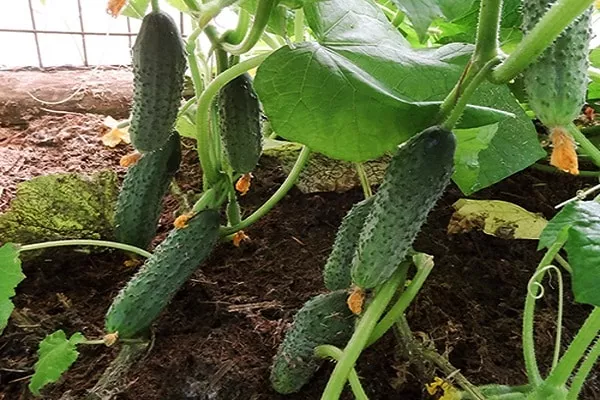
Prestige is an indeterminate variety, meaning the plants grow continuously and can reach considerable heights without shaping. The hybrid also has other varietal characteristics:
- a well-developed root system allows the bushes to be effectively moistened, saturated with oxygen and nutrients from the soil (root shoots reach 25-35 cm in length);
- strong, medium-length stems (80-160 cm) form large bushes;
- female flower inflorescences predominate;
- no insect pollination required;
- The leaves have a deep green hue, smooth texture and wavy edges;
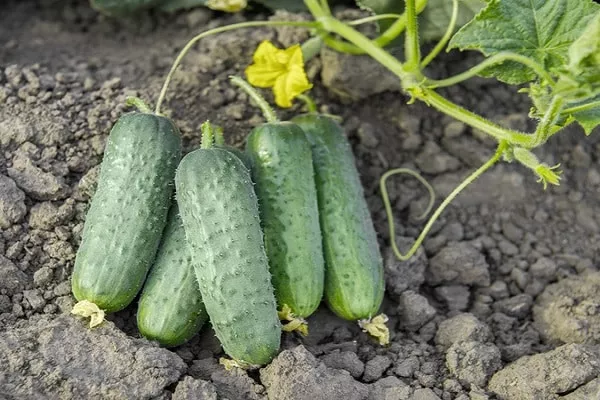
- Prestige is classified as a bunch cucumber - each one produces about 3-4 fruits;
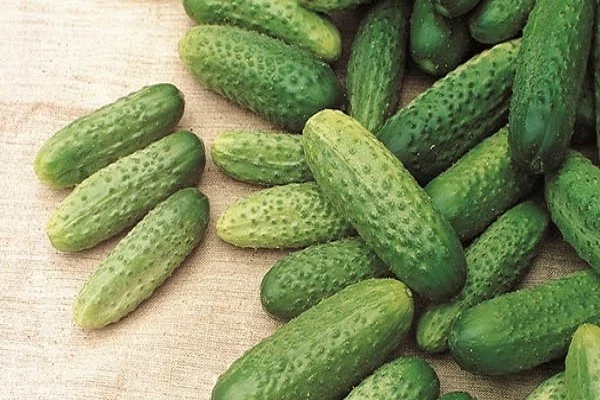
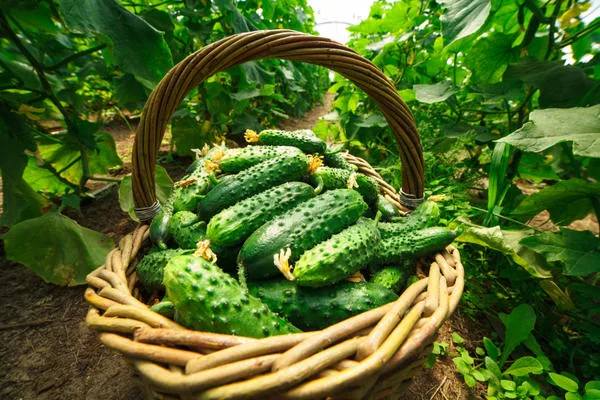
- shortened cucumbers, not exceeding 10 cm in length;
- average weight varies from 65 to 90-95 g;
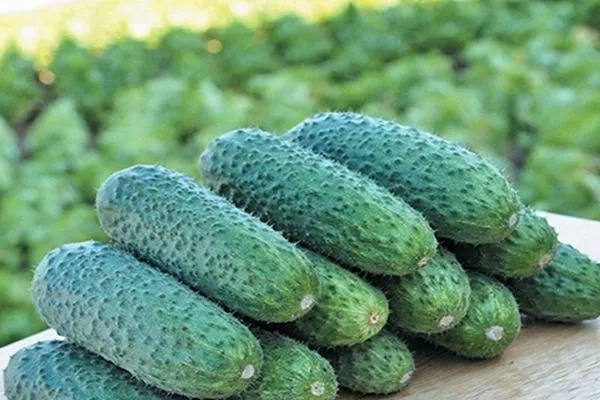
- the skin of the fruit is thin, with large tuberculate formations and white spines;
- The color of the cucumbers is dark green, with small stripes on the surface.
- ✓ The presence of white spines on the fruits, which is a distinctive feature of the variety.
- ✓ The ability of fruits to retain a dark green color even when overripe.
Taste and purpose
Cucumbers are distinguished by their distinctive, rich flavor and fresh aroma. These salad fruits have a unique ability to stimulate the appetite, which is why they are often eaten raw or used in salads with various vegetables.
For winter storage, cucumbers, thanks to their small size, are ideal for whole canning. Their flavor is especially pleasant when lightly salted.
Composition, benefits
The calorie content of cucumbers per 100 g is only 15 kcal. The nutritional value is as follows:
- proteins – 0.6-0.9 g;
- carbohydrates – 2.4-2.6 g;
- fats – 0 g.
The fiber found in cucumbers has a beneficial effect on gastrointestinal function. They contain vitamins B, C, E, and K, organic acids, as well as macro- and microelements, including potassium, sodium, phosphorus, calcium, magnesium, fluorine, iron, and zinc.
Green cucumbers, which consist of 94-96% water, have the property of cleansing the body of waste, heavy metals and toxins.
When ripe, the yield
Prestige reaches maturity in just 40-45 days after the primary shoots form. Although mature cucumbers typically reach a length of about 9-10 cm, experts recommend cutting them back when they reach 6-7 cm to extend the harvest time – after 5 days, a new cucumber begins to form in the same spot.
Yields vary depending on growing conditions. In a greenhouse, yields are around 23-25 kg per square meter, while outdoors they range from 15 to 18 kg.
Regionality and climatic conditions
Prestige was chosen for cultivation in the Central Black Earth Region and Western Siberia due to its tolerance to local climate conditions, but the variety is also popular in other regions. Thanks to its greenhouse cultivation, gardeners across the country can try this variety.
Prestige is resistant to various weather conditions, tolerating both full sun and light shade. Partial shade is ideal to prevent cucumbers from burning during certain hours of the day in the south. The variety is resistant to both heat and short-term cold spells, making it an ideal choice.
Pros and cons
Before planting the Prestige F1 cucumber, it's worth familiarizing yourself with its advantages. Prestige has deservedly earned the respect of vegetable growers thanks to the following qualities:
- It belongs to parthenocarpic varieties, which means that pollination by bees is not required for the formation of fruits, and empty flowers are not formed.
- The taste is highly rated: it is sweet, has no bitterness and remains pleasant after marinating.
- Ideal for cultivation both outdoors and in greenhouses, on balconies and even indoors.
- The plant is undemanding to growing conditions and is resistant to temperature fluctuations, excessive moisture or drought, making it ideal for transportation.
- The green stuff retains its freshness and does not darken.
- Prestige F1 has a prolonged fruiting period and the yield is extremely abundant.
Despite its many advantages, Prestige F1 also has its disadvantages:
- The yield depends on the level and quality of care.
- This variety is particularly susceptible to powdery mildew, grey mould and bacterial disease.
- This is a first-generation hybrid, so it will not be possible to obtain seeds from the collected cucumbers that retain all the qualities of the mother plant.
How to grow it yourself?
To ensure a bountiful harvest, Prestige cucumbers should be planted in soil that provides sufficient nutrients, moisture, and air. Heavy or compacted soils are unsuitable, as they are often susceptible to disease and develop poorly in such conditions.
- ✓ The optimal soil pH should be in the range of 6.0-6.8 to ensure maximum nutrient availability.
- ✓ The soil must contain at least 3-4% organic matter to maintain structure and water-holding capacity.
Preparing a bed for growing cucumbers
The root system of these vegetables is shallow and particularly air-sensitive, so it's important to ensure the soil dries quickly and is evenly moistened. Therefore, the soil should be permeable to moisture and air, light, and as loose as possible.
The root system of these plants reaches 30 cm in length, which is equivalent to the thickness of the top layer of a heated garden bed. The heated garden bed is prepared in the fall, and in the spring, seedlings can be introduced 1-3 weeks earlier than usual.
Soil temperatures should be at least 15-17°C for successful cucumber planting. The best growing locations are those previously grown:
- tomatoes;
- peppers;
- cabbage;
- salads;
- turnips.
The soil should be dug to a depth of at least the length of a shovel blade. When cultivating in regular open beds, be sure to add organic matter—8 to 12 kg per square meter.
Cucumber seedlings
For early vegetable harvesting, use the seedling method, followed by transplanting into greenhouses or vegetable gardens. The ideal time for sowing seeds is April 1-10. Features of the seedling technology:
- Pre-treat the seeds in a 3% salt solution, discarding any that float to the surface and rinsing the remaining ones, then plant them in disposable containers. This ensures minimal stress during subsequent transplanting to their permanent locations. Bury the seeds to a depth of 1.5-2.5 cm, then cover the containers with plastic wrap.
- Peat containers are ideal for seedlings. The entire pot containing the plant is placed in the soil. Alternatively, you can use 500 ml plastic cups, pre-drilled with holes to allow excess moisture to drain.
- The seeds germinate in about a week (+/- 1-2 days). Plants with three to four leaves are transplanted into garden beds in May, once the danger of frost has passed. In greenhouses, this can be done earlier.
- Prepare the area in the fall: dig up the soil, adding manure/humus, and treat it with copper sulfate to protect against pests.
- Dig holes every 5-55 cm and carefully transplant the seedlings into them. Then, moisten the soil with warm water.

Sowing in the ground
To begin sowing, it's important to choose the right time—the soil temperature must remain at least 17-19°C for normal germination. In anticipation of autumn, prepare the site by removing all plant debris and digging it up to a depth of a spade. Acidic soils should be limed.
When spring arrives, around mid-April, the area should be dug again and leveled with a rake. Then proceed as follows:
- In May, add compost, mineral fertilizers and wood dust to the area.
- After this, spray the area with a solution of potassium permanganate to disinfect, sow the seedlings, and cover with dark film. Plant the seeds no more than 2 cm deep.
Sow seeds in sunny weather. Once seedlings emerge, thinning is necessary, leaving the strongest plants at intervals of 20-30 cm.
Subtleties of agricultural technology
It is recommended to grow this variety on a single central branch, with any emerging side shoots removed immediately after they form. This method is especially suitable for greenhouse cultivation. In open ground conditions, simply trimming the tops of the plants and regularly removing excess foliage is sufficient.
Watering
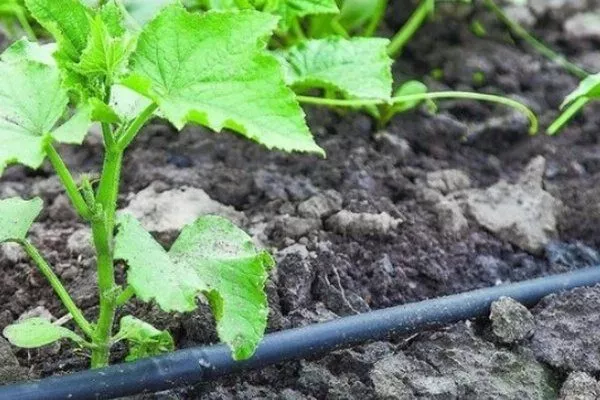
It's important to ensure a uniform and sufficient supply of moisture. The ideal substrate for cucumbers should be light and quickly absorbed. During dry periods in summer, cucumbers require daily or even twice-daily watering—morning and evening.
For watering, use only warm, settled water, to which you can add a few drops of Zircon. After watering, it's helpful to cover the plantings with a layer of straw, compost, or sawdust.
Top dressing
After irrigation, cucumbers need fertilizer, which is applied 3 to 10 times throughout the season, depending on the initial degree of soil fertility.
For feeding plants, it is best to use a weak solution of mullein, which is fed once a week - not a concentration of 1:10, but 1:15-20.
Typical periods for fertilization:
- Two weeks after transplanting the seedlings into permanent soil.
- During the period of intensive budding.
- During the formation of fruit ovaries.
- In the middle of cucumber growth.
Important nuances:
- Foliar fertilizers They are more diluted solutions of the same substances, but they treat the foliage on both sides.
- Foliar feeding is recommended only in cases of obvious deficiency of any nutrient.
- One good solution is to use charcoal – 200 g per 6-7 liters of water.
- To stimulate the formation of more ovaries on flowers, a sweet solution consisting of 2 liters of water, 200 g of sugar, and 1 teaspoon of boric acid is recommended. The water should be diluted with sugar and boron while boiling.
- To extend the fruiting period, you can use an infusion of rotted hay.
- All foliar fertilizers should be applied in the evening.
- For root feeding It is necessary to carefully distribute the liquid so that it does not touch the foliage.
Features of cultivation and possible difficulties
To avoid problems with cultivation, use the following cucumber care techniques:
- To protect cucumbers from spring frosts, they are covered with agrofibre or polyethylene film;
- It is necessary to maintain regular moisture, especially in hot and dry weather, to prevent the development of a bitter taste in the fruits;
- until the ovaries appear, the seedlings are watered every 2-3 days;
- They get rid of excess leaves and shoots, and carefully hill up the bushes.
Diseases and pests
This cucumber variety is resistant to various diseases, but in conditions of excessive moisture and frequent rainfall, it can be susceptible to pathogens such as downy mildew, tobacco mosaic, and white rot.
Disease prevention is achieved by spraying plants with a 3% copper sulfate solution. It is also necessary to remove affected areas.
Pests such as aphids, spider mites, and whiteflies can cause serious damage to cucumbers. To control them, use:
- To combat aphids, use infusions of potato peelings, celandine and malathion.
- Spider mites are destroyed using fungicides - Aktara and Confidor, or tobacco infusion.
- Whiteflies are controlled using sweetened sticky traps and by spraying with onion or garlic infusion. Larvae can be eliminated by watering the soil around cucumbers with a hot pepper solution and sprinkling it with dry mustard.
To prevent diseases, cucumbers are sprayed with natural products that are gentler and safer for both plants and humans. Whole skim milk with added iodine (15 drops per 500 ml) and household soap (10-15 g) is effective. The resulting mixture is diluted in plenty of water. Cucumber bushes are also sprayed with herbal infusions of wormwood and celandine.
Harvesting and use of the crop
Cucumbers are actively harvested during the summer months. They often ripen unevenly, so harvesting continues until early fall. The skin of these hybrids is covered with numerous small spines, requiring the use of gloves when handling.
After the fruit is picked from the bushes, it is placed in wooden crates and stored in a cool place. The produce will keep in these conditions for about a month.
Cucumbers are ideal for fresh summer salads, canning, and pickling. Pickled cucumbers are especially prized for their crispness and density, free of air pockets and bitterness.
Reviews
The Prestige variety is a hybrid that can be grown from both seeds and seedlings. It's easy to care for: just fertilize, water, loosen the soil, and mulch at the right time. The plants produce several crops, and the cucumbers are juicy and crisp, without a bitter aftertaste.