
Podmoskovnye Vecheri cucumbers attract gardeners with their ease of care, early ripening, and excellent flavor. Both novice and experienced agronomists can easily grow them. The key is to learn all the key aspects that make this hybrid so popular: from care instructions to recommendations for growing and harvesting.
Introduction to the variety
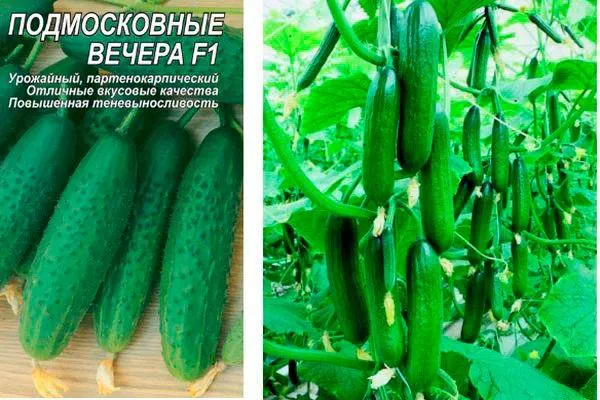
With so many different varieties, it can be difficult to choose one that meets all your needs. Podmoskovnye Vechera (Moscow Nights) has received numerous positive reviews and is cultivated in various regions of the country due to its excellent characteristics.
Features of selection
Work on creating the hybrid began in 1999 at the Manul breeding company, where its creators were A. V. Borisov and O. N. Krylov. After passing the necessary tests, an application was submitted for inclusion in the State Register. In 2000, it was approved for mass production.
Specificity of bushes and cucumbers
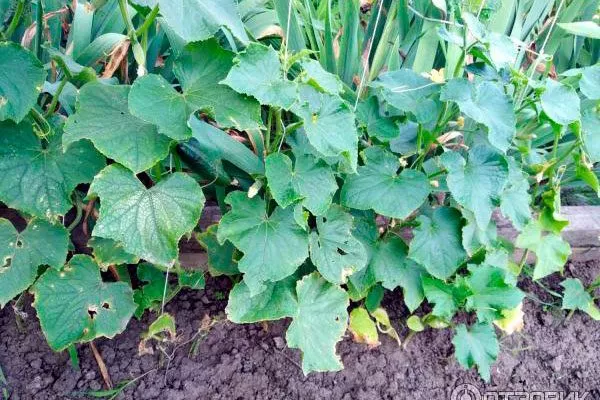
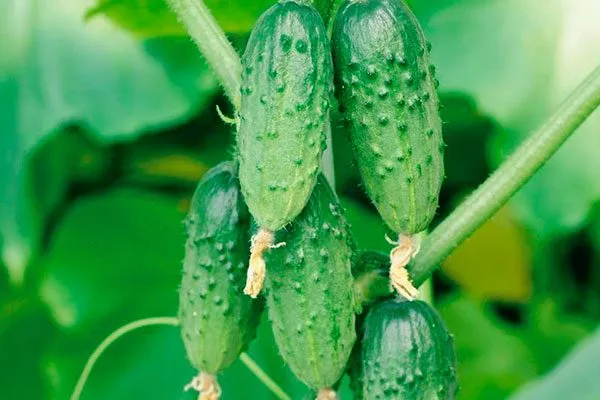
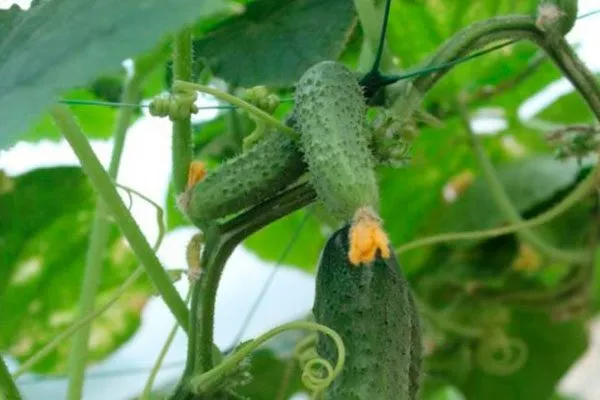
It is an indeterminate variety and can reach several meters in length. It is distinguished by strong, robust shoots with moderate branching. The small leaves are green in color, and the root system is well developed. Up to three ovaries form in a single bunch.
Taste and application
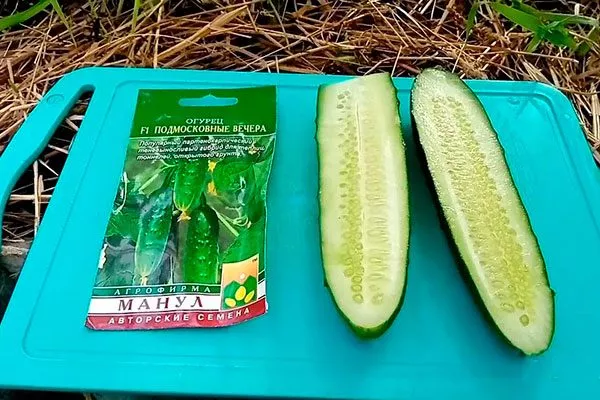
These vegetables are characterized by an excellent flavor; they are sweet and completely free of bitterness. The flesh is firm, without any air pockets. Cucumbers are versatile: they can be eaten fresh or used for processing. Many gardeners emphasize their excellent pickling and flavor qualities.
Fruiting period
This is an early-ripening variety. It takes 42-45 days from germination to the appearance of the cucumbers. The fruiting period is long and extended.
Productivity
On average, one bush yields 7 to 9 kg of cucumbers, and 15 to 17 kg per square meter. In beds without covering material, the yield is slightly lower, at 10 to 12 kg per square meter.
Regions for cultivation
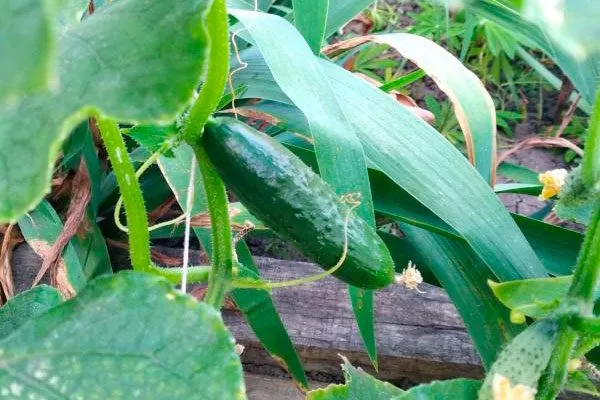
The crop is successfully cultivated throughout almost all of Russia. It thrives in the Northern and Northwestern Federal Districts, as well as in the Central, Volga-Vyatka, and Central Black Earth regions.
The bushes are grown in the North Caucasus, the Middle and Lower Volga regions, the Urals, Western and Eastern Siberia, and the Far East.
Peculiarities of growing a hybrid
To ensure a good harvest and justify the effort, it's essential to provide the crop with proper care. A greenhouse is recommended, although the hybrid also thrives in open garden beds.
Preparing the beds
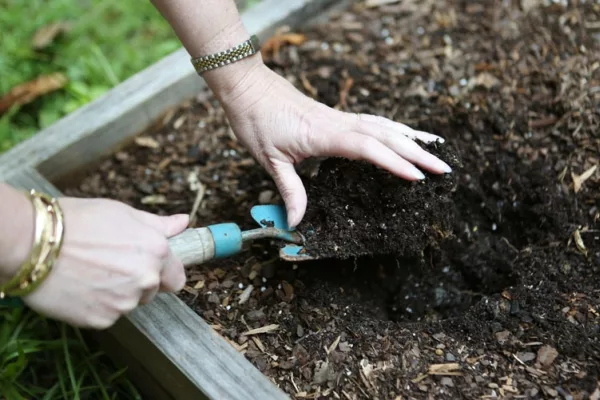
Choose a well-lit area for your seedlings, protected from winds and drafts. Begin preparing the soil in the fall: dig, remove weed roots, and apply fertilizer, including organic and mineral fertilizers.
- ✓ Soil pH should be between 6.0-6.8 for optimal nutrient absorption.
- ✓ The soil should have a high water-holding capacity, but at the same time be well-drained.
Helpful tips:
- Greens prefer loose, nutritious soil with a neutral pH. In acidic soils, add lime, chalk, or dolomite flour to neutralize the acidity.
- An excellent way to prepare the soil for planting is to sow green manure in the fall in beds or a greenhouse. Before the cold weather sets in, bury the seedlings, and in the spring, all that's left to do is dig the soil. When planting seedlings in open ground, it's common to create "warm" beds by filling the trenches with straw and manure.
- In the greenhouse, install trellises and supports to secure the stems and vines. In garden beds, cucumbers are most often grown spread out.
- Planting pattern for the hybrid: 3-4 bushes per 1 sq. m in open ground and 2 in shelters.
A few days after planting, tie the shoots to the trellis. To protect them from sunlight, precipitation, and possible subsequent frosts, cover the plants with non-woven fabric or film.
The intricacies of sowing and caring for seedlings
In southern regions, skip the seedling-growing stage and sow seeds directly into their permanent locations. In temperate climates with short summers, grow seedlings first, then plant them in raised beds or greenhouses. This requires more effort, but allows for an early harvest.
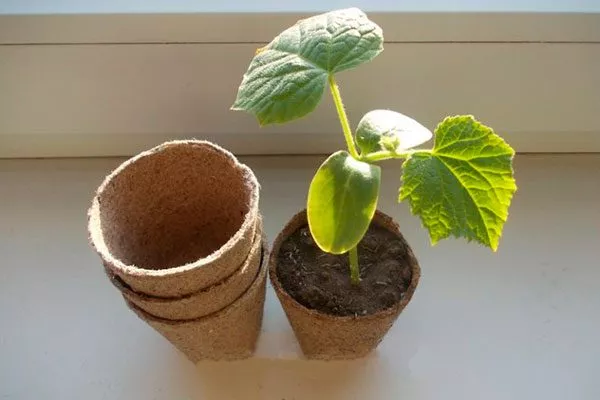
For seedlings, prepare:
- containers (pots, peat tablets, plastic or cardboard cups);
- substrate.
Sow seeds directly into individual pots, as seedlings grow more slowly and have a harder time establishing themselves after transplanting. This will help avoid replanting, and when planting in a permanent location, use the transshipment method with a clod of soil or in peat pots.
Buy ready-made soil (universal or specialized) or prepare your own. In the fall, prepare the following ingredients:
- leaf or turf soil;
- humus;
- coarse-grained river sand (it can be replaced with perlite, rotted sawdust, vermiculite).
These additives make the soil loose and permeable. Add ash and complex fertilizers to the substrate.
The time for sowing seeds depends on:
- places of crop cultivation;
- local climate;
- characteristics of the variety.
In temperate climates, plant early cucumbers in garden beds no earlier than early June, and in greenhouses in mid- to late May. Seedlings should be 25-26 days old, so plan your sowing dates accordingly.
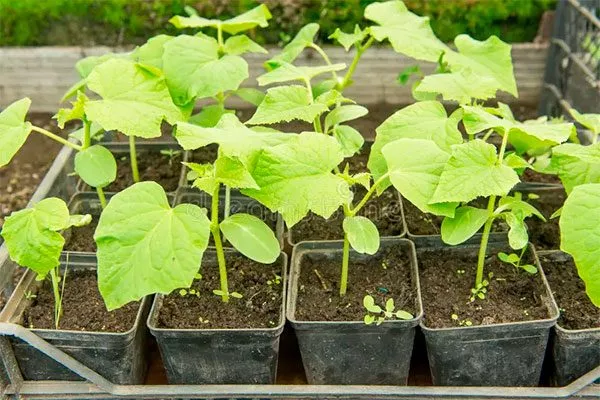
Water potted seedlings regularly and fertilize them once or twice with nitrophoska or special seedling fertilizers (such as Agricola No. 5). The room temperature should be stable – around 20°C – without over-chilling the seedlings. High temperatures can cause them to stretch and weaken.
About a week before planting, harden off the seedlings by placing them outside on a balcony or in a greenhouse. This helps them adapt to the upcoming conditions and makes planting easier.
Methods of growing the variety
Many gardeners, striving for high yields, employ various cultivation methods. The Podmoskovnye Vechera hybrid is no exception.
In bags or plastic bags
For this method, use bags or sacks with a capacity of at least 100 liters. Step-by-step instructions:
- Fill the containers with prepared nutrient soil.
- Drive a tall stake, approximately 2m high, into the center of each bag or sack.
- Install low hollow pipes made of any material for irrigation around it.
- Plant 3 plants in each bag.
- Drive three short stakes into the ground nearby, and attach a piece of fishing line to the tall central stake. This will allow the shoots to grow upward, creating a shelter-like structure.
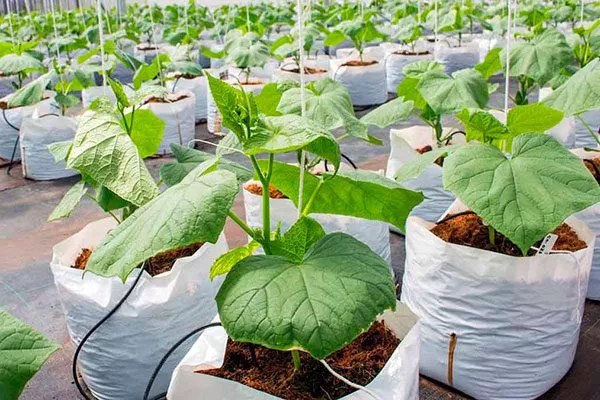
This method is especially convenient in small areas, as the bags or packages take up little space.
In the form of a hut
Plant the seedlings in a circle with a diameter of 2 meters. Place a tall stake with hooks at the top in the center. Drive a stake into the center near each plant. Attach one end of the fishing line to the hooks on the central stake and the other to the stakes. The tendrils will catch on the fishing line and rise upward.
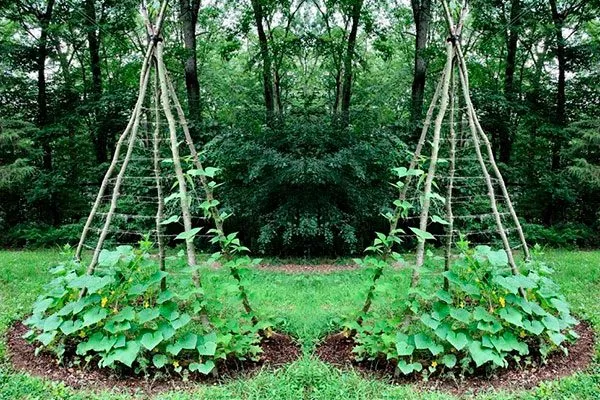
The result is a structure resembling a hut. For the central stake, it's best to use a small-diameter metal pipe, 1/3 of which should be buried in the ground. This will ensure the structure's stability.
On a trellis with a slope
Plant the seedlings in narrow beds in two parallel rows. Drive tall, inclined stakes into the ground at the beginning and end of each row. Place a horizontal pole on top of these stakes, spanning both rows. String a string from the pole to each plant and secure it.
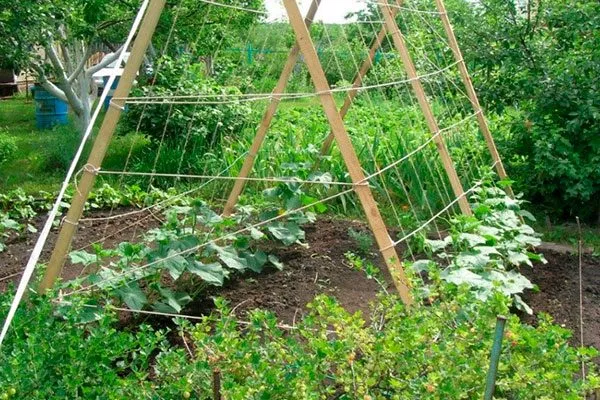
The tendrils will cling to the slats and grow upward. Trellising is a very popular method. It provides good light, prevents overcrowding, and improves ventilation. The fruits are easy to harvest because they are always visible.
Caring for cucumbers: basic techniques
Caring for the crop is straightforward and requires simple agricultural practices. The quality of care determines yields and plant immunity.
Watering
Cucumbers require ample moisture, but it's important to avoid both under- and over-watering. Watering should be moderate before flowering and generous during budding and fruiting, taking into account weather conditions, plant condition, and soil type.
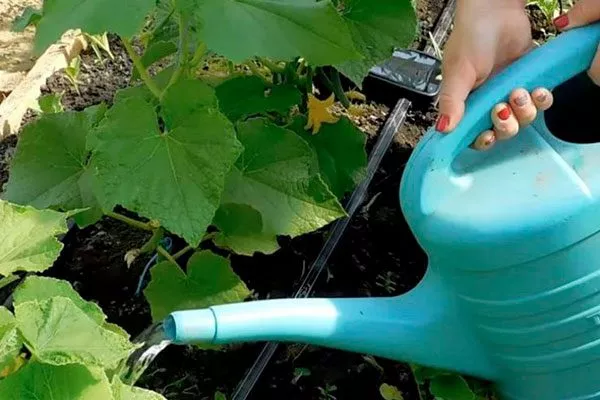
Follow these recommendations:
- In greenhouses, watering depends on soil moisture and air humidity (no more than 85%). In hot weather, water daily; on cloudy and cool days, water twice a week.
- In open beds, precipitation can replace watering, so with regular rainfall, watering is not required.
- The recommended watering rate for young plants is 8-10 liters of water per square meter, while for mature plants, 6-8 liters per root. Apply the water into furrows or holes, avoiding contact with leaves and shoots.
- Use only warm (+22°C) settled water.
You can replace labor-intensive tilling with mulching between rows. Mulch made from hay, straw, humus, or peat protects the soil from drying out, suppresses weed growth, and prevents crust formation on the surface.
Fertilization
To ensure long-term fruiting, ensure regular fertilization. Even in fertile soil, plants quickly deplete nutrients, so additional fertilization is necessary.
Apply up to five fertilizers per season: 15-20 days after planting the seedlings, and then every 10-14 days. Use both organic and mineral fertilizers. Chelated fertilizers and ready-made store-bought formulas, such as Ideal and Kristalon, are popular.
Before flowering, apply nitrogen fertilizers (manure, bird droppings) to stimulate above-ground growth, then add potassium and phosphorus supplements. Suitable mineral fertilizers include nitrophoska, superphosphate, potassium nitrate, and potassium sulfate.
From folk remedies use:
- ash infusion;
- fermented herbs (green "tea");
- for foliar spraying: solutions of boric acid and iodine.
The culture responds well to the addition of yeast solution (in combination with ash) and bread sourdough.
Plant formation
Vigorous bushes produce numerous side shoots, which constantly produce flowers and ovaries, which can weaken them. Train your bushes properly, removing excess shoots and pinching back shoots:
- Remove 4-5 nodes with ovaries at the bottom of the bush (up to a height of 45-50 cm).
- Trim the side shoots, leaving 1-2 leaves and ovaries to the level of the trellis.
- Pinch the main stem when it hangs 10-20 cm from the trellis.
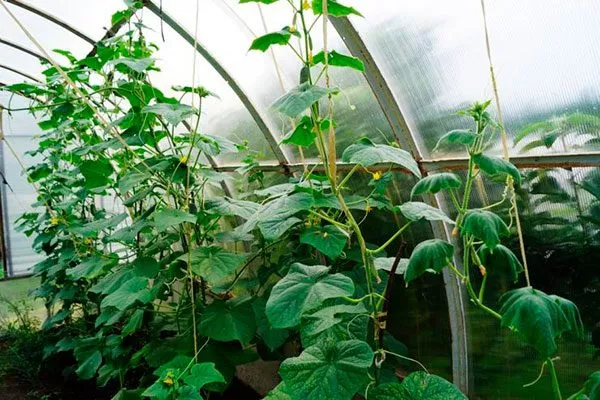
Lack of pruning and dense plantings can lead to reduced yields and the development of infections, especially in greenhouses.
Collection and storage
At peak fruiting, harvest the greens daily. Pick the fruits carefully to avoid damaging the shoots. Regular harvesting promotes the formation of new crops.
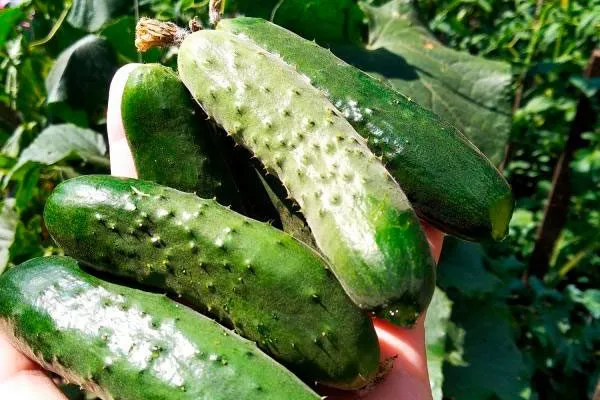
If harvested infrequently, cucumbers may remain on the vine longer, resulting in a reduced overall yield, although they do not overgrow or turn yellow. Others remain in their embryonic stage and do not ripen.
Pest control
The hybrid has good immunity, but some problems can occasionally arise. Common diseases of the crop:
- powdery mildew;
- downy mildew;
- Cladosporiosis (brown olive spot);
- sclerotinia;
- gray mold;
- root rot;
- anthracnose (pennyroyal).
If the plant has been infected, remove the diseased areas, even if they are only part of the root system, as the plant recovers quickly. To prevent re-infection, treat with a fungicide solution: copper oxychloride, Fundazol, Topaz, Quadris, Aliette, Falcon, or Bravo.
Seedlings can be attacked by pests:
- ants;
- whitefly;
- spider mite;
- slugs;
- melon aphid.
It's important to combat pests promptly, without waiting for them to multiply en masse. If pests are detected, use commercial pest control products such as Kinmiks, Decis, Inta-Vir, Arrivo, Fitoverm, and Actofit. These products produce good results after just one application.
Follow the instructions when using chemicals to avoid damaging your plants. During the fruiting period, avoid using chemicals; instead, use traditional remedies such as boiling water, soap solutions, and peppermint infusions.
Positive and negative qualities
Many gardeners highly value the Podmoskovnye Vechera hybrid for its numerous advantages. These include:
Reviews
The Podmoskovnye Vechera hybrid deserves attention thanks to its numerous advantages. It boasts a stable yield and excellent flavor, and easily adapts to a variety of growing conditions. The variety is suitable for both fresh consumption and winter preservation, making it an ideal choice for any gardener. Consistent care is key.