
Cucumbers are an easy-to-grow garden crop, but they're also quite delicate. If a cucumber doesn't like something, the skin and flesh will soon become very bitter. To solve this problem and ensure you're getting only delicious vegetables from your garden, you need to understand why cucumbers become bitter.

Are there any benefits to bitter cucumbers?
Today, some believe that bitter cucumbers have beneficial properties. This is indeed true, as the fruit contains cucurbitacin, which produces bitterness and has medicinal properties.
As early as the last century, the first scientific studies appeared indicating that certain cucurbitacins help reduce the risk of tumor development. The substance is known to have the following beneficial properties:
- analgesic and anti-inflammatory effect;
- increasing the ability to adapt to stressful conditions;
- antiparasitic and contraceptive properties.
Why cucumbers taste bitter and how to prevent it?
There are many reasons why cucumbers become bitter. To solve the problem, you need to understand why.
Potassium deficiency
Potassium deficiency can cause bitterness in greenhouse-grown cucumbers. You can tell by the leaves—they become darker, and the edges take on a characteristic white tint.
To solve the problem, apply potassium nitrate. Dissolve 30 g of the product in 10 liters of water. Fertilize the cucumbers and you'll see the bitterness disappear.
Nitrogen deficiency
If the plant doesn't have enough nitrogen, the stems become thin but stiff. The problem is also indicated by yellowing upper leaves. The lower foliage loses its elasticity and becomes droopy. A lack of nitrogen also causes fruit to grow slowly, develop poorly, and become bitter.
The problem is solved simply:
- Feed the plant with a urea solution. This solution is considered the most concentrated nitrogen fertilizer.
- Prepare a solution at a rate of 25 g per 10 l of water.
- Add about 9 g of urea per 1 sq. m.
Incorrect watering and humidity
Cucumbers don't like dry summer weather. Regular watering is essential, otherwise, low yields or bitter fruit can occur.
- ✓ The water temperature for irrigation should not be lower than +20°C to avoid stress on plants.
- ✓ Watering should be done early in the morning or late in the evening to minimize water evaporation and prevent leaf burn.
However, overwatering can also be detrimental to the plant. Watering cucumbers with a hose is especially dangerous, as tap water is too cold for the heat-loving plant.
Improper watering and excessive water pressure can cause soil erosion and expose the root system. This can quickly cause cucumbers to rot and prevent them from absorbing the necessary nutrients and moisture from the soil.
What is the correct way? water the cucumbers:
- Water the plants so that the soil under the bushes is constantly moderately moist.
- The frequency of watering depends on weather conditions and the soil type in the area. For example, sandy soil requires daily watering during drought.
- If you can't monitor irrigation for any reason, mulch moisture-loving crops. Use any available material, such as a thick layer of weeds, straw, or rotted sawdust.
Mulch will retain moisture in the soil for a long period and reduce the need for watering. This also protects the plant's root system from exposure.
If you don't want your fruit to be bitter, avoid watering the plants with a hose. Moisten the soil under the bushes only with warm water in the morning or evening. If using water at a comfortable temperature, you can mist the leaves of the plants—they really enjoy it.
Insufficient ventilation
Insufficient ventilation has a significant impact on greenhouse cucumber cultivation. This often results in the fruit becoming extremely bitter, making them unfit for consumption.
You need to ventilate the greenhouse regularly, especially in hot weather. If it's warm outside, simply open the door and vents; don't close them at night. The morning temperature should be no lower than 15 degrees Celsius.
Lots of overgrown cucumbers
Most classic and modern varieties boast a decent yield. For example, experienced gardeners sing the praises of the Buratino F1 hybrid. On average, one square meter can yield up to 13 kg of cucumbers.
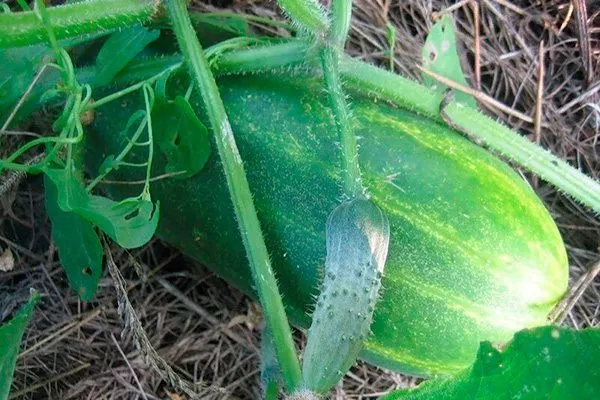
This fertility also has a downside: rapid growth leads to the plant producing numerous overgrown cucumbers.
Damage to cucumber vines
Experienced gardeners note that damage to cucumber vines doesn't directly cause bitterness, but it does negatively impact the crop. Furthermore, broken stems can lead to a loss of a good harvest.
To prevent the problem, install supports or stakes before planting seeds or seedlings. tie up the cucumbersBy lowering a rope from the greenhouse ceiling, you'll ensure better plant growth and prevent them from lying on the ground, risking damage from damp soil and pests.
Seeds of bitter varieties
Breeders are constantly working to develop cucumber varieties and hybrids that won't produce bitterness. Therefore, seeds from older varieties often produce fruits that produce large amounts of cucurbitacin.
Sharp daily temperature changes
Cucumbers are a heat-loving vegetable crop, so climate plays a significant role. You can't influence the weather, so if your region experiences short-term frosts during the summer, grow cucumbers in a greenhouse.
This method takes more time, but you'll get a larger harvest, protect the cucumbers from the wind, and be able to provide support and direct their growth. Most importantly, the cucumbers won't taste bitter.
Lack or excess of light
Cucumbers require bright but indirect light. They react negatively to direct sunlight, which can be scorching during the intense summer heat. This leads to increased production of cucurbitacin.
Cucumbers exposed directly to sunlight are especially bitter. Because of this, cucumbers often grow on the same plant with different flavors: those shaded by foliage are edible, while those exposed to the sun are very bitter.
The same thing happens with cucumbers if they don’t get enough sunlight due to dense planting or shading by taller neighbors.
The solution to this problem is simple:
- Start caring for the good taste of your fruit from the moment you plant. Avoid dense plantings and plant seeds or seedlings no more than 20-30 cm apart, with 40-50 cm between rows.
- Pinch back long-stemmed varieties promptly. Shoots should not grow more than 1.5-2 m.
- Create ideal lighting conditions. A polycarbonate greenhouse is considered the best option for growing plants—the material provides bright yet diffused light.
Seeds from your own garden
Most gardeners prefer to let a few cucumbers ripen to produce seeds. If you do the same, be sure to taste the leaves from the vine where the cucumbers grew. If you detect a strong bitterness, it is not recommended to use the seeds from that plant for propagation.
Sowing dates
Cucumbers are plants that require time to adapt to longer daylight hours, warmer temperatures, and other environmental conditions. Therefore, follow the sowing dates indicated on the packaging. Or use a calendar.
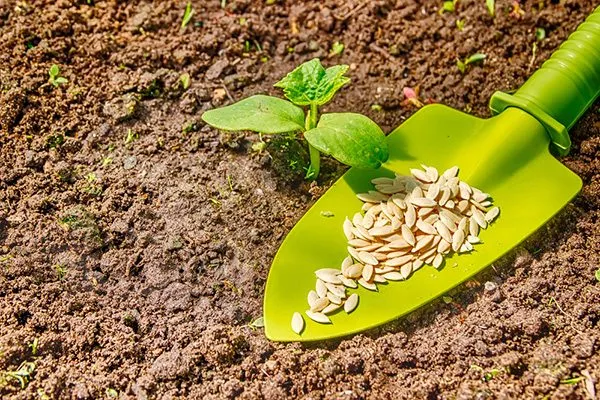
In the Moscow region, seeds are germinated and planted in greenhouses in mid-May, and in open ground until June 5. If you grow cucumbers using seedlings, you can plant them after June 10.
Excess or lack of fertilizers
If you notice your cucumbers have become misshapen, crooked, or have an unusual shape, it's likely due to a nutrient imbalance in the soil. This problem needs to be addressed immediately.
Apply fertilizer according to the instructions. Don't use fresh manure; cucumbers require well-rotted manure. Bird droppings can be used as a natural fertilizer, but make sure the solution isn't too concentrated, as this can burn the plants.
Poor air exchange in the soil
This is one of the most common problems. Very often, the soil lacks aeration, especially if it's predominantly clay. This causes compaction, which leads to root suffocation.
To prevent this, loosen the soil regularly. This will improve air circulation and prevent the cucumbers from becoming bitter.
Dry air in the greenhouse
Controlling the humidity level in the greenhouse is crucial. Dry air can cause fruit to taste bitter.
Regular watering will help avoid this problem. Ensure the plants receive sufficient moisture. Also, water the paths in the greenhouse. You can also install a barrel of water to ensure adequate humidity in the greenhouse.
Pests
Pests are often the cause of bitter cucumbers. To prevent the problem, learn about prevention and control methods.
Spider mite
Spider mites entangle leaves in a fine web, pierce the skin, and suck out the sap. You may notice grayish-marbled spots and light spots that gradually fade. Over time, the leaf turns yellow and dries out.
- ✓ The presence of small white dots on the leaves, which gradually merge into large spots.
- ✓ The appearance of a fine web on the underside of leaves, especially in dry weather.
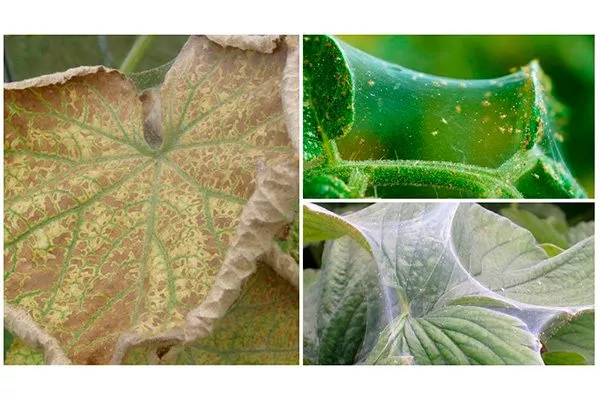
How to fight spider mites:
- Collect and destroy damaged leaves. Remove cobwebs from the plant before treatment.
- During the initial period of pest emergence, use biological products such as Akarin, Agravertin, Vertimek, Fitoverm, and Bitoxibacillin. Apply the treatment to the underside of the leaves.
- For severe damage to cucumbers, use acaricides such as Sanmite, Apollo, or Floramite. Spray three times, spaced 3-5 days apart.
- Spray with broad-spectrum insecticides. Recommended products include Karbofos and Inta-Vir.
Use folk remedies:
- Pour 1 liter of water over 400 g of calendula flowers and let steep for 3 days. Dilute in 5 liters of water and apply to cucumbers.
- Pour 200 g of onion or garlic peels into 10 liters of water and let sit for 12 hours. Strain the solution and spray the plants.
- Finely chop 500 g of dandelion greens, add 15 liters of water, and let steep for 3-4 hours. Strain and process.
Melon aphid
Aphids can damage all above-ground parts of the plant, piercing tissue and sucking out sap. This leads to discoloration and yellowing of the leaves, which wrinkle, curl, and dry out.
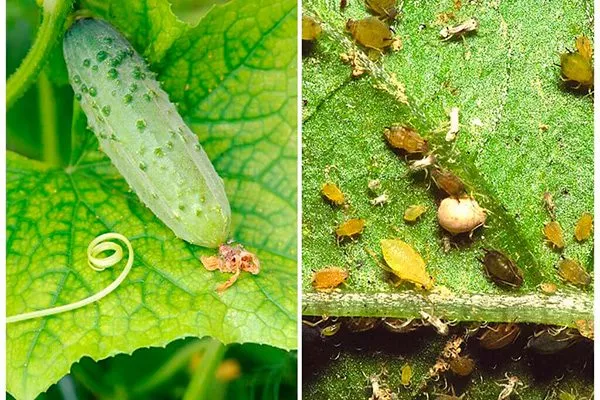
How to fight aphids:
- If the number of insects is small, treat the plants with biological preparations Fitoverm or Actofit.
- If there are a lot of pests, use insecticides: Iskra, Inta-Vir, Karbofos.
- Carry out treatments from the underside of the leaf, since this is where the bulk of insects are located.
Use folk remedies:
- Treat the underside of the cucumber leaves with a solution of potassium permanganate.
- Finely chop 2-3 kg of tomato tops, cover with hot water, and simmer for half an hour. Strain the resulting infusion. Use 1 liter of the prepared infusion per 5 liters of water. Add a little soap for better adhesion. Treat the plants.
- Dilute 10 ml of iodine in 5 liters of water and treat the cucumbers.
What varieties of cucumbers are definitely not bitter?
| Name | Ripening period | Disease resistance | Pollination type |
|---|---|---|---|
| Goosebumps | Early | High | Parthenocarpic |
| Accordionist | Average | Average | Bee-pollinated |
| Masha | Early | High | Parthenocarpic |
| Quadrille | Average | High | Parthenocarpic |
| Khrustik | Late | Average | Bee-pollinated |
| Shchedryk | Early | High | Parthenocarpic |
| Garland | Average | High | Parthenocarpic |
| Berendey | Late | Average | Bee-pollinated |
| Son-in-law | Early | High | Parthenocarpic |
| fidget | Average | High | Parthenocarpic |
| Courage | Early | High | Parthenocarpic |
| Mother-in-law | Average | High | Parthenocarpic |
| Lilliputian | Late | Average | Bee-pollinated |
Most varieties contain the bitterness gene, but recently breeders have worked hard to create varieties that do not accumulate cucurbitacin.
Gardeners note the following varieties of cucumbers that are free of bitterness:
- Ant;
- Accordionist;
- Masha;
- Quadrille;
- Khrustik;
- Shchedryk;
- Garland;
- Berendey;
- Son-in-law;
- Egoza;
- Courage;
- Mother-in-law;
- Lilliputian, etc.
You can purchase seeds of these varieties and grow them in your garden. However, there are a few nuances you should consider:
- Some varieties are not suitable for growing in a particular region or on certain soil.
- Some varieties are hybrids, so you will have to buy seed every year.
- Some cucumbers are not suitable for canning, even though most of the harvest is grown specifically for this purpose. These varieties include Egoza, Kadril, Liliput, Shchedrik, and Berendey.
Even if a variety is prone to bitterness, you can easily avoid this problem by following the recommendations of experienced gardeners.
What to do with bitter fruits?
If you find that your cucumbers are bitter, don't rush to get rid of the harvest, as there are several ways to use these fruits.
How to use bitter cucumbers:
- For the treatment of burns and diaper rash in children and adults
- For making facial masks. If you regularly use cucumber peel, you'll soon notice a significant reduction in acne.
- For canning. Use these fruits in winter salads, pickling, and marinating. The bitterness disappears with heat.
Bitter fruits are also safe to eat after peeling them. You can try soaking cucumbers in water; the bitterness should disappear.
How to prevent cucumber bitterness?
Preventing bitter fruit is fairly easy if you understand the cause. Proper care is the only way to avoid this problem.
Helpful tips:
- Before planting, prepare the soil by adding humus and compost.
- Grow the crop in light, non-acidic soil. To reduce acidity, add lime or dolomite flour.
- Avoid exposing plants to stressful situations such as dry soil, cold watering, drafts, or direct sunlight.
- Water plants regularly, but avoid overwatering.
- Apply fertilizer in accordance with the growth periods of the plant.
- Maintain soil moisture by mulching the soil using hay, sawdust or freshly cut grass.
To solve the problem of cucumber bitterness, simply follow the recommendations and take a responsible approach to gardening. If you perform these care procedures in a timely manner, you'll end up with fruits that won't taste bitter.