
Gardeners, and especially summer residents, don't always manage to harvest their entire crop in a timely manner. Some vegetables simply become overripe and unfit for further use. But this rule doesn't apply to all crops. If your cucumbers have overgrown, don't worry. There are many ways to recycle them profitably.
When should you harvest cucumbers?
Vegetable harvesting is carried out according to the prescribed timeframe for a particular variety, but gardeners should also pay attention to the cucumbers' external characteristics, as the harvest period does not always coincide with the onset of technical maturity. This is influenced by the weather. growing conditions, care.
- ✓ Consider the air temperature: it is recommended to harvest at a temperature not exceeding 25°C to preserve the firmness of the fruit.
- ✓ Check the soil moisture: harvesting after watering or rain can lead to rapid spoilage of cucumbers.
Despite this, it is necessary to focus on collection deadlines based on various indicators.
Based on the variety
| Name | Ripening period (days) | Usage | Collection period |
|---|---|---|---|
| Early ripening varieties | 35-45 | Salads | June |
| Mid-season varieties | 45-55 | Canning | July-August |
| Late-ripening varieties | 55-75 | Pickling | August-October |
When purchasing seeds from a specialty store, the package contains comprehensive information on planting and harvesting times not only for a specific variety but also for the region. General information is available:
- Early ripening varieties. Technical maturity occurs in 35–45 days. Most early cucumbers (especially hybrids such as Masha F1, Temp F1, etc.) ripen uniformly (all at once), and only a few need to be harvested over a period of 6–12 days.
They are commonly used in salads. Early-ripening varieties grow very quickly. Don't delay harvesting; it's best to start earlier than the stated time. The harvest period is June. - Mid-season varieties. Their ripening period ranges from 45 to 55 days. Canning is acceptable, but overripening is undesirable.
Experienced gardeners recommend harvesting even slightly unripe specimens, which will reveal their flavor after heat treatment. The harvest season is July–August. - Late-ripening varieties. Reaching technical maturity takes 55 to 75 days. This variety typically produces fruit over a long period of time, as the fruits develop slowly.
Harvesting should be done at longer intervals than with early varieties (for fast-growing varieties, check the beds daily; for late-growing vegetables, every 2-4 days). The harvest period is August–October.
Collection time
It's strictly forbidden to pick cucumbers from the garden during the day, especially in direct sunlight. Picking cucumbers should be done early in the morning or evening (after 8:00 PM), as these are the times when the vegetables are firm and have minimal water content. They will last longer without wilting.
If dew has accumulated on the cucumbers overnight, postpone harvesting until they have dried. It's also not advisable to harvest them during rain.
Depending on the purpose
| Name | Fruit size (cm) | Purpose |
|---|---|---|
| for human consumption | up to 10 | Fresh look |
| for canning | 6-10 | Conservation |
| for salting in barrels | 10-20 | Pickling |
Based on how the vegetables are used, the stage of ripeness is selected, and therefore the harvesting time. The following guidelines apply:
- For consumption (fresh) - the size of cucumbers should not exceed 10 cm.
- for canning - optimal values are 6-10 cm;
- for salting in barrels - 10–20 cm.
How do you know if your cucumbers are overgrown?
Depending on the variety, cucumbers reach technical maturity 7 to 14 days after the ovary has fully formed. During this period, cucumbers are at their most tender and juicy, with thin skin and a rich color.
It's not always possible to accurately determine the harvest date, especially if weather conditions didn't meet the manufacturer's recommendations or if the crop was planted from home-bought seeds. In such cases, pay attention to factors that indicate the crop is overripe:
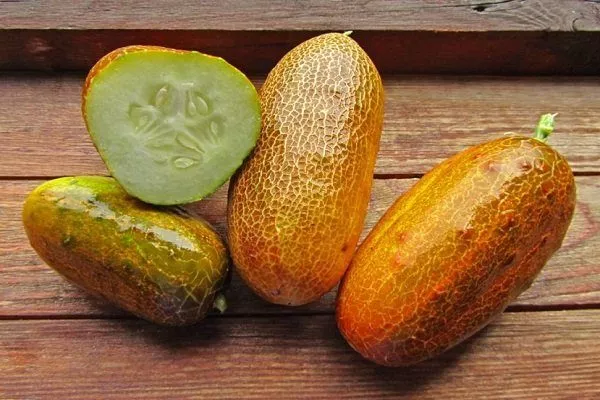
- delicate bumps on the surface disappear if they are typical for the variety;
- the color changes - instead of green, yellowness appears (the more the vegetable is overripe, the more these changes occur);
- if you cut the fruit, inside you will find large seeds with a very rough shell;
- the crust becomes too hard;
- the structure becomes soft (elasticity and hardness are lost);
- the size exceeds that typical for a particular variety;
- the taste becomes watery and bland;
- the aroma is reduced many times over;
- the secondary floral element has completely dried up and fallen off;
- If the variety is supposed to have stripes, then when overripe they look erased.
How to prevent them from overgrowing?
It's crucial to learn how to prevent cucumbers from becoming overripe, and a few tricks are helpful. Overripe vegetables lose their nutritional value, crunch, flavor, aroma, and freshness. They become tough and hard, and their appearance is unappealing.
Another reason for harvesting fruits in a timely manner is to allow new ovaries to form and accelerate the growth of other cucumbers. If overripe fruits remain on the bush, the plant becomes weakened (cucumbers continue to extract nutrients), and existing ovaries fall to the ground.
To prevent overgrown specimens from growing in your garden beds:
- inspect the fruit bushes daily and harvest every 2 days (early ripening ones should be harvested every day);
- in hot weather, vegetables ripen much faster - sometimes it is necessary to pick the crop twice a day (morning and evening);
- At the end of the growing season, metabolic processes in the plant slow down - collect once every 3 days;
- Weed the plants more often to prevent weeds from covering the bush, making it impossible to see the fruits;
- periodically trim the lower leaves and blind the side shoots in the lower tier - the ripening fruits will be clearly visible;
- pick all deformed specimens from the bushes, as they will not grow into a full-fledged vegetable, but it draws a lot of juices from the plant;
- It is very important to “unload” young bushes more often (their root system and main stem are not fully strengthened); small cucumbers can be used for salads or canned as gherkins.
- Check plants for pests and diseases in the morning.
- Monitor the soil moisture throughout the day and water if necessary.
- In the evening, inspect the fruits for ripeness and harvest.
If your cucumber bed is located in your dacha and you can't harvest frequently, experts recommend planting long-fruited cucumber varieties. These varieties grow more slowly and have soft seeds (they don't harden as they develop).
Furthermore, the fruit does not increase in width, and the skin does not become rough. Examples of such varieties include Chinese Heat-Resistant, Alligator, Shanghai Young Man, and Russian Size.
What to do with overgrown cucumbers?
The main thing is not to throw them away, as even overripe vegetables are the fruits of the farmer's labor and investment. Depending on the quantity of defective produce, various processing methods are used, including canning for the winter.
Use as seeds for the new season
Modern gardeners try not to leave overripe cucumbers on the plant, as this reduces yield. It's pointless to harvest seeds from hybrid varieties (marked F1). The following year, the resulting fruits will be mutated and won't meet the stated requirements.
Despite this, many farmers leave overgrown plants. To reduce the risk of reduced fruit and ovary formation, seedlings should be left on a single plant, rather than individually on each plant.
Pickle
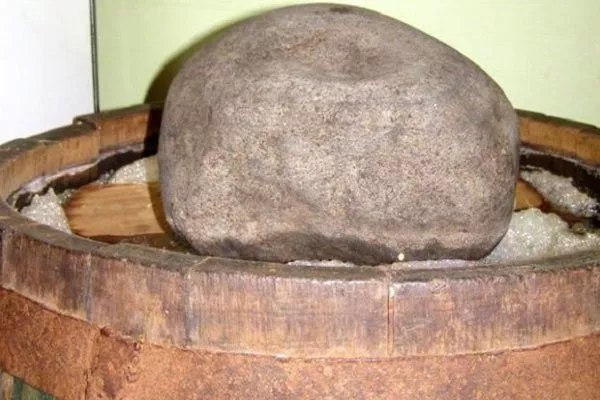
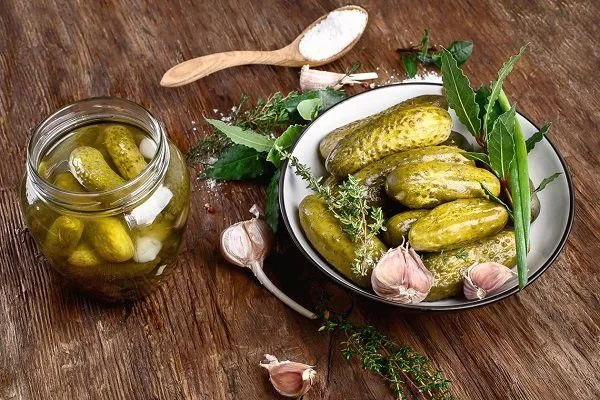
Pickling cucumbers has been practiced in Rus' since ancient times, especially using the barrel method. This can be done in an apartment, using an enamel pot or plastic container instead of a wooden barrel.
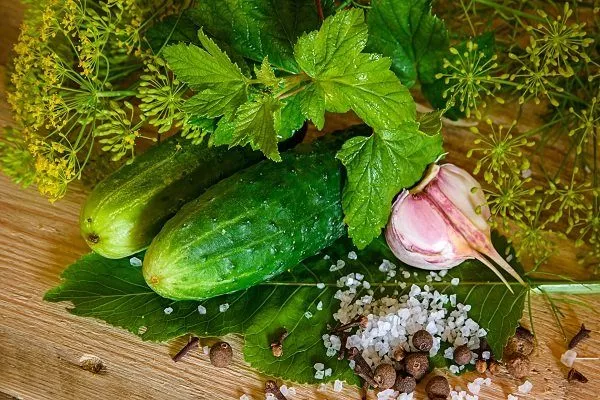
What you will need:
- cucumbers - 4 kg;
- dill sprigs - 150 g;
- horseradish leaves (for a special crunch) - 50–70 g;
- raspberry and cherry leaves - 10 pcs.;
- bay leaf, black currant and oak leaves - 5 each;
- garlic - 50-60 g;
- capsicum - 1-2 pcs.;
- allspice peas - 2-3 g;
- water - 5 l;
- salt - 300 g.
Cooking process:
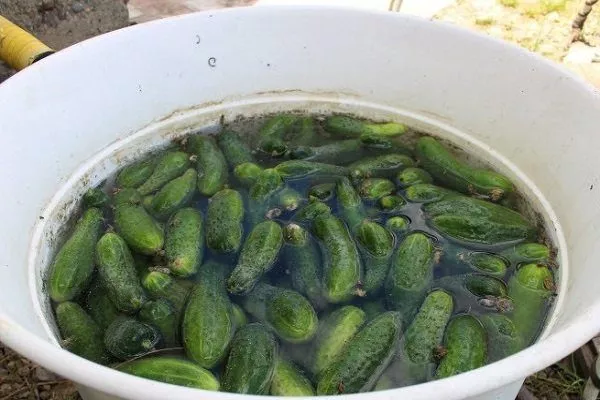
- Sort the cucumbers, place them in a wide bowl, and cover with water. Leave for 4–6 hours (this will neutralize the voids inside the overripe cucumber).

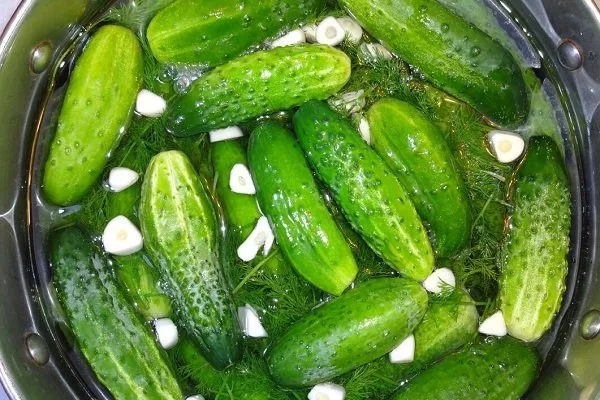
- Place half of the spices and herbs at the bottom of the container. Place the cucumbers on top. Try to place the largest cucumbers at the bottom. Packing them tightly together promotes better fermentation.
- Place the remaining ingredients on the cucumbers.
- Prepare the brine: pour cool, unboiled water (you can use filtered or store-bought water) into a saucepan, add salt, and stir until the last ingredient is dissolved.
- Pour the vegetables over them, place a board and weight on top of them.
- Cover with cheesecloth. Store at room temperature for about a week, skimming off any foam that forms during fermentation daily.
- Once the cucumbers are salted, place the container in the refrigerator, removing the cheesecloth and covering with a lid.

Sliced marinated
A delicious Polish recipe. Useful in salads, pickle soup, and simply as an appetizer.
Ingredients:
- cucumbers - 4 kg;
- sweet bell pepper - 0.5 kg;
- for the marinade:
- vinegar - 400 ml, but you can use a little less;
- salt and sugar - 200 g each;
- water - 3 l;
- bay leaf, mustard seeds, peppercorns.
Work progress:
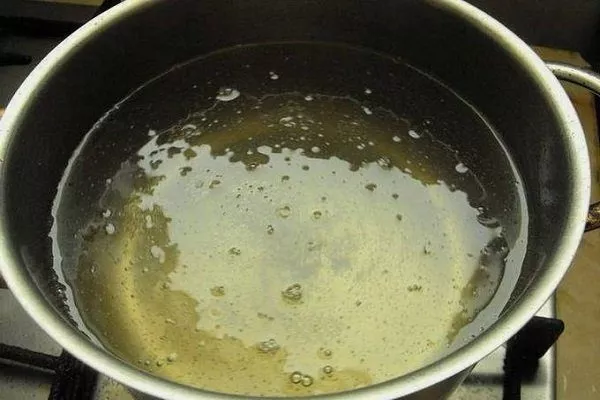
- Cook the marinade - boil for 10 minutes without vinegar.
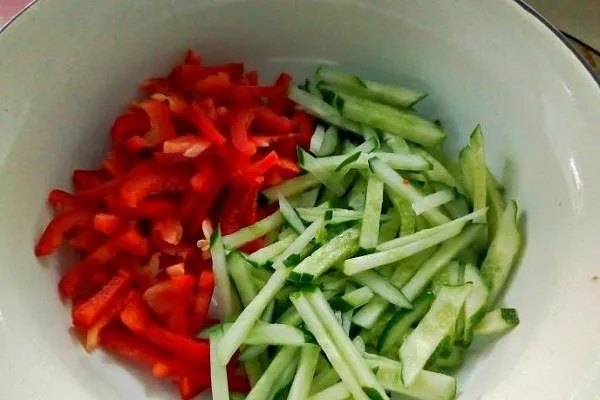
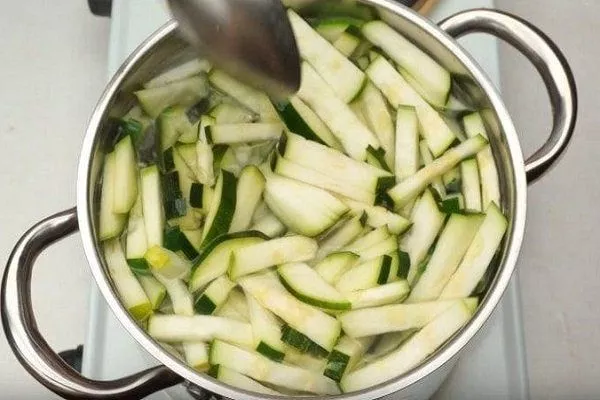
- Peel the cucumbers, removing any tough skin and hard seeds. Chop the bell peppers into strips or slices.
- Bring a separate pot of water to a boil. Dip each pepper into the water for 5 seconds, then immediately plunge it into ice water. This will make the skins easier to peel off.
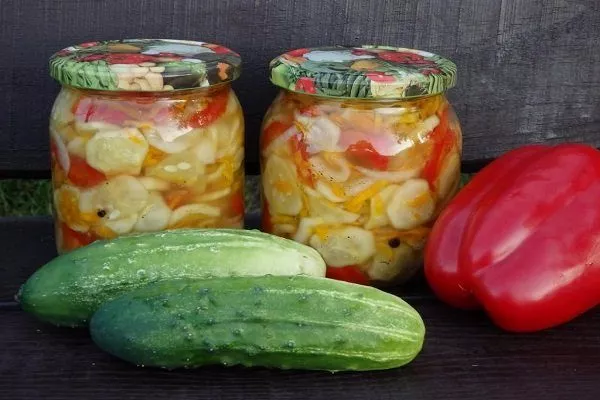
- Place all ingredients in a sterilized glass jar. Add vinegar at the end of the brine cooking time. Fill the jars and seal with sterilized lids.
Sterilize 1-liter jars for 20 minutes and 0.5-liter jars for 10 minutes. After the sterilization time has elapsed, seal the lids, turn them upside down, and cover them with a blanket.
Add to other vegetables
Cucumbers pair well with almost any vegetable. When preparing salads for the winter, add overripe cucumbers. This way, you don't have to peel them.
You can also make a cucumber salad. For this, you'll need the following:
- cucumbers - 1 kg;
- onions and carrots - 200 g each;
- garlic - 1 medium head;
- salt - 1 tbsp;
- spices;
- citric acid - 5 g.
Cooking process:
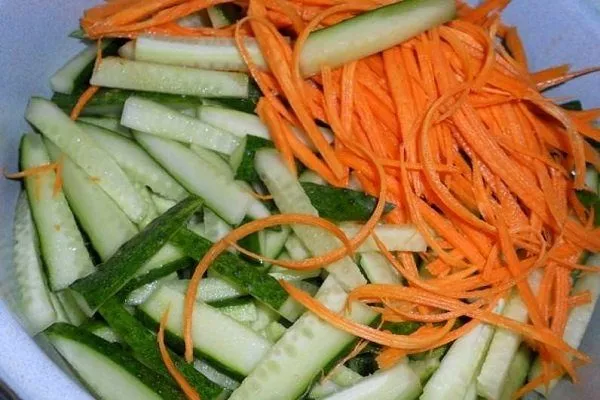
- Peel the vegetables, remove the seeds from the cucumbers, and cut everything into large strips.
- Place in a saucepan, add chopped garlic and salt. Bring to a simmer and cook for 8–10 minutes.
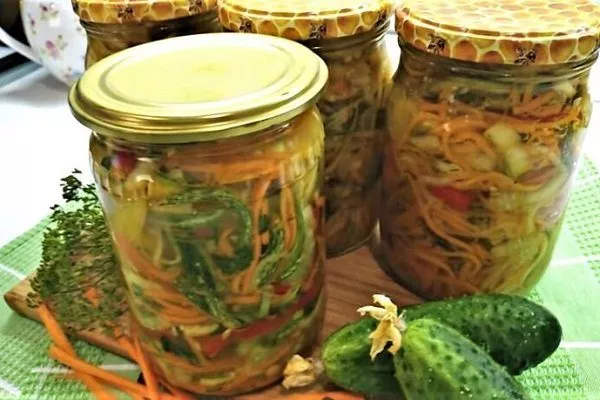
- Transfer to sterilized jars and seal.
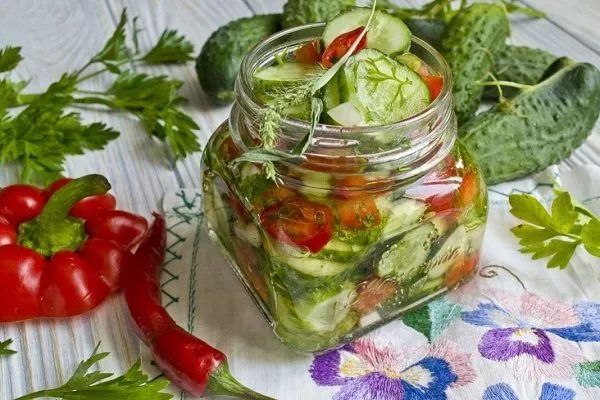
Winter preparations for various dishes
Overripe cucumbers can be preserved for later use. This type of preservation can serve as a base for soups, sauces, and so on.
What you need:
- cucumbers - 1 kg;
- onions and carrots - 200 g each;
- fresh tarragon - 50 g;
- salt - 25 g;
- citric acid - 1/2 tsp;
- garlic - 1 head.
Preparation is simple: peel and cut into strips (grate). Add spices and everything else, mix well, and let sit for 2 hours. Boil for 20 minutes, then jar.
Use for cosmetic purposes
Overripe cucumbers are used to moisturize, cleanse, and whiten the skin. The product can be applied to the face in any form—sliced, grated, mixed with other ingredients, etc.

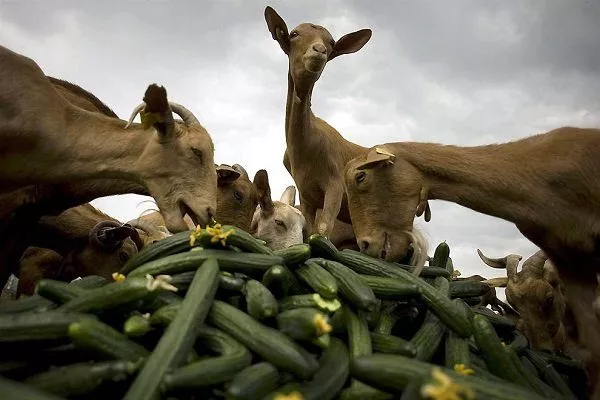
Feed for livestock and domestic rodents
Cucumbers are a favorite food for all types of farm livestock and poultry—chickens, geese, ducks, turkeys, cows, goats, and pigs. Domestic rodents (rats, mice, and hamsters) also consider this vegetable a delicacy.
Cucumbers are 90% liquid, serving as both a source of water and nutrients.
If your cucumbers are overgrown, don't despair. It's better to figure out how to sell the unsaleable product yourself or follow the advice of experienced gardeners and savvy homemakers. You can make a craft with your child from the most unusable cucumbers. This is also a somewhat beneficial use of the product, as it develops creative thinking in children.