
Parthenocarpic cucumber varieties and hybrids are just as tasty and aesthetically pleasing as pollinated varieties. Many of them can be grown outdoors. It's important to choose the right hybrid from the wide variety and provide the plant with the necessary care to achieve a high yield. We'll explain how to do this in the article below.
What are parthenocarpic cucumbers?
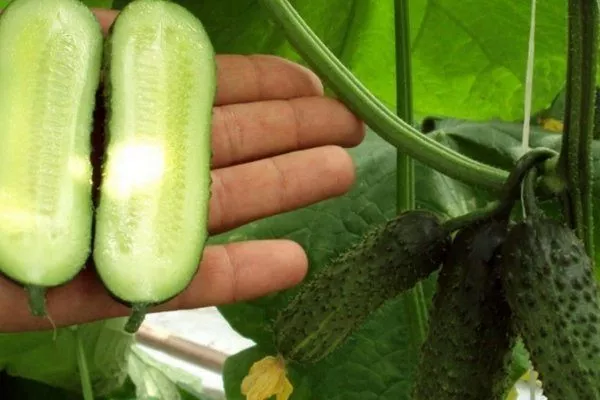
Parthenocarpic cucumbers — a type of cucumber that doesn't require pollination to form ovaries. Their vines often produce very few or no male flowers, but abundant female flowers. These fruits don't contain seeds, so they can't be harvested, and you'll have to buy more seeds the following season.
- ✓ Resistance to specific diseases typical for your region.
- ✓ Adaptation to climatic conditions, including resistance to temperature changes.
History of origin
In the 1950s, breeders began working on a cucumber hybrid that would be easy to grow in greenhouses due to pollination issues. The first results were emerald-colored fruits about 40 cm long, which were completely unsuitable for pickling and canning.
Long-term work on parthenocarpy and various varieties through crossbreeding has led to the emergence of salad hybrids that are eaten fresh, and pickling varieties that do not lose their taste and aesthetic qualities when preserved.
Moreover, thanks to the efforts of breeders, parthenocarpic cucumbers grow well and bear fruit not only in greenhouses, but also in open ground, on apartment balconies, or on windowsills in homes.
Differences between parthenocarpic and self-pollinating cucumbers
Parthenocarpic and self-pollinating cucumbers differ radically in how they produce fruit. Parthenocarpic plants, as mentioned above, require no pollination at all to produce fruit, while self-pollinating cucumbers are self-pollinating, meaning pollination is essential for fruit set.
In addition, parthenocarpic cucumbers in most cases do not have male flowers, while their presence is mandatory in self-pollinating hybrids.
The similarity between both types of crop is that they do not require the presence of pollinating insects or other third parties to be able to transfer pollen between flowers of both sexes.
Advantages and disadvantages
When comparing regular cucumber varieties with parthenocarpic hybrids, the latter, in addition to the property of parthenocarpy, have several advantages:
- formation of more fruits on vines;
- cucumbers of the same shape, without any hollowness;
- cucumbers, having been on the plant for a long time, do not turn yellow;
- the taste of cucumbers is free from bitterness;
- long fruiting period;
- immunity to diseases and pests due to grafting;
- increased shelf life and the possibility of long-term storage.
These cucumbers don't have many disadvantages:
- the variety does not like sudden temperature changes;
- When grown in open ground and pollinated by insects, fruits with differences and deformations in shape are possible.
When planting these cucumbers for winter harvesting, carefully select your seeds, as some varieties and hybrids are intended only for fresh consumption.
Dependence of parthenocarpy on growing conditions
The relationship between parthenocarpy and growing conditions of cucumbers is manifested in the following:
- Hybrids are vaccinated against diseases, so they do not require special measures against diseases and pest attacks.
- A large difference between day and night air temperatures leads to a decrease in the number of ovaries and a slowdown in plant development.
- The formation of the bush, its pinching and the optimal placement of vines directly affect the amount of the harvest.
- Hybrids bear fruit well both indoors and outdoors.
The best parthenocarpic cucumber hybrids
Every gardener has their favorite varieties and hybrids of parthenocarpic cucumbers. Among all their diversity, there are no good or bad varieties. Each one differs in its qualitative and quantitative yield, the time required for cultivation, and whether it can be grown outdoors or indoors.
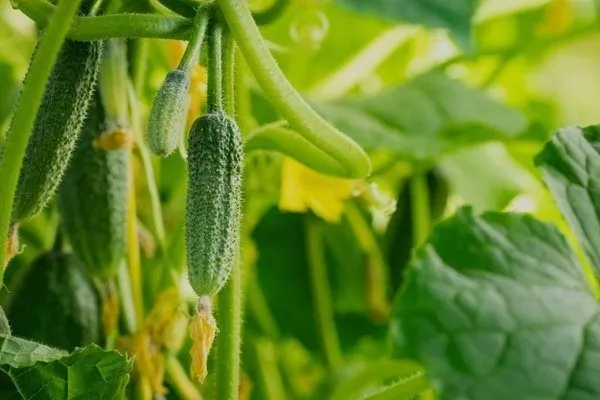
Let's look at some of the common varieties and hybrids of this type of cucumber.
| Name | Growing method | Ripening period, days | Weight, g | Length, cm | Yield, kg/sq.m | Canning | Peculiarities |
| Vyaznikovsky 37 | open ground | 35-40 | 130-150 | 10-14 | 10-12 | + |
|
| Snack bar | open ground | 45-48 | up to 120 | 9-10 | 5.2 | + | resistant to olive spot |
| Mother-in-law F1 | universal | 43-45 | 120 | 8-10 | 4.5-5 | + | sweetish taste |
| Claudia F1 | universal | 50-55 | 80-100 | 9-12 | 10-15 | + | seed rudiments become coarse when overripe |
| Masha F1 | universal | 38-43 | up to 110 | 9-10 | 10-11 | + |
|
| Bully | universal | 40-42 | 80-100 | 8-10 | 10-11 | + | fruiting until the first frost |
| A pile of small F1 | closed ground | 47-50 | up to 75 | up to 12 | 12-15 | — |
|
| Scoundrel F1 | universal | 40-42 | 50-70 | 6-8 | 20 | + | resistant to fungal diseases |
| Kuzya F1 | universal | 40-42 | 15-30 | 3-6 | up to 15 | + | resistant to cucumber mosaic and powdery mildew |
| Meva | universal | 45-47 | 200 | 10-18 | 20-27 | — | resistant to cladosporiosis and powdery mildew |
| Pyzhik F1 | closed ground | 40-43 | up to 100 | 8-10 | 12-15 | + | disease-resistant |
| Stream | universal | 40-43 | up to 50 | 10-12 | 10-13 | + |
|
| Uglich F1 | universal | 45-50 | 100-120 | 10-13 | 5-7 | + |
|
| Zircon F1 | universal | 39-41 | up to 80 | 10-14 | 23-25 | + | resistant to mosaic virus |
| Advance | universal | 49-50 | up to 120 | 10-14 | 3 | + | disease-resistant |
| Herman F1 | universal | 39-41 | 70-100 | 10 | 20-25 | + | resistant to most diseases |
| Adam F1 | universal | 45-52 | 90-95 | 11-13 | 8-10 | + |
|
How to grow parthenocarpic cucumbers?
Parthenocarpic cucumbers are no more difficult to grow than regular cucumbers, requiring virtually no special conditions or agricultural techniques. Each cultivation method has its own optimal timing, depending on the feasibility of creating a suitable microclimate.
In open ground
Cucumbers are sown in open ground either from seeds or from ready-to-plant seedlings. In both cases, it's important that the soil is prepared and warmed by sunlight. Otherwise, the vegetable crop will wither and eventually die. The ideal temperature for cucumbers is 25-28 degrees Celsius.
To obtain seedlings, 35-40 days before the expected planting in open ground, sow the seeds in individual peat pots or reusable containers. For this, use either a store-bought all-purpose soil or a homemade planting mix. The latter requires soil disinfection. More information on planting cucumber seedlings has been written. here.
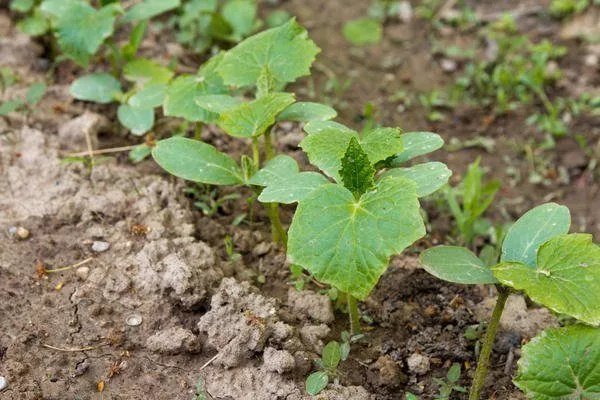
Before sowing, seeds are disinfected by soaking them for 15-20 minutes in a light pink solution of potassium permanganate. To speed up germination, soaking the seedlings in a growth activator is also possible.
- Two weeks before sowing, disinfect the soil with a solution of potassium permanganate.
- A week before sowing, apply organic fertilizer at a rate of 5 kg per 1 m².
- The day before sowing, moisten the soil to a slightly damp state.
Instructions:
- Place 2 seeds at a time into the soil to a depth of 3 cm and sprinkle with soil mixture.
- Spray water on the surface to moisten the soil.
- Cover the pots with glass or transparent film and place them in a warm, bright place. Once the sprouts emerge, remove the covering material.
- Make sure the plant receives sufficient sunlight; supplemental lighting may be needed during this period. When growing on a windowsill, rotate the seedling containers daily to ensure they grow proportionally and don't become stretched or deformed.
- As the cucumbers grow, space them apart to avoid touching and shading.
- Carry out the necessary agricultural procedures. When the plants reach 30-40 cm in length and have four true leaves, they should be transplanted into open ground.
There are several methods for planting seedlings in open ground:
- Single line vertical. The distance between plants is at least 15-20 cm, between rows - 50-70 cm.
- Vertical tape. The distance between plants in a row is 15-20 cm, between strips - 40-50 cm, between rows - 70-90 cm.
- Chess horizontal. Maintain a distance of 60-80 cm between plants, allowing for space between rows. Formed cucumber vines should not be moved; this should be done during the growing stage, removing them from the row spacing.
- Bushy. 2-3 plants are planted in one hole, leaving for them an approximate square of free space measuring 1.5 x 1.5 m.
The same schemes are followed when sowing seeds into the ground at the end of May.
In room conditions
Having decided to grow parthenocarpic cucumbers indoors, you need to choose a location and prepare it. This could be a balcony, loggia, or windowsill, as long as it faces any direction except north. Clean the space, eliminate cracks and other sources of cold air penetration, clean the glass, and perhaps install phytolamps or fluorescent lamps.
Select seeds specifically designed for indoor cultivation to eliminate the need for insect pollination. With supplemental lighting, seeds can be planted at any time.
Containers should be selected with a volume of at least 8 liters, with drainage holes in the bottom.
Instructions:
- Fill the container with a drainage layer of gravel or expanded clay, at least 3 cm thick, and top it with the prepared, disinfected soil. Don't fill the container to the brim; leave a few centimeters of space.
- Rinse the tubs with hot water. After 24 hours, sow 3-5 seeds at a time, planting them 3-4 cm deep into the soil. The rest of the process is the same as for normal seedling cultivation at home.
- Caring for cucumbers is no different from caring for cucumbers grown outdoors or under cover. Avoid direct sunlight from burning the cucumber leaves, providing shade if necessary. Mist the foliage daily with water from a spray bottle. Cucumbers respond particularly well to this type of irrigation.
You can sow the seeds in small peat pots, and after 4 leaves have formed, transplant them into larger buckets.
Indoors
Cucumbers are most often transplanted indoors as seedlings, which are pre-grown in reusable or peat containers indoors. Before planting, the plants need to be hardened off by placing them in a cooler room overnight, gradually reducing the temperature to 18 degrees Celsius.
The planting pattern depends on the greenhouse's size. However, avoid dense plantings to prevent cucumbers from crowding each other. The optimal option is vertical cultivation using supports and trellises.
Dig holes in the garden bed, water them thoroughly, and place the seedlings in them, either in a ball of soil or in a peat cup. Cover the holes with soil, ensuring the rim of the container remains exposed. This will prevent the root ball from turning black and rot from developing. Firm the soil slightly.
ABOUT growing cucumbers in a greenhouseRead more in our other article.
Care Features
Parthenocarpic cucumbers don't require pollination. Furthermore, some hybrids don't even require shaping, making them much easier to care for.
Caring for the first shoots
After the seedlings emerge, ensure that the soil is moist and loosen it regularly to prevent the formation of a hard crust on top of the soil, which would prevent oxygen from reaching the roots and the absorption of nutrients and nutrients.
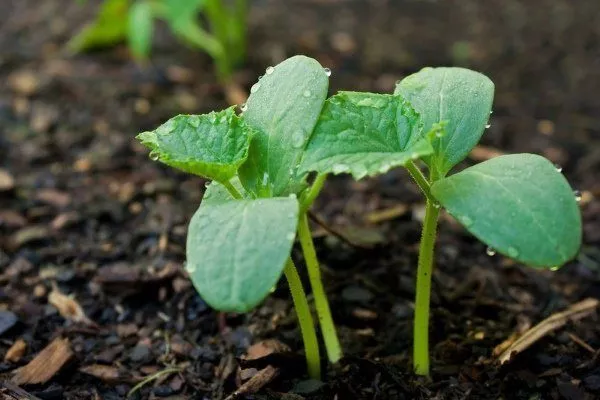
If temperatures fluctuate overnight, cover young plants with plastic wrap. If the soil contains sufficient micro- and macronutrients, there shouldn't be any problems with germination and the formation of mature leaves.
Watering and weeding
Soil moisture is one of the most important procedures for cucumbers. Without sufficient soil moisture, they will die. For watering, use only room-temperature water, preferably from natural sources, or let it settle if it's from a tap.
Soil watering should be performed every other day before flowering, then reduced to 2-3 times a week during flowering, and then increased to 3-4 times a week once fruit sets. If the weather is dry, daily watering may be necessary.
Removing weeds preserves nutrients in the soil, prevents shading of cucumbers, and prevents the spread of diseases and pests from weeds. Weeding also loosens the soil, enriches it with oxygen, and retains moisture in the root zone of the vegetable crop.
Top dressing
To replenish the supply of useful components and compounds in the soil, mineral and organic fertilizers are used:
- When planting, fertilize the planting holes with compost and manure.
- After adaptation of young plants in a greenhouse or open ground, nitrogen fertilizers are applied (10-15 g per 1 liter of water) to activate growth and vegetation.
- Every three weeks, starting from flowering, feed with complex mineral or organic fertilizers, as well as traditional methods. For example, dissolve 15-20 g of ammonium nitrate or urea in a bucket of water; 15 g of superphosphate; and 15 g of potassium sulfate. You can also prepare a solution of chicken manure, manure, or compost at a rate of 250-300 g per bucket of water.
It's important to consider the total amount of fertilizer applied to avoid over-fertilizing the soil. This negatively impacts cucumbers, just like nutrient deficiency.
Fertilize your garden beds in the evening, using either root or foliar application. When applying foliar fertilizer, use a less concentrated solution. Be sure to water your plants before applying additional nutrients.
Read more about fertilizing cucumbers when grown outdoors - here.
Bush formation
Pinching is necessary to reduce the plant's plant mass, which means it loses nutrients to shoots and foliage rather than to fruit production. Only perform side-sonning when cucumbers are tied up. When growing cucumbers horizontally, pinch them so as to minimally disturb the main vine.
Pinch the tops of the vines to ensure the cucumbers have time to ripen and the plant doesn't waste energy on elongating the vines. Parthenocarpic cucumbers typically produce fruit only on the main vine, so it's important to properly shape the plant and remove side shoots:
- To blind the bush, remove all flowers and shoots in the axils of the first five leaves.
- Afterwards, leave 6 shoots, but no more than 25 cm in length.
- The following shoots are left longer - up to 40 cm.
- After - about half a meter.
The final appearance of the bush resembles an inverted pyramid.
Diseases and pests
The most common diseases of parthenocarpic cucumbers include:
- anthracnose;
- Cladosporiosis;
- powdery mildew;
- olive spot;
- cucumber mosaic.
They manifest themselves as various spots on the leaves and stems of the crop, a coating covering the entire plant surface or just on the spots, and a general stunting of cucumber growth, weakness, and drying out. At first, the spots are barely noticeable, but as the fungus progresses, they expand, merge, and change color. If disease control measures are delayed, the cucumbers die completely.
Along with diseases, insect pests can also damage or completely destroy cucumber crops. The most common are:
- Melon aphid.When attacked by these tiny insects, the leaves on the vines twist and curl. The pests reside on the underside of the leaf blades. They suck the plant's sap, which causes a nutritional deficiency, stunts growth and development, and ultimately leads to death.
In small areas, folk remedies are used to combat aphids. For example, an infusion of onion peels or a water solution of wood ash with the addition of laundry soap.
- Greenhouse spider mite. Spider webs on cucumbers are a sign of spider mites. They appear where there are weeds and favorable conditions for the pest. They must be destroyed immediately with chemicals before they multiply and cause irreparable damage. Suitable products include Plant-Pin, Actellic, Fitoverm, and others.
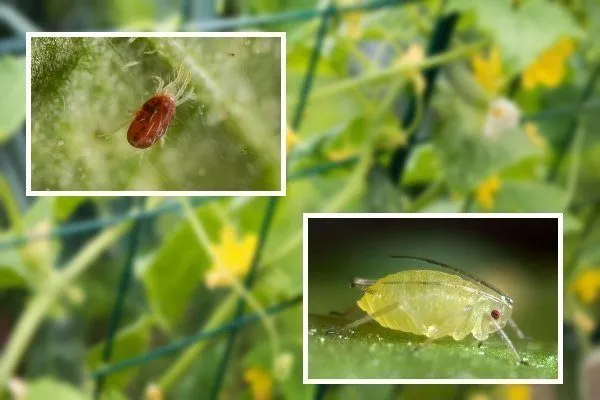
Greenhouse spider mite (left) and melon aphid (right)
Dilute the products according to the instructions and carry out work using personal protective equipment.
Measures for the prevention and control of diseases and pests include:
- preparation of soil and seeds before planting;
- moderate regular watering;
- maintaining microclimate in greenhouses;
- do not thicken plantings;
- regular weeding and loosening of the soil.
- applying fertilizers to build cucumber immunity.
- removal of affected plants and their burning, subsequent treatment of plantings with Fitosporin and Fitoverm.
Harvesting and storage
It is recommended to harvest cucumbers 9-14 days after the start of flowering. This depends on the variety's capabilities and the desired fruit characteristics. When harvesting cucumbers, be careful not to miss cucumbers by leaving them to ripen too much. This will inhibit fruiting and reduce the overall yield.Eat cucumbers at least 2-3 times a week.
The storage and harvestability of cucumbers depend entirely on the variety or hybrid chosen. Therefore, pay attention to this before planting, carefully examining the plant's characteristics.
Parthenocarpic cucumbers are ideal for climates and weather conditions where pollinating insects are difficult to reach. Furthermore, a bountiful harvest can be obtained indoors at any time of year. It's important to choose the right variety, create the right microclimate, and provide proper care.