
Ogorodnik cucumbers have gained popularity and are in demand among agronomists due to their abundant yields, excellent taste, and disease resistance. This variety is ideal for both open ground and greenhouse cultivation, delivering consistently good yields. With proper care, you can harvest large quantities of vegetables.
Who developed the variety and when?
This hybrid variety was developed by Anatoly Nikitovich Lukyanenko, Sergey Vladimirovich Dubinin, and Irina Nikolaevna Dubinina. It was approved for use in 2012.
Description of the plant
The plant is indeterminate, medium-sized, with green leaves that are slightly wrinkled. The flowering type is predominantly female, with 1-2 female flowers produced at each node.
Fruits, their taste and purpose
Ogorodnik is intended for use in salads. The fruits are characterized by the following qualities:
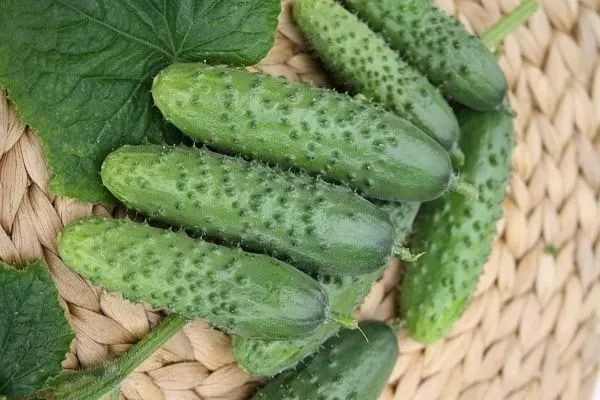
- Shape: cylindrical.
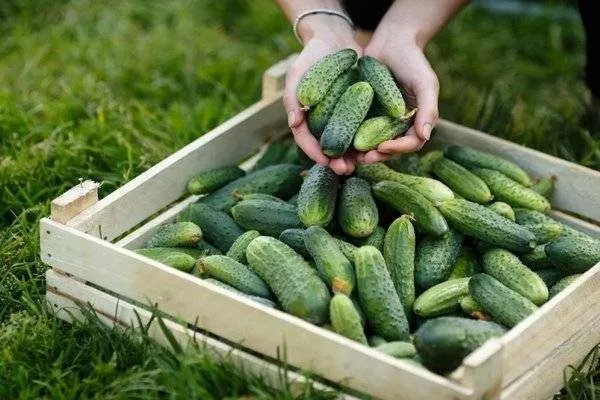
- Length – 6-8 cm.
- Weight – 70-85 g.
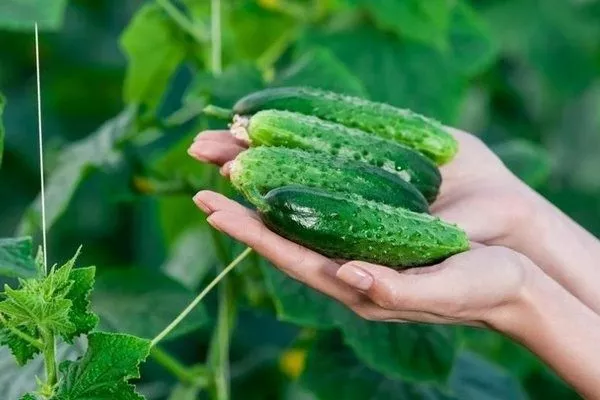
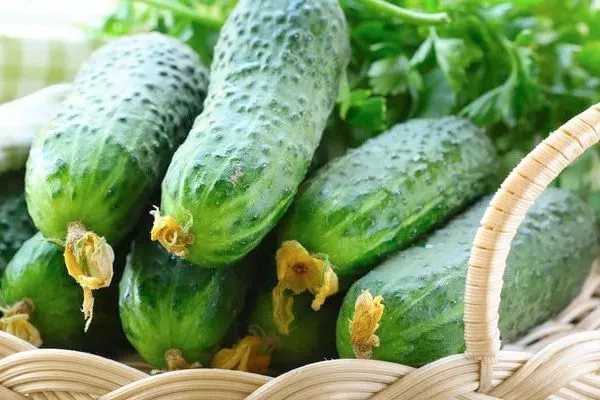
- The coloration is green with medium-length stripes, and the surface is coarsely tuberculated. The tubercles are moderately spaced and studded with white spines.
Their flavor is excellent, thanks to their juiciness and sweetness. They are perfect for making fresh vegetable appetizers, canning, and pickling.
Ripening and yield
Characterized by rapid maturation, reaching full maturity 47-50 days after germination. Yields average 12 kg per square meter.
Soil characteristics for growing cucumbers
In open ground, the crop grows best in light, sandy or loamy soils enriched with organic matter. For successful growth, the plantings should receive full sun throughout the day.
The most suitable sites for this crop are those with a natural or artificial south-facing slope, protected from cold north and northeast winds, such as the south side of a house or barn. The plants require highly fertile soil.
The best fertilizer is manure, applied in the fall or spring at a rate of 10-15 kg per square meter. Scatter mineral fertilizers in the spring 2-3 weeks before sowing or planting seedlings. Lime acidic soils in the fall and spring, dividing the required dose in half.
Timing of sowing and planting cucumbers
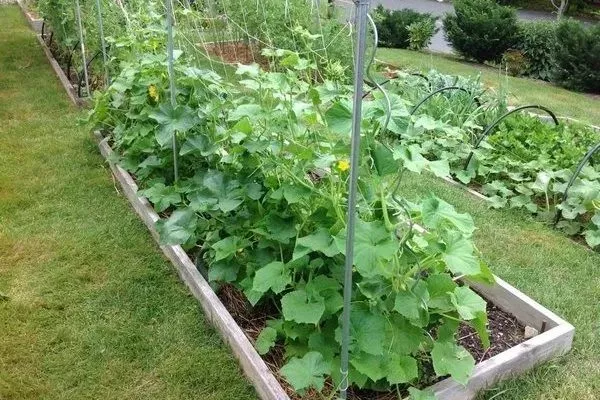
Grow the crop in beds 100-120 cm wide, 22-25 cm high, and 4-6 m or more long. Orient them east to west, sloping slightly south. To achieve this, make the north side 7-10 cm higher than the south side. Pre-wet and germinate the seeds, or sow them dry.
The optimal time for sowing in open beds in the southern regions of the Non-Black Earth Region is the last five days of May, and in the central and northern regions, the first ten days of June. If it is possible to cover the beds with plastic or frame structures, sow 7-10 days earlier.
Sowing greenhouse cucumbers
The earliest cucumbers are grown in warm greenhouses with a thick layer of biofuel, with seedlings planted in late March or early April, and in plastic greenhouses in late April or early May. Sowing and planting times depend on weather conditions.
Follow the recommendations:
- Sow seeds in 1m wide beds in two rows, placing them closer to the center, at a distance of 25-30 cm from each other.
- Place 2 sprouted seeds or 3-4 dry seeds in each hole to a depth of 2-3 cm.
- When growing in beds with strips of plastic covering the soil, make a furrow 10-12 cm deep into which to sow seeds or plant seedlings. This creates an air space between the plants and the plastic.
- Start thinning the seedlings when the first true leaf appears, leaving one strong specimen in each hole.
- To protect against frost, use additional film or paper covers.
- Treat heavy clay soils with sand, reducing the sowing depth to 1-1.5 cm.
Mulch the rows with fine peat or sand.
Growing cucumber seedlings in open ground
For an earlier harvest, it's best to grow the crop from seedlings. In greenhouses and hotbeds, it's a good idea to sow seeds near the planted seedlings to ensure rapid germination in case the seedlings die.
Grow seedlings in 10x10 or 12x12 cm pots. Maintain a temperature of 22-25°C until germination, and then 22-24°C on sunny days and 18-20°C on cloudy days. Water sparingly and do not fertilize.
Plant the seedlings in the ground at 25-30 days old, when 4-5 true leaves have formed. Care includes regular soil loosening, watering, and fertilizing.
Watering and fertilizing cucumbers
Begin watering when the soil is partially dry, and don't delay to avoid stunted growth and loss of the bright green color of the leaves. Use a watering can to ensure a gentle stream of water that doesn't wash away the soil around the plants.
Additional recommendations:
- Mulch the surface of the beds with slightly decomposed peat, or better yet, humus or manure. Use warm water for watering.
- Apply the first fertilizer when 1-2 true leaves appear after thinning. Use 25-30 g of garden mix or 10 g of ammonium nitrate, 10 g of potassium salt, and 10-15 g of superphosphate per 10 liters of water.
- Carry out the second feeding 12-15 days after the first, increasing the fertilizer dose to 40-50 g.
Novgorod method of growing cucumbers on steam beds
A highly effective cultivation method is the Kholynsky (Novgorod) method on steam beds. Follow the instructions:
- In mid-May, dig furrows 40-50 cm deep and 50 cm wide.
- Place well-heated biofuel on the bottom, then cover it with at least 20-25 cm of fertile soil. The result is a warm, high bed 1-1.2 m wide.
- In the center, make a longitudinal furrow 12-15 cm deep and plant 15-20 day old seedlings at a distance of 20-30 cm or sow sprouted seeds.
- Cover the furrows with wooden frames covered with film or glass. The frame size should be 40 x 80-100 cm.
- Thanks to active microbiological activity, decomposing biofuel generates heat, warming the soil. During the first 2-3 weeks after planting the seedlings or when the shoots emerge, lift the frames on warm days. Then remove them, leaving them in place only at night.
- If there are severe nighttime cold snaps, cover the beds additionally. Keep the seedlings under the frames until they begin to push up against the covers.
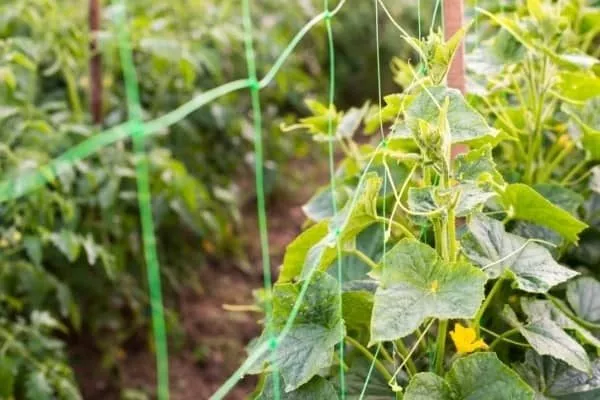
- When the plants reach a height of 25-30 cm, tie them with twine above the first or second true leaf, creating a loose loop. Pull the twine taut vertically and tie it at a height of at least 180 cm.
- After 2-4 female flowers (ovaries) have formed on the lateral shoots with 2-3 leaves, pinch off the tops, leaving one rudimentary leaf above the last ovary. Regularly remove the tendrils.
Harvesting cucumbers
Harvest the vegetables daily or every other day, morning or evening, when the vegetables are moist. Press the stem with your thumb and twist it to the side, or use scissors and a knife. Avoid overgrowing the vegetables, as this will reduce their quality and slow the growth of the cucumbers and the entire plant.
Prevention of diseases and parasites
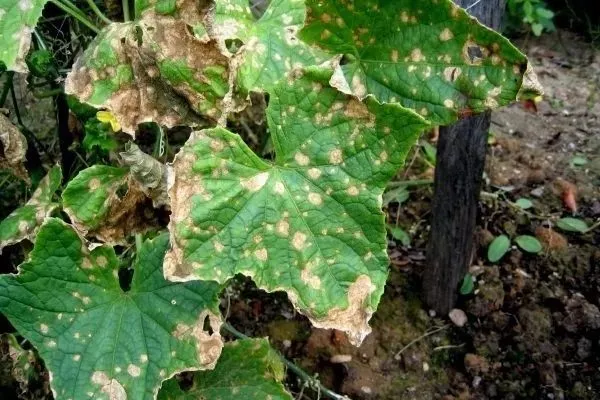
During the growing season, closely monitor the plant's condition. If signs of disease appear on individual leaves, carefully remove and destroy them.
One of the most dangerous greenhouse pests is spider mites. Control them by frequently misting seedlings with water to increase humidity, but avoid excessive moisture, which promotes the development of fungal diseases.
Cucumber Secrets
Not all gardeners know why cucumber beds have so many barren flowers: flowers present, but no ovaries. One reason is the wrong choice of fruit for the seeds. They vary in shape: male cucumbers are triangular, while female cucumbers are tetrahedral.
The seeds of the three-sided (male) cucumber produce plants with abundant sterile flowers (staminate flowers), while the seeds of the four-sided (female) vegetable produce plants with pistillate flowers that form an ovary.
To learn how to differentiate the shape of the fruit, take a cucumber, cut it crosswise, and examine them carefully. If the seeds are arranged in three segments, it's a male cucumber; if in four, it's a female. For planting, keep only the four-sided, female specimens.
Advantages and disadvantages
Before planting a crop in your garden, study its pros and cons. Ogorodnik has numerous advantages:
Among the disadvantages, gardeners note the following qualities:
Reviews
Ogorodnik cucumbers offer an excellent combination of productivity, flavor, and disease resistance, making them an ideal choice for any garden. Their early ripening and compact size make them suitable for a wide variety of culinary purposes. Following all recommendations will ensure excellent results.