
Our Masha hybrid cucumbers are an excellent choice for winter snacks. These short, even-shaped cucumbers retain their crispness and flavor even after a year of storage in a jar. Furthermore, this variety is easy to grow, resilient to adverse conditions, and has a strong immune system.
Introduction to the variety
Our Masha is a parthenocarpic hybrid with indeterminate growth habit. The plants thrive under temporary plastic cover, which is essential for cultivation in cool climates.
History of origin
Nasha Masha is a unique variety from the Mashtakov collection of tomatoes and cucumbers, created by Alexey Alexeevich Mashtakov, a renowned breeder from Rostov-on-Don. In 2006, an application for registration of the cucumber hybrid Nasha Masha was submitted.
Just one year later, it was officially included in the state register of breeding achievements for cultivation in greenhouses on private farms.
Characteristic qualities of the variety
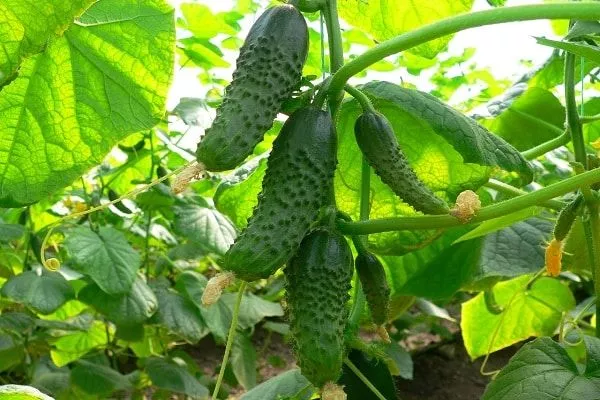
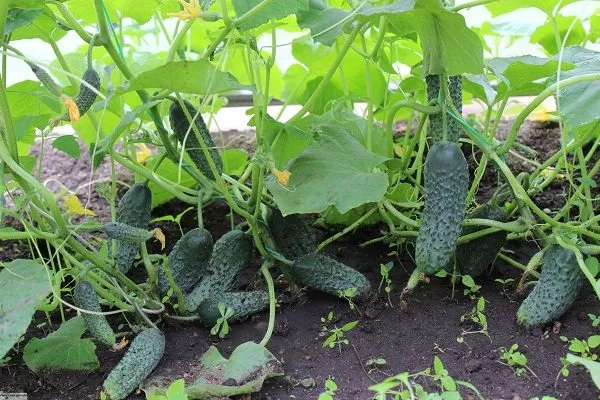
The Nasha Masha hybrid is characterized by accelerated ripening, and its parthenocarpic nature means it produces exclusively female flowers. Fruits form in clusters. The plant is an indeterminate variety with a tall main stem, which can reach 150 to 200 cm. Other varietal characteristics include:
- The bush has moderate branching.
- At least three buds are formed in each node.
- The leaves are green in color and medium in size.
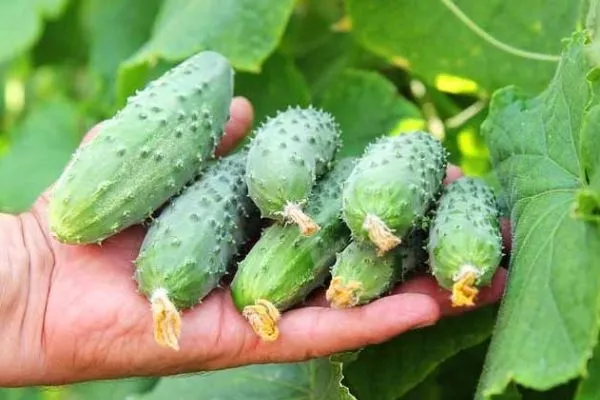
- The Nasha Masha hybrid is distinguished by its short cucumbers with a similarly shortened neck. They are 8-11 cm long and approximately 2.5-3 cm in diameter.
- The fruits are richly green in color and have short light stripes.
- The shape is elongated-cylindrical, with brownish tubercles on the surface.
- The weight of one cucumber is about 65-75 g,
- The skin of the fruit is elastic and slightly glossy.
- The pulp has an elastic and crisp consistency.
- The ability to form shoots is weak.
Taste and purpose
Numerous people who have tried Nasha Masha cucumbers confirm their excellent taste. They consider these gherkin-type hybrids to be the sweetest of all varieties and hybrids. They have a wide range of uses: they are excellent for salads, canning, and pickling.
When ripe, the yield
The first cucumber harvest from this variety can be expected 41-43 days after germination. These cucumbers are generously productive: an average of 16 kg of gherkins or even more can be harvested from 1 square meter of planting.
Resistance to diseases and pests
Cucumbers of this variety exhibit good resistance to the most common diseases. Our Masha is virtually immune to downy mildew, powdery mildew, and mosaic. However, in open ground or in a waterlogged greenhouse, they can become a target for insect pests.
Positive and negative qualities of the hybrid
The variety is renowned for its excellent flavor, which is particularly popular with consumers and is why large farms cultivate Nasha Masha commercially. But the hybrid also has other advantages:
The only drawback of the culture is the need for regular watering.
Landing features
The Nasha Masha cucumber variety prefers warm temperatures. Therefore, the ideal time for planting them outdoors is from the first ten days of May to June 10th. They are best planted when the soil temperature at a depth of 10-15 cm reaches 15-20 degrees Celsius, which will ensure harmonious development and proper formation of young cucumber plants.
Subtleties:
- Don't rush planting this cucumber variety. A sudden cold snap can completely destroy the young seedlings. If the weather is unstable, it's best to cover the plants with agrofibre or plastic film at night.
- It is recommended to arrange rows at intervals of 90-120 cm.
- Seeds should be planted 1-2 at a time, 2 cm deep, with a gap of approximately 12-15 cm between them.
- When two seedlings appear, it is necessary to remove the weaker one.

Subtleties of agricultural technology
To successfully grow the Nasha Masha variety, you need to choose a location that receives bright sunlight, is protected from gusts of wind, and has fertile, well-drained soil enriched with organic matter.
Other nuances:
- The soil pH should be 6.5-7.0.
- Begin preparing for planting in the fall. To do this, carefully dig the soil and add organic matter—8 to 14 kg per square meter, depending on the fertility of the beds.
- When choosing a site, consider crop rotation and proximity to other plants. It is not recommended to plant Nasha Masha cucumbers in the same areas where other cucurbits have been grown for the past 3-5 years. The plants grow best after plants such as deep-rooted vegetables and cauliflower. This cucumber variety thrives alongside beans, peas, cabbage, kohlrabi, lettuce, beets, celery, spinach, and dill. They do not get along well with potatoes, tomatoes, and radishes.
- During the initial cultivation period, it's crucial to protect the plants from sudden temperature fluctuations using non-woven materials. This will stimulate rapid growth and ripening of the fruit. However, once the first flower buds appear, remove the protective covering to avoid interfering with pollination by insects.
- Use mulch, which will not only prevent weeds from spreading but also help warm the soil and retain essential moisture. This is especially critical during the cucumber budding period, when plants require the most water.
- Provide regular irrigation to prevent the fruit from drying out and dying. Otherwise, despite abundant flowering, you may experience low yields. Avoid using cold water; it's preferable to use pre-heated and settled water.
Reviews
Nasha Masha cucumbers are characterized by early ripening, abundant fruiting, and excellent flavor. Due to their weak shoot formation, the bushes do not require shaping or pruning, making the work easier for farmers and gardeners. The fruits can be stored in cool conditions for up to two weeks.