
Junior Lieutenant F1 is the name of an early-ripening and highly productive cucumber hybrid. It has won the hearts of domestic vegetable growers for its excellent yield, resistance to major garden diseases, and self-fertility. Its hallmark is its intense clustered fruiting, which can be observed both in open beds and greenhouses.
Introduction to the variety
This vegetable variety is parthenocarpic. Its plants produce only female flowers, making them self-pollinated. They are distinguished by cluster (bouquet) fruiting: the nodes of the bush produce from 2-3 to 5-7 gherkins each.
- ✓ High resistance to temperature fluctuations, making it ideal for regions with unstable climates.
- ✓ Self-pollination ability, which increases yields even in the absence of bees.
Who is the originator?
The Junior Lieutenant hybrid owes its appearance in 2003 to domestic breeders:
- Borisov A.V.;
- Krylov O.N.;
- Orekhova E.A.
Characteristic features of the appearance of the plant and fruits
The bushes of the hybrid variety "Junior Lieutenant" are vigorous and characterized by vigorous shoot production. They require shaping and staking. Their external characteristics are as follows:
- high “growth” (hybrid plants are of the indeterminate type);
- medium degree of branching;
- foliage: medium-sized, green, slightly wrinkled with a slightly wavy edge;
- Flowers: yellow, crown-shaped, female.
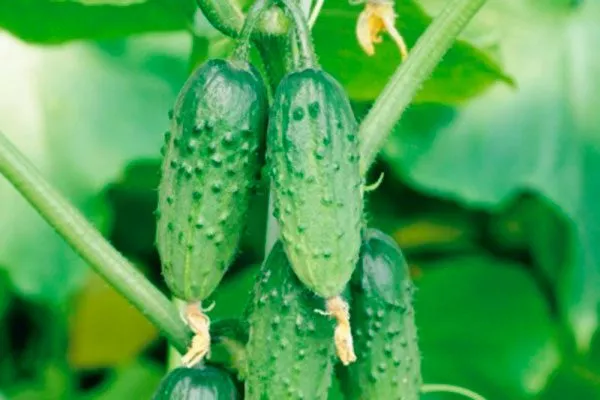
The harvest has excellent quality characteristics. The fruits are of the gherkin type and possess the following characteristics:
- small in size (8-12 cm in length, 2.5-3 cm in diameter);
- weight - 90-110 g;
- spindle-shaped, slightly ribbed shape;
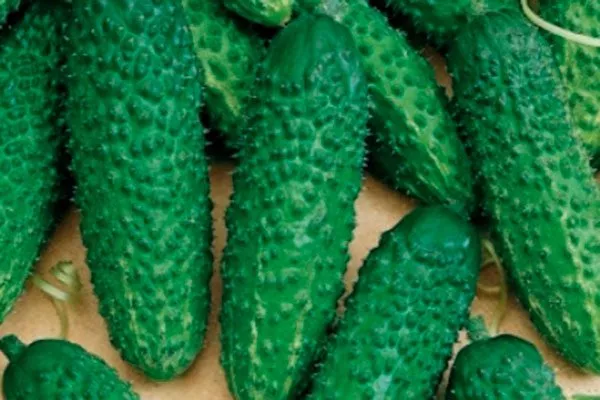
- bright green skin, covered with large tubercles (medium degree of tuberculation), white-spined;
- pulp: medium-dense, crispy, juicy and aromatic.
Purpose and taste
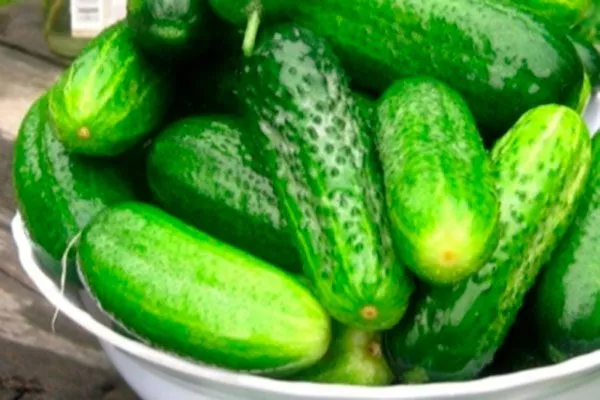
Junior Lieutenant cucumbers delight the eater with an excellent, refreshing taste that lacks bitterness. Housewives use them fresh and in salads, pickling, and canning. Not only gherkins, but also immature pickles, are suitable for winter preserves.
Maturation
This vegetable variety belongs to the category of early-ripening cultivars and hybrids. The harvest ripens quickly—40-45 days.
Productivity
Hybrid cucumbers are considered high-yielding. Maximum productivity is achieved when grown in greenhouses. Yields range from 9 kg to 14 kg per square meter of green, pimply cucumber.
Growing regions
Junior Lieutenant F1 is suitable for cultivation in most regions of the Russian Federation. It is successfully grown in the following regions:
- Northern;
- North-West;
- Central;
- Volga-Vyatka;
- Central Black Earth Region;
- North Caucasian;
- Middle Volga.
Planting cucumbers Junior Lieutenant F1
Growing a hybrid is possible in two ways:
- direct sowing of seeds into garden soil in an open area of the garden beds or in a greenhouse;
- through seedlings with their subsequent transfer to a greenhouse or an open bed (under temporary cover or without it).
Domestic gardeners prefer the seedling method of growing cucumbers. This ensures the earliest possible harvest. Direct sowing of seeds into open ground is more suitable for gardeners growing hybrids in regions with warm and mild climates.
Planting dates
Sow Junior Lieutenant cucumber seeds at the following times:
- the last days of March, the beginning of April - for seedlings;
- last week of May - in open ground (it should be warmed up to +15°C).
Site selection and preparation
This hybrid cucumber grows well in a variety of soil types. It performs best when grown in soil that meets the following requirements:
- light;
- loose;
- air- and moisture-permeable;
- loamy or sandy loam (the optimal option is when the garden soil is predominantly sandy and less than 1/4 part clay);
- neutral or slightly acidic.
- ✓ Soil pH should be between 6.0-6.8 for optimal nutrient absorption.
- ✓ Organic matter content of at least 3% to ensure good soil structure and moisture retention.
If you plan to grow vegetables in your garden without shelter, choose a site with the following characteristics:
- solar;
- reliably protected from strong winds and drafts;
- smooth;
- in the fall, dug up and fertilized with organic matter (compost, cow dung) with the addition of wood ash.
Planting seeds
Start sowing seeds to produce cucumber seedlings in early spring (from late March). They don't need to be treated with fertilizer or growth stimulants. Simply allowing them to germinate is sufficient. Follow the procedure step by step:
- Soak the seeds in warm water (+30-40°C) until they swell.
- Wrap them in a clean, damp cotton cloth. Leave them in the bundle for 2 days. Keep it in a warm, dark place. Make sure the cloth doesn't dry out completely.
- When root shoots appear on the seeds, start planting them.
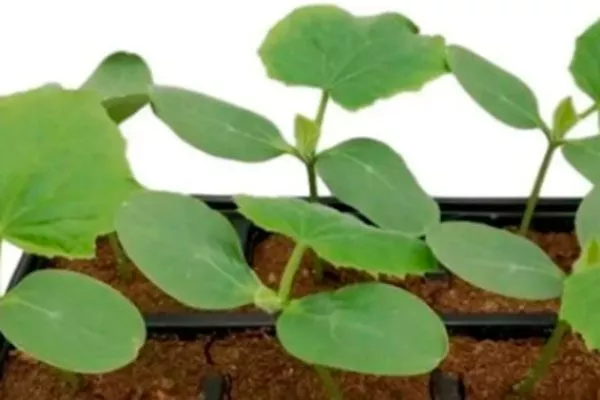
Grow hybrid seedlings in peat pots or plastic cups with drainage holes in the bottom. Use a potting mix enriched with garden soil, peat, humus, and sawdust. Plant the seeds in it to a depth of 2 cm.
Keep the seedlings in a bright, warm place. Water them regularly. Provide the seedlings with fertilizer:
- when the sprouts reach 14 days of age, water them with a solution of complex mineral fertilizer;
- Repeat fertilizing 2 days before moving the plants to the garden bed.
12-14 days before transplanting, begin hardening off the seedlings by placing them outdoors. They will be ready for transfer to the greenhouse once each has at least 2-3 full-fledged leaves.
Planting diagram
Plant Junior Lieutenant cucumber seedlings in the garden in open ground, following a 60x15 cm pattern. Plant at a density of 2.5-3 plants per square meter. In a greenhouse, plant no more than 4 seedlings per square meter of soil. Space them at least 50 cm apart.
Caring for cucumbers Junior Lieutenant F1
This hybrid crop is easy to care for. To obtain a bountiful and high-quality cucumber harvest, simply follow standard agricultural practices.
Watering
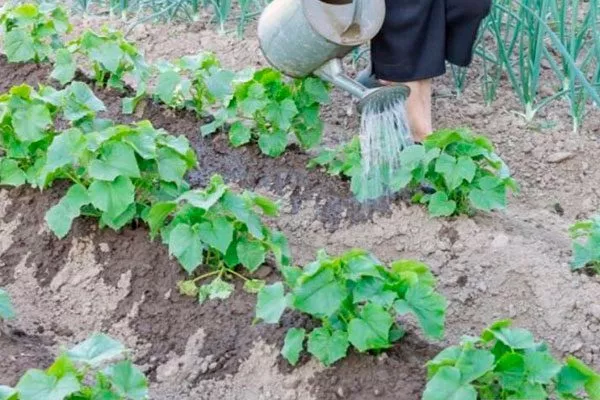
Water your cucumber beds regularly, as this vegetable requires a lot of moisture. A lack of moisture will negatively impact the quality and quantity of your harvest. Follow these guidelines for watering:
- use only warm, settled water;
- carry out irrigation in the morning or evening;
- Observe the water consumption rate - 2 liters per 1 bush;
- Before fruiting begins, water the hybrid planting every 6-7 days;
- after the beginning of fruiting - every 3-4 days;
- focus on weather conditions (if it’s hot, increase watering; in rainy weather, it will need to be reduced to a minimum or completely abandoned);
- Try to avoid dripping onto leaves and stems when watering.
Top dressing
Cucumber plants require fertilizing 3-4 times during the growing season. Follow the instructions below:
- For the first time, water the plants in the garden bed with a solution of mullein (1:10), do this at the beginning of the growing season (14 days after transplanting the seedlings into the garden);
- During the flowering period of plants, use potassium-phosphorus compounds as fertilizer;
- At the time of fruiting of the hybrid bushes, apply a balanced complex fertilizer.
Garter and shaping of bushes
If bushes aren't tied up in a timely manner, their productivity decreases and shoots begin to dry out. Avoid allowing the fruit to come into contact with the soil, as contact with damp soil can cause them to rot.
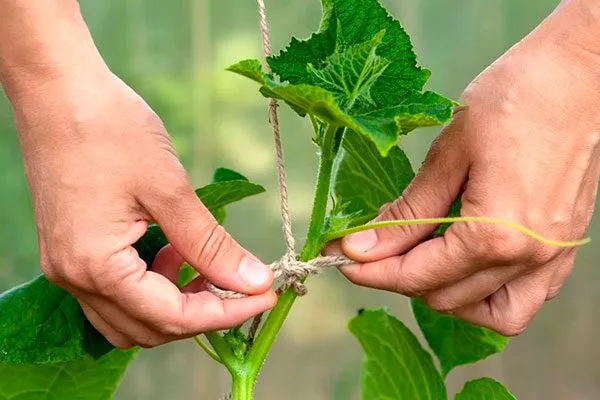
Tie up the bushes when they reach a height of 30 cm. In a greenhouse, it is best to do this vertically:
- On both sides of the bed, stick 2 high supports (wooden or metal stakes) into the ground.
- Stretch a string between them or install a crossbar.
- Tie strips of fabric to it. They should be 3 cm wide and reach the ground. The number of strips should equal the number of cucumber plants in the bed.
- Tie the plants with fabric strips so that the tops are slightly above the ground. Do not tie the knots too tightly to avoid damaging the stems.
To ensure proper plant development and a bountiful harvest, shape and pinch the plants. As the vines grow, the tops shade the lower leaves, depriving them of light. To avoid complications, thin them out by removing excess leaves.
Form hybrid bushes in different ways:
- blind the stem by removing flower buds with lateral shoots up to the axil of the 4th node;
- leave one stem, removing all branches;
- blind only the lower 3-4 nodes of cucumbers grown in an open bed in a spread;
- In addition to blinding the lower 3-4 nodes of bushes grown on a support, shorten the shoots at the 4-6th nodes above the 3-4th leaf (leave everything that is located above, and pinch the main stem at the height of the trellis).
Follow the rules for shaping and pinching cucumber plantings:
- perform all manipulations to remove green parts of plants in the morning;
- do not shape bushes in rainy weather;
- carry out the procedure on a dry day;
- Make cuts with a sharp knife, do not leave stumps;
- Sprinkle the wounds with ash or crushed coal.
Loosening and hilling
In early summer, take the time to lightly hill the hybrid bushes at the base of the stems. Then, loosen the soil to a depth of 4–7 cm after each soil moistening. Perform this manipulation carefully, being careful not to damage the surface roots of the vegetable crop.
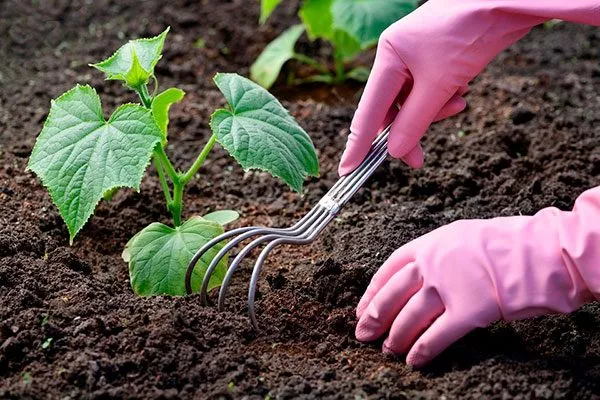
Combine loosening with weeding. Finally, it's a good idea to mulch the cucumber bed to retain soil moisture and suppress weed growth. To do this, sprinkle the bed with organic matter:
- fully rotted compost;
- sawdust;
- mown grass.
Harvesting and storage
Harvest cucumbers as they ripen. Do not allow cucumbers to become overgrown. Harvest cucumbers from the vines every two days or every day.
After harvesting, use the gherkins within 2 weeks. Store them in the refrigerator at 5-12°C to ensure they stay firm, juicy, and delicious.
Resistance to diseases and pests
The hybrid, according to information from the manufacturer, exhibits resistance to many vegetable crop diseases:
- cucumber mosaic;
- Cladosporiosis (brown olive spot);
- powdery mildew.
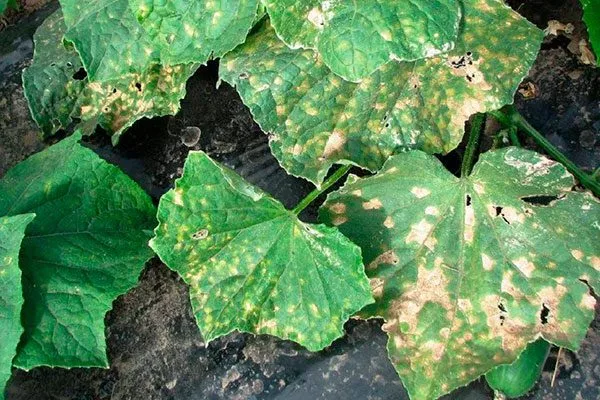
If agricultural practices aren't followed, its bushes become susceptible to infections, particularly downy mildew. Diseased plants are easily identified by the dark green, slightly shiny spots that appear on their foliage and expand over time.
Carry out treatment step by step:
- Trim off infected leaves and shoots. Collect them and burn them away from the area.
- Treat the remaining cucumber bushes in the bed with systemic fungicides.
Inadequate or inadequate care also contributes to pest infestation of the cucumber hybrid. The following insects are most common:
- aphids;
- nematodes;
- leaf rollers;
- snails and slugs.
To prevent the bushes of the hybrid variety Junior Lieutenant from becoming diseased and being attacked by pests, take the following preventative measures:
- tie plants vertically using nets or twine;
- shape the bushes;
- do not water them with cold water (this provokes the development of root rot in the bushes);
- Maintain a favorable temperature and humidity in the greenhouse, avoid fluctuations;
- do not thicken the planting;
- fight weeds;
- apply fertilizer;
- Preventively treat plantings with fungicides and folk remedies against pests.
What are the pros and cons?
Gardeners enjoy growing the Junior Lieutenant hybrid not only for personal consumption but also for sale thanks to its many advantages:
Among the disadvantages, vegetable growers point out the low shade tolerance of the plants and the impossibility of independently collecting seeds (as with other hybrids).
Reviews
Experienced vegetable growers recognize the Junior Lieutenant hybrid as a highly productive, early-ripening, self-pollinating cucumber variety. Its plants produce abundant fruit both in greenhouses and in open gardens. They are rarely affected by diseases or pests when properly cared for. The crisp, attractive fruits are ideal for canning.