
One of the most popular cucumber varieties is the Meringue hybrid. This is due to its excellent yield, attractive appearance, superb taste, and versatility. These cucumbers can be grown in any Russian region, either in open ground or under plastic cover.
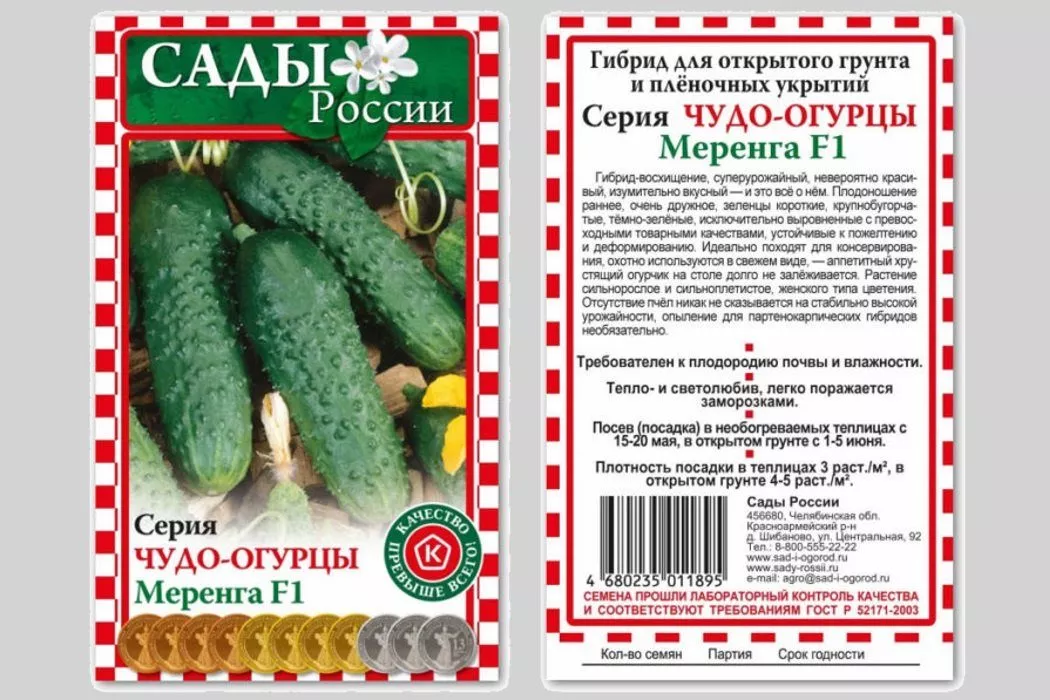
Seeds of cucumber variety "Merengue"
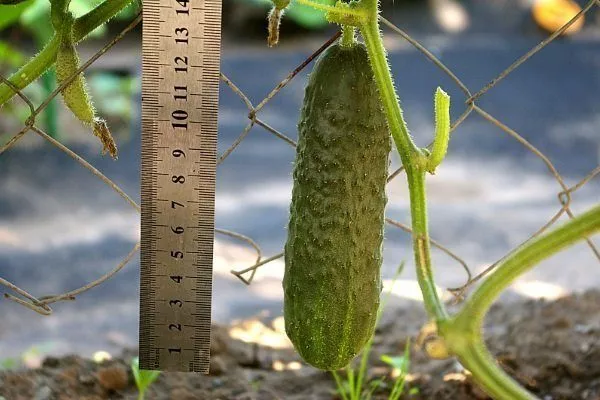
Cucumber variety "Meringue"
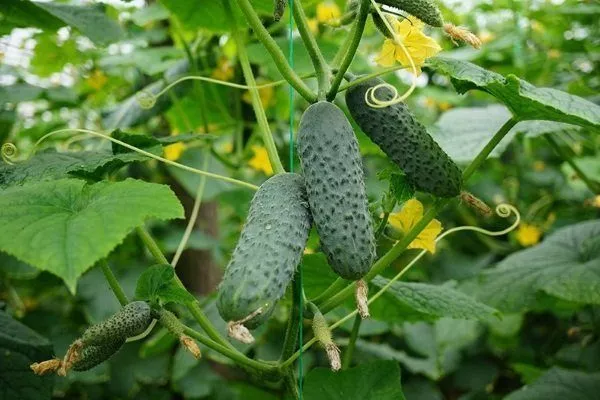
The Meringue cucumber variety has excellent yields.
Description of cucumber varieties
Early-ripening Meringue cucumbers were developed by Dutch breeders. This parthenocarpic variety does not require pollination, so it can be grown in greenhouse conditions, where there are no pollinating insects.
It takes a little over a month for the fruit to appear after full germination. The plant produces fruit vigorously (consistently and continuously) throughout its entire growth period. The seeds of the fruit do not ripen, so they do not overgrow or turn yellow. The fruit is 8 to 10 cm long and weighs no more than 100 grams.
Only the first generation possesses the valuable qualities inherited from the parent variety, therefore, collecting their seeds will be useless, hence the hybrid designation – F1 (first generation).
The hybrid's natural parthenocarpy is genetically determined, which is considered one of the most important advantages when growing this vegetable crop in protected soil. Read more about the characteristics and nuances of growing parthenocarpic cucumbers. here.
Advantages and disadvantages
The Meringue hybrid, in addition to its durability and vigorous growth, has many other positive qualities:
- early maturity – green fruits appear 2 months after planting;
- no pollination required;
- open ground yields 10 kg per square meter, and closed ground – 15 kg;
- When sowing purchased seeds, a stable harvest is ensured, because only individual grains rarely fail to sprout;
- the commercial quality of cucumbers makes them suitable not only for home consumption, but also for sale;
- During transportation, vegetables show excellent preservation;
- resistance to various diseases;
- significant benefits for humans due to its rich vitamin content.
The only disadvantage is that they have to buy new seeds every year, because their own seeds will not bear fruit.
Soil requirements
Meringue cucumbers grow in any loose soil. Good drainage and sufficient organic matter are essential.
- ✓ Optimum soil temperature for sowing seeds: not lower than +15°C.
- ✓ Soil loosening depth before planting: 25-30 cm.
The soil should not be too salty. Too much salt will hinder the absorption of water from the soil, reducing plant growth, causing small foliage and crooked fruits. Too little salt will have the opposite effect, but will make the plant more susceptible to various diseases. The optimal soil pH is 5.5-7.
See the review and comparison of Meringue cucumbers:
Rules for sowing seeds and planting seedlings
Meringue cucumbers are grown using seedlings or seeds.
Direct seeding
This method of sowing is very popular and can save time and effort on growing seedlings. The advantages of this method include:
- the sowing period in the central zone begins in early May and ends in mid-June;
- To obtain an early harvest, pre-prepared seeds are sown and covered with spunbond or other high-quality material;
- it will be necessary to sow dry and pre-soaked seeds together;
- It is more convenient to use the nest sowing method, in which case three to four seeds are placed in one hole.
In the second ten days of May, seeds can be sown in open soil without significant shelter.
Planting seedlings
Using this method speeds up the first harvest and significantly increases its volume compared to seedless sowing. Success with planting and growing seedlings can be achieved with the help of certain subtleties:
- It is better to sort out the seeds and soak the full-fledged ones in a solution with growth stimulants;
- sowing of soaked seeds is carried out in pots or other containers no deeper than 1.5 cm;
- only full-fledged nutritious soil intended for vegetables is used;
- soil and air humidity should be at a moderate level;
- seedlings are watered as needed and only with warm water (23-25 degrees);
- Before planting (a week before), the seedlings need to be hardened off.
Before transplanting seedlings into open ground, it's best to water them thoroughly. Cucumber seedlings are planted between 20 and 25 days old. In temperate climates, seedlings are planted between May 12 and 20, and in open ground without cover, between June 3 and 15.
Post-planting care
To produce a high-quality harvest, Meringue cucumbers require good care. These primarily require timely weeding and loosening of the planting beds, regular watering, and light fertilizing (2-3 times per year):
- It is better to water in the evening at the roots (water temperature – 23 degrees);
- some loosening will be required and mulching;
- weeds are removed regularly;
- To protect the crop from pests and diseases, spraying with special agents is carried out;
- For fertilizing cucumbers in open ground It is better to use liquid manure, infusion of bird droppings or complex fertilizer.
How to achieve a bountiful harvest?
When gardeners choose a particular vegetable variety to grow, a good yield is a key factor. With proper care, temperature control, and optimal humidity, Meringue cucumbers will produce high yields.
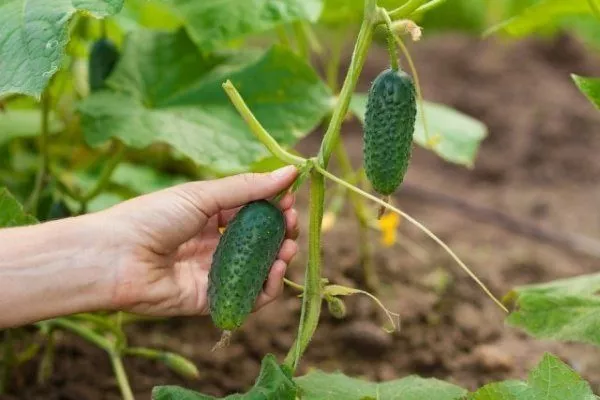
Given Meringue's long growing season, you can provide cucumbers not only for your own family but also for profit. To achieve high yields, you need to:
- tie cucumber vines to trellises;
- correctly remove shoots that hinder plant growth (pinch out side shoots);
- carry out timely harvesting of fruits.
Diseases and their prevention
Meringue cucumbers are immune to powdery mildew but are susceptible to anthracnose. This is caused by a fungus that grows due to poor temperature and humidity conditions. In this case, the leaves become covered in yellow spots, and the plant may die. The disease is extremely difficult to treat, so prevention is best achieved through the use of fungicides.
If humidity in the greenhouse is high, the fruit may become slimy. Plants affected by white rot are pulled out, and healthy bushes are sprayed with Bordeaux mixture.
Meringue cucumbers grown outdoors attract spider mites. Whitefly larvae from the eggs will feed on the sap. Insecticides are used to control these pests.
Harvesting and storage rules
Ripe cucumbers are picked every three to four days. Although they won't overgrow and turn yellow, they will deprive the newly growing cucumbers of nutrients.
The fruits can be salted or pickled. They can be stored fresh for 2-3 weeks in a cool place.
Despite the Dutch origins of the Meringue hybrid cucumber variety, the Russian climate is ideal for growing this crop and achieving high yields. The cultivation technology is simple and accessible to all gardeners. If all the conditions are met, an excellent harvest can be expected.