
Melothria is an exotic plant that attracts the interest of experimental gardeners. This exotic plant can grow in the most unfavorable conditions, yet boasts exceptional yields. Let's learn what this plant is, how to plant and grow it, and what to do with its fruits.
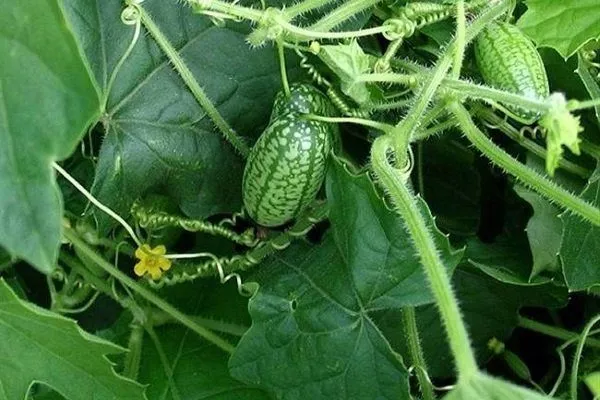
Melothria produces its first fruits two weeks after planting the seedlings.
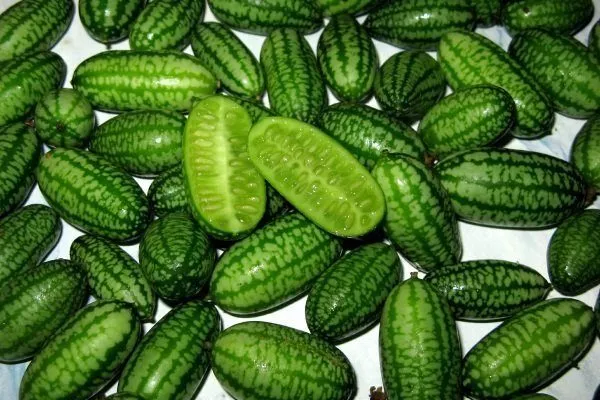
Melothria rafts have a cucumber-like taste with a sour aftertaste.
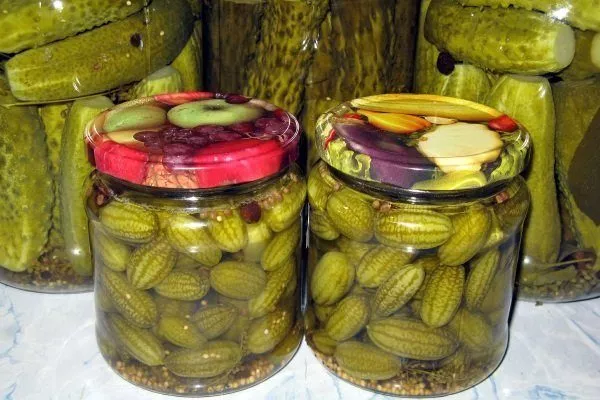
Melotria cucumbers can be eaten not only raw in the summer, but also pickled for the winter.
What kind of plant is this?
Melothria scabra (Cucurbitaceae) belongs to the genus Melothria in the Cucurbitaceae family. It is a perennial vine grown for its miniature cucumber-like fruits. While not widely known, the plant has many common names—the climbing vine is often called mouse watermelon, sour gherkin, and Mexican cucumber.
Botanical description
The plant is very similar to common cucumbers, but the leaves, flowers, and fruits have slight differences. A brief botanical description of the "mouse melon":
- Leaves. The leaves are similar in shape to cucumber leaves, but somewhat smaller. The surface of the leaves is rough, hence the word "rough" in the plant's name. The leaves are three-segmented, triangular, and all segments are pointed.
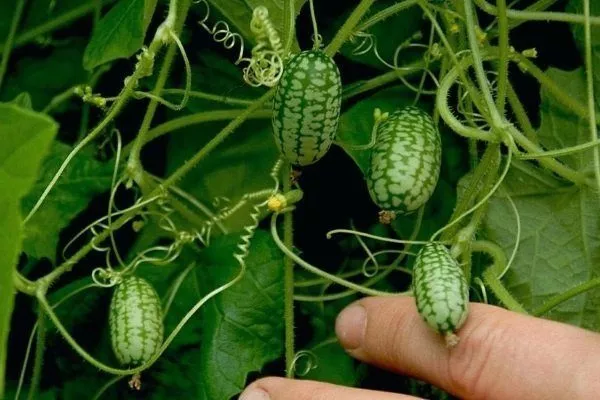
- Fruit. Small, growing up to 4 cm in length, they are harvested when immature, reaching 2 cm in length. The fruit's surface is spotted and striped, giving them the appearance of miniature watermelons. Edible, their flavor combines notes of cucumber with the tart tang of melon rind.
- Tubers. They resemble sweet potatoes in shape. They weigh up to 400 g. They are edible and taste like a cross between radish and cucumber.
- Mustache. Thanks to its long, tenacious tendrils, the plant clings to any support. Pergolas and trellises are used for weaving, and the plant will completely envelop them.
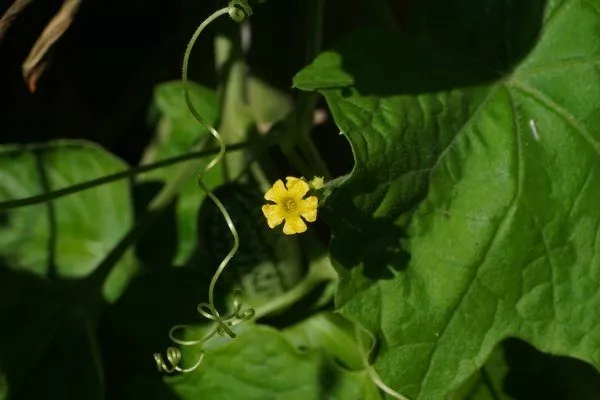
- Flowers. The plant blooms in June. The flowers are bright yellow and bisexual. Female flowers bloom singly, while male flowers are clustered in inflorescences. The flowers have a pleasant, subtle scent that attracts pollinating insects.
The plant grows vigorously—its vertical shoots grow upward, clinging to supports. They reach a length of 3 meters. Lateral shoots, lying on the ground, are capable of firmly rooting.
A special feature of Melothria is that its female flowers bloom before the male ones.
Origin
Melothria was first described in the 19th century by the French botanist C.V. Naudin. His classification of the plant is questioned by modern botanists – closely related species have been discovered in Africa, and the differences between the vines remain unclear.
Some sources claim that the Melothria's homeland is equatorial Africa. Others attribute the vine to Central America, and they are correct—that is where the vine originates. Melothria has no connection to Africa, and "African cucumber" is nothing more than another popular name with no scientific basis. In fact, this unusual plant's homeland is Central America.
Spreading
In Central America, Melothria is considered a weed. In fact, that's exactly what it is—a low-maintenance weed that can withstand a variety of weather conditions. The key requirement is warmth; Melothria can grow in any region of Russia, but it doesn't tolerate cold. In central and northern regions, it is grown only from seedlings.
In its native habitat, the melothria is a perennial. In Russia, it becomes an annual because it freezes in winter. In the tropics, freezing temperatures are unheard of, but in Russia, even in the southern regions, temperatures drop below freezing.
In Mexico, melothria is an aggressive weed, reproducing not only by seed but also by tubers. It's extremely difficult to eradicate; once established, it re-emerges the following year. In Russia, with its harsh winters, such problems don't arise.
Fruiting and yield
Fruiting begins quickly. The first "watermelons" can be seen just two weeks after planting the seedlings. Flowering and fruiting occur in June. The plant produces a large number of fruits—each node produces them, and the fruiting period is spread out over time. With proper care, the Melothria will bear fruit until frost. Its yield reaches 5 kg per plant.
We invite you to watch a video in which gardeners share their impressions of the unpretentiousness of Melotria.
Melothria scabra varieties
Melothria has long been domesticated, but only a few cultivars have been developed. All varieties produce fruits approximately 3 cm long, and their coloring is almost identical, with minor variations. In the West, seed companies do not list Melothria cultivars. However, in Russia, several varieties of the rough "Mexican cucumber" are known; let's look at the most well-known.
| Name | Length of shoots | Productivity | Time to first fruits | Fruit size |
|---|---|---|---|---|
| Hummingbird | 3 m | 3-3.5 kg | 40 days | 2-3 cm |
| Mini cucumber | 3 m | 3-3.5 kg | 40 days | 2-3 cm |
| Chapiteau | 3 m | 3-3.5 kg | 40 days | 2-3 cm |
| Little one | 3 m | 3-3.5 kg | 40 days | 2-3 cm |
| Mouse melon | 3 m | 3-3.5 kg | 40 days | 2-3 cm |
Hummingbird
This variety is visually indistinguishable from Melothria scabra. Therefore, one may doubt whether the originator is truly selling a variety different from the wild plant. The description and cultivation practices of "Kolibri" are identical to those of the common Melothria scabra. Of all the varieties, only "Kolibri" is registered in the State Register.
Stores often offer Melothria without any indication of the variety. Meanwhile, the unmarked packets carry a description that belongs to "Kolibri":
- length of shoots – 3 m;
- average yield – 3-3.5 kg per plant;
- from the moment of germination to the first fruits it takes 40 days;
- fruit size – 2-3 cm.
Unregistered varieties
Melothria can also be found on sale under the following names:
- Mini cucumber. The name itself indicates the "nationality" of this "variety." These aren't cucumbers or gherkins, but a completely different plant. Cultivation techniques are similar to cucumbers, but without pinching the shoots.
- Chapiteau. The botanical description matches Melothria scabra, but the specific features of this "variety" are unclear. It can be used to plant balconies, gazebos, and fences. It's best to check with the seller to see if the variety is edible.
- Baby. The fruit size is 3 cm, the same as that of the common melothria. Sellers do not specify any varietal characteristics.
- Mouse melon. This variety doesn't even exist. It's simply a popular name for Melothria scabra. However, you can find packages labeled "mouse melon" for sale. Essentially, it's just ordinary Melothria.
- ✓ The 'Kolibri' variety has increased resistance to powdery mildew.
- ✓ 'Mini-cucumber' is distinguished by its earlier ripening period compared to other varieties.
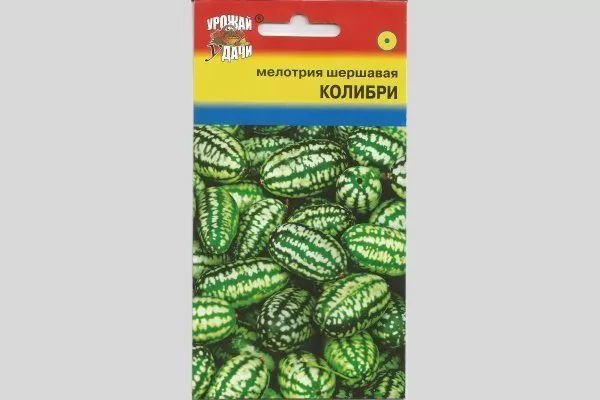
Melotria Calibri Seeds
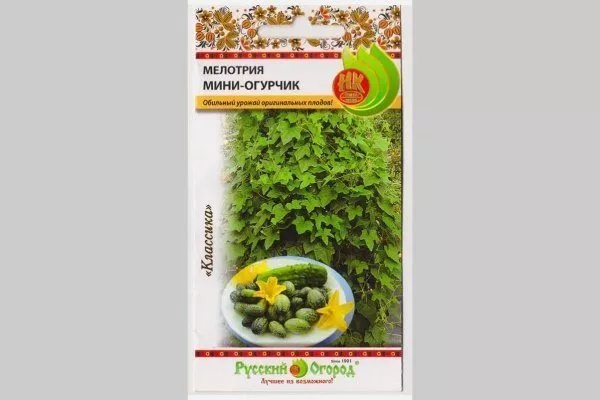
Melothria Mini Cucumber Seeds
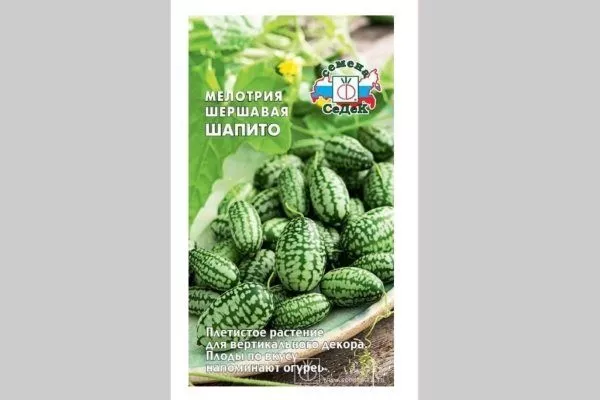
Melothria Chapito Seeds
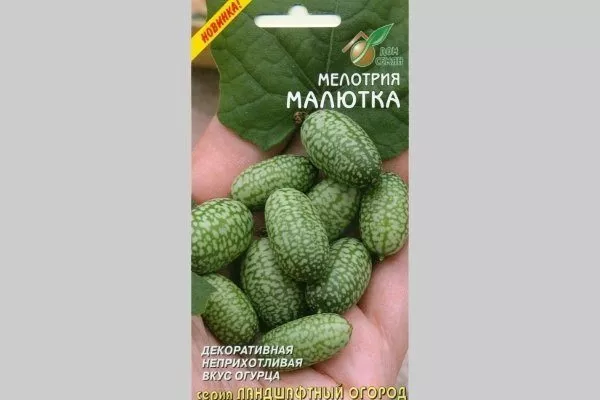
Melothria Baby Seeds
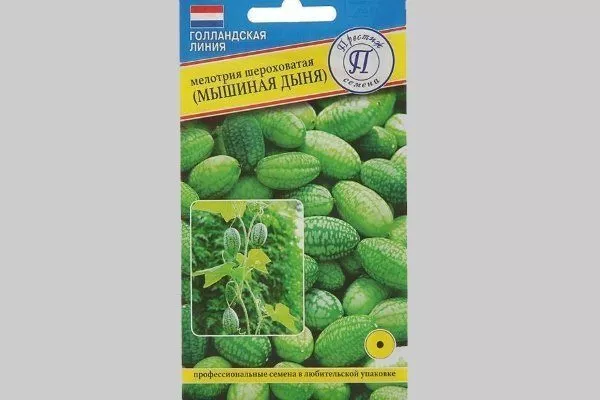
Melothria Mouse Melon Seeds
Advantages and disadvantages
Benefits of "mouse watermelon":
- Unlike cucumber leaves, the leaves don't dry out or turn yellow—they remain green until late autumn. Therefore, the plant can be used for ornamental purposes.
- Suitable for decorating both vertical and horizontal surfaces.
- Not only does this plant climb beautifully over mesh, twine, wire, and trees, it also thrives in individual containers. Melothria can be planted in boxes, containers, and pots—it's perfect for landscaping balconies and other areas where direct planting is not possible.
- Disease resistance.
- High yield.
- Versatility of fruit use.
- Unpretentiousness and undemanding care.
The following points can be considered as disadvantages:
- The plant is not immune to damage by diseases and pests of melon crops.
- The fruits and tubers of the melothria are practically not stored - they must be eaten fresh.
Melothria doesn't exhibit aggressiveness in the Russian climate. The only complaints may be about the lack of ornamental value and the less-than-ideal taste of the fruits and tubers, but these are subjective.
Choosing a landing site
Recommendations for areas for growing Melothria:
- Lighting. Windless areas, well lit by the sun and half-shaded, are suitable.
- Soil. Loose and nutritious. Can be grown in open ground or pots.
- Predecessors. It is recommended to plant after onions, tomatoes, and peas. Avoid areas where cucumbers, pumpkins, and squash were grown, as there is a risk of disease.
- ✓ The soil temperature for planting must be at least +15°C, otherwise the seeds will not germinate.
- ✓ For optimal growth of Melothria, soil pH in the range of 6.0-6.8 is required.
Planting Melothria
Melothria can be sown directly into the ground, or you can grow seedlings first and then transplant them into the garden. The latter method is used in regions with short summers. The seedling method allows for a slightly earlier harvest than when sown directly into the ground.
Seed method
Sowing seeds into the ground is usually used in two cases:
- if the landing is carried out in the southern region;
- if the melothria is used as an ornamental plant and fruiting is not the key task of the plant.
In temperate climates, melothria seeds are sown in the second ten days of May. Sowing procedure:
- make a small furrow in a previously dug and fertilized area;
- 2 seeds are planted at intervals of 20 cm;
- fill the furrow with moistened soil and cover it with a board.
Planting with seedlings
In Russia, melothria grows as an annual, and the best way to grow it is from seedlings. Sowing the seeds coincides with regular cucumbers. Seeds for seedlings are sown in early April.
Order growing seedlings:
- Prepare boxes or containers. Fill them with substrate, which is watered generously immediately before sowing.
- Melothria seeds resemble cucumber seeds, but they are very small—it's best not to cover them with soil. The best option is to sprinkle them on the substrate and then cover them with a light-transmitting material such as glass or film. Place the seeds in a warm room.
- Seedlings emerge within 2-3 days. After the third true leaf emerges, the seedlings are transplanted into individual pots, 2-3 per pot.
- After a week, the seedlings are given complex fertilizer.
- Caring for seedlings requires regular watering. Avoid overwatering the soil.
- Seedlings are planted outdoors in mid-May. They tolerate transplanting well and root quickly. If there is a risk of recurrent frost, cover the plantings with plastic film. Space adjacent plants at least 40 cm apart.
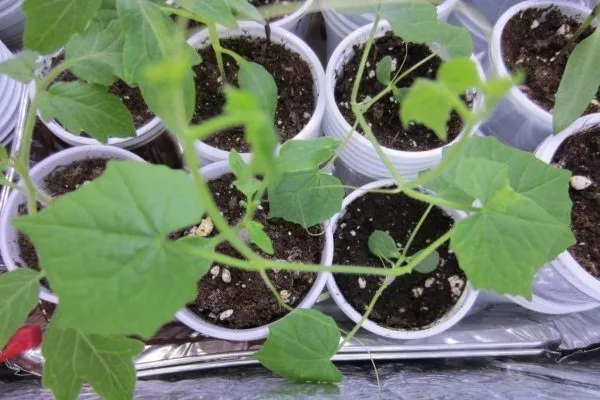
Before planting, it's recommended to harden off seedlings to ensure they can withstand unusual temperatures. Acclimate seedlings to the outdoors gradually—by taking them outside for a few hours or opening a window for ventilation if they're growing indoors.
Care instructions
The liana grows and bears fruit quite comfortably in temperate climates, and it's especially easy to grow in southern regions. Caring for the melothria is easy:
- Like all pumpkins, it enjoys frequent and generous watering. The key is to avoid stagnant water and overwatering.
- After watering, the soil is loosened, but not too deeply, so as not to damage the root system. To conserve moisture and prevent weed growth, the beds are mulched.
- To increase crop yields, plants are fed with fertilizers.
If the plant is being planted for ornamental purposes rather than for fruit, it should be fed with nitrogen fertilizers at the initial stage of growth. Nitrogen promotes the growth of foliage. If the goal is to harvest, a complex fertilizer containing predominantly potassium and phosphorus should be applied.
- Supports and weaving nets are prepared in advance for the vine.
- To prevent powdery mildew, spray the plant twice a season with a soapy solution. Tar or laundry soap is used to prepare the solution.
If the melothria grows well, is disease-free, and has plenty of foliage, it becomes a striking element of landscape design. Unlike other cucurbits, the vine's foliage does not turn yellow, wilt, or wither—it remains attractive until the frost sets in.
How to collect Melothria seeds?
Don't throw away overripe mini cucumbers. If you remove the seeds, rinse them, and dry them, you can get a portion of seeds for planting next year.
Features of collecting melothria seeds:
- To obtain seeds, it is best to use fruits that have fallen to the ground.
- Overripe fruits are kept for another couple of weeks, spread out on a baking sheet and kept indoors.
- After cutting the dried and wilted fruits, the seeds are extracted. They are placed in a jar of water and left for another 5 days. During this time, pathogenic microbes are killed, and the seeds are sorted by quality. The good ones remain at the bottom, the bad ones float to the surface.
- After 5 days, the seeds are washed and laid out on a flat, dry surface, kept in a well-ventilated room for two weeks.
- When the seeds are dry, they are transferred to a hermetically sealed container, which is then kept in a dry and cool place.
If stored properly, melothria seeds will remain viable for up to ten years.
Propagation by tubers
Melothria propagates not only by seeds but also by tubers, like potatoes. If you don't want to wait for a seed to germinate, you can plant the tubers. They don't keep for long as food, but they can be preserved as planting material. To do this, store the tubers in a cellar in the fall. To prevent them from spoiling, place them in slightly moist peat. Plant the tubers in the spring, when the soil has warmed.

Harvesting and eating
The fruits are harvested when slightly unripe. They are not allowed to grow to 4 cm in length and become soft. They are picked when they reach 2-3 cm in length. Neither the fruits nor the tubers can be stored for long. They are immediately used for preserves, which are made according to "cucumber" recipes. They are salted, pickled, and made into jams.
The fruits are best eaten fresh. When overripe, they become soft, develop many seeds, and lose their pleasant flavor. Mini cucumbers are best eaten slightly underripe, while they are still firm.
Melothria fruits are used in salads and are also included in meat, fish, and vegetable dishes. Mini cucumbers are pickled in assorted preserves, along with other vegetables. Adding pepper to the marinade gives the fruits a unique flavor.
Once the plant has finished fruiting, you can begin harvesting the roots. They can be eaten raw, added to salads, or added to stews. However, the roots must be used within 3-4 days, as they lose their nutritional and flavor value after that.
Benefits and harms
"Mouse watermelon" contains a wealth of beneficial nutrients. It is recommended for fasting days and as part of a diet. It contains a lot of magnesium, iron, potassium, phosphorus, sodium, calcium, as well as vitamins C and B9.
Benefits of Melothria fruits:
- the immune system is strengthened;
- blood pressure is normalized;
- the walls of blood vessels are strengthened;
- blood cholesterol levels decrease;
- cardiac activity is stimulated;
- weight is reduced and normalized.
Low in calories—15 kcal per 100 g—mouse watermelon promotes satiety. Scientists have discovered that the fruit of the melothria plant has a tonic, restorative, and anti-inflammatory effect.
Despite their many beneficial properties, mini-cucumbers are contraindicated for people with high acidity and stomach diseases such as gastritis, stomach ulcers, and others.

Miniature "watermelon-cucumbers" are not recommended for pregnant women. Hypertension, cardiovascular disease, liver disease, kidney disease, and gastrointestinal tract diseases are also contraindications for eating mini cucumbers.
Reviews of Melothria
The fruit—small cucumbers—grows in abundance, and I harvest them before frost—they're always a great salad ingredient. The kids eat the "berries" straight from the vines, but I prefer them in dishes and canned. Next year, I built sturdy supports for the vines to prevent them from breaking under the weight of the harvest.
I plant seeds in open ground, and they're growing without a problem. Last year, I harvested about 20-25 plants every day. Just enough for a salad. The melothria also beautifully twines around my arbor; I'm thinking of planting it near the fence.
Melothria isn't the most popular vegetable among gardeners. But as a plant that combines the properties of a vine with high yields of edible fruit, it can be quite attractive. Requiring little care, this "mouse watermelon" will not only create shade in your garden but also provide you with mini cucumbers until late autumn.
Thank you for such a thorough and detailed story about melatronia!