
The "Dachnik's Dream" cucumber variety is a proud product of Russian breeding. It boasts a wide range of uses, excellent disease resistance, and a long fruiting period. This hybrid grows well both in open fields and greenhouses.
Introduction to the variety
Dacha Resident's Dream belongs to the category of parthenocarpic hybrids with a predominance of female flowers. To stimulate productivity, it is recommended to plant it next to varieties that require bee pollination.
Creators
The "Dachnik's Dream" variety is the result of the work of Russian agronomists from the Aelita agricultural firm. It received official recognition in 2008. Among the authors are N.V. Nastenko, V.G. Kachainik, and A.V. Kandoba.
Characteristic features of the appearance of the plant and fruits
The "Dachnik's Dream" plant is distinguished by its vigorous, free-growing, indeterminate bush. The side branches appear quite compact compared to the main stem. Other features:
- The shoots are covered with medium-sized leaves of a rich green color.
- The lateral shoots are small, with shortened internodes.
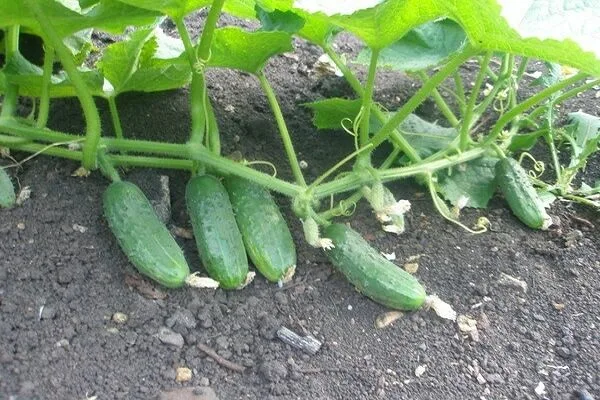
- The ovaries form in clusters. A maximum of 4 to 10 fruits can develop in a single node, but 5-6 are the average.
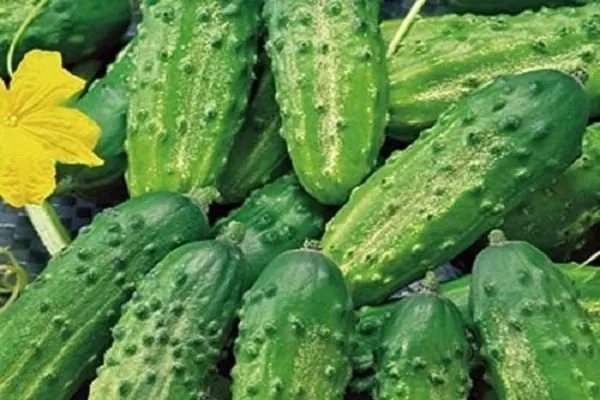
As for the appearance of the fruits of this variety, they are as follows:
- the length is from 10 to 11 cm;
- the shape approaches oval;
- weight approximately 100 g or slightly less/more;
- the skin is thickened, with characteristic tubercles;
- the skin is a rich green color, and the flesh is light in color;
- There are black spikes on the surface.
Purpose and taste
Due to the small size of the fruits, this variety is ideal for preparing hot dishes, pickling and preserving, even if the loss of their crispness is not a problem (this occurs during prolonged heat treatment - cooking pickle soup, etc.).
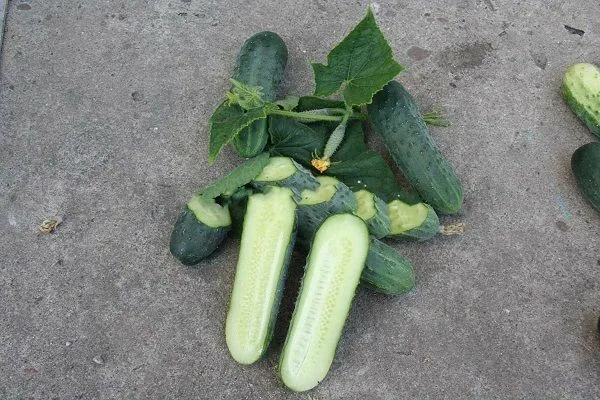
Dream of a Summer Resident cucumbers are perfect for fresh consumption and as a salad ingredient. They boast excellent flavor:
- juicy and dense pulp;
- crispy texture;
- absence of bitterness;
- sweetish taste;
- fresh and pleasant aroma.
When ripe, the yield
A summer resident's dream is characterized by increased productivity: gardeners harvest up to 7.5-8 kg of fruit per season from 1 square meter of open ground. In greenhouses, this figure can reach 18.5-20 kg.
From the moment the shoots appear after sowing until the first trial batch, only 35 days pass, and until mass harvesting, 45 days pass, which indicates early ripening.
Seed producers
The main supplier of the "Dachnik's Dream" variety of seeds is the agricultural firm "Aelita," which cultivates vegetables in peat fields. Another well-known producer offering seeds of this variety is the company "Sedek."
Planting cucumbers
This hybrid variety is resilient to a wide range of climates and has lenient soil requirements. A site for sowing seeds should be selected in advance. Keep in mind that this variety can produce a bountiful harvest even in partial shade.
Planting dates
Cucumbers prefer warmth. In colder climates, they are grown in greenhouses or under plastic in beds. "Dachnik's Dream" seeds are sown for seedlings a month before planting in the ground. In the garden, seeds are sown between May 15th and 20th, when the soil temperature reaches at least 14-16°C.
- ✓ The optimal soil temperature for sowing seeds should not be below +14°C, but for better germination, +16-18°C is recommended.
- ✓ To prevent root system diseases, it is necessary to ensure good soil drainage, especially in greenhouses.
Site preparation
Preparatory work involves cultivating heavy soil to a depth of 6-9 cm and selecting a well-lit location with some midday shade. Onions, tomatoes, cabbage, or potatoes can be used as predecessors for this crop, but planting after squash is not recommended.
What you need to do:
- Dig up the garden. Also, add any organic matter. You'll need between 5 and 12 kg per square meter, depending on the soil's fertility.
- Remove all plant debris from the top layer of soil, right down to the grass roots.
Planting seeds
Before sowing, sprout the "Dachnik's Dream" seeds on a damp cloth, pre-soaking them in a nutrient solution. Then proceed as follows:
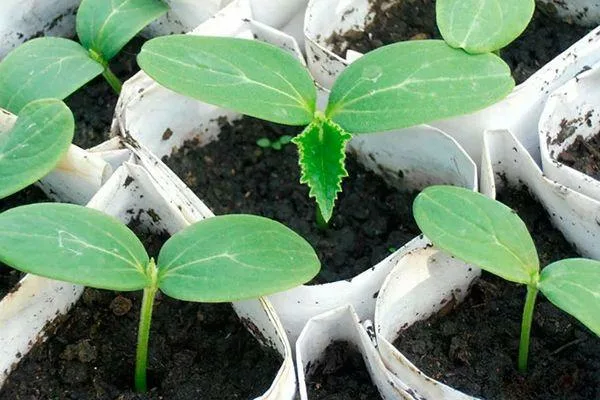
- When the seeds sprout, transplant them into separate cups with loose substrate.
- During the process of growing seedlings, it is important to maintain the temperature at least at +20-23°C, and use phytolamps if there is insufficient light.
- Try to start feeding the plants after two true leaves appear.
Survival of seedlings
To ensure that young plants take root well after transplantation, they begin to acclimate to outdoor conditions a week beforehand – first, they are taken outside during the day, and after a few days, they are even left outside overnight.
The optimal time to transplant seedlings to the greenhouse is April 15-25. They can be transplanted to the outdoor garden when the soil temperature reaches above 16-17°C. Warm weather helps young cucumbers adapt to the new conditions more quickly.
Planting diagram
It is important to organize the landing correctly:
- For good air exchange and to stimulate flowering, leave a space of 15-25 cm between plants;
- Place rows at a distance of 60-80 cm from each other.
Rules for caring for cucumbers
To ensure a bountiful harvest, strictly adhere to the recommended growing practices. Maintaining optimal moisture levels and improving soil fertility is essential, as well as monitoring the health of the plant's roots.
Watering
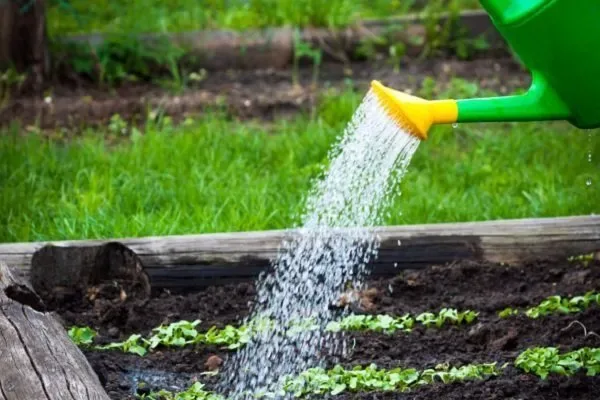
The Dacha Dream F1 cucumbers require regular soil moisture, as they do not tolerate dry soil. However, too much moisture can also trigger disease, while too little moisture leads to bitter fruit and reduced fruit production. During hot weather, it is recommended to water the plants 3-4 times a week, and during dry periods, daily, using warm, settled water.
Garter and shaping of bushes
To stimulate fruit set, pinching the main stem is helpful, which encourages vigorous growth of lateral shoots. Once the plant reaches 25 cm in height, cucumbers begin to require support. Proper staking increases yield.
Advantages of tying cucumbers to a trellis:
- makes it easier to care for plants and shape the bush;
- reduces the risk of pests and diseases;
- simplifies harvesting;
- prolongs the fruiting period.
Top dressing
During the period of intensive growth, cucumbers require fertilizer rich in nitrogen and phosphorus. To stimulate bud and ovary formation in the "Dachnik's Dream" variety, it is recommended to apply potassium-rich fertilizers, as well as boron and iodine.
Organic mixtures are also essential – they provide plants with all the necessary nutrients. Bird droppings or cow manure are dissolved in water and used for irrigation, using 5 liters per square meter.

Hilling
Cucumbers respond well to hilling. Exercise caution when loosening the soil, as the roots of these plants are close to the surface and can be damaged. This procedure helps prevent root rot.
Resistance to diseases and pests
This hybrid is renowned for its resistance to cucumber mosaic virus, root rot, and powdery mildew. However, be aware of the following problems:
- Bacteriosis of cucumbers. The disease causes leaf wilting and progresses particularly rapidly under conditions of high humidity and temperature. Excessive rainfall promotes the proliferation of bacteria, which can destroy up to 70-80% of the crop.
To prevent bacterial blight, it's necessary to disinfect greenhouses and garden tools, and treat seeds with antiseptic solutions before sowing. At the onset of the disease, treatment with Fitolavin-300 is recommended.
Symptoms:- the appearance of oily brown spots on the leaves;
- crust formation on leaf blades;
- death of whips.
- Cucumber cladosporiosis. This fungal disease affects young fruits, causing small brown spots to appear. In rare cases, branches and leaves are affected, developing brown spots that eventually develop into ulcers. Affected fruits become unfit for consumption.
Methods of controlling Cladosporiosis include:- maintaining a stable temperature and humidity in the greenhouse;
- treating the lashes with Bordeaux mixture;
- spraying plants with a solution of copper oxychloride at intervals of 10-14 days;
- thorough removal of plant debris after the end of the growing season.
- Spider mite. This pest lays its eggs in the soil. In spring, the larvae hatch and settle on the undersides of leaves. They feed on plant sap, causing pale spots on the leaves and a loss of green pigment. The insects create a whitish web around the stems.
Methods for controlling spider mites include:- removal of damaged parts of stems;
- cleaning plants from cobwebs;
- treating bushes with a solution of ammonia and tobacco dust;
- spraying plants with biological agents.
To avoid problems, carry out preventative spraying in the spring.
Positive and negative qualities
The "Dachnik's Dream" variety is distinguished by its increased resistance to many diseases, which contributes to prolonged fruiting. The compact size of the fruits makes them ideal for canning.
Reviews
The "Dachnik's Dream" cucumber has quickly become a favorite among our gardeners and farmers. They praise it for its early fruiting, increased productivity, shelf life, transportability, and ease of cultivation. However, some critics say it's not suitable for winter preservation or indoor cultivation.