
The May cucumber is a well-known and old hybrid, an early-ripening, bee-pollinated variety. The plant produces only female buds. It was developed for growing under cover, and in hotter regions, it can be planted directly in the garden.
Introduction to the variety
Maisky is popular among domestic gardeners. This variety boasts many desirable qualities, appreciated by professionals as well. Particularly notable are its mid-early ripening, long fruiting period, generous yield, and delicious, classic cucumbers.
Creators
May F1 was developed by employees of the Manul agricultural company in collaboration with the Russkiy Ogorod agricultural enterprise. The hybrid was created thanks to G. Tarakanov, M. Panova, E. Meshcherov, V. Krylov, and A. Zalkaln.
External characteristics of the plant and cucumbers
The plant has an indeterminate growth pattern and is characterized by moderate branching. It also possesses other varietal characteristics:
- The standard-sized leaves are a rich dark green color.
- The bushes reach a length of 220-250 cm and require pollination by insects.
- Plants form numerous clustered ovaries, with a predominance of female inflorescences.
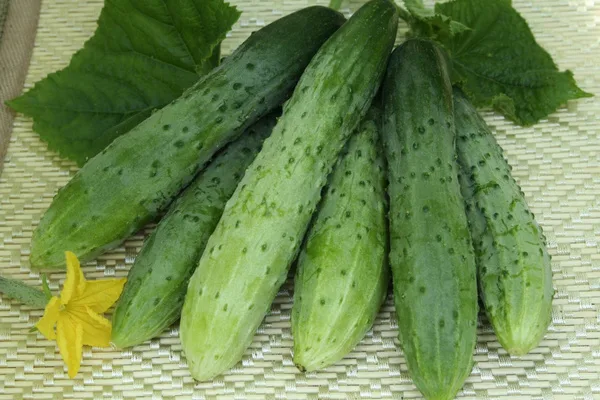
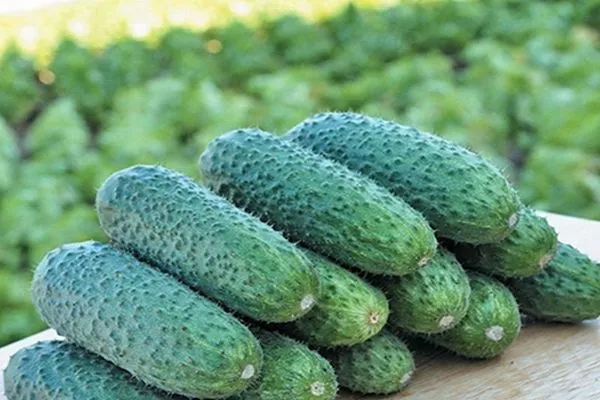
- Cucumbers grow up to 17 cm in length, but in the gherkin stage they are only 12 cm long and have an oblong shape.
- The fruits are covered with small tuberculate formations, dark green delicate skin and medium whitish pubescence.
- The cucumber pulp is dense and crisp, without voids.
- ✓ The predominance of female inflorescences increases yield.
- ✓ Resistance to olive spot and root rot reduces the need for chemical treatments.
Purpose, taste
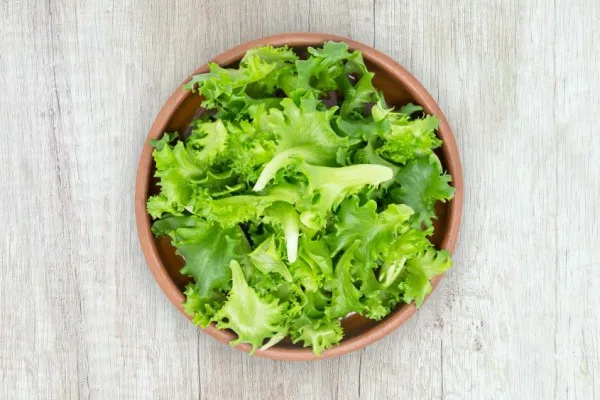
Maysky cucumbers are used for salads and canning. Their sweet flavor and tender skin make them ideal for summer dishes or freshly picked. These cucumbers also taste excellent after any processing, whether pickled or marinated.
When ripe, the yield
This variety is distinguished by its generous yield—an average of 21.5 kg per square meter. The cucumbers have excellent marketability and withstand transportation well. Ripening time is mid-early: from the appearance of the first green shoots to the onset of fruiting, it takes 45-50 days.
Planting cucumbers in May
May F1 can be grown from both seeds and seedlings. Sow seedlings beginning in the first ten days of April. For planting, it's best to use small containers with fertile soil mixture. Seeds should be planted in the garden after May 25th.
- ✓ The optimal soil temperature for planting seeds should be at least 15°C.
- ✓ The distance between rows when planting should be at least 70 cm to ensure sufficient space for growth.
Selecting a site
Fertile soil is ideal for growing cucumbers of this variety. After harvesting the previous crop (tomatoes or potatoes), clear the soil of weeds and tops, then dig to a depth of 20-30 cm. Vegetable growers recommend simultaneously adding organic matter such as manure or humus to enrich the soil with nutrients over the winter.

Preparation of seed material
Before sowing, regardless of the chosen method, treat the seeds and acclimate them to the external conditions. To do this, prepare a 1% solution of potassium permanganate and soak the seedlings for 30-40 minutes. Then, prepare two bowls of hot (not boiling) and cold water. First, soak the seeds in the warm water for 2 minutes, then in the cold water.
Experts also recommend germinating May cucumber seeds to speed up germination and increase the germination rate. To do this, follow these steps:
- wrap the seeds in cheesecloth;
- moisten with warm water;
- keep it in this state until small sprouts appear.
Planting seedlings
To sow, place the seeds in containers at a depth of 1.5-2 cm or no deeper. Cover with a thin layer of loose soil mixture and moisten with a spray bottle. To speed up germination, maintain a room temperature of 24-25 degrees Celsius.
Rules for transplanting seedling bushes:
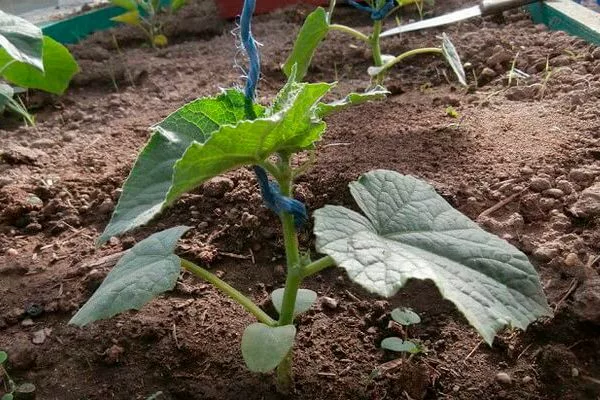
- Transplant the seedlings into the garden beds when they are 25-28 days old. By this time, the plants should be 18-22 cm tall and have 4-5 leaves.
- The depth of the hole depends on the parameters of the root system of the seedlings.
- Planting pattern: 50-55x70-75 cm.
- Before planting, pour boiling water into the hole to disinfect it and add a handful of manure.
- The sprouts of the May f1 variety are planted and covered with soil up to the level of the lower leaves.
- After transplanting, moisten the soil surface and cover it tightly with plastic film. After a few days, when the seedlings have adapted to the new environment, remove the covering.
How to care?
Caring for Maysky does not require much effort, but does include several mandatory steps:
- Watering. It is recommended to water the plant at the root system two to three times a week. In hot, dry weather, water daily, or sometimes twice a day. The water should be preheated in the sun and allowed to settle. It is best to water in the morning or evening, avoiding direct sunlight.
- Fertilizer. Fertilize every 20 days, as this variety responds well to a variety of nutrients. You can alternate between bird droppings, cow/horse manure, and commercial minerals. Complex fertilizers are also suitable.
- Soil care. It's important to weed the beds regularly to prevent weeds from taking hold. At the same time, loosen the soil around the tree trunks to break up the dense layer. Weeding is recommended after watering to allow the plant roots to receive more air and moisture.

Pathologies and pests
Despite the Maysky variety's resistance to disease, improper care can lead to cucumbers becoming infected with certain infections:
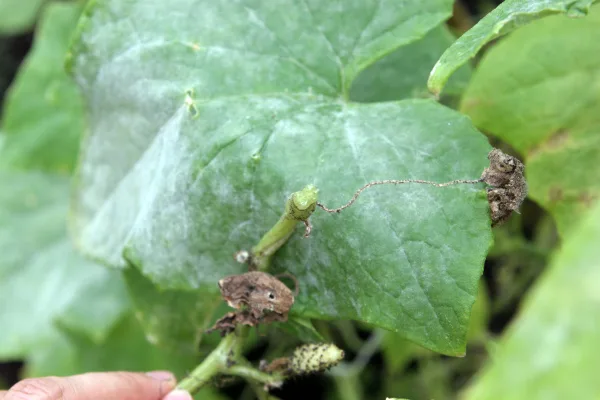
- Powdery mildew. It is one of the most dangerous and common diseases. This fungus spreads through the air in high-humidity conditions. When infected, cucumber leaves become covered with a light-colored coating, and rotting begins.
In the early stages of infestation, spray the bushes with Gamair or Alarin. In more advanced cases, use more powerful chemicals such as Thiovit and Bayleton. - White rot. The disease completely affects the entire Mayskiy f1 variety of plant. Moist spots appear on infected areas, which eventually develop into growths that secrete a slimy substance. These processes lead to death.
Once the disease is detected, spray the plants with antiseptics (Oxychom/Topaz). Copper sulfate is also suitable for the initial stages. - Cladosporiosis. It most often affects weakened plants that don't receive enough sunlight, moisture, and minerals. The fungus begins to develop on cucumbers, covering them with numerous small ulcers.
Cladosporiosis infection results in reduced yields and poor fruit appearance. For treatment, use Oxychom or Bordeaux mixture.

Harvesting and storage
Hybrid cucumbers are harvested three times a week, allowing for the time needed for the fruit to fully ripen. Typically, the Maysky variety is picked early in the morning to allow the wounds on the branches to heal by evening and prevent pests from attracting them.
The fruits are then placed in wooden boxes for storage in a cool room with a temperature of 3-4 degrees Celsius. If the cucumbers are intended for fresh consumption, they are washed and used in a salad.
Positive and negative qualities
This mid-season hybrid produces fruits with excellent flavor. But that's not its only advantage:
Flaws:
Reviews
The Mayskiy f1 cucumber variety is suitable for both salads and canning, and is suitable for both open-air gardening and greenhouse cultivation. Vegetable growers appreciate it for its relatively early ripening and excellent yield. The plants are highly resistant to root rot and olive leaf spot.