
The Mashenka f1 hybrid stands out for its ease of care and disease resistance. This cucumber thrives both outdoors and in greenhouses, as well as under protective canopies. Thanks to its resilience and undemanding nature, it is in unprecedented demand across various climate zones across the country.
Introduction to the variety
Cucumber Mashenka f1 belongs to the group of parthenocarpic species, which means there is no need for pollination by insects and other types of cucumber crops.
The characteristics of the hybrid are as follows:
- This variety has excellent germination rates, reaching 95-96% commercial purity, and yields impressively for an early-ripening variety—over 15 kg per square meter. In greenhouse conditions, yields can be even higher.
- This vegetable is highly stress-resistant, able to withstand sudden temperature fluctuations, and can withstand long transportation and even short-term frosts, which is key to successful sales on a large scale.
- The Mashenka f1 variety is undemanding to soil and fertilizers, which makes it even more attractive for cultivation.
- This hybrid belongs to the mid-early variety category. The growing season for these cucumbers ranges from 35 to 45 days, depending on local climate conditions.
- This crop grows uniformly. Cucumbers ripen gradually, allowing for extended harvesting periods before the onset of cold weather. The main harvest period is July-August, but the harvest can also be made in September-October, and in the south, even as late as November.
In areas with cool climates, the variety exhibits high adaptability, not afraid of low temperatures and unexpected frosts.
Originators
Mashenka is a relatively new development in the world of vegetable crops, but it has already earned the trust of gardeners and agricultural producers. This cucumber variety was created by Russian breeders in 2014 and was registered in the State Register of Breeding Achievements of the Russian Federation in 2015.
The hybrid was developed by breeder E. R. Kudryavtseva. Mashenka grows productively in various climatic zones of Russia and can be cultivated both in open ground and under protective film.
Characteristics of the appearance of the plant and cucumbers
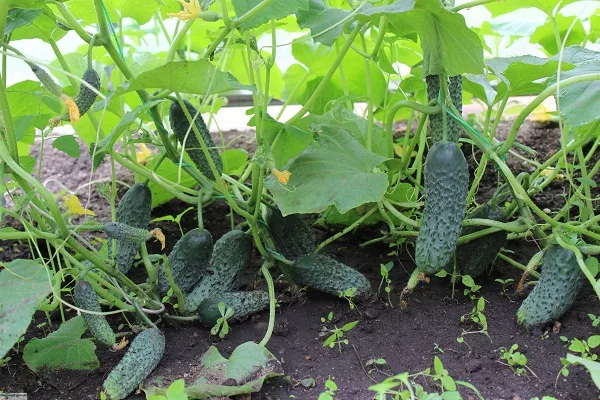
This early hybrid is distinguished by moderate branching, medium density of leaves with an emerald green hue, and a developed root system.
It also has other varietal characteristics:
- The medium-height bush demonstrates balanced growth and formation of lateral shoots.
- During the budding period, bright yellow flowers appear on the bushes, mostly female, with one to two fruits forming at each node. It's important to note that this hybrid is parthenocarpic, meaning it doesn't require pollination by bees and is characterized by a clustered arrangement of ovaries.
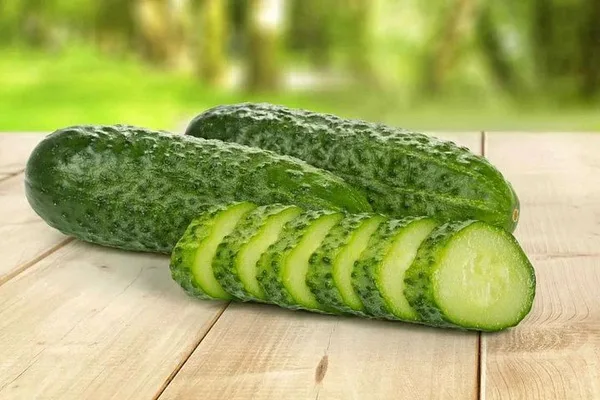
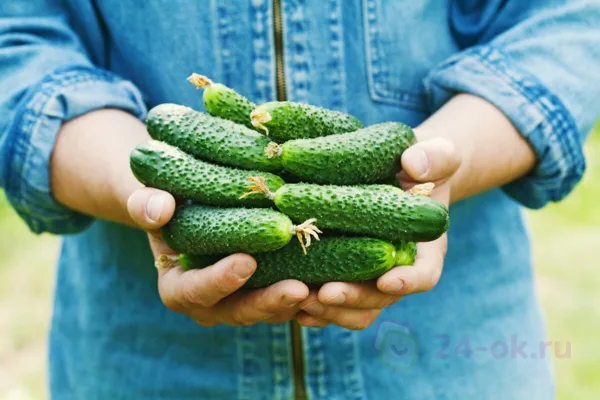
- On a healthy bush, ripe fruits reach a weight of 110 to 180 g, sometimes up to 250-300 g, with a length of 9 to 11-14 cm. They have a harmonious shape, either cylindrical or oval-elongated, covered with a uniform dark green color.
- The skin of the fruit is thick, slightly glossy, dotted with small tubercles and white spines.
- The flesh of this cucumber is rich, soft, crispy and juicy, without any voids or excessive wateriness.
- To preserve the taste and marketability, the harvest must be collected on time, otherwise cucumbers that are overripe on the bushes will lose their quality.
Taste, purpose
The Mashenka cucumber boasts a rich, distinctive cucumber flavor that consistently attracts home cooks and chefs. Its flavor harmoniously combines summery tenderness with refreshing notes that remain even after cooking. The flesh is not bitter and contains minimal seeds.
Mashenka cucumbers can be eaten straight from the garden, added to salads and appetizers, preserved, pickled, and used for making pickles. This variety can be harvested as gherkins or pickles, making them ideal for making small-fruit preserves.
Positive and negative traits
This variety doesn't require insects for pollination, as it can handle the process itself. Mashenka's high germination rate and excellent commercial qualities are noteworthy. Therefore, it has many advantages. However, some disadvantages should also be considered.
Advantages:
Flaws:
Landing features
This variety is most often grown in open fields or under temporary shelters, although it can also be planted in greenhouses. Seeds can be sown directly into the garden bed or propagated using seedlings.
- ✓ The optimal soil temperature for planting should be at least +15°C, which is not mentioned in the article.
- ✓ To prevent diseases, in addition to seed disinfection, pre-sowing soil treatment with biological preparations such as Fitosporin-M is recommended.
Timing and preparation
Planting time may vary depending on regional climate conditions and current weather, but typically occurs between April 20 and May 10, when temperatures are consistently above 18-20°C and the risk of frost has passed. Planting is best done after rainfall.
The site preparation is carried out as follows:
- choose a place where annual herbs, tomatoes or legumes were previously grown;
- In the fall, the soil is dug up, plant debris is removed, and organic mixtures are added;
- in the spring, a week before planting, loosen the soil, add ash and treat with a solution of potassium permanganate;
How to grow correctly?
The process of growing seedlings includes several standard stages, but the most important thing is to pay attention to the varietal requirements:
- begins with soaking the planting material in damp gauze for 3-4 days;
- the time for seedling germination is approximately one month;
- It is recommended to use peat tablets or peat cups, placing 2-3 seeds in each;
- the depth of planting material in the soil is 2 cm;
- temperature conditions should be between +21 and +25 degrees;
- You can use mineral preparations designed specifically for seedlings.
When the bushes are ready for planting, they are acclimatized outdoors for about a week. They are ready when they have 3-4 healthy leaves.
Recommendations for replanting:
- Due to the fragility of the roots, it is recommended to plant the plants together with a container or with a large lump of earth.
- After work, you can provide protective shelter, especially if the temperature fluctuates.
- The distance between rows should be from 60 to 75 cm, and between individual plants – from 30 to 40 cm.

Care
Successful cultivation of this variety does not require complex agricultural techniques, but there are some important steps that must be followed.
- Watering. This plant loves moisture and needs regular watering – at least twice a week, although in hot weather it may be necessary to increase the frequency.
It is recommended to use settled water, preheated to a comfortable temperature of 24-26 degrees Celsius. Watering is best done in the evening, carefully pouring water around the roots to avoid contact with the leaves. - Top dressing. Fertilizer should be applied every six weeks. This variety prefers organic mixtures, with nitrogen and phosphorus applied alternately. The plant needs the most nutrients during the period of bud and ovary formation. Fertilization should be performed in the morning or evening.
- Strengthening the stem, compacting it and providing a protective covering. Compaction begins when the stem reaches the fifth leaf. Stem strengthening begins after it reaches 15-18 cm. Covering the bush occurs when the shoots reach 10-11 cm – this is necessary in low temperatures or dry conditions.

Diseases and parasites
This variety is highly resistant to various diseases. To prevent disease, it is recommended to disinfect the seeds and regularly treat the plants with garlic, tobacco, or onion infusions to minimize the risk of cucumber damage.
There are risks of such problems arising:
- Cladosporiosis. This disease appears on cucumber leaves as rotten, olive-colored spots. It spreads in high humidity. At the first sign of the disease, treat the cucumbers with specialized products such as Kurzat or Ordan, and soak the greenhouse walls in formalin.
The main method of preventing cladosporiosis is regular ventilation. - Gray rot. Characterized by the appearance of waterlogged marks on the leaves, covered with a grayish coating. This disease can be caused by excess moisture.
If such lesions are detected, remove the affected Mashenka stems and treat the pruned areas with copper powder and chalk. Spray the entire area with Trichodermin suspension. - Anthracnose. It manifests as rotten, brown spots on the foliage, which then dry out, and wet ulcers appear on the stems. The growth of the fungus that causes this disease is stimulated by temperature fluctuations.
To prevent the development of anthracnose, spray the cucumber area with copper sulfate, and dust the affected bushes with charcoal or lime.
Harvesting and storage
Mashenka reaches maturity by midsummer. However, from June onward, careful monitoring of the ripening of these vegetables is essential to prevent them from becoming overripe or overgrown. Therefore, they should be harvested daily, which will extend the fruiting period until late autumn.
Reviews
The Mashenka f1 hybrid cucumber is deservedly popular among gardeners as a valuable greenhouse vegetable. It's becoming a preferred choice for those who don't have much time to devote to plant care. This hybrid is drought- and disease-resistant, producing cucumbers with an excellent flavor and no bitterness.