
Masha cucumbers are an F1 hybrid and are characterized by high yields, rapid ripening, resistance to many diseases, and excellent flavor. They are considered an early, self-pollinating gherkin with a long shelf life. For this reason, the fruits are widely grown for wholesale sales.
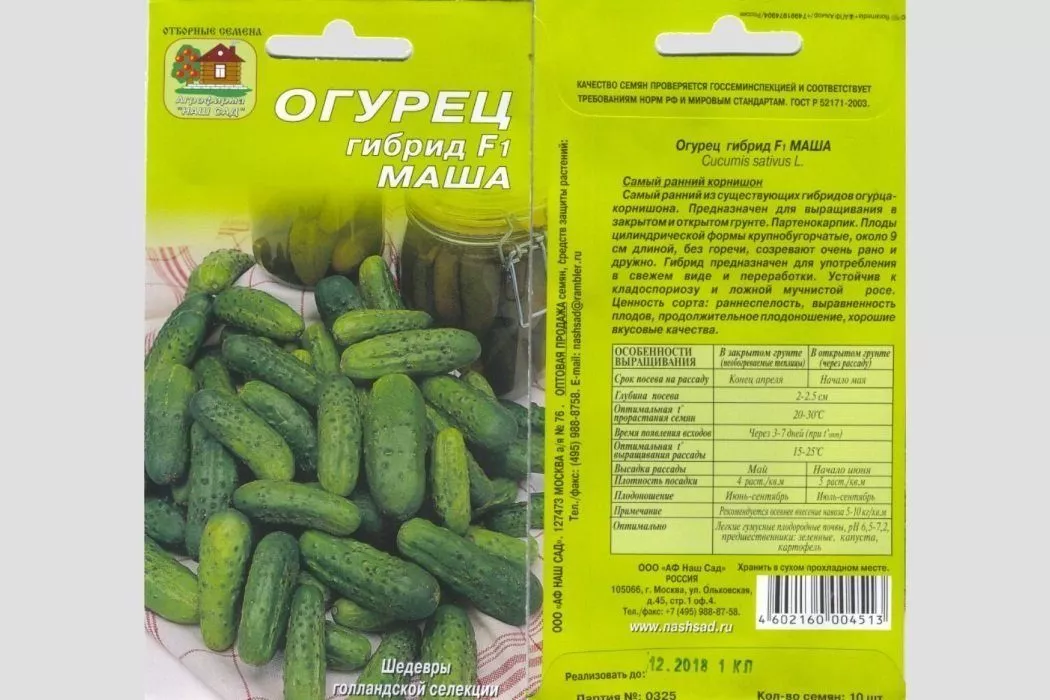
Cucumber seeds "Masha"
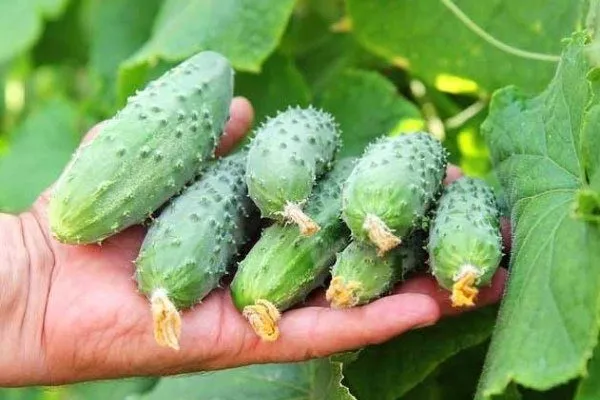
Orurtsy "Masha"
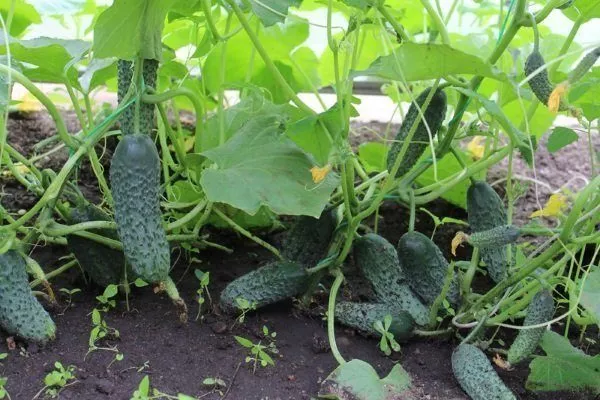
The Masha variety is a record-breaker in terms of yield: more than 10 kg of cucumbers can be harvested from one square meter.
Description of the Masha variety
The F1 class designates the cucumber as a first-generation hybrid, the seeds of which were developed through labor-intensive and time-consuming selection. Specifically, during the development of the variety, various gherkin varieties were crossed, cross-pollinated, and artificially pollinated.
Mung bean can be considered a heterotic variety, meaning it's a cucumber that surpasses its "parents" in all characteristic traits. These factors suggest that home-harvested seeds should not be replanted, as improved characteristics can only be achieved through first-generation selection.
The plant is a determinate variety (the main stem stops growing after the flower clusters form). It has a limited number of shoots, which are vigorous and of medium height. However, when shaping the bush, the shoots can be positioned vertically or horizontally. Masha is a unique variety that can be grown from both seedlings and seeds (in a greenhouse or in the open ground).
Appearance
Characteristics of the bushes:
- climbing ability – medium;
- leaves - slightly wrinkled, medium size;
- flowering is female (due to this there are no barren flowers);
- There can be 6-7 ovaries in one node.
Fruit characteristics:
- shape – cylindrical, bumpy;
- the surface is pimply with a light fluff of a white shade;
- color – dark green with light stripes and spots;
- the weight of one fruit varies from 90 to 100 grams;
- length – 8-11 cm;
- diameter – from 3 to 3.5 cm;
- the pulp has increased juiciness;
- the skin is crunchy;
- bitterness – absent;
- there are no voids inside;
- the skin is thick and dense.
The Masha variety has a wide range of uses – canning, pickling, eating in salads, etc. A special feature is that even after pickling and heat treatment, the elasticity and crunch are retained.
Ripening time and yield
The first harvest can be collected 36-40 days after the initial shoots emerge. For a mass harvest, a few days is sufficient.
To achieve maximum yield, ripe cucumbers should be picked daily. This allows new ovaries to develop.
Masha's fruits don't grow more than 11 cm and don't yellow, but if they aren't picked, the yield decreases and the flavor deteriorates. This is because the cucumbers are parthenocarpic.
In terms of yield, up to 10 kg of cucumbers can be harvested from 1 square meter. The final harvest occurs in late September – early October.
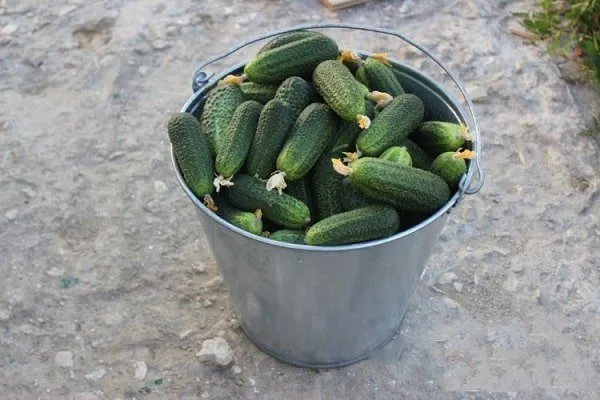
Planting and care features
Caring for and planting gherkins does not require any special skills, but there are still some rules that must be followed.
Selection and preparation of seeds
Seed preparation is essential, regardless of the chosen growing and planting method. Seeds are often pre-treated (they are brightly colored).
- ✓ Optimum temperature for seed germination: 25-28°C.
- ✓ The humidity of the gauze for germination should be 70-80%, without allowing it to dry out.
If the seeds haven't been disinfected, soak them in a light potassium permanganate solution for 15 minutes. Then drain the liquid, place the seeds on damp cheesecloth, and cover with more cheesecloth. Leave the seeds in this solution for 5 days (wet the cloth periodically with water). When the seeds are placed in the solution, remove any hollow parts. They always float to the surface.
Site selection and soil preparation
Proper crop rotation requires space. The plot should be free of preceding crops such as pumpkins, squash, zucchini, and melons. Masha is best sown after cauliflower, cabbage, legumes, and onions.
Soil preparation is essential. Ideally, this should be done in the fall. To do this, apply a solution of 1 liter of wood ash, 3 buckets of manure, and 100 grams of nitrophosphate fertilizer (this dosage is calculated per 1 square meter). If you didn't fertilize the soil in the fall, then in early spring, remove 20 cm of soil, add a layer of manure, cover with the removed soil, and then form the beds.
If the cucumber is grown using seedlings, then the soil is prepared in a different way:
- combine peat, sand, humus, soil with leaves in equal proportions;
- disinfect the soil by heating or scalding it with boiling water.
The planting method is selected based on the growing method – seedling or non-seedling.
Watering
It's recommended to water mung bean cucumbers early in the morning or late in the evening. Otherwise, the cucumbers will get sunburned. To maintain optimal soil moisture (minimum 75%, maximum 85%), use drip irrigation. If this isn't possible, water can be applied using a watering can with a fine nozzle.
- ✓ Watering should be done with water at a temperature of 20-25°C to prevent stress in plants.
- ✓ Optimum soil moisture for Masha cucumbers: 75-85%.
Watering rules depending on the planting method:
- In open ground, Masha is watered based on the amount of rainfall. The soil should be loosened the following day, not immediately.
- When grown in a greenhouse, water every other day. Each plant requires an average of one and a half liters of water.
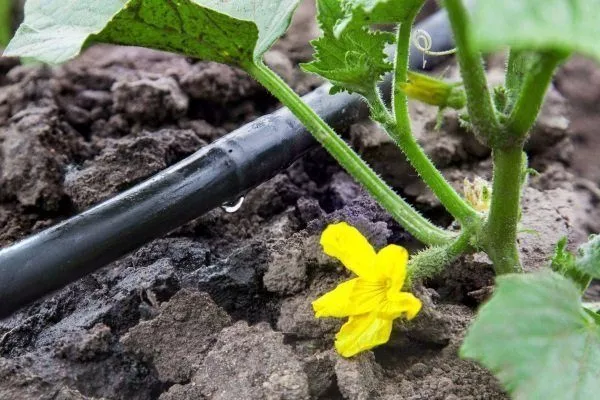
Using cold water (preferably warm) for watering is strictly prohibited. This will reduce yield and cause the flowers to fall off.
Fertilization
Fertilizing should be done every 10-14 days, but the first application is recommended 18 days after transplanting to a permanent location. Throughout this period, alternate fertilizers (mineral and organic). Traditional remedies, such as dandelion and nettle infusions, and yeast, are also excellent for feeding. Periodically, spray the plants with Bordeaux mixture, a weak solution of potassium permanganate, and wood ash solution.
Fertilizing rules based on the planting method:
- When planting seeds in the garden, fertilize up to six times during flowering and cucumber growth. Initially, apply a urea solution (one matchbox per bucket of water). Next, add potassium and phosphorus.
- Ifcucumbers are grown in a greenhouse, then first apply Kemira Lux fertilizer (1 tablespoon of minerals per bucket of water). Then apply organic fertilizer (1 liter of mullein and 20 grams of ash per 10 liters of water).
Weeding and loosening
Aeration provides the soil with sufficient oxygen and nutrients, keeping it light and fluffy. Weeding is necessary to remove weeds, which absorb essential minerals and water and prevent the cucumbers' root system from growing.
Loosening and weeding are carried out as the weeds grow, on average, every 7-14 days. After these manipulations, it is recommended to hill the bushes. Do not push the tool too deeply into the soil, as this can damage the roots.
How to form a bush correctly?
The yield depends on how well the bush is trained. This requires pinching shoots, tendrils, and ovaries, removing leaves, and guiding creeping shoots in a specific direction. It's best to grow mung beans on a trellis, which creates comfortable conditions for ventilation and harvesting.
To increase yield, experts recommend shaping only one stem. Here's how:
- separate 4 leaf axils from the bottom, remove the ovaries and shoots here;
- in the other 4, leave one leaf and one ovary;
- after that, from the 9th to the 12th axil there remain two ovaries and two leaves;
- from the 13th to the 16th axil it is necessary to leave three ovaries and three leaves;
- then everything is removed and the growth area is pinched.
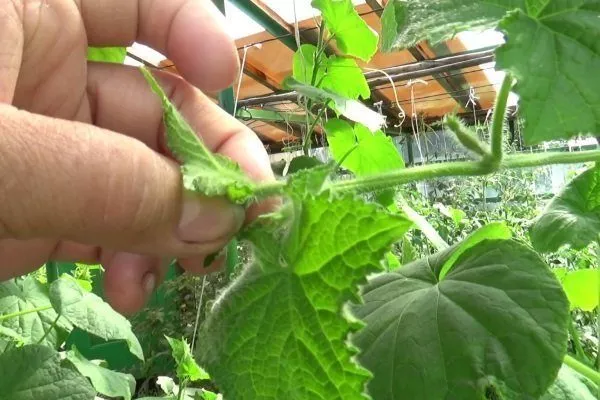
The tendrils must be removed and the stem must be placed on a wooden support.
Features of seedling and non-seedling growing methods
Seedling method
Growing from seedlings allows for the earliest possible harvest. Furthermore, it allows for control over conditions, including temperature, light, and humidity. In this case, the following guidelines should be followed:
- When planting seeds, the temperature should not exceed 28 degrees Celsius. Read on to learn how to plant cucumber seedlings. Here.
- When the first shoots appear, the temperature regime is reduced (maximum +18).
- Hardening off the seedlings 7-10 days before transplanting them to their permanent location is done by placing them in a cool place (initially for an hour, then gradually increasing the time).
- When repotting, proceed with caution, as the roots are still fragile. Experienced gardeners recommend planting seeds in half-liter pots made of peat and humus.
- In the greenhouse, the bush develops until it forms three strong leaves, after which it is transferred to the garden bed.
Growing sprouts in greenhouses has many advantages, but there is also a significant drawback: poor ventilation and high humidity create favorable conditions for the development of pathogenic microorganisms.
To prevent plant infection, the greenhouse is disinfected. This typically involves special smoke-based disinfectants, which are evenly distributed throughout the room and ignited. The greenhouse should remain in this condition for 5 days, after which it is recommended to thoroughly ventilate the "room." Make sure there are no cracks through which the disinfectant could escape.
Other recommendations:
- Once every three years, remove the top layer of soil in the greenhouse (maximum 7 cm) and replace it with new soil.
- Add compost, loam, and horse manure to the soil.
- It's beneficial to add potassium, phosphorus, and organic fertilizers. Wood ash, superphosphate, and urea are used for this purpose.
Nowadays, you can find peat pellets for seedlings that don't damage the root system when transplanting seedlings. The seed is embedded in the pellet, and when the seedling is transplanted, the protective film is removed and the sprout is planted in the soil.
Seedless method
In open ground, seeds should be planted only in well-warmed soil. The site should be moderately sunny (shaded during hot hours) and free of drafts. Further, adhere to the following requirements:
- 20 days before planting the seeds in open ground, dig to the depth of a shovel.
- At the same time, humus or compost is added (the dosage per 1 sq. m is a bucket of fertilizer).
- When planting, add a handful of humus and 1 tablespoon of urea to each hole.
- Water the hole and place the seed.
- Apply mulch and cover with plastic film. Leave this until the first shoots emerge. To ensure uniform emergence, maintain a consistent seeding depth.
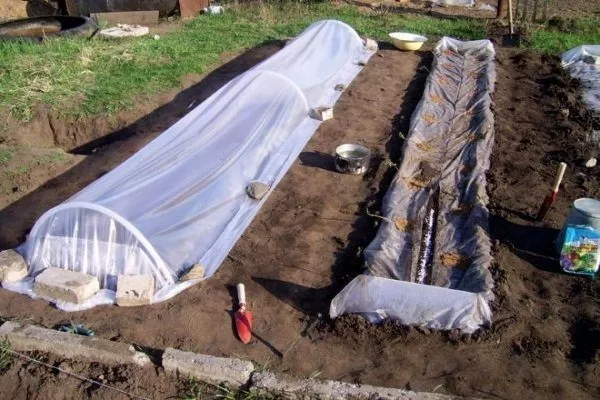
The seeds are planted no deeper than 2-3 cm into the soil. Horizontal growth (stems lying on the ground) requires a planting pattern of 80 x 60 cm, while vertical growth (using a trellis) requires a planting pattern of 20 x 100 cm.
Diseases and pests
The Masha variety is fairly resistant to many diseases common to cucumbers. However, unfavorable conditions and inadequate care can contribute to the following diseases:
- Cucumber mosaic. Characterized by deformed fruits and leaves, as well as mottling, the disease is characterized by weeding and ash treatments on the foliage (spray the leaves with water and sprinkle with crushed ash). Fundazol is used for control.
- White rot. It manifests as a whitish, fluffy coating on fruits, stems, and foliage. To prevent the development of white rot, bushes are covered with plastic during sudden temperature drops. To get rid of the disease, the affected areas must be removed and destroyed. The remaining bush is sprayed with a special solution (10 grams of urea and a couple of grams of copper sulfate per bucket of water).
- Powdery mildew. Signs of the disease include the formation of brown spots on the foliage of the plant and a fluffy coating that develops as the disease progresses. To prevent the disease, sprinkle the leaves with crushed wood ash. Fundazol is used for treatment.
- Anthracnose. It is characterized by leaf lesions (white or yellowish spots). To prevent infection, spray the plant with a weak solution of potassium permanganate. Control agents such as HOM and Ridomil Gold are used. Affected areas are removed.
Like any cucumber variety, Masha is susceptible to pests. The most common insects that attack it are:
- Aphid. You can recognize the pest by the following signs: curling leaves and spotting. In addition, fruit buds and flowers begin to fall off rapidly. You can prevent and get rid of insect infestations by spraying with the following products:
- tobacco dust solution;
- the drug Fitoverm;
- soapy water (use dark laundry soap);
- infusion of wood ash.
- Slug. When slugs appear on fruits and stems, slimy trails can be seen. The pest actively feeds on the foliage of the plant. The following methods are used for prevention and treatment:
- loosen the soil frequently, simultaneously sprinkling it with tobacco dust or wood ash;
- sprinkle the Groza preparation on the soil under the bush;
- You can also use Metaldehyde.
- Thrips. It is characterized by leaf deformation, which causes the leaves to take on a cup-shaped appearance. Additionally, scarring occurs on the fruit. Control and prevention measures:
- remove weeds in a timely manner;
- avoid the appearance of couch grass and sow thistle;
- spray the plant with Fitoverm;
- spray the leaves with an infusion of yarrow decoction.
- Spider mite. The insect's presence causes leaf deformation and the formation of a fine web. To get rid of the mite and prevent its reappearance, follow these steps:
- wash the stems and leaves with water and laundry soap;
- spray with dandelion infusion;
- use a decoction of yarrow;
- use celandine tincture;
- add Aldicarb or other pesticides to the soil.

Harvesting and storage
You can begin harvesting when the fruit reaches 8 cm in size. Don't wait until the cucumber reaches 10-11 cm, as the skin will thicken at this point.
If using seedling cultivation, the harvest period can be considered 37-40 days after germination. When sowing seeds in open ground, the ripening period increases by 2-3 weeks.
It is recommended to store the vegetable in the refrigerator for no more than 28-30 days. It is suitable for use in salads, canning, and pickling.
Pros and cons of Masha cucumbers
Advantages of the Masha variety:
- ripening speed;
- crunch even after heat treatment;
- excellent taste;
- unpretentiousness of care and cultivation;
- resistance to diseases and pests when properly maintained;
- the ability to bear fruit without pollination (parthenocarpy);
- the possibility of growing in different ways (horizontally, vertically, with seedlings and without seedlings);
- wide range of uses;
- high yield.
Flaws:
- there is no possibility of collecting seeds (you need to buy new ones every year);
- weakness of the root system (when transplanting seedlings, you need to be careful).
Reviews
Video review of the Masha variety
This video explains the characteristics of the Masha cucumber variety, what they look like, what makes them special, and how to care for them:
The Masha cucumber variety is deservedly popular with gardeners and farmers. It boasts high yields, excellent storage properties, and excellent transportability. However, to achieve this, you need to follow simple rules for planting, growing, caring for, and harvesting. It's an indispensable vegetable at any time of year.