
The Marinda F1 cucumber variety has been a favorite among farmers and gardeners for over 25 years for its ease of cultivation. This hybrid is a versatile cucumber that can be grown as a root vegetable, pickle, or salad vegetable, and its flavor is distinguished by its freshness and aroma. These cucumbers are equally delicious fresh, as well as in pickles and marinades.
Introduction to the variety
It's no coincidence that Marinda F1 is a favorite among gardeners worldwide. This variety is parthenocarpic, meaning it doesn't require pollination. It grows both outdoors and indoors, and boasts high disease resistance. Marinda F1 can also be grown on a balcony or windowsill, and boasts a generous yield.

History of origin
The Marinda F1 hybrid is the result of the selective work of specialists at the renowned Dutch company Seminis, which is part of Monsanto Holland BV. Its development was completed in the early 1990s.
Immediately after being registered in the state registry in 1994, Marinda began to gain popularity not only in Europe, but also in Russia, where it successfully adapted to local conditions.
Features of the appearance of bushes and cucumbers
Marinda cucumber plants grow to a medium height. Their leaves are medium to large, with a yellow-green color. The hybrid also has other distinctive features:
- Flowering is of the female type.
- The plants form clusters, each typically containing 6 to 8 fruits. With proper care, the clusters develop vigorously and synchronously.
- The plant is not limited in growth and belongs to the indeterminate varieties.
- The bushes are characterized by a rather spreading structure and not too dense branching.
- The climbing ability does not exceed the average level.
- The Marinda hybrid can be grown on both vertical and horizontal supports.
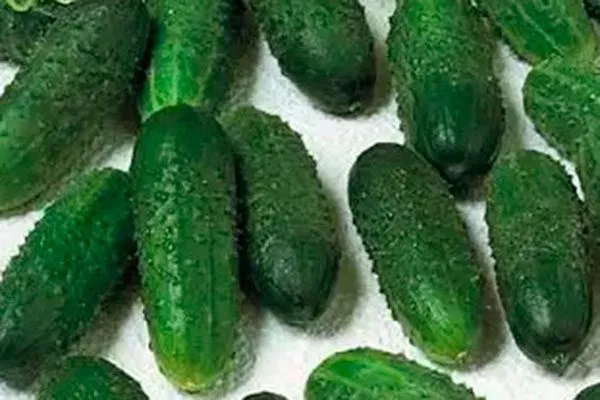
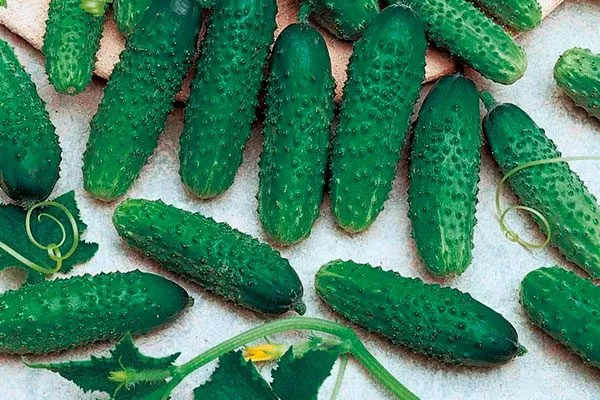
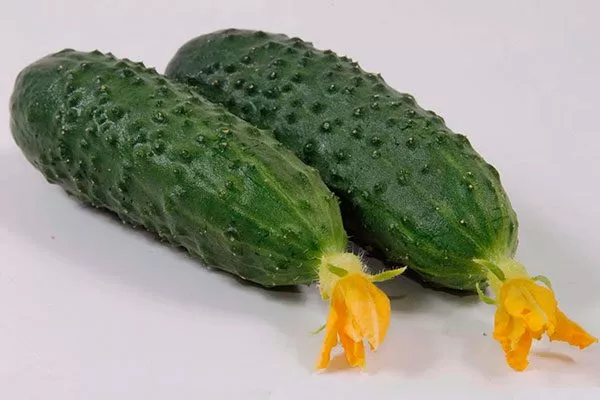
- Cucumbers grown on well-cared for bushes have a regular cylindrical shape.
- Their length varies from 10 to 13 cm maximum.
- The weight of ripe fruits can reach 65-76 g.
- The cucumbers are adorned with a thick, deep green skin.
- The surface of the cucumbers is characterized by a moderate degree of tuberculation and exhibits a slight shine.
- Small white spines can be seen on the skin.
- The cucumber pulp is quite dense and crispy.
- ✓ The hybrid has high resistance to cladosporiosis and powdery mildew.
- ✓ The fruits are not prone to overgrowing and retain their shape even when harvested late.
Taste and purpose
Marinda is a cucumber variety with excellent flavor. It lacks bitter notes, and its flavor is considered harmonious and balanced. These vegetables are versatile: they can be eaten fresh or used in a variety of dishes, salads, appetizers, and more. They are also suitable for pickling and preserving.
When ripe, the yield
Ripening occurs quickly: from sowing to harvest, the fruit takes an average of 57 days. This variety has a long fruiting period.

Marinda is often grown commercially, where yields can reach 90-207 centners per hectare. In private gardens, yields can be 5-7 kg per square meter, and in greenhouses, they increase to 28-30 kg per square meter.
How to grow it yourself?
The creators of this garden culture strongly recommend cultivating this variety both vertically, using trellises or nets, and horizontally, without additional supporting structures.
Requirements, preparation
In central Russia, the optimal time to begin sowing is from April 20-25 to May 10-12. If evening temperatures don't drop below 10 degrees Celsius and daytime temperatures stay around 20 degrees Celsius, the soil will have time to warm up to 15 degrees Celsius—ideal for transplanting seedlings into open ground.
- ✓ The optimal soil pH should be within 6.0-6.8.
- ✓ The soil should be well drained to avoid water stagnation.
Other features:
- If seedlings have already emerged but the weather is still cool, it's a good idea to cover the soil with plastic film for a couple of days before planting to allow the soil to warm up. Plastic bottles with holes cut in them for ventilation or a special film structure can be used as a protective cover.
- During the process of preparing planting material, it is necessary to check that the seeds are in an undamaged condition.
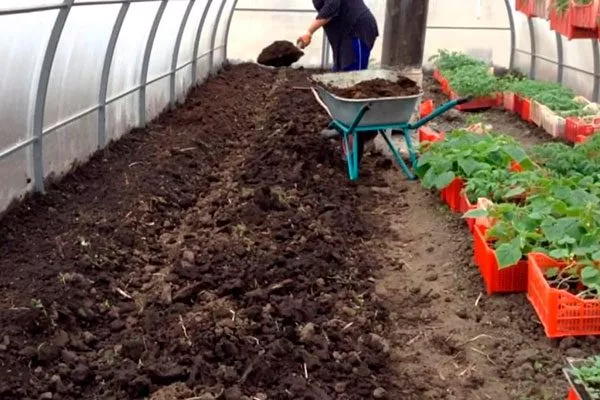
- Cucumber Marinda F1 prefers a fertile, light soil mixture rich in humus and not saturated with nitrogen.
- The best place is a sunny bed, but protected from the wind.
- To help the plant grow stronger, you can add rotted leaves or sawdust to the soil.
- To harvest earlier than usual, you can use protective film over the seedlings.
- For growing in open ground, it is preferable to choose two-year-old seeds, which have better germination and are prone to the formation of female flowers.
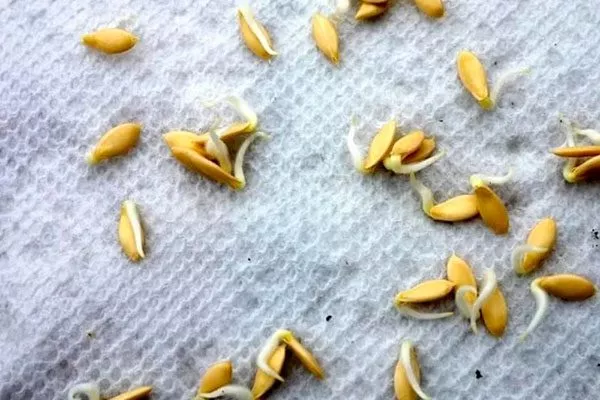
The seedlings can be planted in a garden plot or grown indoors using containers. Although hybrid seeds have a high germination rate, experienced gardeners recommend preparing the seeds before sowing. This process involves the following steps:
- Dissolve 1 tablespoon of table salt in 500 ml of water.
- Place the planting material in this solution for 15 minutes.
- Discard any seeds that float to the surface as they are not suitable for planting.
- Rinse the remaining grains under running water and dry on a paper napkin.
In open or greenhouse soil
To successfully grow Marinda, you need to choose a suitable location: this could be a greenhouse complex or an open area with excellent sunlight, protected from cool gusts of wind, with soil enriched with organic compounds.

Planting of seeds is carried out in the following manner based on the following rules:
- The seeding depth is 2, maximum 2.5 cm.
- Leave a gap of 55-65 cm between rows of seeds, and 15-20 cm between the plants themselves.
Operating algorithm:
- Prepare the soil by loosening it to a depth of 20-25 cm and fertilizing it with Superphosphate (45-50 g per 1 sq. m).
- If planting in raised beds, replace the soil with fresh compost. Create a mixture of peat, turf, garden soil, humus, and sawdust (in a ratio of 1 part sawdust to 2 parts each of the other ingredients). Add 200 g of ash and 25 g of superphosphate per bucket of the mixture.
- Create holes according to the planting scheme.
- Provide ample watering of the holes with warm water, then place one or two seeds in each.
- Sprinkle the substrate on top, without compacting it too much, and cover with a thin layer of peat.
During the initial period of care, before the young plants have 2-3 pairs of true leaves, focus on regular watering and careful weed removal.
At home for seedlings
To successfully grow seedlings, use individual containers, whether plastic or peat pots. Sow seedlings a month before you plan to transplant them to their final location.
Steps for growing seedlings:
- Start by filling the pots with nutrient-rich substrate.
- Saturate the soil with water so that it is moist.
- Make small holes in it, 2-2.5 cm deep.
- Place seeds in each hole and lightly cover them with soil.
- Move the pots to a warm place and provide them with a humid environment using cut-up plastic bottles, cling film or plastic bags.
- Once the seedlings appear, remove the protective covers.
- After 30-40 days, move the seedlings to their permanent location, according to the placement rule.
Care
Marinda cucumbers are known for their ease of cultivation, but to achieve the best harvest, careful care is essential. These are standard, so even a beginner can plant them.
Weeding and loosening
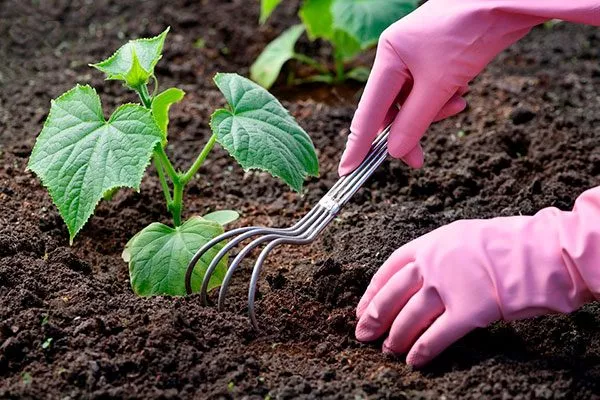
Maintain your cucumber bed regularly, including thinning and loosening the soil at least once a week. Ideally, do this after watering. Mulching can significantly simplify bed maintenance.
Watering
Cucumber plants require a certain level of moisture. Providing them with adequate water is especially important during the ripening period.
Rules:
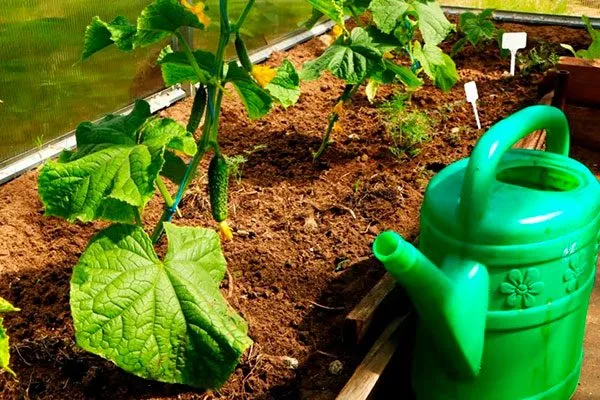
- In cold weather, before budding begins, one watering every 6-7 days is sufficient, but after flowering it should be done every 3-4 days.
- In hot weather, increase moisturizing to daily.
- The volume of water should be 12-22 liters per 1 sq. m, depending on the age of the bushes.
- To ensure more effective penetration of moisture deep into the soil, you can first make several holes with a pitchfork.
- It is important to use water at room temperature (+24 degrees) and try to minimize the amount of drops falling on the leaves.
- It is best to water in the morning or evening hours.
- For watering, use a watering can with a spray nozzle, preferably one with a narrow spout to avoid washing away the soil and exposing the roots. It's acceptable to pour water into the spaces between plants. Drip irrigation is the best option.
Fertilization
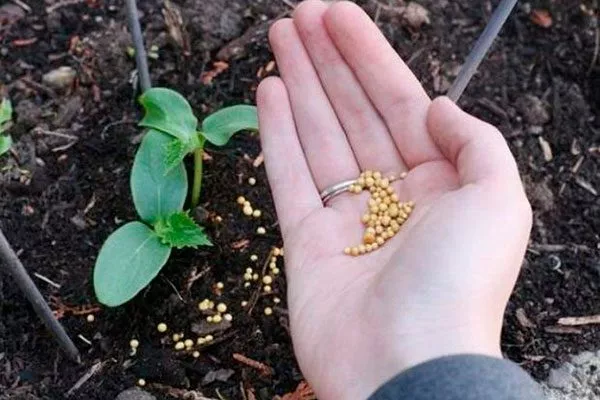
Cucumbers with a short ripening period, such as Marinda, require only four feedings during the entire growing season, at intervals of 12-16 days.
Understanding the need is simple – the cucumbers themselves indicate it:
- the need for nitrogen is manifested by a decrease in the size and discoloration of leaves;
- Potassium deficiency leads to the appearance of yellowish edges on green mass and disease of fruit buds;
- with a phosphorus deficiency, flowers become small and deformed, and the leaves acquire a grayish tint;
- insufficient calcium causes darkening of foliage and shortening of the spaces between nodes;
- A lack of boron causes cucumbers to develop a characteristic hook and thickening at the base.
Subtleties of feeding:
- Apply nutrients for the first time a couple of weeks after planting the seeds or when young plants have developed two or three pairs of leaves, when cucumbers are most in need of nitrogen. Nitrogen is found in urea, ammonium sulfate, and ammonium nitrate. You can also use an infusion of cow manure or bird droppings.
- Cucumbers, which are actively flowering, require calcium supplementation. For this, use a solution of potassium nitrate or potassium magnesium sulfate.
- After two weeks, repeat the foliar feeding procedure, using an infusion of fresh or compressed yeast, fresh nettle or dandelion.
- During the final stage, a complex fertilizer is applied to prolong the fruiting period. It should contain nitrogen, phosphorus, and potassium in equal proportions. These include nitroammophoska, azofoska, Rodnichok, Agricola, or Rastvorin.
Before fertilizing, water the plants approximately 3-4 hours beforehand. Fertilizer should be applied in the late afternoon.
Bush formation
Marinda bushes are not particularly spreading, which makes their formation quite simple and does not require significant effort from the gardener.
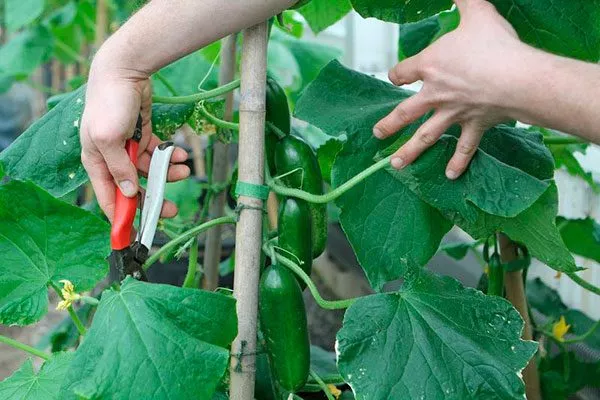
To support plants in a greenhouse, wire should be stretched taut and attached to the ceiling. In open ground, special supports 160-200 cm high are recommended.
Possible difficulties
Problems encountered when growing hybrid cucumbers:
- If the seedlings produce excessively elongated stems, this indicates insufficient sunlight. In such situations, the plants should be moved to brighter areas or equipped with special phytolamps.
- If cucumbers grow with an irregular shape and are severely deformed, they are fed with nitrogen fertilizers to correct this.
- Lack of fruiting can be caused by elevated air temperatures, especially in greenhouses. To avoid this, water the plants with cool water and provide regular ventilation by frequently opening the doors.
- In direct sunlight, the leaves may become covered with small spots. In such conditions, protect the plant from the sun by covering it with a translucent, lightweight material during the hottest hours of the day.
Diseases and pests
Marinda F1 is a cucumber variety susceptible to attack by various pests, including slugs, mites, and aphids. To combat the latter, use a mixture of red pepper and tobacco dust diluted in water. Colloidal sulfur is used to kill mites, and a 5% metaldehyde solution is used to kill slugs.
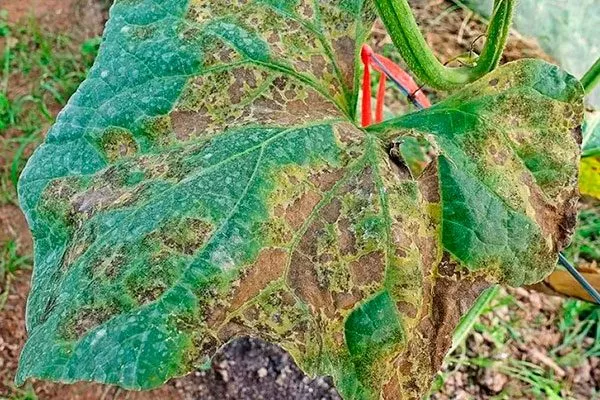
Marinda F1 can suffer from anthracnose and angular leaf spot. To combat anthracnose, treat the shrubs with Bordeaux mixture. To combat angular leaf spot, use Cuproxat or Abiga-Peak.
Harvesting and storage
To increase the number of fruits per bush, cucumbers are harvested every three days. This is done carefully, using sharp knives or scissors, leaving the stems on the plants.
Rules:
- The ideal time for harvesting is morning or evening, after the sun has set.
- Do not pick off the fruits or twist the stems to avoid damaging the bushes.
- At temperatures between 5 and 7 degrees Celsius and humidity between 85 and 90%, cucumbers can be stored in an open plastic bag covered with a damp cloth. This will keep them in good condition for 2 to 3 weeks.
- Cucumbers are not washed before storage.
- It is necessary to maintain a distance between cucumbers and other vegetables and fruits, as some of them emit ethylene, which accelerates the spoilage of cucumbers.
To keep cucumbers fresh longer, you can use the following techniques:
- Fill a bowl or saucepan with water to a depth of 3-4 cm and place the cucumbers upright, stems down. Change the water every couple of days. This way, the cucumbers will stay fresh for 12 days at room temperature.
- Brush clean cucumbers with beaten egg white, then let them dry. This way, cucumbers can be stored at room temperature for 3-4 months.
- Cut the cucumbers into large pieces, place them in sterilized jars, sprinkle with salt, and seal with lids. Soak them for 2–3 hours before using, and store the jars in a cool, dark place. This way, the cucumbers will keep for at least 4 months.
- Place the cucumbers in the freezer. After defrosting, they may lose their visual appeal, but their nutritional properties will remain intact.
- Pour a small amount of vinegar into the bottom of the pan, then place a rack over the cucumbers and arrange them so they don't touch the liquid. Cover the pan, and the cucumbers will keep in a cool, dark place for 2-3 months.
Positive and negative qualities
The Marinda variety quickly gained popularity among agricultural specialists due to its numerous advantages:
Before you start planting, it's worth considering some of the disadvantages of this crop:
Reviews
The Marinda F1 variety is deservedly popular among gardeners in our country, having earned a good reputation over its 25 years of existence. This hybrid does not rely on pollination, producing a large number of cucumbers at each node. The cucumbers are easy and convenient to harvest; they are sweet and juicy, with no empty spaces.