
The Mamluk f1 cucumber is a variety developed by Russian breeders that boasts parthenocarpy. This cucumber is characterized by compact fruit formation, low cultivation requirements, and cold tolerance. The fruits retain their quality and juiciness during long-term storage, without developing internal voids.
Introduction to the variety
Mamluk has earned a reputation as a cucumber that requires constant attention from the gardener. Even in warmer regions of Russia, these cucumbers are preferred for greenhouse cultivation to achieve abundant harvests. And for residents of northern regions, greenhouse cultivation is essential. Mamluk grows and produces fruit beautifully on apartment windowsills.
Originators
A team of specialists from the Research Institute for Vegetable Crop Breeding, owned by the Gavrish company, put considerable effort into creating the hybrid variety Mamluk. It was officially registered in the state register of the Russian Federation in 2012.
Work on the Mamluk hybrid was the result of the joint efforts of many breeders, among whom the most prominent were S. F. Gavrish, A. E. Portyankin, A. V. Shamshina, T. Ya. Suvorova, V. N. Shevkunov, N. N. Khomchenko and I. S. Pluzhnik.
External characteristics of the plant and cucumbers
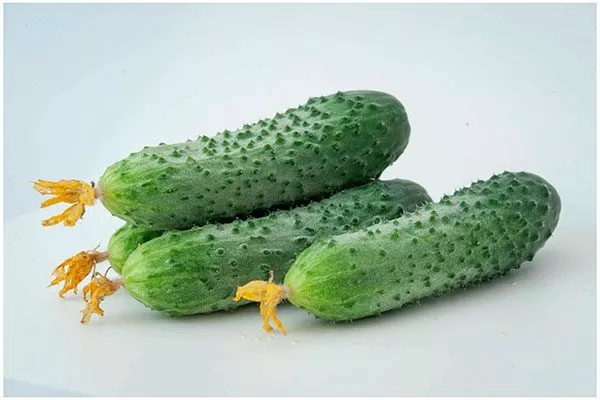
Mamluk is a hybrid, designated by the alphanumeric code F1. This cucumber variety produces female flowers, requiring no pollination to form cucumbers. Its fruits are distinguished by their excellent marketability and transportability.
Please also pay attention to other varietal characteristics:
- The root system of Mamluk is particularly powerful and developed, which promotes active growth of leaves and stems, and also ensures good fruiting.
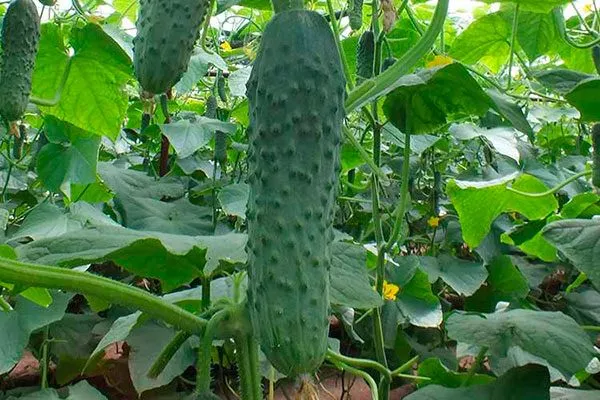
- The plants are indeterminate, meaning they are capable of continuous growth and therefore require regulating formation.
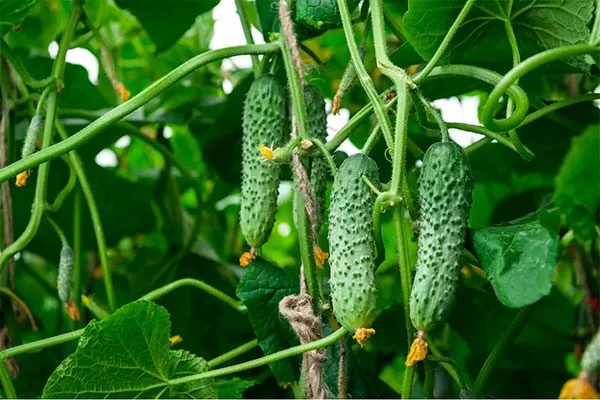
- Each node produces a maximum of 2 or 1 ovary, so there is no need to standardize them.
- The cucumber plant has weak branching. The leaves on the shoots are medium-sized, green, and slightly wrinkled.
- Cucumbers grow short, their length is from 14 to 16-17 cm, but sometimes there are specimens of even smaller size - 9-13 cm.
- The weight of cucumbers varies from 110 to 130 g.
- The fruits are cylindrical in shape.
- The cucumbers are dark green in color, with light lines of medium length and rare spots along the stripes.
- The surface of the cucumbers is medium-tuberous.
- Light-colored spines are present, corresponding to the color of the pubescence.
Taste and purpose
Mamluk cucumbers are primarily used in salads. They have a juicy flavor and are completely free of the bitterness typical of most other varieties. The fruits are distinguished by their excellent taste, harmoniousness, and aroma. A wide variety of dishes can be prepared with these cucumbers.
Composition, benefits
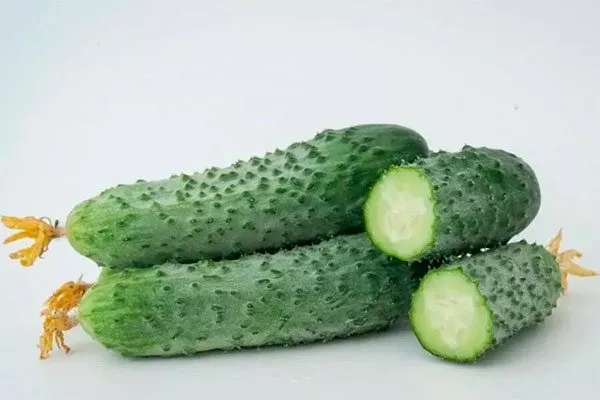
Cucumbers contain a rich array of vitamins and minerals. They are a dietary product with virtually no contraindications. Nutritional value of this variety:
- caloric content – 14 kcal per 100 g;
- proteins – 0.8%;
- fats – 0.1%;
- carbohydrates – 2.5%;
- water – 95%;
- fiber – 1%.
Cucumbers have a beneficial effect on the functioning of almost all body systems:
- reduce the risk of cancer cell development due to the content of lignans and cucurbitacins;
- maintain bone strength;
- strengthen the cardiovascular system;
- regulate the functioning of the nervous system;
- normalize the functioning of the gastrointestinal tract;
- whiten the skin;
- restore water-electrolyte balance;
- remove excess fluid and toxic deposits from the body.
When ripe, the yield
Mamluk is an early-ripening variety, as the first fruits can be seen within one to six weeks after sowing. This variety is ideal for double crop rotation: cucumbers can be sown in the spring and again in the summer, allowing for two harvests in a single season.
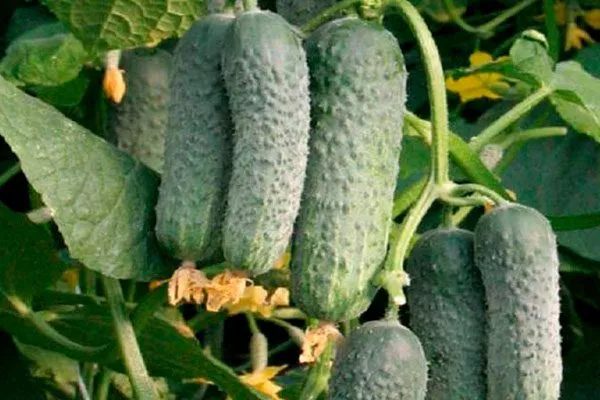
The fruiting period for each bush averages 1.5 to 2 months. Productivity ranges from 13 to 14 kg per square meter, but with proper care, even higher yields can be achieved.
Climate conditions
Mamluk is a cold-hardy variety that, thanks to its resilience to adverse weather conditions, can grow both in late fall and spring. The plant tolerates low temperatures well without reducing yield.
Hybrid agricultural technology
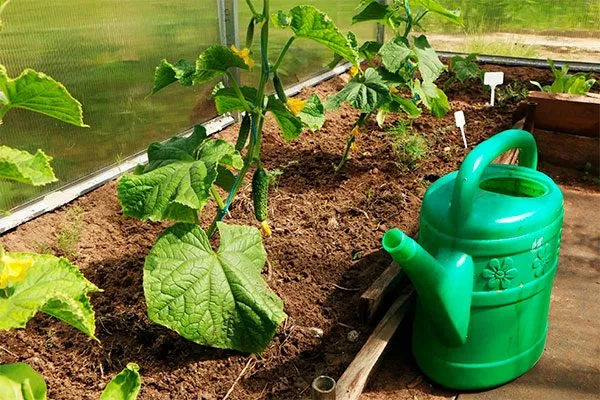
The cultivation technology for this variety, whether outdoors or indoors, is virtually identical to that of other varieties. Seeds are sown when the soil warms to between 10°C and 14°C. The sowing depth is typically about 3-4 cm. The recommended planting pattern is 50-60 x 50-70 cm, with trellis support required.
- ✓ The optimal soil temperature for sowing seeds should not be below +12°C, which ensures better germination.
- ✓ To prevent diseases, it is recommended to use biological preparations, such as Trichodermin, 7-10 days before sowing.
Planting by seed
Before sowing, dig over the area and enrich it with any organic solution. Sow green manure crops 25-35 days before sowing to nourish the soil. Oats, radishes, mustard, and beans are suitable for greenhouses.
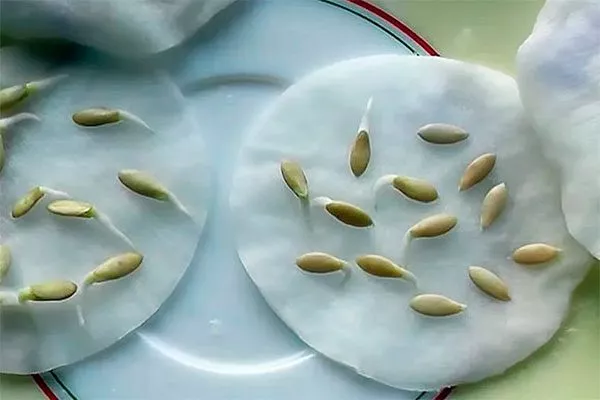
Consider other important aspects:
- Freshly picked grass is an excellent nutrient: it enriches the soil first with nitrogen, then phosphorus and potassium, and also inhibits pathogen growth. To speed up the grass's decomposition, it is irrigated with biological fertilizers such as Vostok-EM or Baikal-EM.
After this, the mass is scattered over the area and dug up. - The beds are made using a bayonet shovel and leveled with a rake. The beds are 50-70 cm wide and 18-22 cm deep. A depression is made in the center and steamed with a hot solution of potassium permanganate. The seeds are planted up to 4 cm deep, pointed end up, to ensure rapid germination.
Seedling method
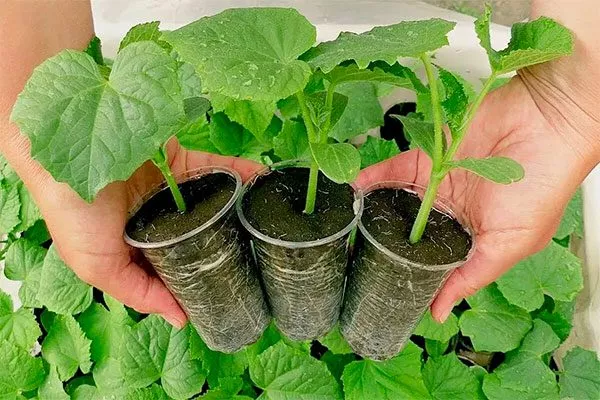
Seedlings begin growing 2-3 weeks before transplanting to the permanent bed, due to the variety's rapid growth. Seeds are planted in a light, nutritious substrate consisting of 2 parts peat, the same amount of compost, and 1 part sand. A commercially available substrate such as Universal can also be used.
Before sowing, the soil mixture is disinfected:
- a strong solution of potassium permanganate or Fitosporin;
- calcined in an oven at a temperature of +110-150°C for 40 minutes;
- warm up in steam for 30-40 minutes.
Please note some subtleties:
- For feeding, add 30-40 g of superphosphate and 250 g of wood ash to one 10-liter bucket with a pre-prepared substrate.
- The hybrid doesn't tolerate transplanting well, so the seeds are planted in large peat or plastic cups. This way, the seedlings can be transplanted into the ground without damaging the root system.
- Fill the containers with moistened soil mixture, plant the seeds deep, and cover with plastic wrap. At an air temperature of 25-26°C, sprouts appear in 3-6 days. After this, remove the plastic wrap and place the seedlings in sunlight.
- The seedlings grow strong and healthy, so they don't require additional feeding (provided the substrate is properly prepared). Water them once a week with warm, clean water.
- The seedlings are transplanted to their permanent location when they have 3-4 true leaves. The soil temperature should be between 15 and 17°C. The planting pattern is standard.
Care activities
During the growing season, various care procedures are carried out.
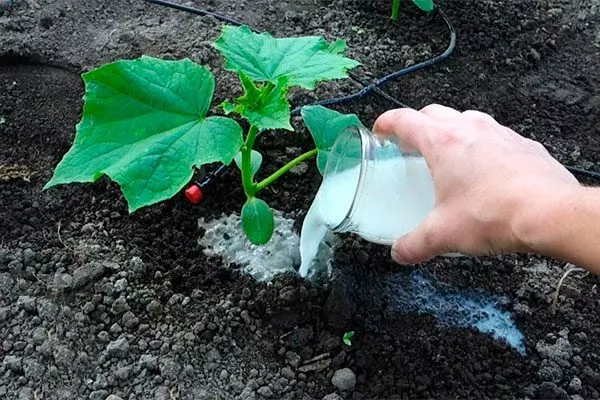
- Watering. Cucumbers require abundant and regular watering. To obtain the desired harvest of crisp fruits, it's essential to keep the soil moist. Apply 2-4 liters of water per square meter of plot. To prevent rot, water 7-12 cm away from the stems, not directly under them.

- Top dressing. During the growing season, apply organic mixtures based on manure or chicken manure. Overdoing it with nitrogen fertilizers can degrade the varietal characteristics, and crunchy fruit will be replaced by dense foliage.
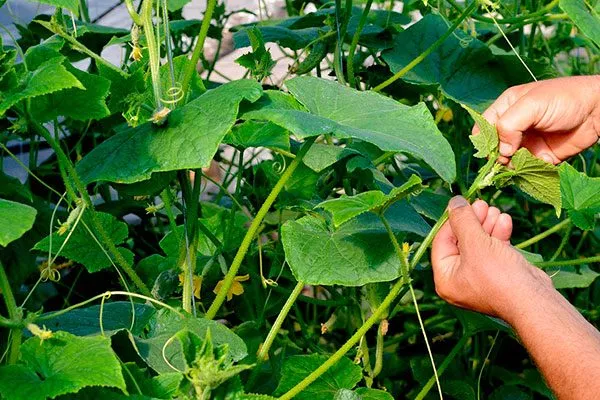
Use specialized mineral complexes for feeding. - Topping. To ensure nutrients are directed toward fruit formation rather than unwanted shoots, lateral shoots should be pruned. This does not apply to branches emerging at nodes 18-20.
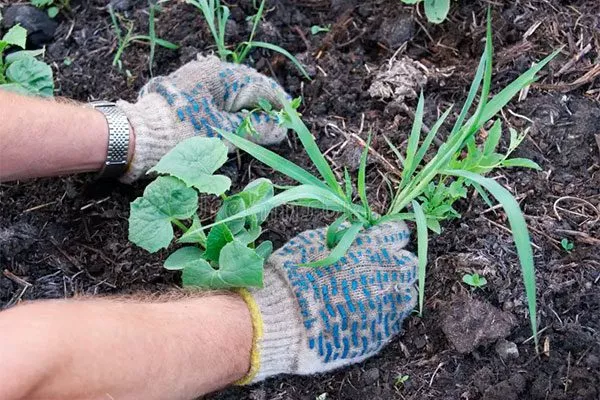
Pinch the remaining shoots at 2-3 leaves. Shorten the central stem above the 25-26th node. This procedure is only effective if the shoots are no longer than 5 cm. This pinching method prevents ovary shedding and increases yield. - Loosening and weeding. Cucumbers grow well in loose soil, so loosen it after watering or rain. Since cucumber roots are close to the surface, loosening the soil only needs to be done between rows.
Careless handling of this procedure can damage the root system and result in the death of the plant. Weeds also damage cucumbers, so remove them regularly.
Diseases and pests – resistance, control
Breeders have provided the Mamluk hybrid with reliable immunity. This plant is resistant to many cucumber diseases, such as:
- downy mildew;
- Cladosporiosis;
- root rot.
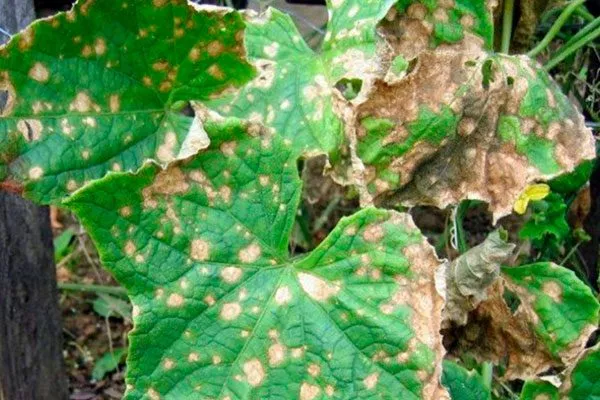
However, the variety can be susceptible to diseases such as powdery mildew, fusarium wilt, and anthracnose. To protect the crop from these diseases, specialized biological products are used. These products are safe for both beneficial insects and gardeners. The most effective biological products are considered to be:
- Trichodermin;
- Fitosporin.
In a garden, crops can be attacked by pests. There are many methods for controlling them. For example, garlic or onion infusions, or a decoction of wormwood or Bogorodskaya grass are excellent for combating aphids and spider mites.
You can use a preventative product called Guapsin. Spray the plants with it while taking personal protective measures.
Harvesting and use of the crop
Cucumbers grown in greenhouses are uniform in size, don't overripe, and don't taste bitter if picked promptly. To prolong the fruiting period, pick cucumbers every two days. In the open garden, cucumbers may grow slightly crooked, but this doesn't affect their flavor or quality.
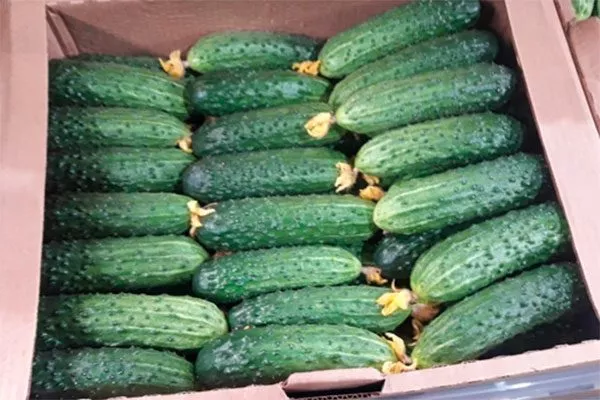
Harvested cucumbers are stored in a cool place for 2-3 weeks. They are eaten fresh, used for pickling and salting, and also used in winter salads. Cooking preserves their crispness and prevents the flesh from softening.
Positive and negative qualities
The advantages of the Mamluk cucumber variety are as follows:
Reviews
Mamluk cucumbers are a high-yielding greenhouse crop. A long fruiting period, disease resistance, good transportability, and long storage life, as well as simultaneous ripening of the fruit without bitterness, are the main advantages of this hybrid. This crop is grown in various regions.