
Lukhovitsky cucumbers are a dual concept. In the first case, they refer to a range of diverse varieties grown in the Moscow region (in the town of Lukhovitsy); in the second, they refer to a single, selectively bred F1 hybrid variety. It was added to the state register in 2006 and is the officially registered originator.
Description of Lukhovitsky cucumbers
| Name | Yield (kg/m2) | Ripening period | Ovary type |
|---|---|---|---|
| Libelle | 8 | Average | Multiple |
| Elegant | 6-7 | Average | Singles |
| Mirinda | 6-7 | Average | Multiple |
| Salinas | 8-9 | Average | Beam |
| Adam | 10 | Early | Beam |
| Vyaznikovsky | 5-6 | Early | Singles |
| Muromsky | 3-4 | Early | Singles |
The city of the same name is located in the floodplain of the Oka River and is considered the cucumber capital, as it is here that a huge number of popular varieties are grown:
- Libelle It is distinguished by its yield of up to 8 kg per 1 sq. m and a large number of ovaries on one bush.
- Elegant: yield – 6-7 kg, ripening period – average.
- Mirinda: Fruiting is similar to the previous variety, but is distinguished by multiple lateral shoots.
- Salinas: bunch type of ovaries, yield – 8-9 kg per 1 sq. m.
- Adam: Fruiting – 10 kg. Feature: flowers are predominantly female.
- Vyaznikovsky: The size of cucumbers reaches 10-11 cm, the vines are shortened.
- Muromsky: The yield is low (3-4 kg), but it is resistant to all diseases.
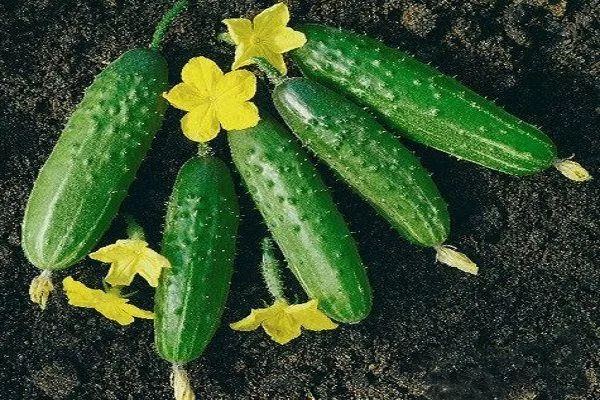
Libelle variety
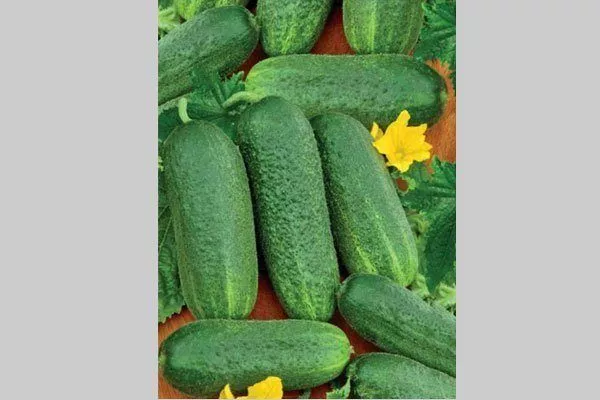
Cucumber variety "Elegant"
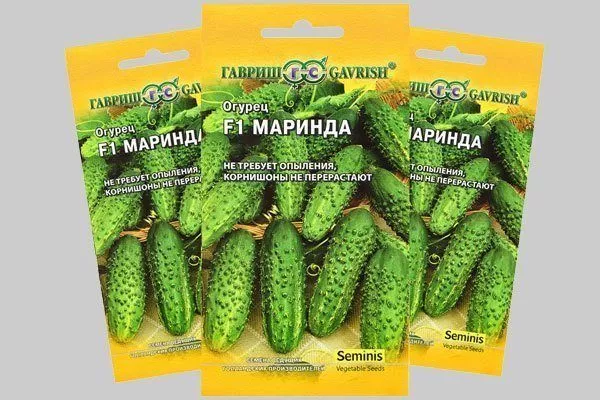
Mirinda cucumber variety
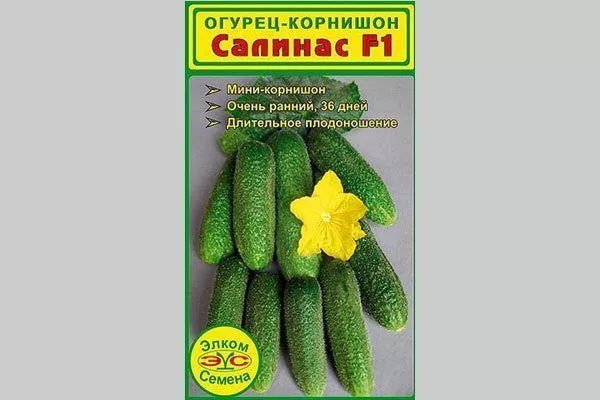
Cucumber variety Salinas
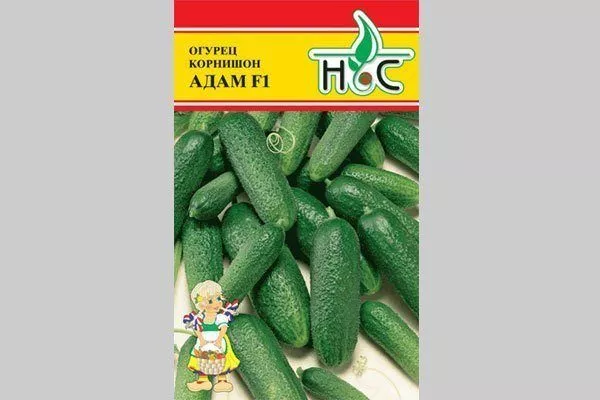
Cucumber variety Adam
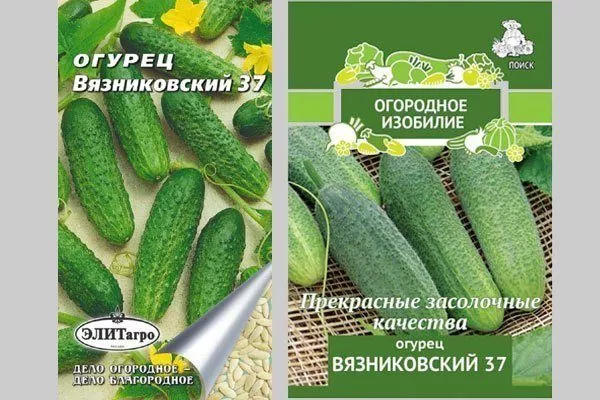
Cucumber variety Vyaznikovsky
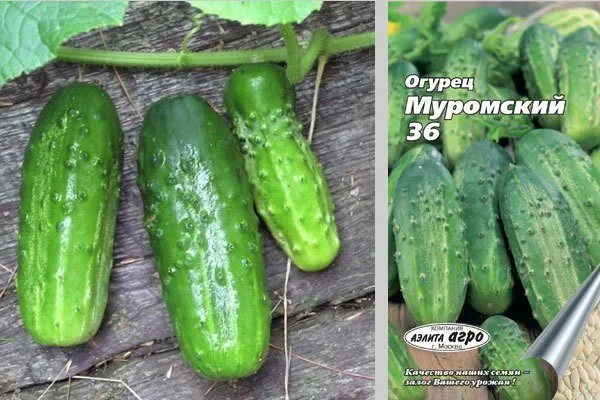
Muromsky cucumber variety
There is also a variety called Yegoryevsky, which is based on various types of cucumbers, including Lukhovitsky.
Qualities that are present in all Lukhovitsky varieties:
- resistance to many diseases;
- rapid adaptation to cold weather;
- thinness of the skin;
- absence of bitterness;
- small sizes (gherkins);
- no voids;
- increased crunching;
- versatility of application;
- ease of care.
Characteristic features of the Lukhovitsky hybrid:
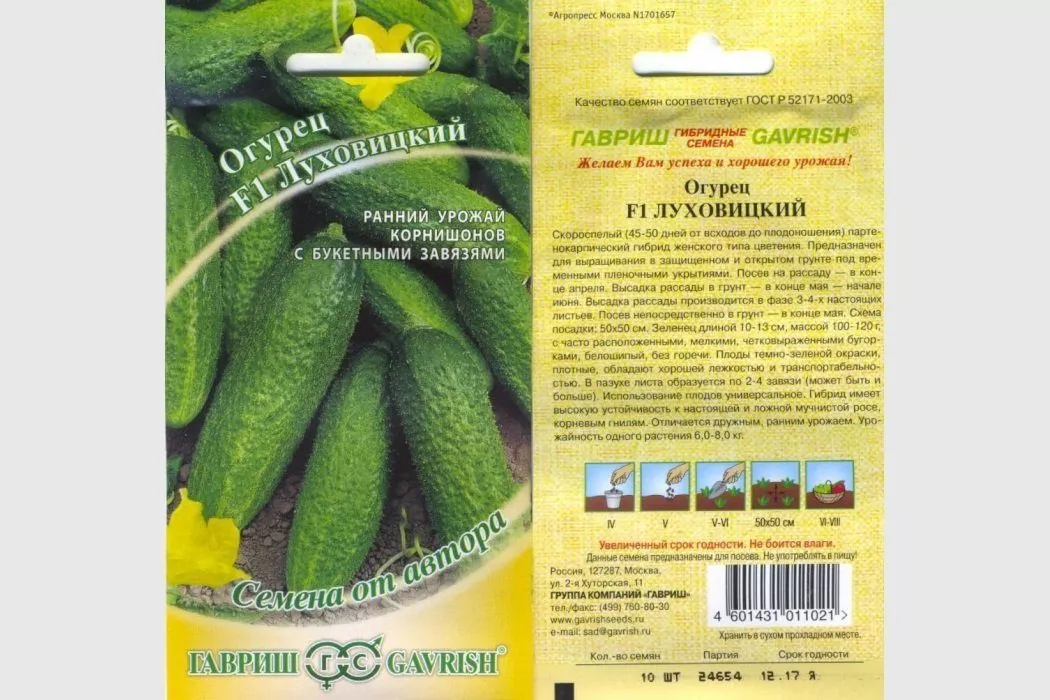
- High yield: one plant yields 8-10 kg, meaning if you plant just 3 bushes per square meter, you can harvest up to 22-28 kg of fruit (more in a greenhouse).
- Ripening time depends on growing conditions. The first shoots appear within a week after sowing the seeds. After this, biological maturity occurs in 40-45 days. In open ground, the harvest can be completed after June 12th, and in a greenhouse, a couple of weeks earlier.
- The plant is not afraid of high humidity and lack of light, but does not tolerate wind.
- Pollination is not required, as the flowers are purely female.
- The ovaries are formed in bunches.
- Fruit description: Dark green with light-colored pimples. Mild stripes run along the sides. Weight: 90-100 grams, length: 10-12 cm, no waxy coating. A distinctive feature: there are no overgrown fruits, so all fruits are uniform in size. The skin is elastic and thin, and does not break during cooking. The flesh is firm, with small grains, but juicy. There is no acidity or bitterness.
- Intended use: consumption in salads, canning, marinating, pickling.
- Transportability is excellent, so the variety is suitable for commercial purposes (after harvesting, the appearance does not change for 5 days).
- Bush characteristics: a minimal number of lateral shoots, a strong trunk that is not limited in growth, so the bush can be grown vertically.
- ✓ No need for pollination due to the predominance of female flowers.
- ✓ Tolerant of lack of light, but sensitive to wind.
Pros and cons
Advantages:
- compactness and evenness of shape;
- same size;
- the highest level of productivity;
- the crunch remains after heat treatment;
- early ripening;
- resistance to most diseases;
- transportability;
- the ability to plant seeds in open soil or directly in a greenhouse;
- excellent shelf life;
- excellent taste.
Among the disadvantages, it is worth noting that it requires a lot of care, so it will be difficult for beginners to get a decent harvest in the first year.
Planting and care features
The Lukhovitsky hybrid thrives in high humidity, warm temperatures, and rich soil. These characteristics are the key to high yields.
- ✓ Soil pH should be between 6.0-6.8 for optimal nutrient absorption.
- ✓ The soil must be rich in organic matter (at least 4-5%) to ensure the necessary moisture capacity and air permeability.
Seed preparation
No special preparation of the seeds is required, as the seeds are sold already processed. You can also soak the seeds in a weak solution of potassium permanganate or warm water.
Selecting and preparing soil
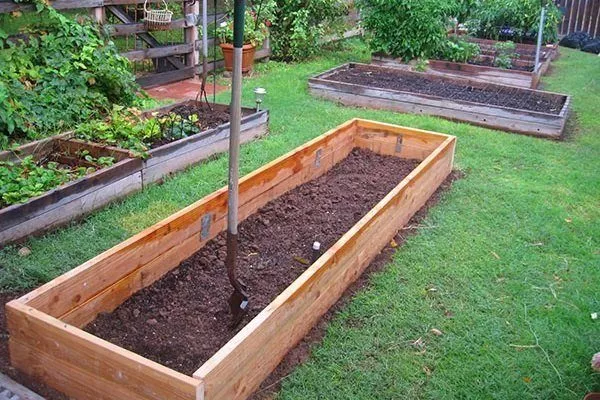
The soil for Lukhovitsky cucumbers should be rich. Prepare it starting in the fall:
- In the fall, dig trenches (40 cm deep) for the future garden beds. To make them easy to find in the spring, each trench should be bordered with wooden borders. Add compost and fill with soil.

- In the spring, warm beds are formed, into which seeds or seedlings are sown. The following steps are required:
- scald the trenches with boiling water;
- remove soil with humus;
- line the bottom with polyethylene film, onto which pour urea and sawdust (height 11-12 cm);
- heat the manure to 55 degrees, pour it on top;
- lay out the soil;
- cover with thick, dark-colored film;
- After 4 days, make holes in the top film in the places where the seeds or seedlings will be placed.
Planting dates
The hybrid's roots are located in the surface layers of the soil. This is why film is used at the bottom of the trenches. If using seedlings, sowing occurs around April, and transplanting into open ground occurs after May 20th or in early June. Seeds are planted in the garden at the end of May.
Seedling cultivation method and greenhouse maintenance
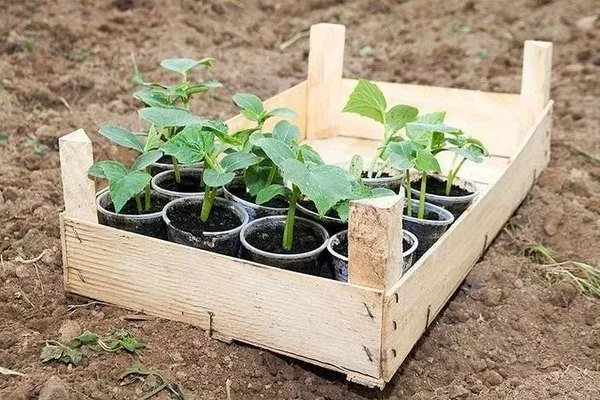
For seedlings, seeds are placed in 10x10 cm peat briquettes. This is necessary to prevent damage to the fragile root system when transplanting into open soil. Seeds are grown in a greenhouse. To do this, follow these steps:
- Place straw on the bottom of the greenhouse to maintain optimal temperature conditions.
- The top is covered with soil mixed with humus and peat.
- Next, the seeds are placed in a peat briquette or pot at a depth of 5 cm, which are sprinkled with soil.
- The greenhouse is covered with film in 2 layers.
The seedlings must be kept in such conditions for 30-45 days, so planting of seeds is carried out when the snow has not yet completely melted.
Peculiarities:
- When the outside temperature stabilizes, the film opens during the day and closes again at night.
- Water the seedlings as the soil dries out. Overwatering is not recommended.
- The temperature in the greenhouse should not exceed +25 degrees, but should not fall below +23.
- Water plants only with warm, settled water, preferably in the evening.
- Seedlings must be fed. The first time, the usual concentration is reduced by half, then the standard dosage is applied. Fertilizers such as manure slurry, chicken manure, or Kemira Universal or Sudarushka can be used.
- When transplanting seedlings into open ground, they are planted to a maximum depth of 20 cm.
Seedless cultivation method and features of open-ground cultivation
What rules should you follow:
- The distance between bushes should be 30-50 cm.
- It is advisable to tie cucumbers to trellises.
- The soil should be kept moist but not wet. After each watering, it's advisable to mulch the area immediately around the plant.
- The area must be well lit.
- During planting, humus, chicken droppings or manure are added to the holes.
- It is advisable to plant two seeds in one hole.
- The optimal air and soil temperature is +17-19 degrees.
- The soil needs loosening.
- Until the bushes are fully established, they are covered with a thick film. When daytime temperatures are normal, they are ventilated.
- When the plant begins to bear fruit, watering is done more frequently than during the formation of sprouts.
- As the bush grows, it is necessary apply fertilizers (with potassium, phosphorus, and nitrogen). Ammophoska, a universal fertilizer, is often used for this purpose.
Loosening the beds is done very carefully, as the root system is close to the soil surface, which can weaken and eventually kill the plant. Organic mulching is considered the best option.
Pest and disease control
This hybrid is subject to very rare cases cucumber diseases – only if the plant is neglected. The only problem that arises is powdery mildew. It appears as yellow or whitish spots on the lower leaves. It looks like a coating.
Learn how to combat pests and diseases from this video:
This disease is classified as a fungal infection, so the following methods of control and prevention are used:
- Infection can be prevented using Bordeaux mixture or Sulfarid solution. You can also use Thiovit Jet, Oxyhom, or Ridomil Gold.
- To stop the spread process: Fundazol, Fitosporin, Topsin-M, Gamair.
- Modern fungicidal preparations: Bayleton, Kuproksat, Kumulus, Privent.
Sulfur-based products can be used for active control, but in this case, this is undesirable, as they burn the foliage. To avoid this, reduce the recommended concentration of the active ingredient, making the solution weaker.
Harvesting and storage
The Lukhovitsky hybrid can be harvested every other day, but daily harvesting is recommended for increased yield. The fruits are cut with pruning shears along with a small section of stem, which allows the cucumber to last longer. It's best to store the cut fruits in the refrigerator, sealed in a plastic bag.
Reviews
Lukhovitsky cucumbers offer a wealth of advantages. No matter which variety or hybrid you choose, each will offer its own unique benefits. You'll get a decent harvest with minimal care. The key is to strictly adhere to the proper growing practices (prepare the soil in advance, water, mulch, and harvest promptly).