
When growing cucumbers, gardeners often encounter stem cracking. Over time, this leads to deformation of the above-ground portion of the plant and eventual death. This is usually caused by serious cucumber diseases, but care errors can also be the cause.
Causes of cucumber stem cracking and how to combat it
A weakened plant is especially susceptible to pathogens and insect pests. Cucumber stem cracking is usually caused by:
- cucumber mosquito;
- cucumber mosaic;
- root rot.
In most cases, symptoms of damage can be detected at an early stage and the problem can be eliminated in a timely manner to save the plant.
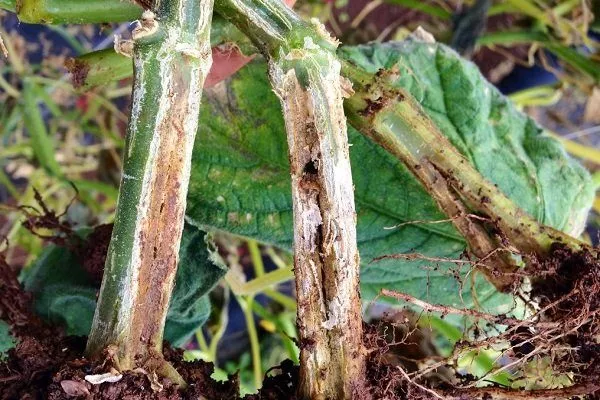
Cucumber mosquito
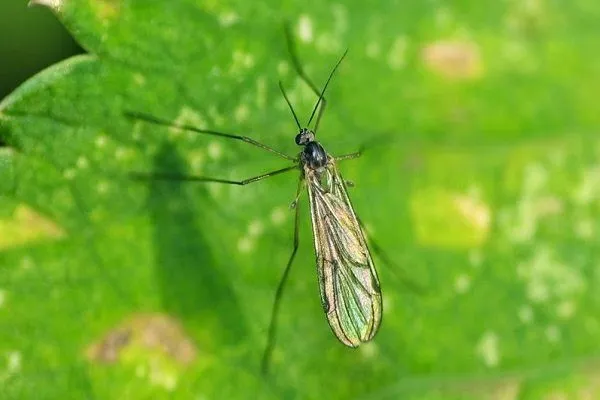
A small insect, similar in appearance to a common mosquito, attacks a plant weakened due to non-compliance with agricultural practices or damage diseasesThe cucumber midge can also harm young, immature crops.
Symptoms of the parasite's attack include noticeable small tunnels on the surface of the stems. These are not created by the insect itself, but by its larvae, which chew holes in the plant tissue, starting from the roots. Over time, the above-ground portion of the bush begins to rot, right down to the fruit.
Adults can develop in soil, fertilizers, and poorly treated planting material. After green shoots emerge, the mosquito lays eggs in them.
An additional harm is that the cracks caused by the larvae are very vulnerable to diseases and mites.
To combat the cucumber mosquito, the following measures are used:
- use of chemicals to disinfect the soil;
- thermal treatment of soil;
- spraying stems and root parts with insecticides;
- installation of yellow sticky traps in the beds.
Iskra, a proven insecticide, is dissolved in water at a rate of 1 tablet per 10 liters. The resulting solution is applied at a rate of 100 ml per 1 square meter.
Cucumber mosaic virus
This disease is a necrotic strain (causing complete tissue death) and is the most dangerous of all known phytoviruses. It most often occurs in greenhouses, but can also be found in open gardens.
Crop rotation methods are ineffective in combating cucumber mosaic disease. Prolonged warmth and high humidity are favorable conditions for its development, so the disease most often spreads in the Lower Volga region, Ukraine, and the North Caucasus, where it is always warm and humid.
Symptoms of mosaic virus infection include:
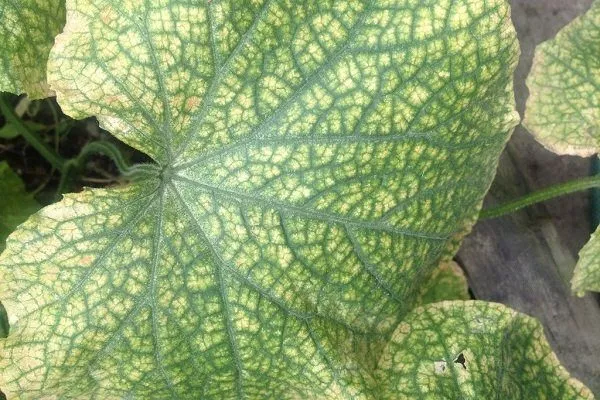
- the leaves become covered with a mosaic pattern of yellow and brown, dry out, and become deformed;
- the tops die off;
- thread-like formations appear on the fruits;
- the growth of the bush slows down;
- the stems crack and become glassy at low temperatures.
The following methods are recommended for combating and preventing cucumber mosaic:
- Before planting, warm the seeds at a temperature of +56°C;
- grow seedlings in a sterile (disinfected) substrate or soil taken from a great depth;
- destroy weeds and affected parts of cucumbers;
- To neutralize aphids, use pesticides (for example, Actellic and Aktara) or spray with aromatic oils.
Experienced gardeners recommend choosing cucumber varieties that are less susceptible to viral infections.
These include:
- Pasadeno;
- Octopus;
- Ofix;
- Pasalimo;
- Pasamonte.
- ✓ Availability of genetic marking for resistance to cucumber mosaic virus.
- ✓ Thicker stem walls reduce the risk of cracking.
Root rot
There are many possible causes of root rot. These include overfertilization of the soil, too frequent watering with cold, unsettled water, and cool (up to 15°C) or overheated (above 29°C) soil.
The disease manifests itself with the following symptoms:
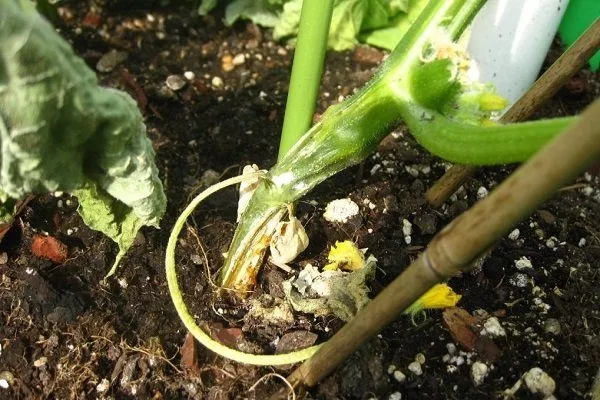
- darkening and browning of the base of the stem above the roots;
- yellowing and wilting of leaves, starting from the bottom;
- stopping the development and growth of the bush;
- drying out of the stem and cracking near the root zone.
Measures to combat root rot include the following:
- the lower part of the stem is lubricated with a mixture of 1 teaspoon of copper sulfate and 3 tablespoons of crushed chalk, dissolved in 500 ml of water;
- the soil and the stem above it are generously dusted with wood ash;
- the bushes are first sprayed with Pervikur, and after 5 days with Fitoflavin, according to the instructions on the package;
- When growing cucumbers in a greenhouse, the soil is thoroughly watered with Alirin-B.
Agrotechnical errors
Diseases and pests aren't always to blame for cucumber stem cracking. Often, gardeners themselves, through improper care of their crops, cause crop failure.
Factors that lead to disturbances in the growth and development of cucumbers are the following:
- the seeds were not warmed up and prepared before planting;
- the soil for seedlings was not sterilized;
- the planting of seedlings was not carried out in a timely manner;
- an unsuitable place for planting was chosen - a lowland, not enough sun, unsuccessful proximity to other plants;
- failure to observe crop rotation (planting cucumbers in the same place for several years in a row);
- unsuitable soil substrate for cucumbers;
- incorrect watering - too much in cold or hot weather or too little using cool water;
- excess fertilizers in the soil, especially organic ones.
Prevention
If you approach growing cucumbers carefully from the very beginning, you can avoid stem cracking.
It is enough to apply preventive measures:
- Select seeds carefully, choosing material from a reliable manufacturer.
- Buy disease-resistant varieties.
- Prepare the seed material by hardening it in the refrigerator before planting, treating it with a weak solution of manganese and selecting the specimens that float to the surface.
- Sterilize the soil in which the seedlings will grow. To do this, you can bake the soil mixture in the oven at 180°C for 20-30 minutes.
- Clear the soil in the open bed of debris and plant remains, loosen it thoroughly and water it with a solution of potassium permanganate.
- To ensure that the soil in the garden bed maintains the required moisture level, mulch the spaces between the rows with sawdust or hay.
- Maintain a regular fertilizing schedule. Apply nitrogen fertilizer every 10-12 days before flowering, and potassium and phosphorus during fruiting.
- Shape the bushes by cutting off old shoots, extra shoots (stepchildren), yellowed or damaged leaves.
- If growing in a greenhouse, arrange regular ventilation to maintain a suitable microclimate: humidity 80-85%, temperature +25-30°C during the day and +15-18°C at night.
- Treat plants every 2 weeks with Agravertin, Biotin or Fitoverm to avoid pests.
Proper care, proper preventative measures, and monitoring of cucumber growth and development will help ensure a good and healthy harvest. Most often, the crop requires a balanced diet. top dressing And glazeto prevent the stems from cracking. But other problems can also be solved if caught early.