
Liliput is a parthenocarpic hybrid variety with small fruits. These are not only shortened but also arranged in multiples on the vines. The plant is characterized by extremely rapid growth – the harvest can be completed within 6-8 weeks of sprouting.
Introduction to the variety
Liliput is a hybrid developed for gardening in the temperate climate of the Central Russian region. It is cultivated in a variety of ways, as it is ideal for open spaces and plastic structures.

Originators
The breeding work was carried out by the Gavrish agricultural firm. Among the scientists who worked on this hybrid, V. N. Shevkunov, S. F. Gavrish, A. V. Portyankin, and A. V. Shamshina are particularly noted. In 2008, the parthenocarpic hybrid was officially recognized and approved for gardening.
External characteristics of bushes and fruits
This dwarf variety is renowned for its moderate branching and the presence of determinate lateral shoots, allowing the bush to develop independently. This is a powerful advantage for inexperienced gardeners.

Varietal characteristics and properties:
- The leaves are medium in size and vary in color from green to dark green.
- The flowers are female, and the ovaries form in the leaf axils in clusters of 5-10. The author's description lists Liliput cucumbers as parthenocarpic, meaning they don't require insects for pollination. This significantly simplifies the process of growing cucumbers indoors.
- Fruit growth is slow, a genetic trait. If cucumbers aren't harvested on time, they remain 7 to 9 cm long and begin to slowly expand in width. While they don't turn yellow for a long time, the formation of new ovaries is significantly delayed.
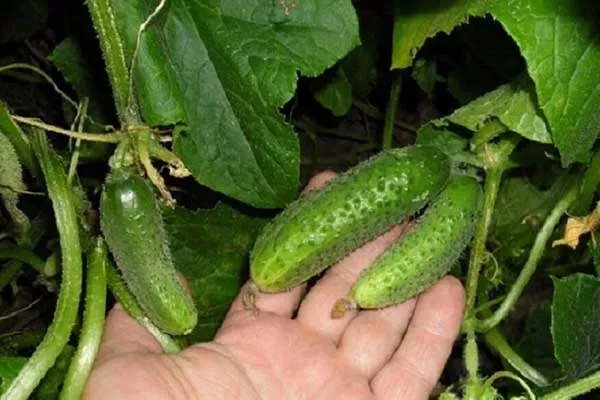
- The cucumbers have an elongated cylindrical shape, sometimes resembling a truncated cone.
- The skin is thin, even in overripe fruits, and is colored a rich green or dark green tone, which becomes lighter from the base to the top.
- Shortened whitish lines are visible on the surface of the peel.
- The cucumber is smooth, covered in numerous pimples, with small whitish spines in the center. These tiny needles break off easily when harvested.
- The size of Liliput F1 cucumbers lives up to their name. They average 2-4 cm in diameter and weigh 80-90 g.
Taste and purpose
The skin of these cucumbers remains juicy even when overripe. These vegetables are ideal for salads, appetizers, winter preserves, and canning. The flesh retains virtually no bitterness, even with insufficient watering—it retains a noticeable sweetness.
Composition and benefits
The fruit has a unique composition: 93-95% of it is structured liquid, which is extremely beneficial for the body. Caloric value: 12-15 kcal per 100 g of pulp.
This vegetable is rich in beta-carotene, vitamins A, B, C, and PP, as well as trace elements such as potassium, magnesium, phosphorus, and folate. It holds the record for fiber content and is beneficial for those suffering from atherosclerosis, coronary heart disease, and obesity.
Ripening time and yield
Liliput F1 bushes produce a stable harvest even during prolonged rains, short-term droughts, and other adverse weather conditions. Liliput has a short growing season: from the first shoots to mature cucumbers, it takes only 38-42 days.
This hybrid is highly productive – 10-11 kg of cucumbers can be harvested per season. The main factors contributing to increased yield are:
- high-quality seed material;
- fertile, fertilized soil;
- regular watering at the root;
- timely feeding;
- frequent fruit picking.
Planting cucumbers
Despite the good productivity of this variety, its performance is affected by the precision of sowing. Liliputa can be planted in two ways: by seedlings or by sowing.
Planting dates
For seedlings, seeds are sown in containers between April 14 and 16. If you plan to use the seeding method, the optimal time for planting is May 20, when the soil temperature has stabilized at 13-16 degrees Celsius.
- ✓ The optimal soil temperature for sowing should not be below +15°C to ensure germination.
- ✓ To prevent diseases, ensure good air circulation around the plants, avoiding dense plantings.
How to prepare the beds?
Cucumbers are a sun-loving crop, so the hybrid should be planted in sunny locations, protected from wind and especially cold drafts. Experts recommend choosing a location facing south of the house.

Before planting, the area must be prepared:
- dig up in autumn;
- remove weeds and debris, root remains;
- fertilize the beds with compost, dilute with sand.
Just before planting, loosen the beds to a depth of 3-3.5 cm and add mineral fertilizers.
Planting seeds
Before you begin planting cucumbers, be sure to perform a few simple manipulations with the planting material:
- First, you need to disinfect them. To do this, prepare a 1% solution of potassium permanganate. Dilute potassium permanganate with water until the color is pinkish. Soak the cucumber seeds for 25-35 minutes.
- To harden the seedlings, first place them in hot, but not boiling, water for a couple of minutes, then in cold water for the same amount of time. Repeat this process twice. Then, place the seeds on cheesecloth and let them dry.

In open ground, plant the seeds in 1.5-2 cm deep holes. Then cover with soil, water with warm water, and cover with plastic wrap until germination occurs.
Growing seedlings
For this, use peat or plastic containers with drainage holes in the bottom to allow excess liquid to drain. Sow the Liliput seeds to a depth of no more than 2 cm, water, and move them to a well-lit location with a temperature of at least 27-29 degrees Celsius. Once shoots appear, reduce the temperature to 19-21 degrees Celsius.

Transplant the seedlings into open ground when the soil warms to 13-15 degrees Celsius and the plants have up to 5 leaves. Plant the seedlings at a depth up to the bottom leaves (usually 8-10 cm deep), cover with soil, and water.
Planting diagram
The Liliput f1 variety is planted at 4 bushes per square meter. This planting method ensures abundant fruiting and makes harvesting and care easier.
Rules for caring for cucumbers
Although the Liliput variety doesn't require special care, to ensure a good yield and high-quality cucumbers, it's necessary to regularly water the plants, tie them up, feed them, and loosen the soil in the beds. All the necessary agricultural practices are listed below.
Watering
Water once every 2-4 days. In dry conditions, water daily. Warm water is usually used. The amount of water depends on the stage of growth:
- before budding, 1 bush requires up to 1.5 liters of water;
- during the period of ovary formation and further fruiting – up to 2-2.5 l.
How to tie and shape?
Because Liliput is characterized by intense vegetative growth, cucumber plants require pinching of side shoots. Typically, when shaping the bush, the primary branches and the central shoot are left. Pinch at intervals of 45-55 cm.
Liliput f1 bushes are trained on vertical trellises. When staking, if the top of the main stem grows larger than expected, it is trained downward.
Top dressing
To achieve abundant yields, vegetable growers recommend regularly fertilizing the beds with minerals. Liliput is typically fertilized 5-7 times during the season. Experts recommend using potassium, superphosphate, urea, and nitrophoska as such additives.
- First feeding: 2 weeks after planting the seedlings, using a complex mineral fertilizer with a predominance of nitrogen.
- Second feeding: at the beginning of flowering, with an increase in the proportion of phosphorus and potassium to improve fruit set.
- Third feeding: during the period of active fruiting, with an emphasis on potassium fertilizers to improve the taste of the fruit.
Excellent fruiting results are achieved by using complex mixtures such as Agro Nova, Clean Leaf, and the like.
Hilling
To prevent a crust from forming on the soil surface around the trunks of cucumber beds, cover the bushes with soil while loosening the soil. This will help strengthen the plant's root system and encourage new root formation.
Resistance to diseases and pests
Liliput f1 cucumbers have genetic resistance to the main cucumber diseases (such as powdery mildew, downy mildew, root rot, and olive spot). However, during epidemics, the plant's immunity may be weakened, increasing the risk of bacterial blight and attack by slugs and spider mites. Problems that can also arise if agronomic practices are not followed include:
- Bacteriosis – This is a plant disease that causes the following symptoms: leaves begin to turn yellow, then wilt, curl, and die, while the fruits become covered with yellow spots, become soft, change shape, and begin to rot.
In conditions of prolonged rainfall, ulcers with cloudy liquid form on plants, and seedlings in the soil die. - Slug - This is a pest that can damage not only plant leaves, as many people think, but also their fruits. When they appear, you can notice holes in the leaves and small nicks in cucumbers.
- Spider mite – This is a small but extremely dangerous pest that can completely destroy cucumber plants. If you notice it in your garden, you need to take action immediately.
When an invasion occurs, the bushes begin to slow down their development, white spots appear on the underside of the leaves, and a white web forms on the stems and upper surface of the foliage.
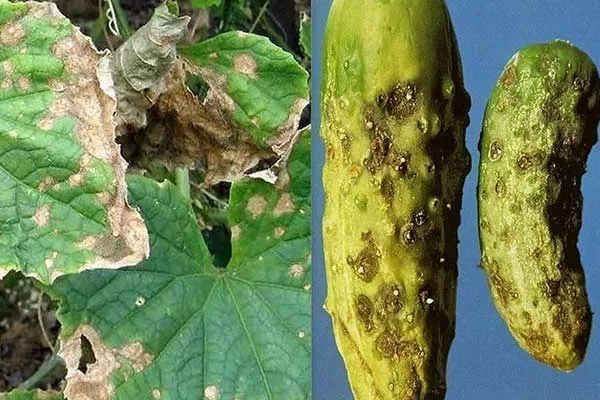
Fungicides are used to treat diseases, and insecticides are effective in controlling insects.
Harvesting and storage
It's recommended to harvest the cucumbers when they're at the gherkin and pickle stage. Liliput f1 cucumbers are typically harvested every other day. This is best done early in the morning or late in the evening, using rubber or fabric gloves and a sharp knife to remove the stems.
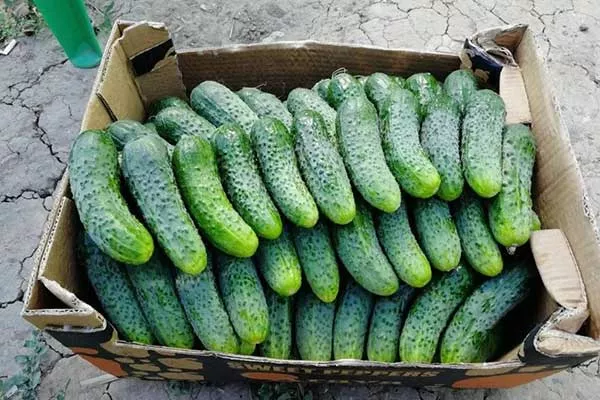
To prevent cucumbers from rotting or turning yellow, and to preserve their excellent taste and appearance, it is recommended to store Liliput in basements at a temperature no higher than +3-4 degrees Celsius.
The fruits are stored in wooden crates, as these containers provide adequate ventilation, preventing rotting. If any cucumber begins to rot, it should be removed immediately along with the surrounding fruits, as they may also rot.
Positive and negative qualities
The Liliput cucumber variety was developed by Russian breeders relatively recently, but since then, vegetable growers have identified its key advantages. However, it also has its drawbacks.
Among the disadvantages, vegetable growers note the tendency of fruits to become overgrown if harvested late.
Reviews
The Liliput f1 cucumber hybrid is characterized by early maturity, low maintenance, and decent yields. The fruit's flavor is excellent. The hybrid is stable and produces good results even in cold summers. It is recommended for planting in any garden, regardless of the gardener's skill level.