
The Libelle cucumber has been popular since the 1970s. It has proven itself to be a highly successful variety and is in high demand. The highest yields can be achieved in central and northwestern Russia. This variety requires insect pollination, as it is parthenocarpic.
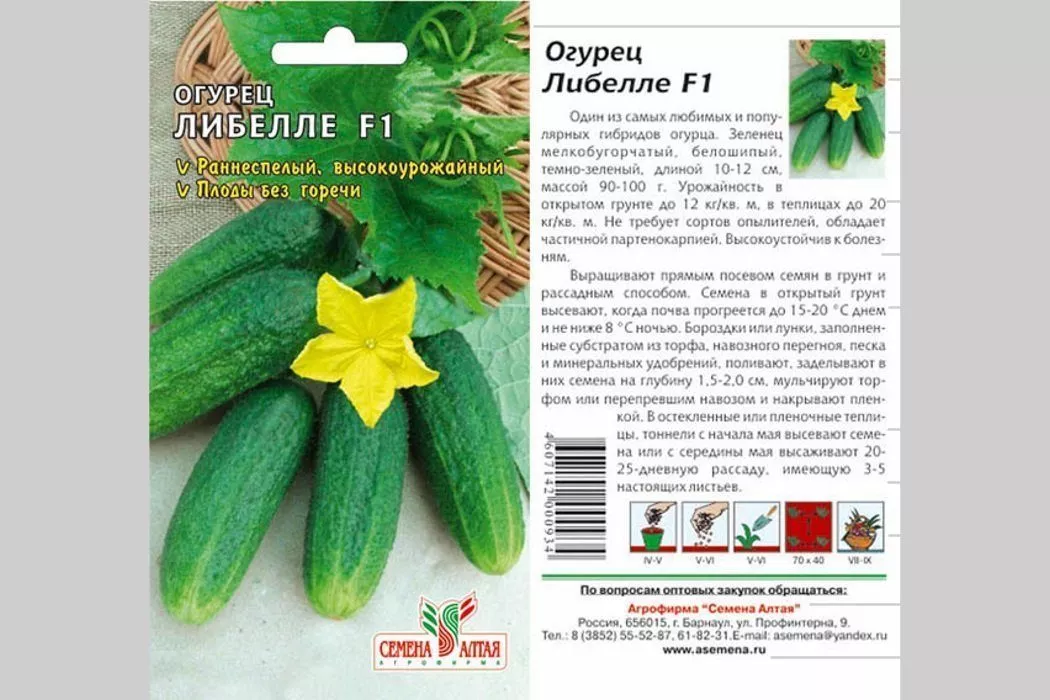
Cucumber seeds of the Libelle variety
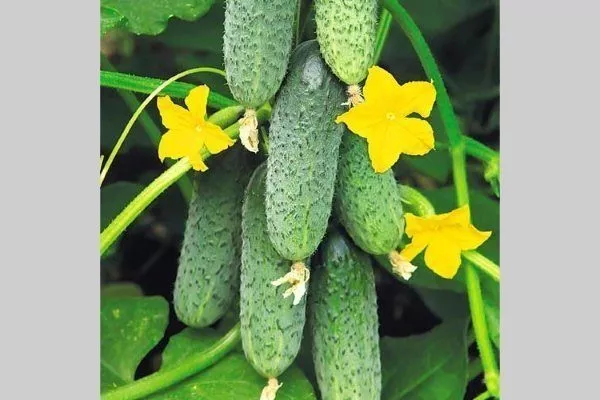
Libelle cucumbers on the bush
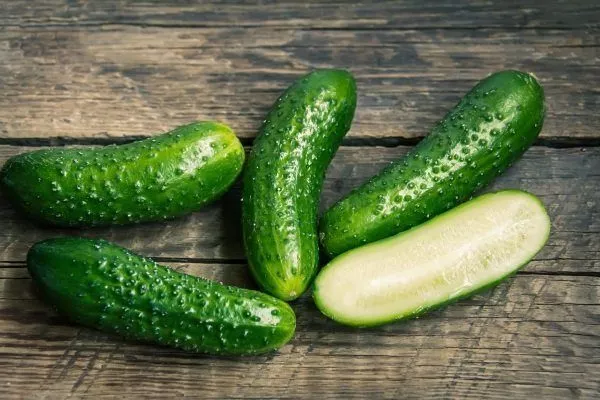
Libelle cucumbers have a thin, delicate skin and small seeds.
Description of cucumbers
The Libelle variety is a mid-season F1 hybrid, meaning it's impossible to grow the bush from home-collected seeds. This is because high-quality seed can only be obtained through primary selection of different varieties.
The variety can be grown in open ground, in greenhouse conditions, by means of seedlings or planting seeds in the soil.
Areas of use of cucumbers:
- preparing salads;
- whole food preservation;
- pickling;
- pickling;
- canned food in the form of salads.
Libelle's appearance
Fruit characteristics:
- shape – elliptical;
- color – dark green;
- the surface is covered with small spikes;
- length size – from 12 to 15 cm;
- the weight of one fruit is from 100 to 150 grams;
- the sides have thin white stripes;
- tips are whitish;
- seeds - small in size;
- the skin is tender and thin;
- pulp – sweet, juicy;
- crunching is present;
- There is a slightly noticeable bitterness (this indicates the concentration of cucurbitacin, which is used to fight tumors).
- ✓ The presence of cucurbitacin in the fruits, which imparts a slight bitterness and has antitumor properties.
- ✓ Cluster type of ovaries, which increases yield potential.
If the fruit is left uncovered in very hot weather, white spots will form on them. Therefore, it's best not to plant cucumbers in direct sunlight. They should be covered with foliage.
Bush characteristics:
- increased climbing and branching;
- leaves – round, wrinkled, size – medium, edges – serrated, irregular;
- shoots are powerful;
- The root system is weak, so care must be taken when transplanting to a permanent location.
Due to its extensive branching, it's best to plant this variety vertically, with the vines braided around a support. This will protect the young plants from direct sunlight and allow for ventilation.
Ripening time and yield
Libelle ripens between 49 and 55 days after the first shoots emerge. The mass harvest takes place around August. Average yields are 8-10 kg per square meter.
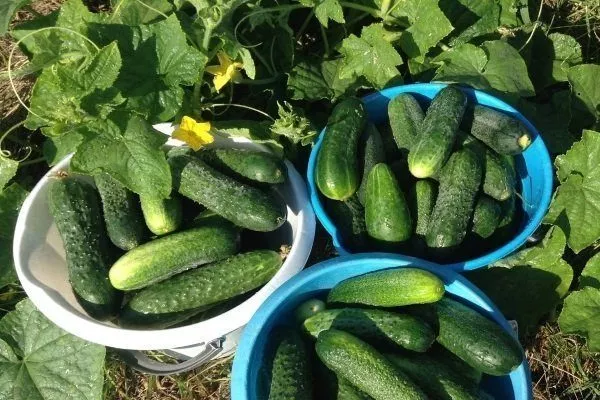
To ensure the yield meets the standards for this variety, it's best to plant cucumbers in open ground. This is because the variety requires bee pollination. This will minimize the number of barren flowers. As a last resort, it's recommended to use a removable film cover (open the film during the day).
Pros and cons
Advantages:
- wide range of uses;
- transportability;
- excellent taste and juiciness;
- quite high yield;
- attractive presentation;
- resistance to many diseases;
- possibility of growing in cool climate conditions;
- no need for pinching;
- can be collected in the form of gherkins (smaller than standard size);
- cluster type of ovaries (one node contains up to 3 units).
Flaws:
- slight bitterness;
- pollination by bees is necessary;
- average ripening period.
Planting and care features
The Libelle cucumber is distinguished by its predominantly female flowers. Otherwise, planting and care requirements are the same as for other hybrids. Recommendations:
- To speed up the ripening time, it is better to use the seedling method;
- to strengthen the root system, before planting in the ground, the soil is saturated with manure (humus);
- the temperature ranges from 20 to 22 degrees during the day;
- at night the temperature should not drop below +10-12 degrees (if necessary, cover with film at night);
- watering is carried out regularly, since the variety does not tolerate drought;
- After planting in the ground, mineral fertilizing is necessary;
- the area must be windless;
- Acidic soil is not suitable (lime or dolomite flour is added to neutralize the acid).
To increase the fruitfulness of Libelle, it is necessary to plant the vegetable in close proximity to cucumber varieties in which male flowers predominate.

Preparing and planting seeds
Seeds are most often sold in a seed coat. In this case, no preparatory work is required. If the seed coat is missing, warming is necessary: bring the water to a temperature of 50-53 degrees Celsius and soak the seeds in it for 15 minutes. To speed up germination, it is recommended to soak the seeds in an Epin solution for 2-3 days (remove them after sprouting).
- ✓ Optimum soil temperature for seed germination: +25…+28°C.
- ✓ The need for daily ventilation of seedlings to prevent fungal diseases.
The landing is carried out as follows:
- the container for planting seeds should not be less than half a liter in volume, since it is not recommended to transplant the variety frequently;
- the soil is abundantly moistened;
- sowing depth – maximum 1 cm;
- It is advisable to put a couple of grains into one hole.
Caring for seedlings
After sowing the seeds, cover the containers with plastic wrap (glass can be used) and place them in a warm place (minimum temperature 25 degrees Celsius, maximum 28 degrees Celsius). Next, follow these rules:
- Daily ventilation of the containers and spraying with warm water is essential. Use a spray bottle for this purpose.
- After germination, the temperature is reduced to 17 degrees Celsius. This is necessary to prevent the seedlings from growing too tall.
- After about 6-8 days the temperature rises again, but to 20 degrees.
- Lighting must be provided.
- A couple of sprouts should emerge from each hole. They are carefully examined and assessed for strength. The weakest ones are cut off at the root with scissors.
- Watering should be done twice a day in very hot conditions. In normal temperatures, watering every couple of days is sufficient. Make sure the soil doesn't become damp, but not wet.
- If the seedlings do not receive enough sunlight, or the weather is cloudy outside, then artificial lighting is used.
- After two strong leaves have formed, apply nitroammophoska (or nitrophoska) as a top dressing. Dilute the solution as follows: 1 teaspoon per 1 liter of water.
Planting in the ground
It's undesirable to overgrow seedlings, as they will have difficulty establishing themselves in open ground. Therefore, transplanting should be done 21-25 days after germination. To do this, prepare the soil first:
- Dig thoroughly (the depth of the shovel blade should be from 15 to 20 cm).
- Pour the hot solution over the plants. To prepare it, use the following dosage: for 20 liters of boiling water, add 1 liter of mullein, 2 teaspoons of copper sulfate, and 2 cups of chicken manure.
- After sprinkling, the area is covered with a thick film and kept like that for 6 days.
When transplanting seedlings into the garden, ensure that the root system is not damaged. Dig holes in a 50x30 cm pattern, with half a meter between rows and 30 cm between plants. Add a little water to each hole and 1 tablespoon of complex fertilizer. Then, fill with soil and water again lightly. In adverse weather conditions, it is recommended to cover the seedlings with plastic wrap overnight.
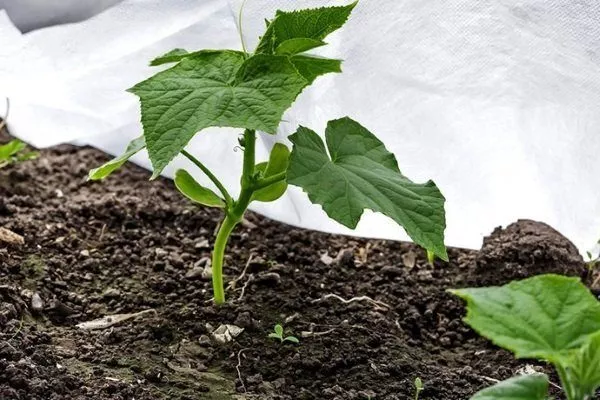
There is no need to shape the Libelle bush, as it is quite branchy and climbing.
How to care for Libelle?
Caring for the variety includes the following main aspects:
- fertilization;
- loosening;
- weeding;
- watering;
- spraying against pests;
- mulching;
- hilling.
How to care:
- Cucumbers should be watered once a week before flowering. Three to six liters of warm water per square meter are needed. This depends on the humidity level in different climates. Once fruiting begins, more water is needed – up to 10 liters per square meter. Watering should be done a couple of times a week, preferably early morning or evening.
- The first application of organic fertilizers is done a couple of weeks after transplanting into the garden.
- Next, it is necessary to add minerals based on potassium, phosphorus and nitrogen every 15 days.
- Loosening is carried out every 10 days, the digging depth should not exceed 7 cm.
- Hilling is required when the root system is exposed.
- With vertical cultivation there is a need for tying.
Features of the seedless method
If you don't have time to grow seedlings, you can sow seeds directly into open soil. Here's how:
- 2-3 weeks before planting, prepare the soil - dig, loosen, level.
- Be sure to add humus or compost (dosage per 1 sq.m. is 10 liters of organic matter).
- 20 grams of nitrogen, 30 grams of phosphorus, and 15 grams of potassium are also added here.
- The soil temperature should be at least +15 degrees.
Row planting:
- make grooves 1 cm deep;
- water with warm, settled water;
- Sow seeds 30 cm apart for vertical planting and 1 meter apart for horizontal planting;
- sprinkle with soil (no need to use water).
Planting in holes:
- make holes in 2 rows;
- the diameter of each hole is 50 cm;
- form 8 cm sides;
- pour plenty of water;
- let the moisture soak in;
- add 3-5 seeds;
- cover the top with soil, which is pre-mixed with humus or peat fertilizer;
- After 2 strong, full-fledged leaves appear, sort through the seedlings (leave a couple of the strongest ones, cut off the rest);
- The depth of planting seed material is one and a half to three centimeters.
A gardener shares his method for planting cucumbers in holes in the following video:
Other planting methods:
- The seeds are planted on manure piles. To do this, a "garden" is formed from organic matter and the seeds are planted.
- On a compost heap. Proceed in the same way as in the previous case.
- Spreading, or horizontally. In this case, the stems are laid out on the ground surface. This method requires careful handling, as moving the shoots from one place to another is not recommended.
- Trellising is the most popular and optimal method. Seeds are planted in rows, around which wooden stakes are installed. Trellis wire is stretched across the stakes (slats can also be used). The height ranges from 50 cm to 1 meter. The advantage of this method is that the stems don't need to be tied separately – they are simply draped over the wire. This significantly saves space, reduces the risk of disease, and promotes ventilation. Furthermore, the fruit always stays clean and dry.
- In barrels and boxes, the containers are filled with soil mixed with compost or manure, and grass. Water the containers before planting. The barrels are covered with plastic until the leaves emerge. Next, an arch is installed to support the plant stems.
- In bags in which plant remains are stored.
There are special ones care rules for cucumbers grown without seedlings:
- The first weeding is carried out 10-12 days after emergence.
- Thinning is carried out as necessary (if weak bushes are found).
- Liquid manure must be added (1 part manure to 5 parts water).
- You can fertilize with chicken manure (1:7 ratio to water). 5 liters of liquid are required per 1 square meter.
- Minerals are used. For 10 liters of water: 20 grams of potassium sulfate, 30 grams of superphosphate, 20 grams of urea.
- Watering is done using drip irrigation or a spray bottle. The water should be settled and warm.
- Excessive moisture should not be allowed, as the root system will become susceptible to rotting.
- It's advisable to mulch the soil. For this purpose, use grass from the garden and scatter it over the cucumber plot.
- Further care is the same as for seedlings in a greenhouse.
Diseases and pests
The Libelle variety is considered resistant to pests and diseases. However, this only occurs with proper care and maintenance. Causes of disease include:
- contaminated soil;
- sudden changes in temperature (for example, hot during the day and cool at night);
- lack of fertilizers;
- presence of drafts;
- poor illumination of the area;
- watering with cold water instead of warm.
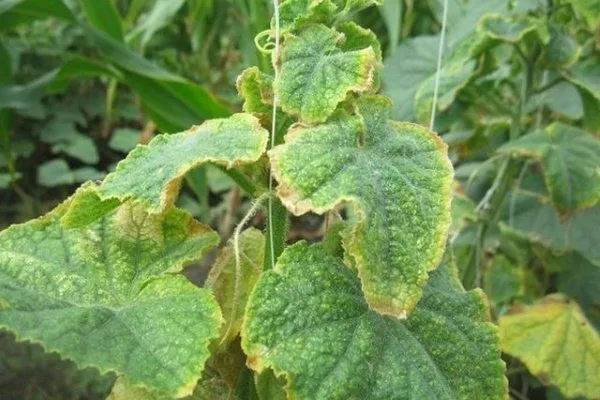
Diseases and pests that affect Libelle, and methods of control and prevention:
- Fusarium. Specific preparations are used.
- Powdery mildew. Folk remedies are used for prevention and treatment. To do this, prepare a solution: for 10 liters of water, add one liter of milk, 10-12 drops of iodine, and 1 tablespoon of brown laundry soap. If necessary, you can substitute whey for the milk. Apply the mixture to the leaves.
- Gray mold. It's easy to get rid of: combine water and baking soda according to the standard recipe.
- Bacteriosis. Human preparations are used. Add 1-2 Trichopol tablets to 1 liter of water. Pour into the soil.
- Slugs and spider mites are among the pests that should be noted. To get rid of the insects, plant garlic and onions near the cucumbers. Standard pest control products are used in case of pest infestations.
To prevent disease and insect attacks, it's important to keep your garden beds clean, including removing weeds promptly. If any disease was detected in the garden last year, you'll need to collect all the grass and tops in the fall, destroy them by burning, and treat the soil with special treatments.
How to harvest and store crops?
The cucumbers are harvested in the morning when they are ripe. To do this, they are trimmed with pruning shears. The key is that harvesting is done daily. Failure to do so will prevent unharvested fruit from forming new ovaries.
Storage rules:
- For long-term storage, cucumbers are mainly used hard.
- The place should be dark and cool.
- Fruits need to be ventilated, so avoid plastic containers, bags, and similar items. Wooden boxes are recommended for storage.
- The maximum room humidity is 80%.
- Temperature range: from +1 to +5 degrees.
- Before storing, each vegetable is carefully inspected and damaged fruits are rejected.
Reviews
I do it this way: I artificially warm the soil. When warm air comes in, I plant the seeds and immediately cover them tightly with plastic wrap. I don't open the soil for a couple of weeks to keep the cold out. There's plenty of moisture there. But if the soil suddenly dries out, I have to turn the generator back on and water with a blast of warm air. But that happens very rarely. If anyone wants to, take this advice; it's less hassle and you can harvest on time.
The Libelle variety is grown in garden plots, private vegetable gardens, and large vegetable farms. It boasts excellent flavor and yield, offering numerous advantages. However, to achieve these results, it's essential to strictly follow simple growing and care guidelines.