
The hybrid cucumber variety Lastochka F1 demonstrates excellent productivity, surpassing even the highest-yielding varieties. It requires little care and is adaptable. Lastochka F1 can be grown both outdoors and under cover.
Introduction to the variety
This hybrid from Semko belongs to the class of highly productive cucumbers, requiring bees and other insect pollinators for pollination. The health benefits of cucumbers are undeniable. Regularly including them in your diet helps eliminate toxins from the body and provides essential micronutrients and vitamins.
Gherkins from this variety are ideal for pickling and marinating. This hybrid is successfully grown in central Russia.
Information about origin
Lastochka is the result of the breeding work of Medvedev A. V., Medvedeva N. I., Kapustin A. A. and Medvedev A. A. The variety was approved for use in 2002.
Description of bushes and fruits
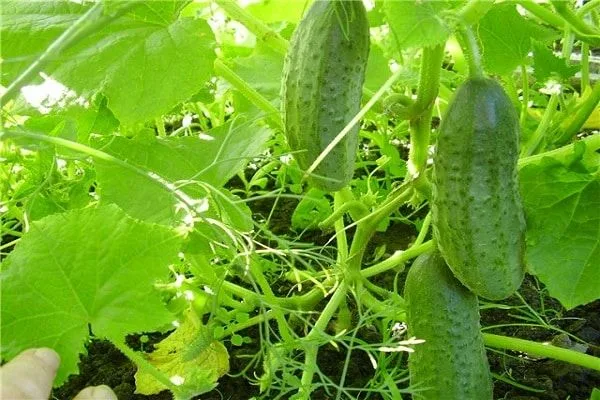
Cucumbers of this variety are characterized by an indeterminate growth habit and reach a medium height of 120-150 cm. The bushes have moderate branching, and the leaves are bright green.
Other varietal characteristics:
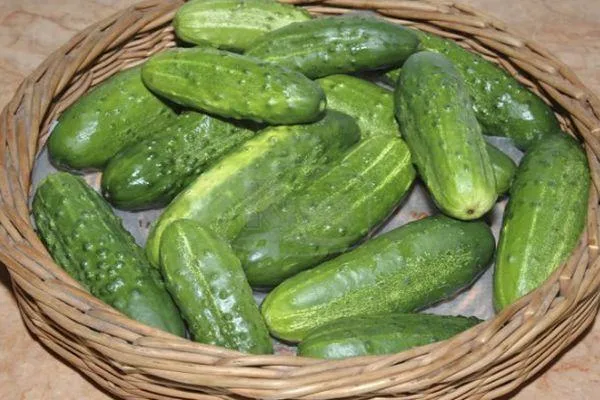
- The fruits are shortened – their length varies from 11 to 12 cm, and the diameter of a mature vegetable reaches 3.7 cm maximum,
- The weight of one cucumber ranges from 85 to 115 g.
- The cucumbers are oval-shaped, green in color with light lines of medium length and a light spotted pattern.
- The surface is covered with medium-sized tubercles, which are not located too closely.
- The spikes are black.
Where is it used?
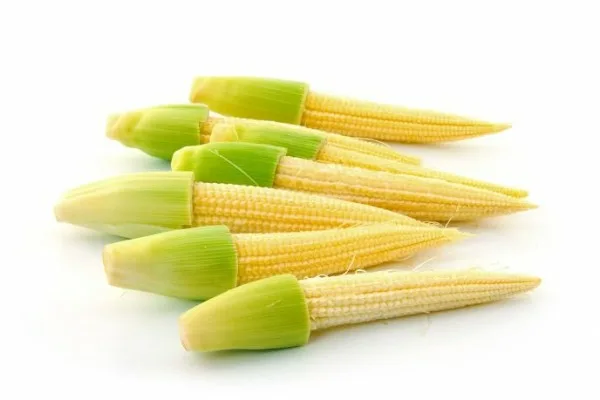
Cucumbers of this variety are prized for their excellent flavor and firm flesh. They are versatile in use: ideal for pickling, canning, and eating raw. The product quality is high, with a marketability rate of 82 to 96%.
Peculiarities of maturation and productivity
The Lastochka variety is planted directly into the garden soil. This plant, like most hybrids, prefers warm conditions. Proper agronomic care guarantees a bountiful harvest.
The Swallow is distinguished by its early maturity—from the emergence of the first shoots to the harvest of young cucumbers, it takes only 37-42 days. The yield of this cucumber variety varies depending on the region:
- in the Central Black Earth Region it ranges from 155 to 335 centners per hectare;
- in the North Caucasus region – from 215 to 435 centners;
- in Nizhnevolzhsky – from 140 to 260 centners.
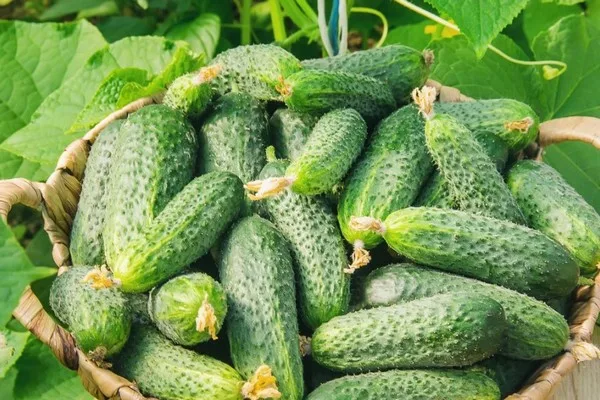
Moreover, on average, the yield reaches 10-13 kg per 1 sq. m.
Landing rules
The Lastochka variety is widely grown in the southern and relatively warm regions of Russia. However, productivity declines in the northern regions. In the south, it is sown in open beds immediately after the soil warms to 12-13 degrees Celsius.
- ✓ The optimal soil temperature for sowing seeds should not be below +12°C, but for better germination +15°C is recommended.
- ✓ The distance between plants when planting should be at least 30 cm to ensure sufficient space for the root system to grow.
Preparatory activities
First, decide on the type of cucumber bed, then select the optimal location. It should be sunny and wind-free. What to do:
- dig up, fertilize with organic matter;
- remove all remaining roots and grass;
- level the surface.
Sowing and germination
A damp cloth is often used to germinate seedlings. The seeds are wrapped in it and placed in an opaque plastic bag. Cotton wool or bandages are not recommended as these can damage fragile seedlings by entangling them in their fibers.
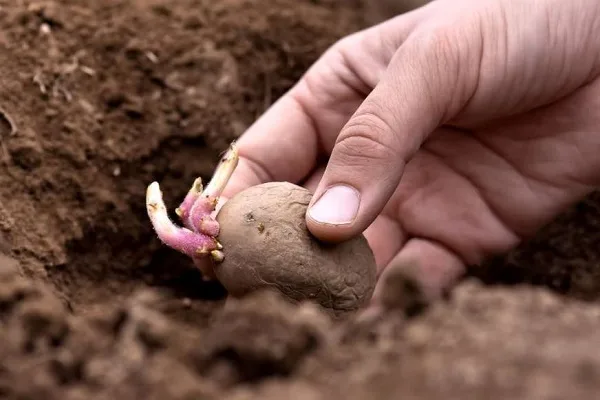
No further manipulation is necessary, as the seed producer has already provided disinfection and growth stimulants. The classic sowing pattern is used: seeding at a depth of approximately 1.5-2 cm in light, fertile soil.
Transplanting seedling bushes
Transplanting cucumber seedlings into open ground begins when the weather stabilizes. The soil should warm to a stable 13-14 degrees Celsius. Specific considerations:
- Any sudden changes in temperature can negatively affect plant growth.
- In southern latitudes, the optimal time for planting is the first days of May, and in the northern and central regions - a month later.
- It is important to monitor the soil moisture level, as stagnation during transplantation can damage the Swallow plant.
- Seedling bushes are planted at a depth of 7-10 cm, placing 5-6 plants per 1 sq. m.
- For the Swallow, a trellis is immediately installed for support.
How to grow further?
To obtain a bountiful harvest of Lastochka, it's essential to consider all the variety's characteristics and adhere to proper agricultural practices. The variety doesn't require special care, so growing it shouldn't be a problem. The most important consideration is the quality of the fertilizer, as this determines the level of productivity.
Subtleties of hydration
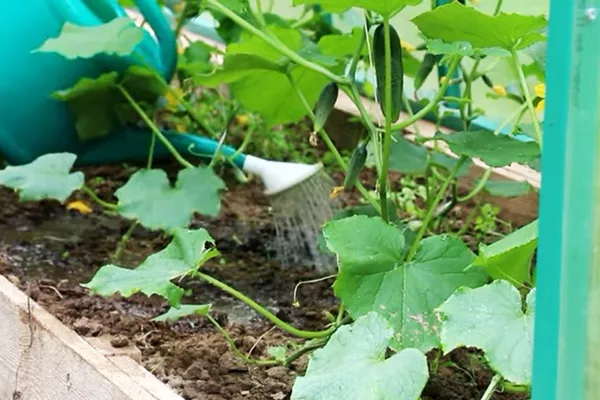
Caring for cucumbers includes regular watering, which is critical to achieving the perfect flavor of the Lastochka variety. It's important to pay special attention to soil moisture levels during periods of heavy rainfall, as water can compact the soil, making it difficult for the roots to access moisture and nutrients.
After the rains have stopped, carefully loosen the soil to improve aeration. If signs of water stress are detected, such as delayed fruit development, flower drop, or browning of leaves, additional irrigation is necessary.
Features of fertilization
To ensure healthy growth and abundant harvests, hybrid plants require timely feeding. Immediately after sowing the seeds, apply the first nitrogen-based fertilizer.
Fertilizing is especially important after fruit sets. This is done twice:
- First times to stimulate growth and improve the quality of fruits.
- Second – to extend the fruiting period.
At the beginning of the fruiting season, it's recommended to use organic mixtures—compost or plant infusion in a 1:5 ratio, as well as diluted cow manure or wood ash. Of the mineral fertilizers, consider potassium nitrate and urea.
Cucumbers respond positively to fertilizing with a urea solution in a proportion of 5-6 g per 5 liters of water, but it should be applied in cloudy weather or in the evening to avoid burning the leaves.
To properly feed cucumbers with ash, you need to know a few nuances:
- It is enough to dissolve 230-250 g of crushed charcoal in 9-10 liters of settled water, mix thoroughly and use for watering.
- This type of feeding can be done every week and a half both in open ground and in greenhouses.
To stimulate re-flowering and fertility of plants after harvest, it is recommended to use the following fertilizers:
- Wood ash in the amount of 100 g, dissolved in 5 liters of water.
- Tincture of old hay - let it stand in water for two days.
- A soda solution prepared from 15 g of soda per 5 liters.
- Urea at a dosage of 8 g per 5 liters of water.
- Yeast solution (5 g per 5 l) or bread broth, which is becoming an increasingly common practice among gardeners.

Resistance to diseases and pests
The Lastochka variety has good resistance to diseases such as powdery mildew, downy mildew, and cucumber mosaic, but it is still susceptible to other infections and pests:
- Cladosporiosis. This disease causes round, necrotic, gray or olive-colored spots to appear on cucumber fruit, which may ooze liquid. Affected cucumbers often become covered with deep spots, sometimes with a bloom. The fruit rots, and the foliage turns brown.
To combat the disease, buy Acrobat MC, Infinito, Ranman, Armetil M Ridomil MC, Dove, Medzyan or copper oxychloride. - Alternaria. This disease is common in regions with warm, humid climates. Initially, necrotic spots with yellowish edges appear on the leaf surface, which eventually dry out and crumble, leading to the withering of the affected parts.
Alternaria can also affect the fruit. At the first signs of disease, spray cucumbers with Poliram twice, 1.5-2 weeks apart. To treat Swallowtail grown in a greenhouse, purchase Bordeaux mixture (1%) and copper oxychloride (0.3%). - Black flea. It feeds on both foliage and roots, leaving behind holes. The pest appears in the spring. Due to its voracity, it can destroy entire young plants.
To combat the beetle, sprinkle plants with ash and chalk, and use mothballs between rows. Spraying with a vinegar solution is effective. Among insecticides, Arrivo, Aktara, and Sherpa have proven effective.
Harvesting and storage
For storage, store the fruits in a dark place in single-layer boxes. If kept at a cool temperature, the vegetables will retain their freshness and nutritional value for up to two weeks. It's best to harvest the vegetables with sharp tools in dry weather.
Positive and negative qualities
The need for timely support of plants with the help of garters and fertilizers is the main disadvantage of the variety.
Reviews
Swallow, like other cucumber varieties, thrives in warm conditions, but this hybrid is perfectly adapted to various climates and grows well outdoors without additional shelter. The key to successful growth and fruiting is providing the hybrid with sufficient nutrients and moisture.