
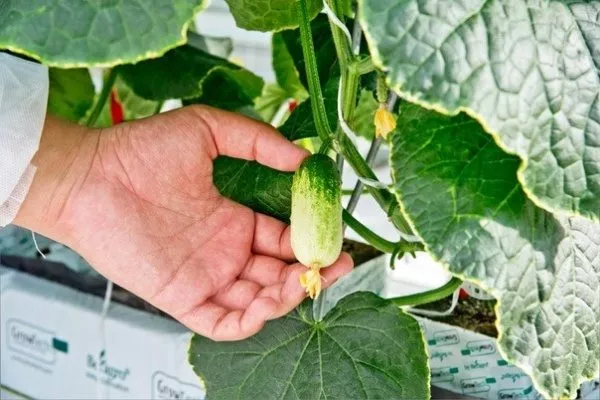
The Quirk F1 variety is a parthenocarpic cucumber, capable of producing fruit without the need for pollination. These vegetables are distinguished by their seedless interior and unique coloring: light green with a whitish tint on the outside, while the inside is bright green.
Introduction to the variety
Quirk F1 features a female flowering type. Key characteristics of the variety:
- Early harvesting potential. From sowing to harvesting the first ripe fruit takes 40 to 45 days.
- It does not require pollination by bees, which means it can produce a harvest even without their participation.
- Resistant to various diseases, including cucumber mosaic and powdery mildew.
- The seeds of this variety are distinguished by their high germination capacity.
- The bushes have short internodes, which allows for the formation of more nodes. Typically, 20 nodes grow per square meter, with each node producing an average of 5-7 cucumbers.
- Each package contains 2-3 seeds, which makes their price significant compared to other popular varieties and hybrids.
- The yield ranges from 5 to 6.5 kg per bush, and in heated winter greenhouses, up to 10.5 kg can be harvested from an area of 1 square meter.
- Transportability is excellent and can be stored in optimal conditions for up to a week.
- Quirk F1 does not tolerate prolonged dry soil conditions.
- Recommended for cultivation in various regions of Russia, including the Northern, Northwestern, Central, Volga-Vyatka, Central Black Earth, North Caucasian, Middle Volga, Lower Volga, Ural, West Siberian, East Siberian and Far Eastern regions.
- It tolerates shade well, making it suitable for growing in conditions with little sunlight.
Information about origin
Quirk F1, a hybrid variety officially approved for use in Russia, is part of a collection of products called "Sensational Snacks."
The application for inclusion of the variety in the list was submitted on September 14, 2018, and its official use was approved in 2020. The original producer is the company "Rijk Zwaan".
The list of producers of the Quirk cucumber seed variety includes the following companies:
- “Rijk Zwaan” from the Netherlands;
- “Record” from Russia;
- "An atypical farmer" from Russia.
External characteristics of the plant and cucumbers
This plant is characterized by vigorous stem growth but few branches. Its medium-sized leaves are a classic green. The blooms are predominantly female, with 4-5 buds per node.
Other varietal qualities:
- the plant is distinguished by a developed central branch, which reaches a height of 30-45 cm;
- The cucumber usually has a round shape, although sometimes more elongated cylindrical fruits are found;
- a vegetable with a thin skin that does not need to be peeled before eating, which greatly simplifies the cooking process;
- the average length is 5 cm, and the weight is 25 g maximum, their diameter is 2.5-3 cm;
- the bumps on the surface are large;
- medium pubescence;
- the pulp has crunchy properties;
- the consistency is compacted, without cavities;
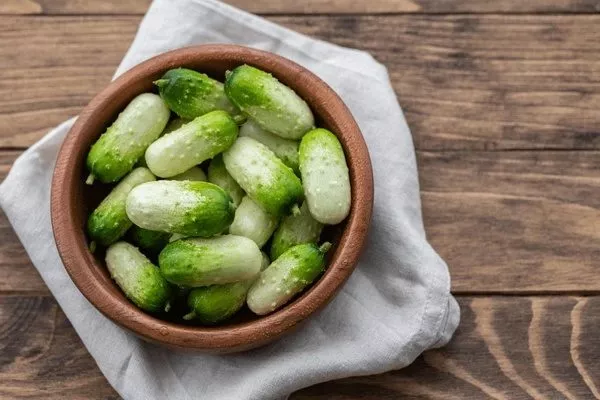
- the color is light green, with the distal half being whitish, but the flesh is a rich green tone;
- The thorns are snow-white.
Purpose and taste of fruits
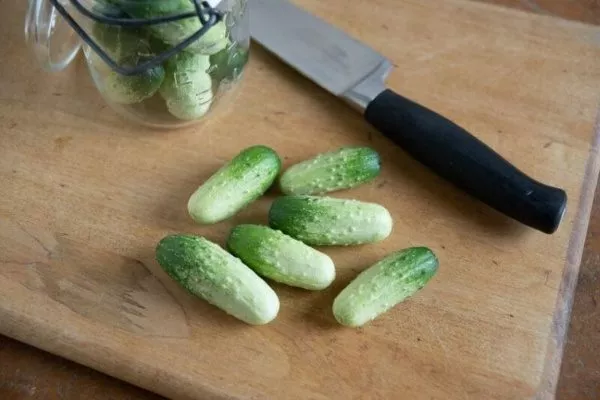
The Quirk F1 cucumber is known for its crisp texture and refreshingly cool aroma, making it an indispensable ingredient for salads, appetizers, and a variety of culinary delights. This variety is not suitable for pickling or canning.
Landing features
Successful cultivation requires careful soil preparation. The variety prefers nutrient-rich substrates and comfortable, warm temperatures, avoiding drafts. Lower temperatures may cause growth problems and delayed fruit ripening.
Planting dates
It is recommended to sow seeds in the soil in early May. To prevent unfavorable temperature conditions in the greenhouse, agrofibre is often used, allowing planting to begin a week earlier.
Site preparation
Ideal soil types include black soil, loam, and sand. It's important to maintain a neutral soil pH, and if it's acidic, apply lime to neutralize it. Before planting cucumbers, amend the soil with various mineral and organic mixtures, including cow manure, compost, or humus, or even chicken manure.
The beds are dug up, cleared of weeds and other debris, and the walls of the greenhouses are treated with disinfectants.

Planting seeds
Before planting, soak the seeds in water for a few hours to stimulate germination. Then, follow these steps:
- In the prepared soil, make shallow grooves up to 2 cm deep, placing them at a distance of 30-35 cm from each other.
- Place the seeds in these furrows.
- Moisten the plants and cover with dark mulch film. The thickness of the material should be approximately 30-340 microns. This will retain moisture and maintain an optimal temperature for the cucumbers, as well as prevent weed growth.
- If sowing is done in open ground, which is not very desirable for Quirk, then lay agrofibre on top of the film, securing the edges with soil.
When sowing seedlings at home, use peat cups, which you can then use to transplant them to a permanent location.
Planting seedlings
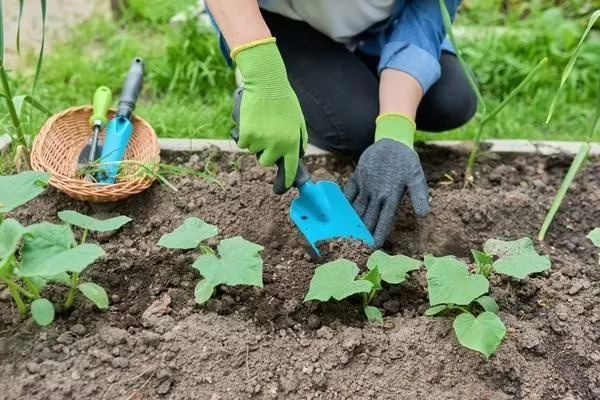
Once the first green shoots appear, the plant will begin to grow vigorously. Repotting occurs when 2-4 leaves have formed. Follow these steps:
- Dig shallow holes in the ground – their dimensions should be 1.5-2 cm larger than the size of the root system of the seedlings.
- Carefully move the growing bushes there.
- Sprinkle with soil along with the first leaves.
- Water generously and sprinkle the soil surface with wood ash.
Planting diagram
Cucumbers are planted in rows spaced 55-65 cm apart, with 35-45 cm between the individual cucumbers. This allows for easy staking and training. Sometimes, denser plantings are possible, for example, 45-50 cm by 25-30 cm.
Care
The Quirk F1 cucumber is grown in a greenhouse, and achieving high yields requires adherence to specific agricultural practices. Regular fertilization is essential, along with timely herbicide treatments to prevent weed growth.
Irrigation
In greenhouse conditions, cucumbers require special attention to humidity: in hot weather, they need to be watered twice a day. Insufficient moisture can lead to stunted growth and the development of hollows in the fruit. Under normal hot conditions, drip irrigation once a day is sufficient.
Garter and shaping of bushes
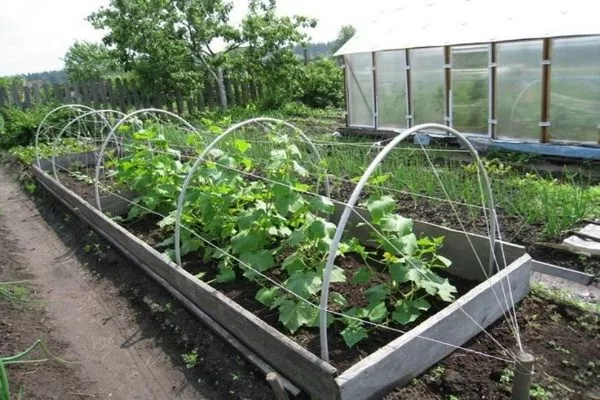
The Quirk variety uses a bush-type approach to plant training, as the fruit is primarily concentrated on the main branch. However, once the bulk of the fruit has been harvested, secondary shoots begin to develop further.
Key points:
- When the central shoot reaches a height of 140-155 cm, it is recommended to shorten it a little to limit the growth of lateral branches.
- The vine is then wrapped around the supporting structure. The last two knots can be used to form lateral shoots, which should also be pruned after five leaves appear.
- Staking allows for space savings, simplifies harvesting, and reduces the risk of fungal infection since the plant is not touching the ground. This procedure is performed when the shoot reaches 30-40 cm in length, preferably in the morning to avoid intense heat.
- To create the structure, use two supports to which the twines are attached.
Fertilizing, watering
During the fruit harvesting period, usually starting between June 18th and 20th, the first fertilizer application is made. Nitrogen-based fertilizers are particularly effective at this stage. Potassium-based fertilizers are recommended for peak productivity. Micronutrient supplements are applied weekly as a chelated cocktail.
In greenhouse conditions, it is preferable to use drip irrigation.
Hilling
As plants grow, root hilling is necessary. This process strengthens the root system, promotes the development of new root shoots, and retains moisture, preventing evaporation.
Disease and parasites
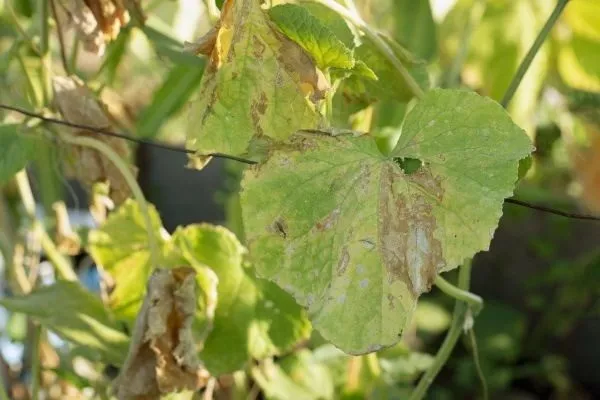
When growing Quirk F1 cucumbers, if all care recommendations are followed, the risk of disease is significantly reduced. This hybrid is resistant to powdery mildew and viral infections, but some problems may still arise:
- Angular spotting. This disease affects cucumber leaves and fruits. Initially, small spots appear on the plants, which grow larger over time and can lead to death. To prevent the development of pathogenic fungi, it is recommended to treat the plant with a copper sulfate solution.
- Spider mite. Small spots appear on the leaves, after which the mites attach to the plants and begin to actively reproduce. Acaricides are used to control these pests.
- Microspherella black rot. This is a fungus that can attack Quirk under high humidity. The disease begins to spread through the buds, affecting the leaves, fruits, and stems. Plants can be protected from this pathogen by treating them with fungicides.
Harvesting and storage
To encourage a bountiful harvest, remove the first fruits that form on Quirk F1. Subsequently, harvest every two to three days to prevent overgrowth.
This variety should be stored in a cool place, away from direct sunlight, where its quality will remain for 6-8 days. However, to fully appreciate the taste and freshness, it is recommended to consume the cucumber immediately and fresh.
Positive and negative qualities
Being a hybrid, Quirk F1 has a number of advantages that make it competitive with traditional varieties:
Because Quirk F1 is a hybrid, its characteristics cannot be passed on to future generations – the best characteristics are not inherited.
Reviews from gardeners
The small Quirky cucumbers don't live up to expectations for pickling, but they're widely used in salads. This variety is shade-tolerant, allowing it to be successfully grown even in low-light conditions. It's drought-tolerant, but produces generous harvests.