
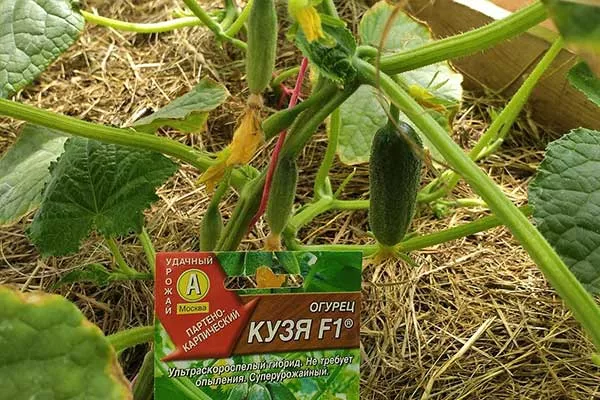
Kuzya F1 is a productive and fast-growing cucumber hybrid developed by Russian breeders. This variety is ideal for growing gherkins and pickles. Kuzya F1 cucumber promises a bountiful harvest of elegant fruits with uniquely small and closely spaced tubercles, which will enhance any dish and make a wonderful addition to a fresh salad.
Introduction to the variety
Kuzya F1 can successfully bear fruit in virtually any area of Russia, thanks to its adaptability to a variety of climates and weather conditions. This variety is ideal for both outdoor and greenhouse cultivation.
Originators
The early cucumber variety Kuzya was created by specialists (N. V. Nastenko, A. V. Kandoba and V. G. Kachainik) from the Aelita agricultural firm in 2006. The variety was officially registered in the State Register in 2007.
External characteristics of the plant and cucumbers
Kuzya is a tall, indeterminate plant with medium foliage density. A well-known characteristic is its ability to spread rapidly through lateral shoots, resulting in a voluminous bush that requires considerable space.
The hybrid also has other varietal characteristics:
- The leaves are bright green, the main stem is strong and pubescent, and the root system is well developed.
- During flowering, the bush is covered with large, rich yellow inflorescences. The plant is characterized by female pollination, with each cluster producing 4 to 6 gherkins.
- Bushes that reach medium size and height up to 180-200 cm are parthenocarpic, that is, capable of self-pollination.
- The tops of the medium-sized leaves are covered with a rough surface with slightly wavy edges.
- This variety is distinguished by its high commercial quality: cucumbers are formed in a balanced and neat manner.
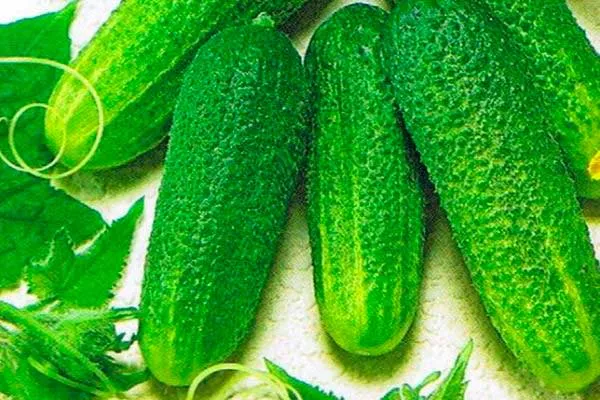
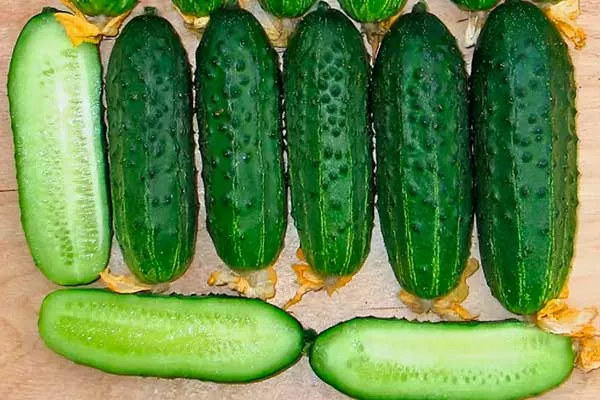
- The average weight of mature cucumbers on a healthy plant is 70-95 g, their length reaches a maximum of 7 cm, but can reach up to 10 cm. A special feature is the ability to harvest cucumbers from 1 to 4 cm long, known as pickles, and from 3 to 6 cm, called mini-gherkins.
- The cucumber has a regular oval-cylindrical shape.
- Mature vegetables are bright green in color with light longitudinal stripes and minor blurry spots.
- The skin is of medium thickness, decorated with small tubercles, slightly ribbed and covered with noticeable white spines.
- The pulp is tender and juicy, and does not contain any voids or other defects.
Taste and purpose
Kuzya impresses with its impeccable taste. The flesh of this variety's cucumbers is rich in flavor and has an optimal consistency, abundant in juice, and is free of voids, bitterness, and wateriness. The flavor is sweet with a refreshing aftertaste. The fruits are crisp and almost completely seedless (they are very small).
Its uses are multifaceted: the vegetable can be eaten raw, used to prepare various salads and appetizers, marinated and preserved, and is ideal for pickling.
When ripe, the yield
Kuzya is an early-ripening cucumber variety. The period from the emergence of primary shoots to fruit ripening takes 38-40 days. Continued fruiting is ensured only with regular fertilizing. The harvest is from late June to early July.
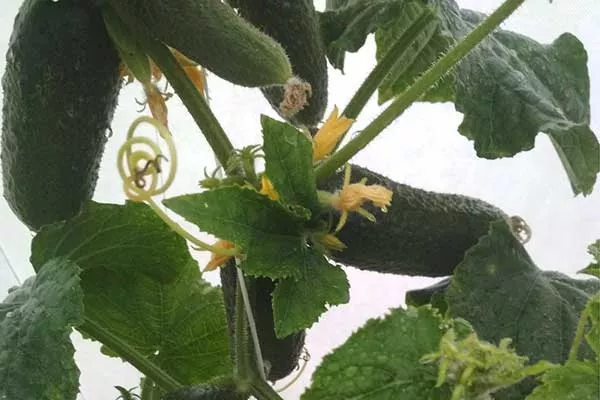
The yield of this cucumber variety is high, averaging 6-7.5 kg per square meter. In greenhouse conditions, productivity figures are even more impressive – up to 15.5-16 kg per square meter.
Soil requirements
This cucumber variety doesn't require any special soil conditions, but it does require fertile soil that is breathable, moist, slightly loose, and neutral in pH. Cucumbers especially thrive in sandy and loamy soils.
Climate conditions
Kuzya is a warm-loving plant. Therefore, it should be planted in a southeast-facing area where the sun shines longer, the air warms and circulates freely, and where there are no cold winds or stagnant conditions. It's important to note that the hybrid does not tolerate sudden temperature changes or prolonged shade.
Varieties of Kuzya cucumber
| Name | Plant type | Ripening period | Disease resistance |
|---|---|---|---|
| Kuzya F1 | Hybrid | Early ripening | High |
| Kuzya Plodov | Hybrid | Mid-season | Average |
| Brownie Kuzya | Hybrid | Early ripening | High |
Kuzya is a fundamental hybrid with several subvarieties. The most popular and well-known of these are:
- Kuzya Plodov. It stands out among other cucumbers with its fruits, which reach 15-20 cm in length. They have a slightly tart flavor and retain their freshness for a long time. This variety, with its abundant yield, is ideal for both fresh consumption and canning.
- Brownie Kuzya. This variety produces medium-sized fruits, ranging from 8 to 11 cm, and fairly productive, yielding 9 to 12 kg per square meter. It doesn't require much light, so it can be grown in shaded areas.
Positive and negative qualities
Landing features
Success in growing the Kuzya f1 hybrid, as well as its disease resistance, directly depends on the quality and correct planting of the seeds. They are typically grown from seedlings. The ideal sowing time is early May. Cucumber seedlings are transplanted into open ground between May 20 and June 10.
- ✓ The optimal soil temperature for sowing seeds should be at least +15°C.
- ✓ To prevent diseases, it is necessary to observe crop rotation, not planting cucumbers in the same place for more than 2 years in a row.
Site preparation
Before planting the Kuzya cucumber, the soil must be thoroughly prepared: loosen it and clear it of weeds, root debris, and debris. In the fall, the cucumber beds are enriched with organic mixtures such as manure, humus, or compost.
Planting seedlings
Experienced agricultural specialists use a 1% potassium permanganate solution to prepare seeds, which safely disinfects planting material from various pathogens. The seeds are marinated in this solution for 30-40 minutes, then dried on cheesecloth.
Please consider some important aspects:
- Sow seeds in pots filled with peat to a depth of 2 cm maximum. Typically, two seeds are placed in each pot.
- After filling the hole with soil, water them with warm water.
- Then place the pots in a room with a temperature of +26-27 degrees.
- For normal development of seedlings, it is necessary to provide them with light for 14-16 hours a day.
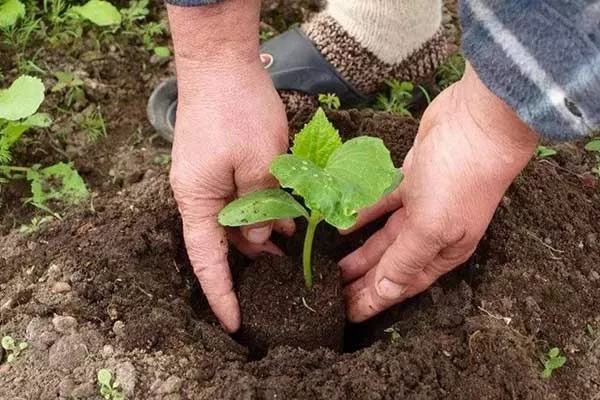
- Kuzya seedlings are transplanted into the garden beds when the cuttings have 4-5 healthy leaves. To do this, dig holes 5-8 cm deep, set the plant in place, and cover with substrate up to the level of the bottom leaf.
- After planting, cucumber bushes are moistened and covered with a thick plastic covering.
The distance between rows of Kuzya f1 cucumbers is 55-65 cm, and between plants in a row – 15-25 cm, which simplifies harvesting and agricultural work.
Care
To ensure Kuzya cucumbers deliver juiciness, sweetness, and excellent yield, experts strongly recommend following proper agricultural practices. This involves a few simple steps.
Watering
For cucumbers, it's preferable to use warm water that has been settled and slightly warmed. Water in the evening, focusing on the root system. It's recommended to water every 3-4 days, but in extreme heat and drought, you can increase the frequency to once every couple of days or even daily.

Equally important is loosening the soil around the cucumber bed, which should be done immediately after watering. Using a pitchfork, loosen the soil to a depth of 3 cm to improve air and water penetration and remove weeds.
Garter and shaping of bushes
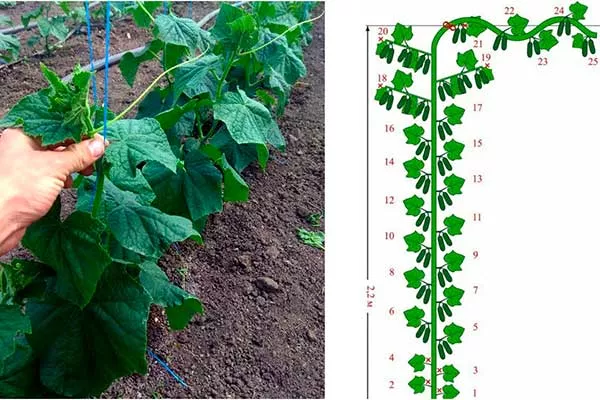
Vertical supports are used to support and shape cucumber plants grown in greenhouses. If cucumbers are grown outdoors, no staking is required.
Top dressing
During the growing season, Kuzya f1 cucumbers require three fertilizing sessions, which include organic mixtures and a limited amount of mineral fertilizers—superphosphate, urea, or potassium nitrate. The interval between fertilizing sessions is approximately 14-16 days.

Diseases and pests
Although Kuzya F1 has good disease resistance, failure to adhere to agricultural practices can lead to infection by certain pathogens:
- Ascochytosis or black rot. This is a disease most commonly found in greenhouse-grown cucumbers. When infected, water-soaked spots appear on the fruit and stems of the plants, which then wilt and turn black.
To protect plants, it is recommended to use the following preparations: Fundazol, Topaz, Trichocidin SP or Topsin-M. - Mosaic. This disease primarily affects the leaves of cucumber plants. Small wart-like blisters appear on the leaves, and the leaf blade becomes wrinkled, with folded edges. Agrochemicals such as Actellic, Aktara, or Farmayoda are used to combat the disease.
- Downy mildew (sometimes called pseudopowdery mildew). It is an infectious disease in which cucumber leaves become covered with round spots, and a white or grey coating forms on the underside.
If the problem is detected, the bushes are treated with specialized chemicals such as Ridomil Gold, Kurzat, or Profit. Some vegetable growers recommend using a solution of baking soda or onion peels, but only at the initial stage.
Harvesting and storage
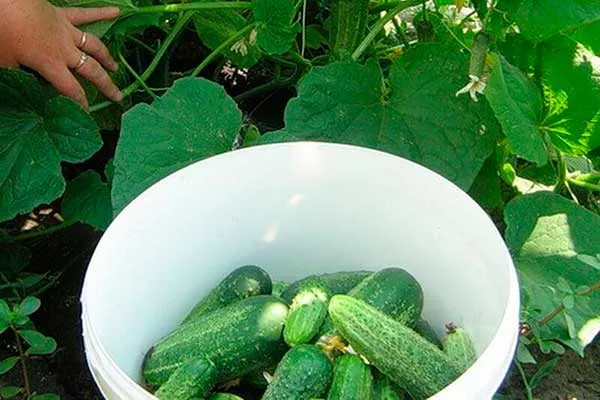
To prevent the roots from overgrowing, Kuzya f1 cucumbers should be harvested as they reach maturity. Therefore, harvesting occurs daily or every two days. It is recommended to store the fruits in cool conditions, at a temperature of approximately 5-6 degrees Celsius. Basements, such as cellars, are typically used for this purpose.
Reviews
The Kuzya hybrid yields not only ripe cucumbers but also mini gherkins and pickles. To ensure long-lasting and abundant fruit production, cucumbers require regular watering, loosening of the soil, and fertilization with minerals. This will ensure juiciness and sweetness without any bitterness.