
Kurazh F1 is an early-ripening hybrid cucumber variety with female flowering, designed for growing under plastic covers and in open ground. It begins bearing fruit 1.5 months after the first shoots emerge.
This hybrid produces dark green cucumbers 12-16 cm long and weighing 120-130 g, with excellent flavor. The variety is also attractive for its high yield – approximately 12 kg per square meter.
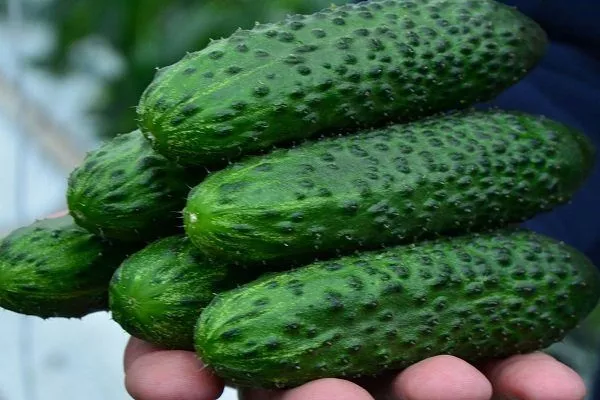
Cucumbers Courage are early ripening
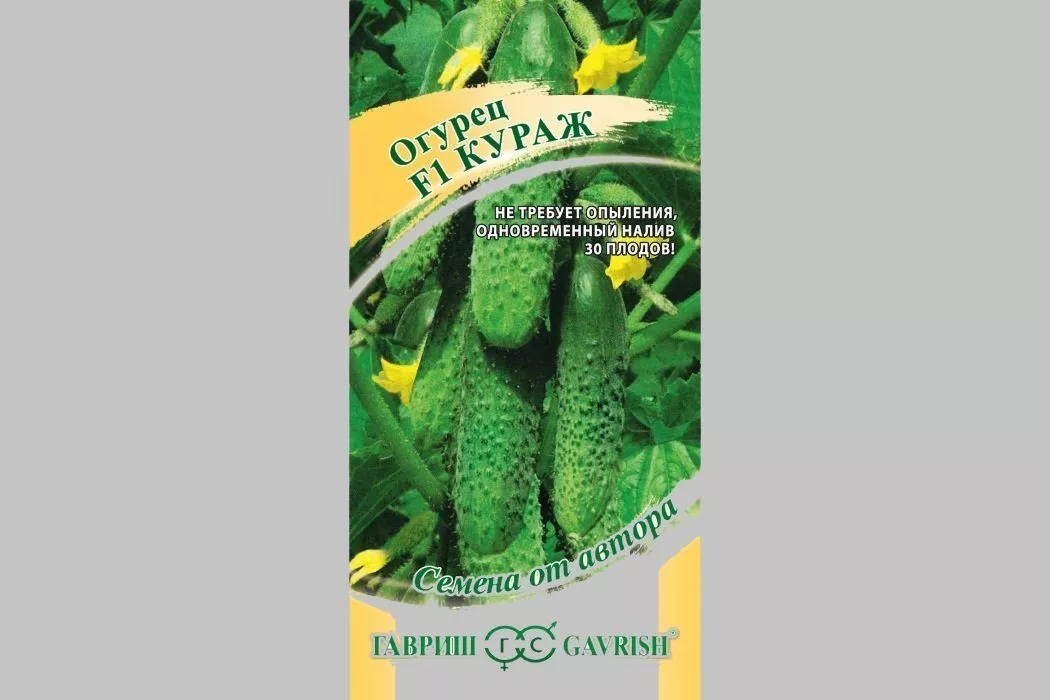
Cucumber seeds Courage
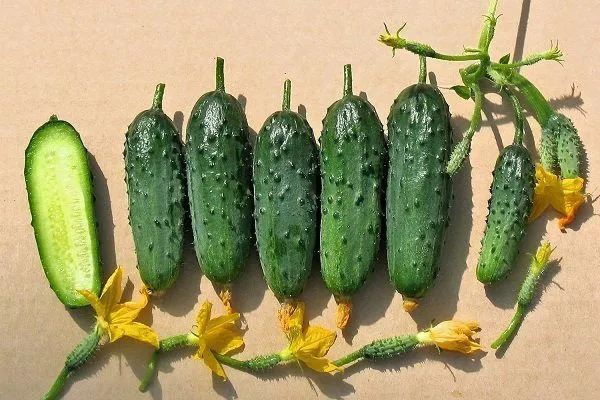
Cucumbers Courage
Description of the variety
The Kurazh F1 cucumber was developed by Russian breeders from the Gavrish agrofirm, and its authors are Gavrish S. F., Shamshina A. V., and Portyankin A. E. The variety was entered into the State Register of Breeding Achievements in 2002. The most suitable locations for its cultivation are:
- Stavropol Krai;
- Krasnodar Krai;
- Rostov region.
Let's take a closer look at how the hybrid blooms and bears fruit.
Bushes
According to the variety description, the Courage cucumber bush has the following characteristics:
- cluster (bouquet) type of flowering - with proper care, 2 to 4 clusters of ovaries are formed in the nodes of the stem, and 3 to 8 buds appear on one ovary in the axils of the leaves, and up to 25-30 ovaries can be formed on one bush at the same time;
- indeterminate - the main stem grows continuously, so by the end of summer the height of the central shoot can reach 3-3.5 m;
- parthenocarpic - does not require pollination by bees or other insects, which has a positive effect on the ovary, since there is no dependence on weather conditions and insects;
- with moderate (close to average) ability to form new shoots;
- medium-branched and medium-sized, covered with green, wide leaves of medium size, smooth to the touch and with slightly pronounced teeth along the edges.
The bushes have a well-developed root system and grow freely at a planting density of 2.5-3 plants per 1 sq. m in a greenhouse.
Fruit
Cucumbers of the Courage hybrid have the following characteristics:
- weight – small, on average 100-140 g;
- length – cucumbers on the main stem reach 13-16 cm in length, and on the side shoots they often reach 12-15 cm, since they are less well supplied with nutrients and moisture;
- diameter (volume) – about 4-4.5 cm;
- form - correct cylindrical, with weakly expressed longitudinal ribs;
- color – dark green with a light waxy coating and light longitudinal stripes running up to 1/3 of the length of the cucumber;
- tuberosity – the skin is covered with frequent medium-sized tubercles, each of which has light-colored spines;
- taste - the light green flesh is juicy, tender and sweetish, it crunches pleasantly when bitten, it is not bitter, but in terms of taste it is somewhat inferior to cucumber varieties pollinated by bees and bred specifically for fresh consumption;
- purpose – universal, so the cucumbers can be eaten fresh, as well as preserved (salted, pickled);
- shelf life – cucumbers can be stored without loss of taste and commercial qualities for 10 days after harvesting.
- ✓ Self-pollination ability makes it ideal for greenhouse cultivation.
- ✓ High resistance to powdery mildew and other common cucumber diseases.
Table of characteristics
The main characteristics of the hybrid can be found below:
| Parameter | Description |
| Ripening period | Kurazh is an early-ripening variety, so mass harvesting begins 1.5 months after sowing. In greenhouse conditions, this period is reduced by approximately 10 days. The advantage of this variety is that it can produce a harvest in winter (50-55 days after planting) or in spring and summer (35-40 days after emergence). |
| Growing conditions | The plant is parthenocarpic and has a female flowering type, so it can be grown both in open ground and in a greenhouse or hothouse. |
| Productivity | Yields depend on growing conditions. If grown in a greenhouse, up to 40-50 kg of cucumbers can be harvested per square meter. When grown outdoors, 16-18 kg of cucumbers can be harvested per square meter. |
| Weather resistance | The hybrid is resistant to adverse weather conditions and is ideal for second-crop cultivation, which is especially relevant for southern regions. In this case, the yield will reach 12 kg per square meter of bed. |
| Disease resistance | This variety is resistant to powdery mildew (true and false), and is also resistant to root rot, olive spot and cucumber mosaic virus. |
| Harvesting | To avoid stunting the cucumber plant's growth, it's best to harvest the first fruits early, when the cucumbers reach 10-11 cm in length. Subsequently, they should be harvested as they ripen, avoiding over-ripening them on the plant, as this will inhibit the formation of new ovaries and impact yield. |
A review of the Kurazh cucumber variety can be seen in the following video:
Agricultural technology
Cucumber Courage must be cultivated in compliance with the following agricultural practices:
- The crop can be grown in two ways: using seedlings or by directly sowing seeds into open ground.
- The optimal time for sowing seeds during summer-fall rotation is the first ten days of June, and for transplanting seedlings into the ground is the first ten days of July. However, planting can continue until the end of July. In any case, cucumbers should be planted outdoors when the soil temperature at a depth of 10-15 cm has warmed to 15°C.
Don't delay planting too long, as with each week of delay, the yield per square meter will drop by approximately 1 kg due to decreased light.
- Plant cucumbers in well-lit areas protected from wind, drafts, and cold. It's best to avoid overheating, as the plant thrives in moisture. A little shade during the hottest parts of the day is welcome.
- For this crop, choose a light-textured soil with a high humus content. Loams, sandy loams, and fertile black soil are good options.
- Plant cucumbers in a plot where beans, potatoes, onions, cabbage, carrots, or other root vegetables grew last year. Watermelons, melons, pumpkins, and other melons are the worst predecessors.
- Before planting cucumbers, prepare the soil. It's recommended to apply organic fertilizer in the fall at a rate of 3 cups of ash, 3 buckets of manure, and 70 grams of nitroammophoska per square meter. In the spring, dig the soil over with a spade and, if necessary, add compost at a rate of 1 bucket per square meter. Then, cover the soil with plastic wrap to warm it up.
- Proper care for vegetable crops includes watering, fertilizing, and protecting seedlings from pests and insects. It's equally important to properly shape the bushes and partially remove leaf layers, leaving no petioles.
- ✓ The optimal soil pH should be in the range of 6.0-6.8 for maximum nutrient absorption.
- ✓ The soil must be well-drained to avoid waterlogging and root rot.
Seed preparation
Before planting, seeds must be treated to remove harmful microorganisms. This is done in several stages:
- Soak the seeds in a salt solution (2 tablespoons of salt per 1 liter of water) for 20 minutes. Any seeds that float to the surface are not viable and should be discarded.
- Rinse the seeds that have settled to the bottom in warm water and soak them for 30 minutes in a pink solution of potassium permanganate at room temperature. You can also use special disinfectants, such as Epin-Extra or Baikal EM-1, to disinfect them.
- Rinse the seeds thoroughly and place them in a piece of cloth. Then water them generously to prevent them from drying out. To ensure a warm and humid microclimate, place the seeds under a plastic bag. They will sprout as early as four days. If sprouts don't appear even within a week, the seedlings should be discarded as they are unsuitable for planting.
- Place the sprouted seeds in a damp cloth on the bottom shelf of the refrigerator and harden them for two days to build their immunity and increase their resistance to stress.
Properly treated seeds of this hybrid have a germination rate of over 95%.
Direct sowing of seeds into open ground
Planting should only begin after the soil temperature has risen to 10–15°C. If seeds are planted in cold soil, at best, they will produce weak, stunted plants with poor fruiting.
To avoid these consequences, you can prepare a warm bed for your cucumber. This will trigger biological reactions similar to those occurring in a compost heap, creating a greenhouse-like environment for the plant. To create a warm bed, follow these steps:
- Dig a trench of the required size to a depth of 1-2 shovel blades.
- Lay the first layer of drainage in the form of tree branches, with smaller branches stacked on larger ones.
- Pour a second layer of drainage from paper, dry leaves, food waste, sawdust and shavings.
- Compact everything, water generously with warm water, and then with cow dung (1:10) at the rate of 1 bucket per 1 sq. m.
- Place the final layer – fertile soil mixed with humus or compost, at a rate of 1-2 buckets per 1 sq. m.
- Decorate the borders of the garden bed with boards.
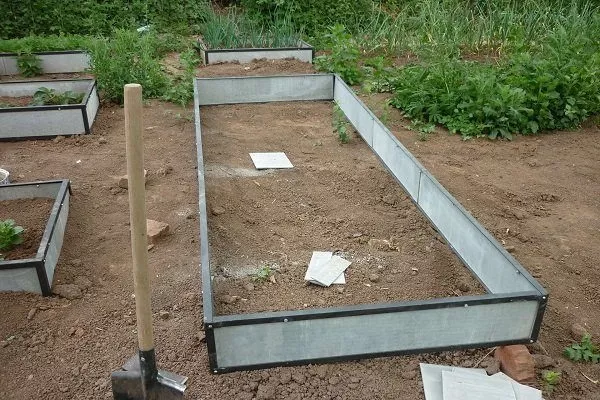
In such a plot, you can grow the Courage cucumber, which can be done in two ways:
- HorizontalWith this method of cultivation, the cucumber vines will spread along the ground. This eliminates the need for shaping the plants; all that's required is to distribute them evenly across the bed.
- VerticalThis method involves creating supports for the crop, allowing the bushes to grow upward. These supports must be properly formed, otherwise, yields will suffer.
The vigorous cucumber Courage is best grown on a trellis, which significantly facilitates ventilation of the plant during the ripening process, as well as the harvesting process itself.
Gardeners often prefer the vertical method because it saves space in the garden bed. In any case, sowing seeds is done in the following order:
- Prepare holes in the bed at 50 cm intervals. The optimal distance between rows is also 50 cm. Therefore, the planting pattern is 50 x 50 cm.
- Add 2 teaspoons of urea and a handful of compost to each hole. Mix everything thoroughly with soil and water.
- Throw 2-3 seeds into each furrow to a depth of at least 3-4 cm, and then cover with soil.
- Cover the sown seeds with plastic wrap or other material to create a greenhouse effect. Once the first shoots emerge, lift the cover. Once the air temperature reaches 15°C, remove it completely.
A few weeks after planting, seedlings will appear, which must be thinned out, leaving at least 35 cm between seedlings.
Planting through seedlings
The seedling method allows for an early harvest, but is more labor-intensive, as it requires growing strong seedlings. It's best to sow the seeds in individual 0.5-liter peat pots, which can be planted immediately in their permanent location without removing the seedlings from the container or disturbing the delicate root system of the cucumber seedlings.
After sowing, the seed containers should be kept in a room where the temperature is at least 27-28°C. For this purpose, the containers can be kept near a radiator or in the kitchen. Once the first shoots appear, the seedlings should be moved to a cooler location and kept at a temperature no higher than 18°C to prevent them from stretching excessively. To achieve this, the containers can be moved to a greenhouse, with one or more large barrels of water placed nearby to act as a heat accumulator.
A week before planting outdoors, begin hardening off the seedlings by placing them on the balcony or outside for a few hours daily. The weather should be warm and windless. This will help them adapt more quickly to their permanent location.
Seedlings should be transplanted into the ground at the age of 3-4 weeks, when they have 3-4 true leaves and a root system of 4-5 roots 8-10 cm long. The optimal planting pattern is 50x50 cm.
Caring for seedlings
To obtain a good harvest, crops must be properly cared for, with all necessary agricultural practices carried out in a timely manner.
Watering
The Courage hybrid is a moisture-loving plant, so watering should be generous and regular. Use warm water that has been left in the sun for 6-8 hours.
Water the cucumbers It's important to water the bed so that it doesn't stagnate. Avoid pouring water under the bushes to avoid washing away the soil from the roots, which are close to the soil surface. When watering, simply moisten the entire bed. Another option is to create shallow furrows between the bushes to allow water to flow.
In any case, the plant should be watered once every 2-3 days at a rate of 4-5 liters per plant. Of course, when growing cucumbers outdoors, the watering schedule should be adjusted depending on weather conditions. If the weather is hot and dry, the beds should be watered daily. If the summer is cold and cloudy, watering should be reduced.
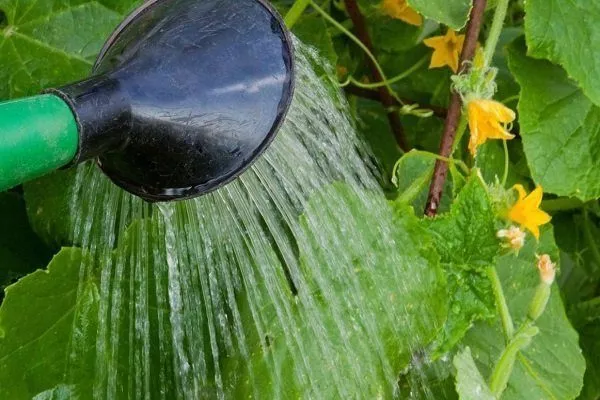
It is important to remember that cucumbers require the most abundant watering at the following stages of their development:
- when the first ovaries are formed;
- during the period of mass fruiting;
- after the fruit harvest is complete.
During these periods, the bushes need to be watered every 2-3 days at a rate of 9-12 liters of water per 1 square meter. If the plant experiences a lack of moisture, this will cause the cucumbers to become bitter, significantly reducing their flavor.
Top dressing
80% of crop yields depend on timely planting application of fertilizers and watering. It's recommended to fertilize the plant four times per season. In hot weather, fertilizer should be applied directly to the soil. In other conditions, it's best to spray cucumbers with nutrient solutions.
The best time to fertilize is the evening of a cloudy day. It's best if it rains the day before.
An approximate feeding scheme for the Courage cucumber looks like this:
- On the 15th day after planting in the groundWater the plant with a solution of fresh manure (1:10) or chicken manure (1:15). An infusion of green grass can also be used for the same purpose. To prepare it, finely chop the grass, fill a saucepan one-third full, add water, cover tightly with a lid, and leave in the sun for 3-4 days. Once the characteristic odor appears, strain the infusion, dilute with water (1:5), and use as directed.
- In the flowering phaseWater the plant again with the fresh herb infusion. Cucumbers can also be fertilized with the following:
- A mineral solution of 35-40 g of simple superphosphate, 25 g each of potassium nitrate and ammonium nitrate per 10 liters of water. A glass of sifted wood ash can be added to the mixture. An alternative option is an ash infusion: pour 500 g of powder into 10 liters of water, let it steep for 3-4 hours, strain, and use as directed.
- A mineral foliar fertilizer mix consisting of 3 g of simple superphosphate, 10 g of boric acid and 7-10 crystals of potassium permanganate, or 3 g of boric acid and 100 g of granulated sugar per 1 liter of water. When preparing the latter mix, use hot water, otherwise the sugar will not dissolve completely.
- At the initial stage of mass fruitingFeed the cucumbers again with the herbal infusion, as well as a mineral solution of 35 g of potassium nitrate and 50 g of urea per 10 liters of water. The bushes should also be sprayed with a urea solution (10-15 g per 10 liters of water).
- 10-12 days after the previous feedingWater the plant with an infusion of rotted hay (infused for 2-3 days) or ash (200 g per 10 liters of water), as well as a soda solution (25-30 g of baking soda per 10 liters of water). The leaves should also be sprayed with a urea solution (15 g per 10 liters of water).
Bush formation
When growing vertically, proper vine formation is essential to ensure that this bouquet-flowering variety produces full fruit. This is because, as the cucumbers ripen, large leaves overcrowd the fruit, preventing them from receiving adequate light. As a result, their development lags, the tops turn yellow and fall off, and the ovaries begin to swell and slowly die.
To prevent such consequences, pinch shoots and buds promptly, and remove unwanted leaves. Here's the optimal pattern for shaping a single-stem bush:
- In the axils of the first 4-6 leaves, remove all ovaries and lateral shoots so that the plant directs all its energy to the formation of a powerful root system and leaf apparatus.
- Starting with the 5th to 7th leaf, until the plant reaches the trellis (2.2 m), remove only the lateral shoots in the axils, cutting off the last leaves and leaving petioles 3-5 cm long. Be careful not to overdo it, as a sudden loss of foliage is very stressful for the plant. Therefore, remove no more than 3-4 leaves at a time. After 24 hours, the bushes can be fertilized with Novosil.
- Next, train the plant along the trellis and pinch off the top when it reaches the neighboring plant or the greenhouse ceiling. Wrap the top twice around the support beforehand. At 2-3 nodes under the trellis, you can leave not only the buds but also the shoots, pinching them after the second leaf.
Thanks to this formation, it is possible to provide the plant with maximum illumination, which will contribute to greater photosynthetic activity of the leaves and the formation of ovaries.
When grown horizontally, the plant's vines don't need to be trained. However, they should be evenly distributed across the soil to ensure adequate light.
To learn how to shape cucumbers, watch this video:
Protection from diseases and pests
The authors claim the variety is tolerant to powdery mildew, mosaic, olive spot, and root rot, but is susceptible to other diseases. These include:
- FusariumIt develops unexpectedly and rapidly, so the bush may wilt within 12-24 hours. Affected plants should be removed from the garden bed and destroyed. As a preventative measure, seeds should be doused with boiling water or soaked in a bright pink solution of potassium permanganate before planting.
- AnthracnoseA fungal disease that manifests as white or light yellow spots on the leaves. The fruits also develop shallow but wide dents and a pink slime or coating. They should be discarded as they are too bitter.
Diseased bushes will need to be removed, and the remaining ones will need to be sprayed with a solution of Bordeaux mixture (1%) or copper oxychloride (0.5%). These treatments should be carried out several times a week, stopping 3-4 days before harvest. Every 10-12 days, the bushes can also be sprayed with a suspension of bleach (30-35 g per 10 liters of water). Stop treatment at least three weeks before harvest. Effective products include Hom and Ridomil-Gold. - BacteriosisIt manifests itself as small "ulcers" on the cotyledons and brown, angular spots on the leaves, which become convex. When humidity is high, cloudy, dark-brown droplets appear on the underside of the foliage. The affected areas die, and holes appear on the leaves.
The disease gradually spreads to the vines and fruit. The diseased plant should be removed, and the remaining bushes should be watered with a 2-3% Bordeaux mixture solution. - White rot (sclerotinia)It thrives in high humidity conditions. White spots covered with a thin coating appear on the vines, foliage, and cucumbers. Gradually, they become soft, translucent, and watery. The affected areas must be cut off, otherwise the entire plant will rot. Treat the cut areas with a mixture of 2 g of copper sulfate and 10 g of urea per 10 liters of water. If the entire bush has to be uprooted, sprinkle the soil in the affected area with crushed charcoal or slaked lime at a rate of 200 g per 1 sq. m.
- CladosporiosisLeaves become covered with gray or brown spots, then dry out and die. The fungus can spread to the fruit, which must be picked and discarded, as they develop an unpleasant flavor when infected. As a preventative measure, the greenhouse should be ventilated daily. Affected plants and soil should be treated with a 1% Bordeaux mixture (100 ml per 10 liters) every 8-12 days. The recommended application rate per plant is 300-500 ml.
In addition to the diseases listed, the Courage cucumber is also susceptible to the following pests:
- AphidLeaves become spotted and curl, while flowers and ovaries fall off. Affected plants should be sprayed with an infusion of tobacco dust or wood ash, or a soap solution. Insecticides such as Fitoverm, Strela, and Inta-Vir are helpful.
- ThripsSmall insects appear on leaves and vines, which become covered in beige and yellow spots. These quickly turn brown, and the bush dries up. To repel the pest, spray the plant with an infusion of yarrow or hot pepper. A 0.5% solution of Karbofos or Actellic will help.
- Spider miteA characteristic web-like pattern can be seen on the leaves and stems. Affected areas turn light green, then pale yellow. They eventually die. Affected leaves should be washed with soapy water and sprayed with an infusion of yarrow, celandine, or dandelion. Acaricides such as Akartan, Aldicarb, Zolon, Metaphos, Fosfamidom, Cidial, and Bikon are helpful.
- SlugThe pests leave behind sticky silvery trails. Affected plants bear fruit poorly, and the fruit doesn't store well and rots quickly. To repel slugs, loosen the soil and sprinkle it with ash or tobacco dust. Products such as Metaldehyde and Groza can help.
- WhiteflyThe butterfly larvae leave a sticky substance on leaves and stems. Cucumbers turn black and die. Fitoverm and Admiral are effective against this pest. Identified larvae can be removed manually or with sticky tape.
- Root nematodeIt settles on the roots and sucks their juices, causing the plant to weaken and die. Diseased plants should be dug up and burned, and the underlying soil layer, at least 50 cm thick, should be removed and replaced.
To protect cucumbers from pest infestations, the soil should be dug deep in the fall and all weeds and plant debris should be removed.
You can learn more about cucumber diseases and pests here.
Features of growing in a greenhouse
If the cucumbers are of the Courage variety grown in a greenhouse, the following features should be taken into account:
- In the fall, the soil surface should be cleared of plant debris and weeds. It's also recommended to replace the top 5-7 cm of soil 2-3 times a year to remove any pathogenic microflora from the greenhouse. Any soil deficiency can be replenished with a 1:1 mixture of loam and compost or rotted manure.
In the spring, the beds should be dug over again and mineral fertilizers should be added: 30 g of urea, 40 g of superphosphate and 20 g of potassium fertilizer per 1 sq. m. - Form the bushes into one stem to increase the crop yield.
- Remove lateral shoots from the main stem in the axils of 4 formed leaves.
- There is no need to regulate the number of ovaries.
- Provide the plant with a good level of lighting.
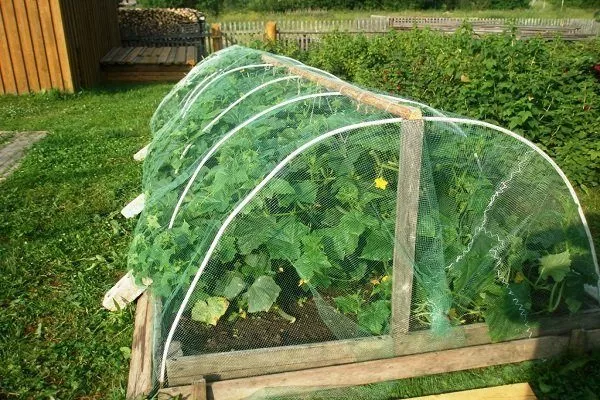
If the leaves begin to wilt, water them or spray them with a warm chalk solution (200-250 g per 10 liters). This will significantly lower the air temperature in the greenhouse and increase the humidity.
Harvesting and storage
Harvesting can begin 40 days after germination. This typically occurs in mid-July. The first green fruits are harvested when they reach 10-11 cm.
It's important to remember that the plant produces clusters of ovaries, so the more frequently you pick the fruit, the faster the ovaries will ripen, increasing the yield per bush to 10 kg, and per square meter of garden bed to 16-20 cm.
From then on, cucumbers should be harvested as they ripen, preferably every two days. Avoid leaving them on the vines for too long, as this will negatively affect the taste of the cucumbers and reduce the plant's yield.
Cucumbers should be picked unripe to avoid bitterness. Fully ripe cucumbers are only suitable for seeding, but the Kurazh variety cannot be propagated this way.
The best time to harvest is early morning or late evening. Firm and juicy cucumbers should not be picked by hand, twisted, or pulled by the stems, as this could kill the plant. They should be carefully cut with a sharp knife or in sections, leaving the stem attached to the plant.
If cucumbers are picked from the bush and immediately stored in a cool, dark place (+7…+10°C) with constant humidity of 80-90%, they will retain their flavor and shelf life for 8-10 days. It's recommended to cover them with burlap or another opaque, permeable material. If stored outdoors, the fruit will become limp and lose its attractiveness within 2-3 days.
Before storing cucumbers in the cellar, they should be sorted, removing any that show signs of damage, deformation, or other abnormalities. Good cucumbers are best stored not on the floor, but on wooden pallets, cardboard boxes, or crates. Line the bottoms of these boxes with plastic beforehand.
Pros and cons
The strengths of the Courage variety are:
- high yield (6-12 kg per unit area);
- the ability to self-pollinate, so it can be successfully grown in a greenhouse without creating special conditions for the formation of ovaries;
- resistance to many cucumber diseases and heat;
- fruiting with cucumbers with excellent taste and commercial qualities;
- good transportability;
- possibility of cultivation in different climatic regions.
As for the disadvantages of the hybrid, they look like this:
- high cost of seed material;
- demanding in terms of care and bush formation;
- the possibility of bitterness and voids appearing in the fruit due to insufficient watering.
The Kurazh cucumber is a hybrid that appeals to gardeners for its early maturity, early ripening, and excellent flavor. The plant has a cluster-type arrangement of ovaries, resulting in high and consistent yields. Furthermore, it is parthenocarpic, so it does not require pollination by bees or other insects.