
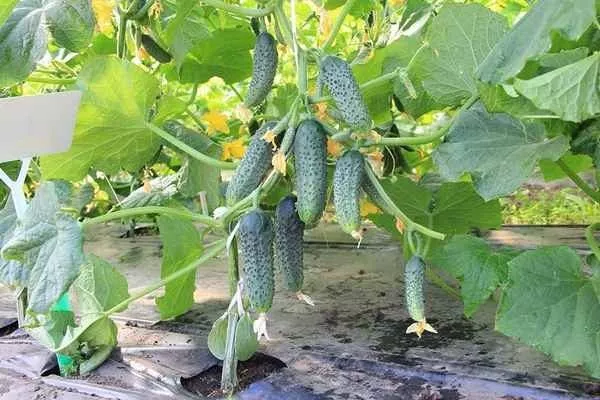
Connie is a hybrid cucumber ideal for both open-air and indoor gardening, such as under temporary plastic structures. This variety does not require pollination from other plants, is parthenocarpic, and is known for its excellent quality. It is sometimes referred to as Connie F1, reflecting its hybridity.
Introduction to the variety
This variety produces bushes with constant growth, reaching considerable height and possessing a moderate level of branching and leaf count. Ovaries form in clusters. Connie's fruits are uniform in size, are not prone to overgrowth, and do not turn yellow, maintaining a pleasing appearance for a long time.
Originators
Connie is the result of careful breeding by our scientists and was registered in the Russian State Register in 1999. This hybrid is ideal for both greenhouse and outdoor cultivation during the spring and summer seasons.
The copyright belongs to the St. Petersburg public organization “Union of Seed Producers Association Biotechnics”.
Characteristic features of the appearance of the plant and fruits
Connie is known for its indeterminate growth, so the shoots continue to grow until they mature. This variety produces fruits in clusters. Flowering occurs in the female type, but the fruiting period is extended. It is impossible to collect seeds for subsequent sowing from this hybrid, so new seed must be purchased each year.
Main varietal characteristics:
- The bushes are quite large and require plenty of space to fully develop. They can reach a height of 200 cm when grown vertically on a support.
- The stems of this hybrid are strong, the shoots are of medium branching.
- The leaves of the plant have a classic green color, but with an uneven pattern on the blade.
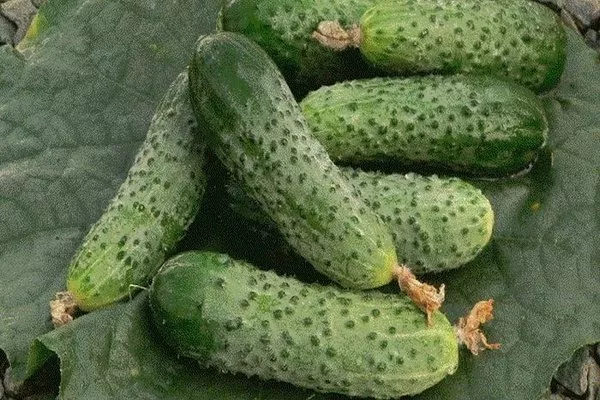
- Cucumbers with a cylindrical shape and small parameters reach a maximum length of 9-10 cm with a diameter of 2 cm.
- The average weight of one fruit is 75 g. But the weight can be either 60 g or 85 g.
- The skin has a delicate texture and a bright green tone with small bumps and light fluff.
- The pulp of the fruit is dense, juicy, with a pleasant crunchy sound and a sweet taste without bitterness, which makes it high-quality.
- When viewed cross-sectionally, the cucumber greens appear round.
Purpose and taste of fruits
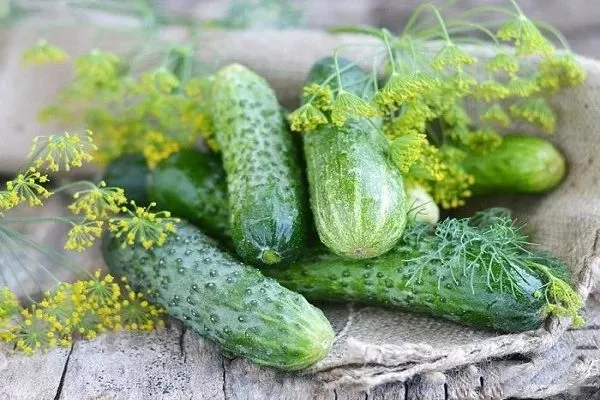
The fruits of this variety are characterized by their sweetness and lack of bitterness, making them particularly appetizing. Connie is versatile, allowing them to be eaten fresh, used in salads, vegetable platters, smoothies, and juices. Their small size makes them ideal for canning and pickling.
Maturation
This early hybrid reaches maturity in 45-50 days of vegetation. Its distinctive feature is parthenocarpy—the bushes are predominantly female flowers, which produce ovaries without the need for pollination.
Productivity
This variety is distinguished by its generous yield. The first cucumbers can be harvested within a month and a half of sowing, with a single plant yielding up to 8-9 kg. The second harvest reaches 13 to 16 kg per square meter.
| Parameter | Indicator |
|---|---|
| Average yield per bush | 8-9 kg |
| Maximum yield per square meter | 16 kg |
| Period of active fruiting | 45-60 days |
| Number of fruits per node | 3-5 pcs |
| Output of marketable products | 92-95% |
Composition, calorie content and beneficial properties
The calorie content of cucumbers is low - only 14 kcal per 100 g. Cucumbers contain the following vitamins: A, B1, B2, B4, B5, B6, B9, C, E, H, K, PP and beta-carotene, as well as minerals: potassium, calcium, silicon, magnesium, sodium, phosphorus, iron, iodine, copper, selenium, fluorine, zinc.
Regular consumption of cucumbers has a beneficial effect on human health:
- restores water-salt balance;
- accelerates metabolism;
- dilates blood vessels;
- stabilizes blood pressure;
- helps neutralize cholesterol plaques;
- promotes the dissolution of stones and sand in the kidneys;
- normalizes the function of the pancreas;
- improves blood counts.
Necessary climatic conditions
For optimal plant growth, a location in full sun is preferable. The hybrid is resistant to low temperatures and can withstand short-term frost damage. It thrives in partial shade, which protects the leaves from drought.
Hybrid agricultural technology
To get a productive Connie cucumber, simply follow these basic rules: choose the right time for planting or sowing, ensure regular watering, etc. To achieve maximum productivity and extend the harvest period, it is recommended to train the bush.
Planting by seed
Before planting the seeds in the soil, they are pre-treated. The seeds are soaked in water with potassium permanganate added for 30 minutes, then gently rinsed and spread on a damp cotton cloth. At a room temperature of 25-26°C, the seeds will germinate and produce green shoots within 2-3 days.
Sowing is carried out in the standard way, but the seeds are placed with the pointed side down at a depth of no more than 2.5-3 cm with an interval of 20-25 between them.
Planting using seedlings
Seedlings are grown in 500-600 ml containers to avoid picking and damaging the root system. Use a general-purpose potting mix (loose and light).
Peculiarities:
- When sprouts appear, be sure to move the seedlings to a sunny place, avoiding drafts.
- At the first stage of leaf growth, feed the seedlings with an amino acid solution of Speedfol Amino Start.
- Seedlings are planted in a greenhouse after May 20-25, and in open ground - from June 1-10.
Care
At the initial stage of growth, the plant is protected from night frosts by covering it with a layer of agrofibre.
Maintenance schedule
- Days 1-10: Daily temperature monitoring under cover
- Days 10-20: First loosening of the inter-rows
- Day 20-30: Installing supports for tying
- Day 30-40: first feeding with complex fertilizer
- Day 40-50: beginning of bush formation
Basics of Hydration
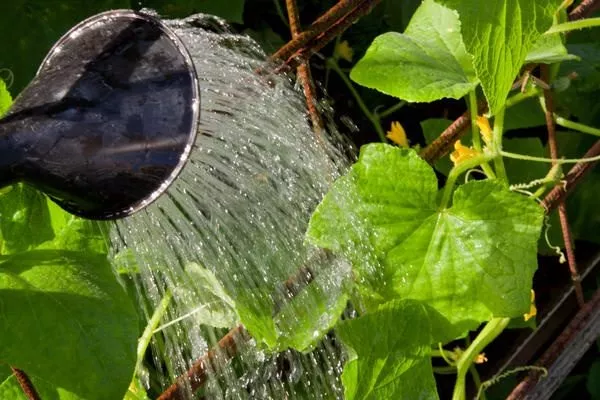
Initially, water the bushes moderately once a week, then increase the watering frequency to three times a week during budding and fruit ripening. Apply water directly to the base of the bush, preferably in the evening.
Irrigation can be simplified by installing a drip irrigation system. The amount of water needed depends on the depth of the root system, which varies depending on the growing season:
- when the seedlings are at a depth of no more than 3-3.5 cm, 2.5-3.5 liters of water are required per 1 sq. m;
- During the flowering and fruiting period, when the roots reach a depth of 15-17 cm, the volume of water increases to 15-20 liters.
Land cultivation
Regular loosening and clearing of weeds, removing them by the roots, is essential. To retain moisture, prevent unwanted plant growth, and provide additional nutrients, the top layer of soil is covered with straw, hay, peat, compost, or sawdust.
Fertilization
The selection of fertilizers for plants depends on their current condition:
- before flowering, Agricola-5 is used;
- during budding, organic compounds, superphosphates and potassium sulfate are needed;
- During the period of intensive fruit ripening, include nitrophoska, cow manure and any other universal organic mixtures, as well as potassium sulfate.
Fertilizing is carried out every 10 days until the end of the harvest.
| Development phase | Fertilizer | Consumption rate |
|---|---|---|
| Before flowering | Agricola-5 | 25 g/10 l of water |
| Budding | Potassium sulfate | 15 g/10 l of water |
| Fruiting | Nitrophoska | 30 g/10 l of water |
| Mass gathering | Mullein (1:10) | 1 l/plant |
Formation
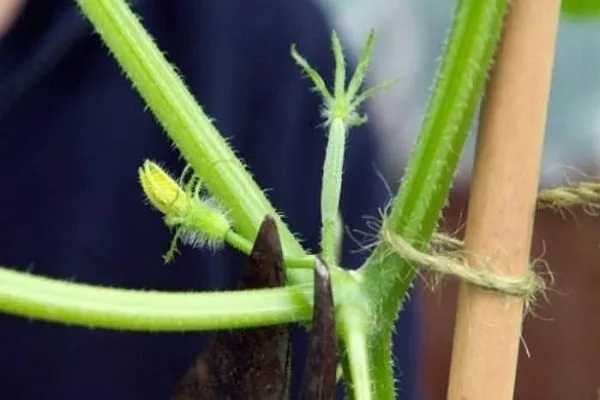
The bush is trained to ensure that leaves and stems do not obstruct the plant's light and air. It's also important to perform sanitary pruning, which involves removing dead branches, leaves, flowers, diseased areas, and vines that cause the bush to become overly dense.
Shaping is performed to limit growth. It occurs as follows:
- leave the first four leaves without ovaries and shoots;
- at the fifth and sixth levels, cut the shoots to 18-22 cm;
- at the seventh and eighth levels – 30-45 cm;
- shorten the upper branches to 50-60 cm in length;
- cut the main stem at a height of 140-150 cm.
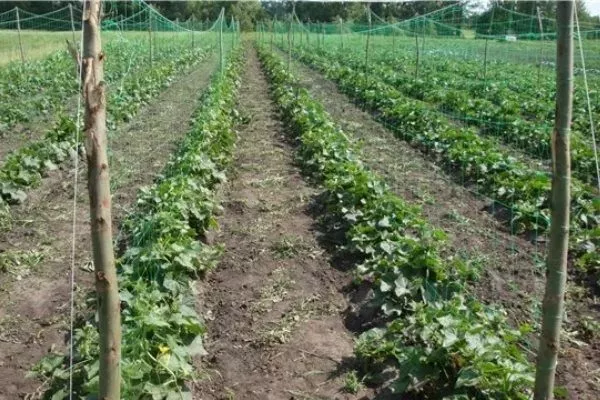
Hanging
For greenhouse cucumbers, maintenance is an important step aimed at providing them with sufficient light, preventing rot and mold, increasing yields, and saving space.
There are several hanging options that require securing the stems to solid frame elements:
- using a special mesh;
- installation of vertically stretched ropes;
- V-shaped suspension, in which two wires are stretched for each bush, forming a V-shaped structure that divides the bush into two parts.
Growth restriction
This process involves carefully removing the apical portion of the stem to stimulate the development of lateral branches and increase the plant's productivity. In the case of cucumbers like Connie, a technique called blinding is used. It's based on the principle that the higher the branch, the more ovaries remain on it.
The formation of the bush occurs as follows:
- The first four leaves are left without ovaries and shoots;
- At the fifth and sixth levels, shoots are removed by 20 cm;
- At the seventh and eighth levels – 30-40 cm;
- The upper shoots are cut to 50 cm in length;
- The main stem is cut at a height of 1.5 meters.
Features of cultivation and possible difficulties
To create ideal conditions for cucumber growth, it is important to consider their specific characteristics:
- To maintain a stable temperature and prevent fungal infections, it is necessary to regularly ventilate the greenhouse;
- During warm periods, it is important to maintain the required level of humidity by using water reservoirs in the greenhouse;
- To protect the leaves from sunburn, you can paint the walls of the greenhouse using a spray bottle with chalk;
- Mulching the soil with sawdust and dry grass will help reduce the amount of watering, destroy weeds and provide the plant with nutrients;
- In greenhouse conditions, you can stimulate more active growth of ovaries by increasing the carbon dioxide content in the air: for this purpose, you can place a barrel of compost in the greenhouse, which will produce carbon dioxide during the fermentation process;
- You can extend the daylight hours for cucumbers by using additional light sources; it is recommended to use fluorescent lamps for this purpose.
Diseases and pests
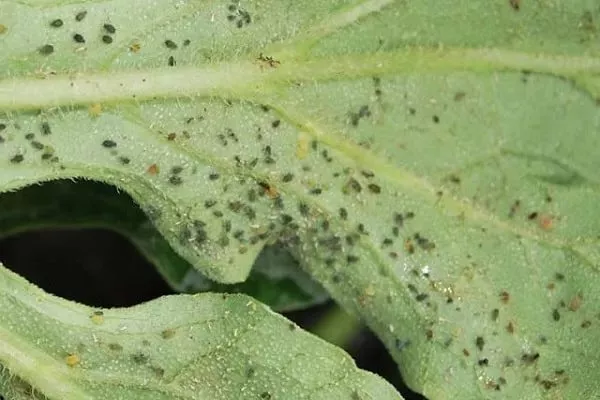
Connie is disease-resistant. This cucumber can successfully fight powdery mildew and root rot if properly cared for. However, cucumber plants are often susceptible to anthracnose, which causes yellowing and eventually death of the foliage. To protect the plant, use wood dust or a soap solution.
Cucumbers may be affected by pests:
- Cucumber bug It leaves bite marks and large holes in the leaves, causing them to curl and die. To protect against this pest, use a tincture of shag.
- Spider mite It is identified by whitish spots on the undersides of leaves and a fine web. It is effectively controlled by finely chopped hot peppers, soaked in water, and then sprayed.
- Whitefly It leaves a sticky coating on green foliage and reproduces in clusters of white larvae. It can be controlled with a yarrow infusion.
Sometimes cucumbers are attacked by aphids, which are carried by ants.
Harvesting
This vegetable crop has a long ripening period, allowing you to enjoy fresh cucumbers until the cold weather sets in. In the refrigerator, cucumbers retain their flavor for no more than 5-6 days.
Positive and negative qualities
Connie is a versatile cucumber variety that can be grown in a variety of conditions. But before purchasing seeds, it's worth considering their advantages and disadvantages:
Connie's distinctive features that become apparent with proper care:
Connie has its own characteristics that not all gardeners may like:
Reviews
The Connie F1 variety is an excellent choice for gardening enthusiasts. It is easy to care for, has good resistance to fungal diseases, and is suitable for both greenhouse and open-air cultivation. The fruits are juicy, crisp, and delicious, retain their freshness for a long time, and are easy to transport.