
The "Konkurent" cucumber didn't get its name by accident. It truly deserves the best reviews from consumers and gardeners. It has been grown in the Russian Federation since the 1980s. Originally bred in the southern region, it has since been grown in cooler parts of the country.
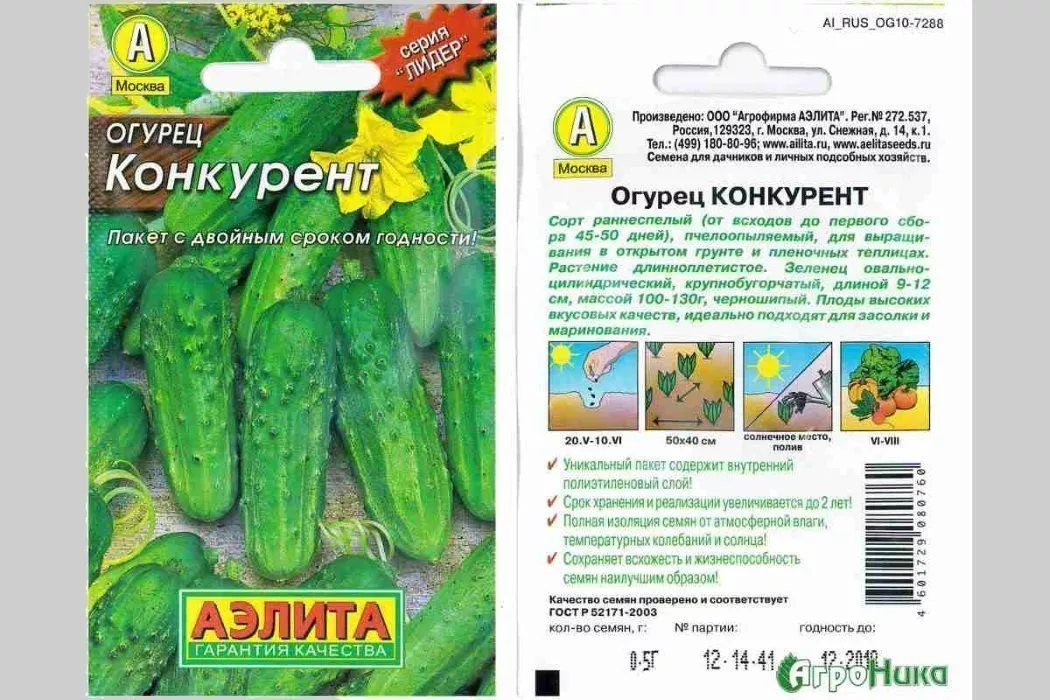
Cucumber seeds "Competitor"
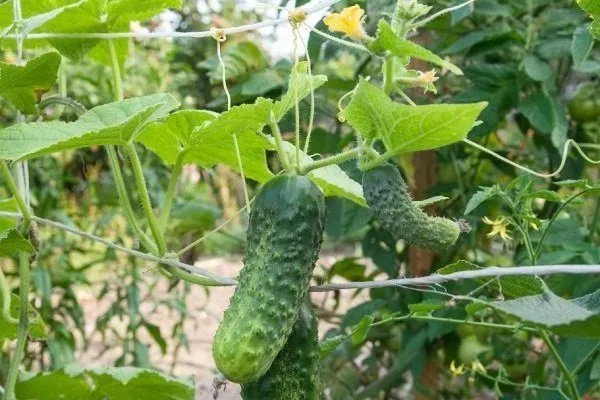
Cucumber Competitor
General characteristics of cucumbers
This variety is early maturing and heat-loving, so it's best planted outdoors no earlier than the end of May. The root system is quite developed in the early stages—the root grows 2-3 times larger than the stem. As the fruits ripen, the bush takes on the size of a rhizome. A distinctive feature is the rapid growth of the stems, which are home to tendrils. These tendrils help the plant grasp any supporting structure.
After the sprouts emerge, it takes very little time for the first flowers to appear, which are divided equally into male and female. In warm climates, the flowers begin to open very early – around 4 a.m. In cooler regions, the opening time shifts by two hours. The inflorescences last a maximum of two weeks, after which they fall off. In their place, ovaries with fruits form.
Description of the variety
The competitor is an indeterminate variety, so it has no growth restrictions. The bush is characterized by the following characteristics:
- the maximum length of the main stem is 2 meters or more;
- the setting of ovaries tends to bunch;
- whip – powerful, branching – moderate;
- pollination – high level;
- peduncles are long (up to 7 cm).
Fruit characteristics:
- shape – oval, cylindrical;
- color – dark green;
- the surface of the cucumber is bumpy with soft spines;
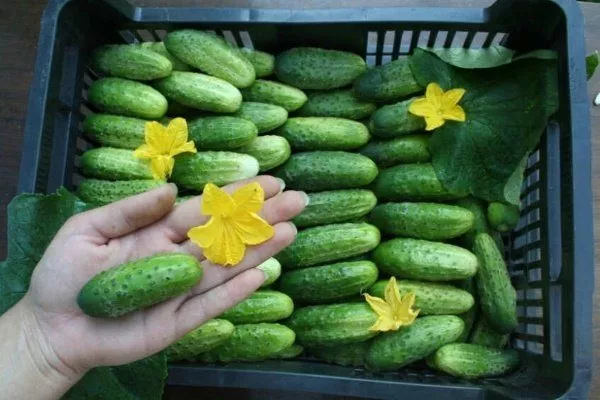
- length – 10-13 cm;
- weight – 110-140 grams;
- no bitterness;
- taste – sweet;
- aroma – pronounced;
- the pulp is juicy.
This variety has a wide range of uses, including salads, canning, pickling, and salting. It also has a long shelf life, making it ideal for commercial use.
Ripening time and yield
The competitor ripens quite quickly. If planted in the ground in spring, the harvest can be collected in just 40-50 days. If planted later, the ripening time is shortened—the fruits are ready to eat in 32-35 days.
The yield depends on weather conditions. In warm climates, the fruiting period lasts for 3 months, while in cooler climates, it decreases. On average, 3 to 6 kilograms of fruit can be harvested per square meter.
Pros and cons
Main advantages:
- stability of yield over a long period of time;
- excellent taste;
- transportability;
- shelf life;
- decent presentation;
- ease of care and cultivation;
- pollination;
- good yield;
- resistance to powdery mildew;
- rapid survival of seedlings;
- power of the root system and bush.
Flaws:
- If the cucumber is not harvested in time, the skin turns yellow;
- when overgrown, the peel hardens and cracks;
- If you don't water enough, bitterness will form.
Sowing seeds
This variety is suitable for both seedling and non-seedling cultivation. In the southern part of the country, seeds are planted in open ground; in cooler regions, seeds are first seedlings are being grown, which is transplanted into the garden.
Seed preparation
If you plan to plant your own seeds, please note that best germination occurs in the second or third year, provided the seeds are stored in a cool, dry place. Konkurent seeds can be used for up to six years.
- ✓ The water temperature for soaking seeds should be at least 25°C to activate growth processes.
- ✓ The concentration of potassium permanganate solution for seed disinfection should be 0.5-1% so as not to damage the embryo.
How to prepare grains:
- sort - to do this, place in salted water for 10-15 minutes, and remove the floating elements;
- wash the seeds;
- disinfect - make a weak solution of potassium permanganate, soak the seeds in it for 24 hours;
- soak the seeds in water;
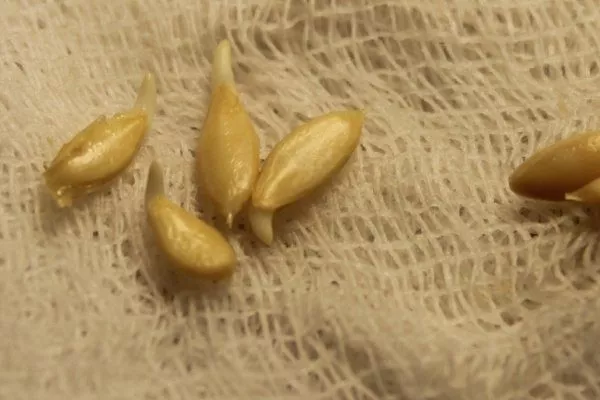
- transfer to wet gauze;
- let it germinate.
Planting dates
When growing Konkurent cucumbers from seedlings, the planting date is calculated. To do this, determine the date of transplanting into open ground. Count back approximately one month from this date. For example, transplanting to a permanent location is planned for May 1st. Therefore, the seeds are planted between April 1st and 5th.
When planting directly from seedlings, temperature requirements must be met: the soil and air temperature must be at least 15-16 degrees Celsius. If urgent planting is required, then follow these expert tips:
- prepare the ground;
- cover the area with black film;
- let stand for at least 4 days.
Choosing a location
It is recommended to plant cucumbers in a new location each year. The best site for Konkurent is considered to be soil where tomatoes, onions, cabbage, and potatoes were grown the previous year. Avoid planting after legumes and carrots.
Soil preparation
The competitor is considered an easy-to-grow plant, but to increase yields, soil preparation is necessary. About 30 days before planting, disinfect the soil. To do this, soak the soil in a weak solution of potassium permanganate or scald it with boiling water. After two weeks, dig the soil and simultaneously apply fertilizer. To do this, prepare a solution (the dosage is given for 2 square meters):
- 20 liters of compost or slurry;
- 60 grams of urea;
- 30 grams of potassium chloride;
- 60 grams of superphosphate;
- 40 grams of potassium sulfate.
Mix the ingredients thoroughly and water the area.
Sowing patterns
Since Konkurent's stems grow rapidly, it's best to grow it on a trellis. To do this, sow two rows of seeds (plant the seedlings) 20-40 cm apart, and drive wooden stakes every meter between them. Wire or slats are attached to these stakes.
Features of planting seedlings
The Konkurent root system isn't particularly robust, so it's best to plant the sprouted seeds in peat pots or briquettes. This way, the roots won't be damaged during transplanting. Two seeds are placed in each pot.
Features of planting in open ground
When planting in a vegetable garden, a 40x40 cm pattern is recommended, but a 20x40 cm pattern is suitable for trellis planting. Planting should be done after soil disinfection and application of a complex fertilizer. This means that the soil should be prepared.
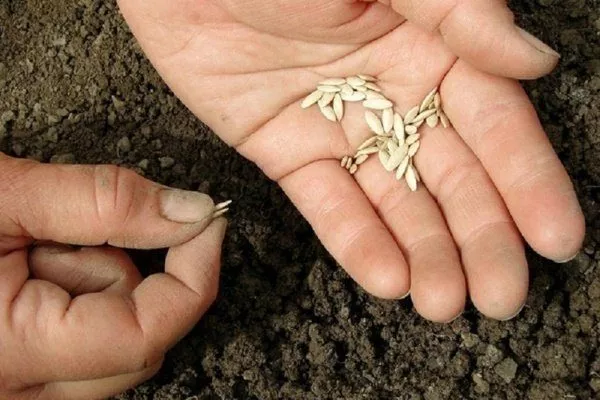
To ensure that the seeds germinate faster and the harvest is significant, be sure to loosen the soil and enrich it with humus.
Taking Care of a Competitor
Caring for Konkurent is a pleasure, as the variety is considered completely unpretentious. However, there are still some special rules.
Bush formation
This variety can grow practically in the wild, so if you don't have the time or inclination to tie it up, let the stems grow naturally. They will nestle comfortably in the soil and produce side shoots. However, in this case, you'll need to increase the distance between the plants. It's important to note that growing this variety horizontally reduces yield and prolongs the ripening period. This is due to the lack of adequate ventilation.
To harvest as early as possible, pinch the shoots. Each shoot should have approximately six leaves. To prevent thickening, which reduces fruiting, it's important to trim the primary shoots with pruning shears after the cucumbers begin to form. The remaining shoots are tied to trellis wire. It's best to pinch them after 5-6 leaves have formed.
Watering
Until the bushes are fully established, seedlings need to be watered sparingly but frequently. Later, the situation changes dramatically—more water is applied, but the frequency decreases.
Rules:
- The time for moisturizing is morning or evening.
- You shouldn't pour cold water on it, but it's also not recommended to water it with liquid that's been overheated by the sun.
- Until the first flowers appear, water once a week. Apply up to 4 liters of water per square meter.
- During flowering, 5 liters per square meter every 4 days is sufficient.
- During fruiting, the soil is moistened every 2 days with 7 liters.
At growing in greenhouse conditions Or, under film, thorough ventilation is required after watering. Therefore, the film is left open for a couple of hours.
Weeding and loosening
Loosening the soil is necessary to ensure oxygen and nutrients reach the root system. Weeding helps prevent disease. Given the Konkurent's weak root system, these manipulations are carried out with extreme caution and without deep penetration of tools.
Fertilization
Cucumber beds need to be fertilized periodically, although this isn't as important for the Konkurent. However, the quality of the fruit and its yield depend on it.
| Fertilizer type | Validity period | Recommended application frequency |
|---|---|---|
| Mullein | 2-3 weeks | Every 14 days |
| Chicken manure | 3-4 weeks | Every 21 days |
| Superphosphate | 4-6 weeks | Every 30 days |
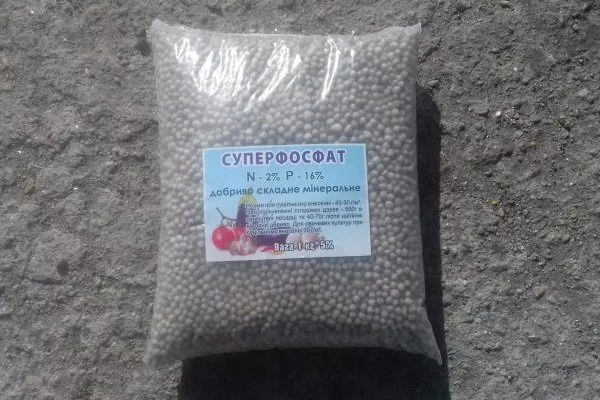
Three weeks after planting, apply fertilizer every 15 days. Cow manure, chicken manure, or herbal infusions (dandelion or nettle) can be used. A superphosphate solution can also be used.
Pests and diseases
The variety isn't particularly susceptible to disease, but it does occasionally occur for various reasons. What diseases and pests are likely to affect Konkurent?
- Angular leaf spot, olive leaf spot, cladosporiosis, common mosaic, and powdery mildew are all preventable. Copper-based solutions (Bordeaux mixture, copper oxychloride) are used against these diseases.
- Aphids and mites. Bushes should be treated with a 10% malathion solution or Actofit.
How to harvest and store crops?
Cucumbers are harvested early in the morning, allowing them to retain the coolness and freshness of the night. Harvesting occurs daily or every other day, depending on the yield (the more frequently ripe fruits are picked, the more ovaries will form). Harvest the fruits using pruning shears.
Wooden boxes with large gaps between the slats or baskets are used for storage. The containers are placed in the coolest possible room. Under these conditions, they retain their structure for up to 10 days.
Reviews
The Konkurent cucumber can be grown by both experienced and novice gardeners. This variety offers numerous advantages, is inexpensive, and even uses home-grown seeds. However, before planting, be sure to carefully study all the intricacies of growing and caring for it – only then will your cucumber bush reward you with abundant fruit.