
Klavdiya Agro cucumbers are an excellent choice for those looking for a productive and disease-resistant variety. Their ease of care and versatility make them a favorite among many gardeners. With proper cultivation and care, they will yield high-quality vegetables and consistently abundant harvests.
Introduction to the variety
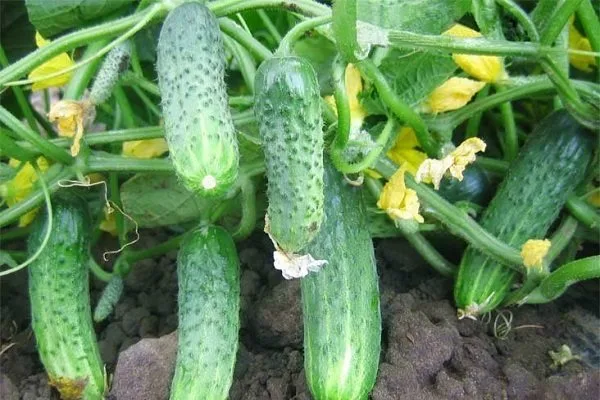
The Klavdiya Agro cucumber is characterized by high marketability and yield. The cucumbers have a delicious flavor and are used for a variety of purposes. This variety is easy to grow both outdoors and in greenhouses. It has comprehensive disease resistance and exhibits a long fruiting period.
Ripening occurs 40-45 days after germination, and fruiting begins in June and continues until August. The average yield is 15.5 kg per square meter, which is a significant advantage.
Composition and useful properties:
- Caloric content is only 15 kcal per 100 g.
- Cucumber contains 95% structured water, which is beneficial for the body. It helps remove toxins, heavy metals, and waste, flushing the kidneys.
- The composition includes vitamins A, C, group B, folic acid, minerals - potassium, magnesium, zinc.
- Cucumbers surpass many other vegetables in fiber content.
Vegetables are often included in weight-loss diets and used in cosmetic masks because they improve complexion, tone and moisturize the skin, and have whitening and anti-inflammatory effects. However, they can be harmful to people with kidney disease, so they should be consumed sparingly.
Features of selection
Klavdiya Agro is a hybrid created by a team of breeders: L. A. Chistyakova, O. V. Baklanova, N. N. Klimenko, S. V. Maksimov, and A. N. Khovrin. It originated from the Klavdiya variety. It was introduced into cultivation in 2015.
Specificity of bushes and cucumbers
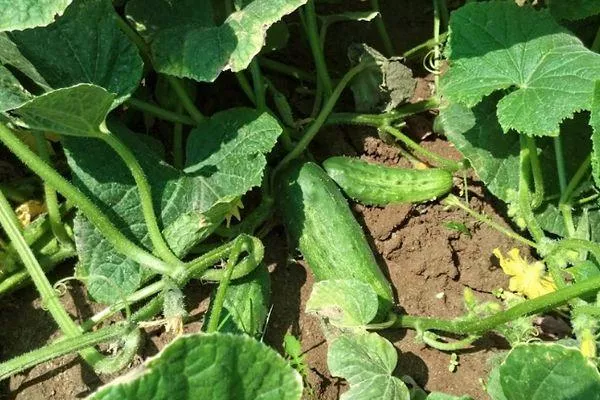
This is a parthenocarpic variety. The plant is characterized by vigorous growth and indeterminate habit, with the main stem reaching approximately 200 cm in length. The plant is sparsely branched, with medium-length green leaves. The flowering type is female, with 2-3 flowers per node.
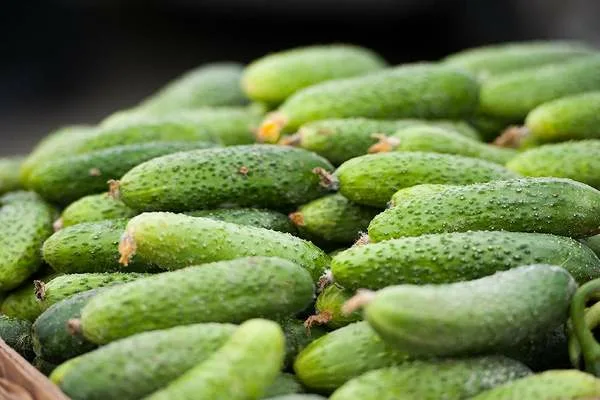
This is a cluster hybrid, with more than three green fruits in each cluster. They range from 10 to 12 cm in length and 3 to 4 cm in diameter. Each fruit weighs between 90 and 100 g. The fruits are cylindrical in shape and have a finely tuberculated surface.
Taste and application
This hybrid has a variety of uses: it's suitable for fresh consumption, pickling, and canning. The fruit has excellent flavor, crisp flesh, and a pleasant aroma.
Agricultural technology rules
The Klavdiya Agro cucumber can be grown both in a greenhouse and in garden beds. Sow the seeds directly into the ground or in seedling pots.
Follow these recommendations when growing seedlings:
- When determining the timing of planting seeds for seedlings, keep in mind that the crop begins to bear fruit 50 days after germination. Seedlings are ready for transplanting in 25-30 days. Sow seeds in April, depending on the weather conditions in the region and the planting location (greenhouse or garden bed).
- For the substrate, use ready-made soil or prepare a mixture of humus, peat and sawdust in a ratio of 2:2:1.
- Fertilize the homemade substrate with a complex preparation, for example, Kemira or Universal.
- Place the seeds 1.5-2 cm deep into the soil and cover the pots, creating a mini-greenhouse.
- Seedlings will emerge in 4-6 days in a warm location. Remove the cover and keep the containers with seedlings for 3-4 days at a temperature of 19°C (65°F) during the day and 16°C (61°F) at night to prevent the plants from stretching.
- Water the seedlings as the soil dries out, every other day or less often.
- The optimal temperature for grown seedlings is +23°C during the day and +17°C at night.
- When the seedlings have formed three leaves, feed them with a solution of 5 g of nitrophoska per 1 liter of warm water.
- Plant seedlings with 4-5 leaves and a height of up to 20 cm at the end of May or the beginning of June, when the soil warms up to +15°C.
- In a garden bed, place 4 seedlings per 1 sq. m., in a greenhouse, less often – 3 plants per 1 sq. m.
When sowing seeds in the ground, sow them at a temperature of +15°C and an air temperature of +20-23°C. Leave 90 cm between rows and 30-35 cm between holes. Plant the seeds 3 cm deep. Place 2-3 seeds per hole.
- ✓ The optimal soil temperature for sowing seeds should not be below +15°C, and the air temperature +20-23°C.
- ✓ The distance between plants in open ground should be 30-35 cm, between rows - 90 cm.
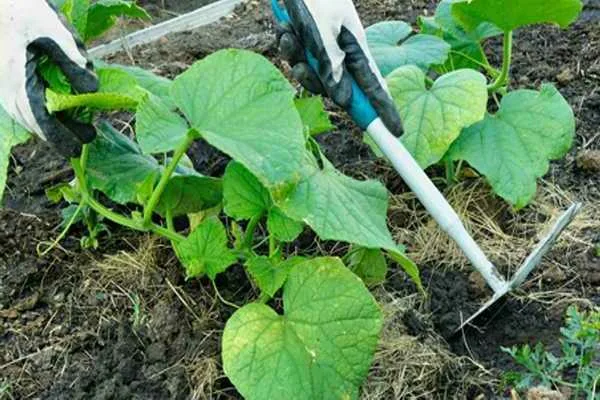
Provide your seedlings with comprehensive care. Follow these simple gardening practices:
- Watering and loosening. Moisten the bushes in the evening with warm water, preferably with a watering can to avoid eroding the soil. Pour 3 liters of water under the roots. In the morning, loosen the soil and remove weeds. Ventilate the greenhouse regularly, maintaining humidity at 75-80% and a temperature of 18 to 25°C.
- Formation of whips. Stake and shape the plants. Pinch the main shoot at a height of 1 m in garden beds and up to 1.2 m in the greenhouse. Do not allow side shoots to grow more than 50 cm, and limit shoots to 15 cm.
- Top dressing. Before harvesting, fertilize the crop twice, 10 days apart. Dissolve 5 g each of urea, potassium sulfate, and superphosphate in 10 liters of water. Apply 2 liters of fertilizer to each plant, avoiding contact with the roots. Good results are achieved with Kormilets fertilizer: 50 g per 10 liters of water.
During the harvest of cucumbers, fertilize the bushes three times at the same interval:- 1 liter of mullein and 25 g of nitrophoska per 10 liters. Application rate: 1.5 liters per root. Instead of mullein, use Ideal fertilizer: 500 ml per 50 liters of water. Application rate: 5 liters of solution per 1 square meter.
- 5 g urea, 100 g wood ash and 5 g sodium humate per 10 l. Consumption: 2 l.
- 25 g of azophoska per 10 l. Consumption: 2 l.
Reviews
Klavdiya Agro cucumbers combine high yields, excellent flavor, and low maintenance. This hybrid has proven itself to be a reliable and productive variety, suitable for growing in a variety of conditions. It's important to understand all the characteristics of the crop, grow the plants correctly, and provide them with comprehensive care.