
Chinese cucumbers surpass regular cucumbers in every way. They're incredibly long, never bitter, and, most importantly, they produce fruit right up until the first frost. Learn how to plant and grow these miracle Chinese cucumbers below.
What is Chinese cucumber?
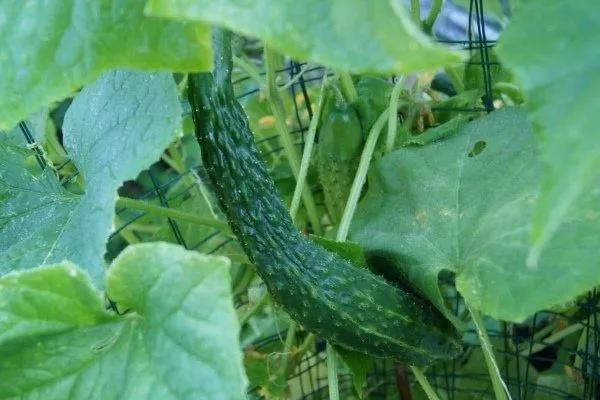
In appearance, Chinese cucumbers are very similar to regular cucumbers. An inexperienced gardener might find it difficult to tell the difference between a familiar garden crop and this miracle cucumber. Chinese cucumbers are not a cultivar, but a whole variety of cucumber—a herbaceous annual plant from the Cucurbitaceae family.
Chinese cucumbers differ from regular cucumbers in size, taste, and biological characteristics. This crop is chosen by active, experimental gardeners who enjoy growing unusual vegetables.
History of appearance
Chinese cucumbers originate from China. Cucumbers, as a crop, have a history of over 6,000 years. This subspecies, however, is a relatively recent development. It was developed in China, and very soon these unusual cucumbers spread throughout the world.
Every year, breeders develop new varieties that differ from each other in biological nuances, but have common agronomic characteristics.
Detailed description
The main distinguishing feature of Chinese cucumbers is their long, spiky fruits, reaching 80-90 cm in length. Other characteristics of the crop:
- Bush. The plant has the appearance of a vine, with 3-4 fruits forming on each shoot. The bushes are vigorous, with thick stems and large leaves;
- Fruit. The diameter is no more than 7-8 cm, the average length is 50-80 cm, and the fruit is completely hollow. The skin is dark green, and the surface is pimply. The seeds are small, underdeveloped, soft, and do not harden as the fruit grows.
- Flowers. Mostly female, gathered in bunches of several. The plant produces numerous ovaries.
Experienced gardeners recommend using Chinese cucumbers with light spines for salads, and those with dark spines for canning.
Characteristics
The plant is easy to grow, thriving in any soil type without any special growing conditions. It can be grown in both sun and shade—light conditions don't significantly affect yield. Three to four plants are enough to provide a family with Chinese cucumbers.
Main agrotechnical characteristics:
| Characteristics | Description |
| Productivity | 9-10 kg from one bush, maximum – 30-40 kg |
| Disease resistance | high (resistant to the main cucumber diseases) |
| Drought resistance | High (has virtually no effect on yield, can withstand temperatures up to +40°C) |
| Growing method | in open ground and in greenhouses |
| Taste | sweetish (the peel does not have a bitter taste; the flesh is dense, crunchy, does not become rough, and does not contain voids) |
| Aroma | resembles a melon or watermelon |
| Maturation | the crop is early maturing (fruits appear 35-40 days after germination) |
| Fruiting | long-lasting (the last fruits are picked before frost) |
| Product appearance | excellent (even overripe fruits are firm and attractive, they do not turn yellow and do not have large, hard seeds like ordinary overripe cucumbers) |
What varieties are there?
Almost all Chinese cucumbers are hybrids. Previously, seeds were imported from China. There were no domestic varieties, or they didn't match the general characteristics of the subspecies. Today, most Chinese cucumber varieties on the market still come from China. Let's look at the most popular ones.
| Name | Ripening period, days | Yield, kg per bush | Fruit length, cm |
|---|---|---|---|
| Flameproof | 48-54 | 15-20 | 35-55 |
| Farmer's | 48-54 | up to 35 | 35-40 |
| Emperor | 42-45 | 25-30 | 40-50 |
| Climbing | 65-70 | 20-25 | 10-15 |
| Cold-resistant | 50-55 | 20-30 | 55-65 |
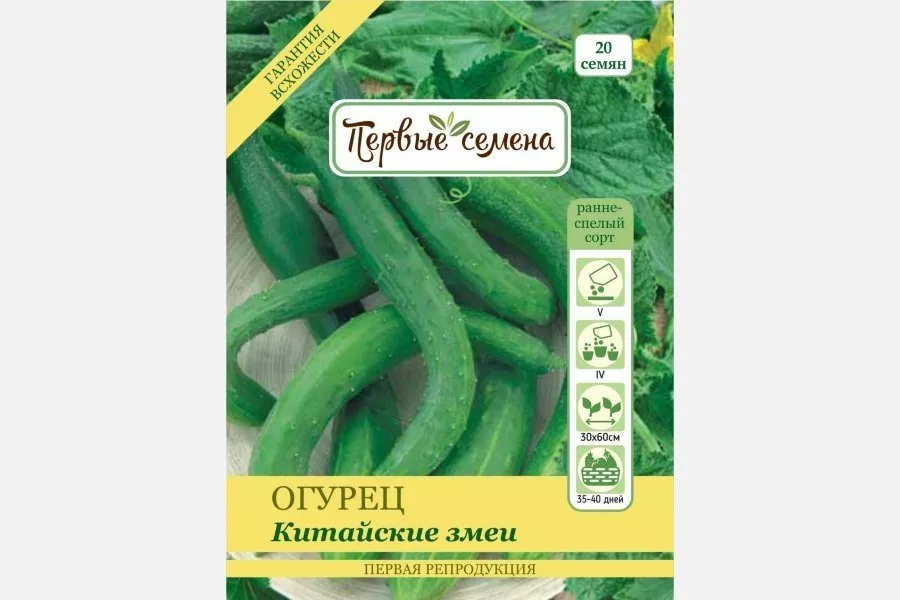
| Chinese snakes | early | 8-9 | 50-80 |
| Chinese miracle | 65-70 | 20-30 | 40-65 |
| Alligator | 45-50 | 14-16 | 35-40 |
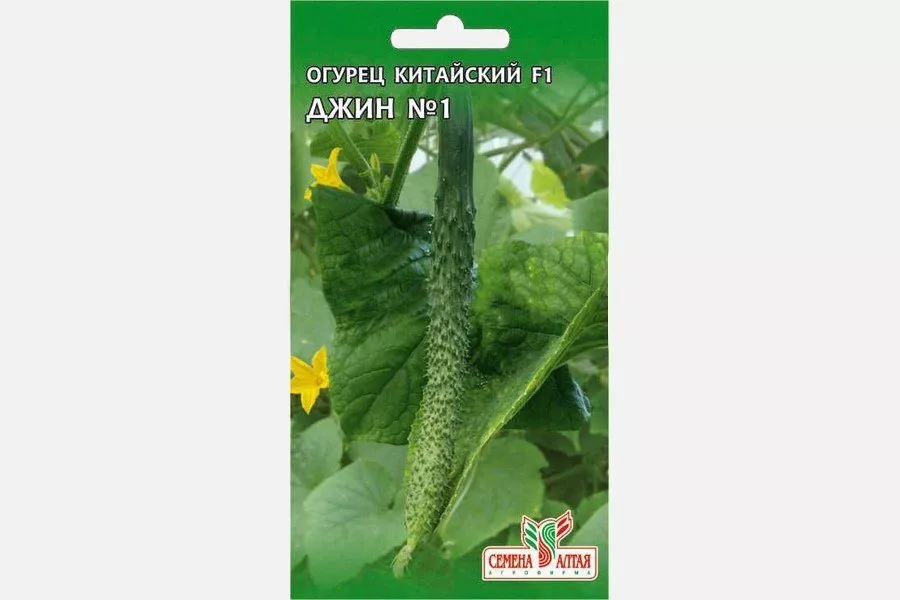
| Gin No. 1 | mid-late | not specified | 30-40 |
Flameproof
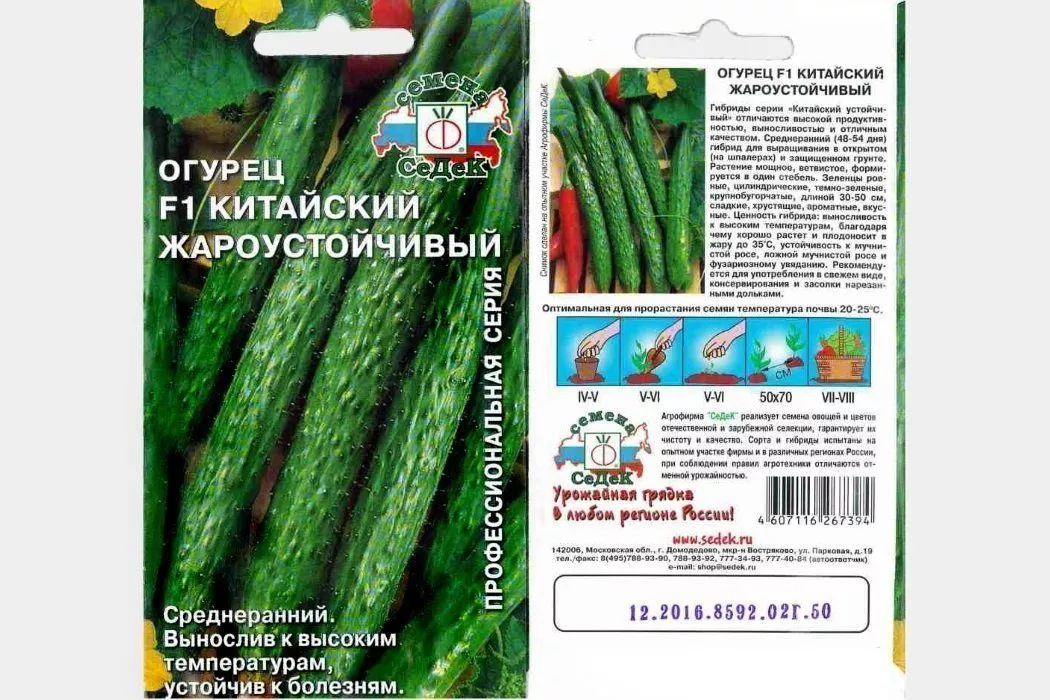
A mid-season hybrid. From germination to first fruit, it takes 48-54 days. The plants are well-branched, vigorous, and well-foliated. Fruiting continues until frost. Climbs well over nets and trellises. Yields 15-20 kg per bush. Fruit weight is 100-120 g, length 35-55 cm. Country of selection: Russia.
The fruit is cylindrical, with large pimples. It thickens at the tip. The skin is thin, dark green, with short whitish stripes along the top of the fruit. The flesh is sweet, tender, aromatic, and crunchy.
The seeds are soft and underdeveloped. The hybrid is drought-resistant, heat-tolerant, and produces fruit at high temperatures. It is disease-resistant. The fruits can be stored in the refrigerator for up to 7 days and eaten fresh or pickled.
Farmer's
A mid-season hybrid. Fruit appears 48-54 days after germination. The plant is vigorous and vining. It is resistant and tolerant of all environmental challenges. Yields up to 35 kg per bush. Weight: 250-300 g, length: 35-40 cm. Country of selection: China.
The fruits are smooth and dark green. The flesh has a delicate, slightly sweet aroma. The taste is sweet and crunchy, with no bitterness or hollowness. They are eaten fresh, canned, and salted after being sliced.
Watch the video below for a review of Chinese farm-grown cucumbers grown in bags in open ground:
When grown in greenhouses, the yield of Chinese cucumber increases several times.
Emperor
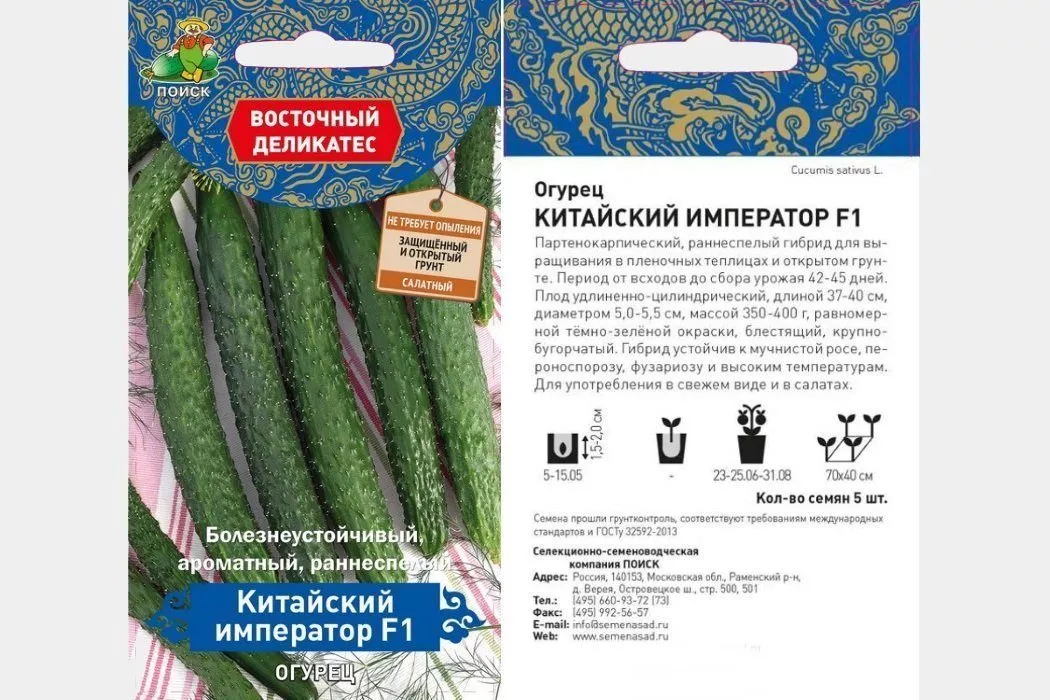
An early-ripening hybrid. Ripens in 42-45 days. Stems reach 3.5 m in length. Yields 25-30 kg per bush. Weight: 400-550 g, length: 40-50 cm. Selected in China. Resistant to cucumber diseases such as powdery mildew.
The fruits are long, dark green, with shiny skin. They taste slightly watery and have a pleasant aroma.
Climbing
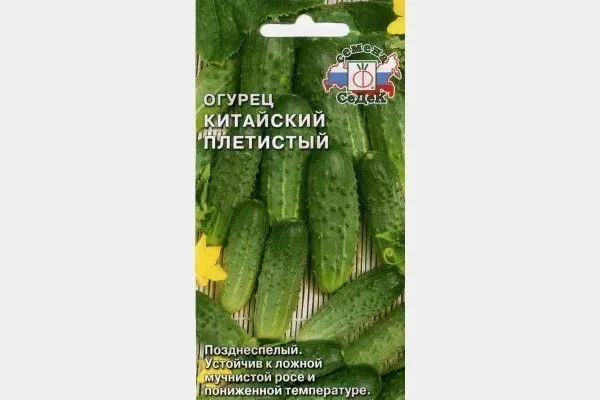
A late-ripening variety, it ripens in 65-70 days. Climbing cucumbers are much smaller than other varieties. Pollination is cross-pollinated; unlike most Chinese cucumbers, it relies on insects. Climbing cucumbers are grown in open beds. Yields are 20-25 kg per plant. They weigh 100-140 g and grow 10-15 cm long. They were bred in China.
The fruits are small, with a waxy, thin, and slightly sweet skin. They are easy to transport, disease-resistant, and cold-tolerant. They are a versatile variety.
Cold-resistant
This is a mid-season F1 hybrid. From germination to first fruit, it takes 50-55 days. The plants are vigorous and grow vigorously. They are versatile – suitable for greenhouses, hothouses, and open ground. They require trellis support.
Cold- and drought-tolerant, virtually immune to powdery mildew, fusarium, and downy mildew. Yields 20-30 kg per bush. Fruit weight 135-155 g, length 55-65 cm. Country of selection: Russia.
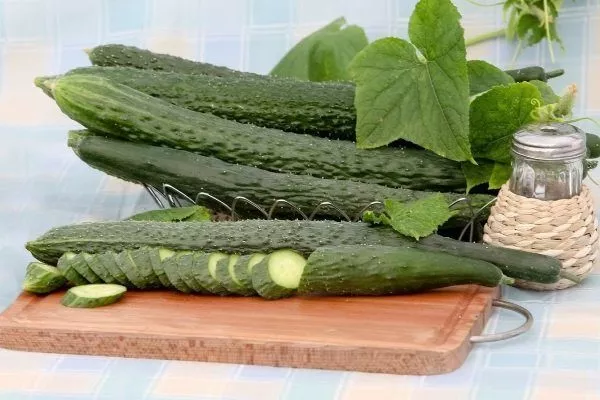
The fruits are cylindrical, often curved, with hard pimples and a short neck. Length: 30-50 cm. The fruit is dark green, thin, shiny, and densely pubescent. The spines are light-colored. The flesh matches all the characteristics of Chinese cucumbers: juicy, sweet, aromatic, and completely free of bitterness. Can be eaten fresh or pickled.
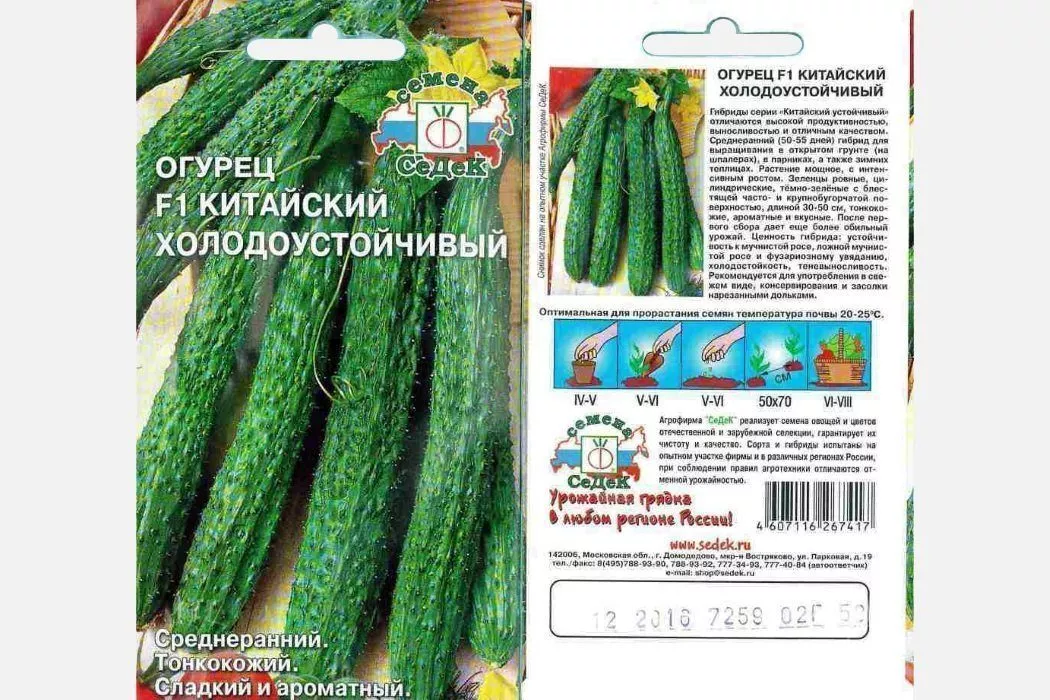
If you are late in harvesting ripe fruits, they will become overgrown and the pulp will become tasteless.
Chinese snakes
An early-ripening variety. Pollination is not required. Yields 8-9 kg per square meter. With proper care, up to 30 kg per square meter. Weight: 350-400 g, length: 50-80 cm. Maximum diameter: 7 cm. One cucumber is enough for a large salad bowl.
The fruits are juicy and thin-skinned. They grow very quickly. They can be preserved, pickled, or eaten fresh. They are resistant to powdery mildew and common mosaic. They can grow in shade and easily tolerate high temperatures.
Chinese miracle
A late variety bred in China. Ripens in 65-70 days. Yields 20-30 kg per bush. Weight: 500-650 g, length: 40-65 cm.
The plant grows up to 4.5 m tall and produces fruit until frost. The fruits are juicy, thick, and have a bumpy, non-bitter skin. They are eaten fresh. Canned, but must be done on the same day as harvest.
For a review of the Chinese Miracle cucumber variety, watch the video below:
Alligator
An early-ripening F1 hybrid bred in China. Ripens in 45-50 days. Yields 14-16 kg per square meter. Weight: 300 g, length: 35-40 cm. Fruiting continues until mid-autumn. Requires insect pollination.
The bushes are vigorous, with branches tied to trellises. A single bush produces 6-8 cucumbers. The cucumbers are large and knobbly, with skin resembling alligator skin. The fruits are eaten fresh and used for preserves.
Gin No. 1
A mid-late bee-pollinated hybrid. Selected in China. Fruit length is 30-40 cm. The cucumbers are firm and contain a high dry matter content. Their main advantage is increased resistance to fungal diseases.
The fruits are long, gently ribbed, and cylindrical. They are grown from seeds and seedlings. They are delicious fresh, in salads, and canned.
Comparative table with long-fruited varieties:
| Variety | Yield, kg per 1 sq. m. | Fruit length, cm |
| Chinese cucumbers | 30 | 30-90 |
| Danila F1 | 15 | 10-15 |
| Amur F1 | 30-50 | 12-15 |
| Herman F1 | 25 | 10-11 |
| Prestige F1 | 28 | 9-12 |
Where is it recommended to grow the crop?
Chinese cucumbers prefer vertical growth. They can climb along supports both in open ground and in greenhouses—the main thing is to create the right conditions. For an early harvest, greenhouse cultivation is recommended. Vertical cultivation produces long, straight fruits.
Due to changing weather conditions, rain, daytime heat and nighttime cold, the yield decreases, as negative factors affect flowering and ovary formation.
In the south, Chinese cucumbers can be grown in open ground. If tied to a trellis, they will grow long and straight cucumbers. Staking this crop is highly recommended, as leaving the vines on the ground increases the risk of disease and the fruits will grow crooked—however, this does not affect the taste of Chinese cucumbers.
Advantages and disadvantages
Benefits of Chinese cucumbers:
- high and stable yield;
- long-term fruiting;
- resistance to cucumber diseases and parasites;
- self-pollination;
- excellent product characteristics;
- possibility of growing in shaded conditions;
- withstand frost without damaging yield;
- compact – takes up little space;
- precocity.
Cons:
- poor preservation;
- only some varieties are suitable for pickling;
- Without garters, cucumbers grow uneven and crooked.
Landing features
Chinese cucumbers are planted from seeds or seedlings. In the south, seeds can be planted without plastic; in all other regions, greenhouse cultivation is recommended.
- ✓ The optimal soil pH should be in the range of 6.0-6.5 to ensure maximum yield.
- ✓ The soil must be well-drained to avoid waterlogging and root rot.
Choose a site sheltered from winds, level or with a slight slope to the south. The greenhouse structure or site should receive ample sunlight. When growing outdoors, some shade is acceptable. Waterlogged or clayey soils are unsuitable for this crop.
How to prepare planting material?
Preparing the seeds:
- Let's calibrate. Place the seeds in water. After waiting half an hour, remove any that float to the surface.
- We are etching. Seeds are often susceptible to infection. They are immersed in a dark purple solution of potassium permanganate for 0.5-1 hour.
- We treat with a stimulant. The seeds can be soaked for an additional 10-12 hours in a stimulant. "Epin" is suitable. Dilute 4 drops of the product per 100 ml. You can also soak the seeds in sodium humate for 2-3 hours. Add 0.5 g of humate per liter.
- We germinate. Place a damp cloth on a plate, seeds on it, and a second cloth on top.
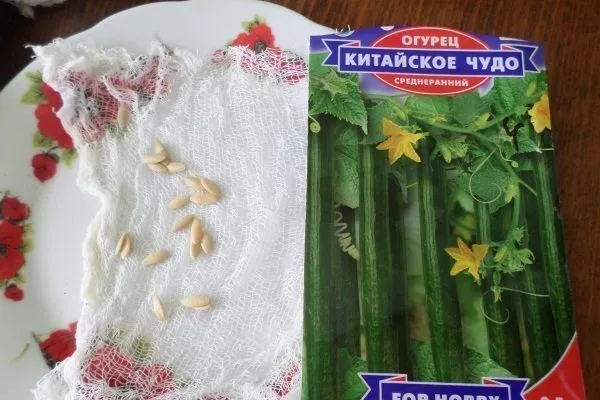
Growing takes 25-26 days. To plant cucumbers in early May, sow the seeds on April 15th. Read more about how and when to plant cucumber seedlings. Here.
Growing seedlings:
- Select containers of appropriate size. Fill the glass with potting soil:
- peat – 6 parts;
- sand – 1 part;
- sawdust of deciduous trees – 1 part;
- humus – 2 parts.
- Place one seed per cup, planting at a depth of 0.5-1 cm. Sprouts appear in 3-5 days.
Soil preparation
During autumn digging, add humus, wood shavings, and black soil (1:1:2). In greenhouses, the soil is made into two layers. Manure, straw, and leaves are placed on the bottom, followed by humus. Recommended composition:
- turf soil – 2 parts;
- peat – 3 parts;
- compost or humus – 3 parts.
For every 10 kg of soil mixture, add 15 g of superphosphate and 250 g of ash. Nitrogen is not added during the preparation stage; it is sufficient in the compost.
Planting in the ground
Seedlings are planted in a greenhouse or in open ground. In the latter case, they are planted when there is no risk of frost. Pricking out occurs when the fourth leaf appears.
How to plant:
- Depending on the variety, row spacing ranges from 50 to 90 cm. If the plant produces few lateral branches, the distance between adjacent bushes is 25-30 cm.
- Water the seedlings a day before planting to make it easier to remove the soil lump.
- Prepare holes in the beds; their size should be slightly larger than the cups from which the seedlings were placed.
- Pour a slightly warmed solution of potassium permanganate into the holes to disinfect the soil, then pour regular water into the holes.
- Remove the plants, being careful not to disturb the soil ball to avoid damaging the root system.
- Position the plant so that its root collar is 1-2 cm above the soil level. Gently compact the soil.
Seedlings are planted outdoors at a temperature of +20°C. Although Chinese cucumbers are cold-hardy, low temperatures adversely affect their growth and development.
Sowing seeds in the ground
Chinese cucumbers are easier to plant from seeds in open ground – this method is practiced in the south at +13-15°C.
Subtleties of sowing:
- The distance between holes is 5 cm. The width between rows is 50 cm. 3 seeds are placed in each hole.
- Planting depth is 3-4 cm, no more.
- When the seedlings emerge, thin them out. The distance between adjacent seedlings should be 10 cm.
- The plants are thinned a second time when they have several true leaves. Leave 25-30 cm between adjacent bushes.
When thinning out seedlings, they must be cut or plucked out; pulling them out can damage the roots of the plants left to grow.
Care Features
Caring for Chinese cucumbers is almost the same as for regular cucumbers. This crop has very long stems and few side shoots. Therefore, they are planted more frequently than usual and always tied up.
Caring for Chinese cucumbers includes:
- regular watering;
- shallow loosening;
- weeding;
- tying up the vines;
- top dressing.
Watering and fertilizing
Indoor cucumbers are watered twice a week; outdoors, water according to rainfall. It is recommended to mist the plants daily with warm water. The recommended watering rate for young plants is 0.5 liters, and for mature plants, 1-1.5 liters. Water cucumbers only with warm water.
In open ground, if fertilizer is applied in the fall, cucumbers won't need fertilizing. In greenhouses, the crop is fertilized twice:
- 2 weeks after planting, when flowering begins;
- during fruiting.
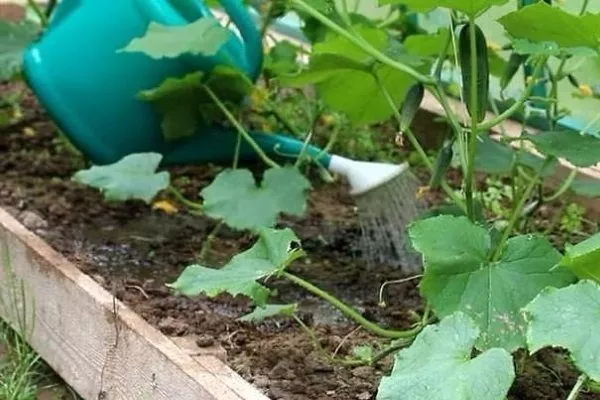
To increase yield, it is recommended to spray plants with a urea solution. A special fertilizer mixture is also used, which has a beneficial effect on plant development:
- Take boric acid (1 g), potassium permanganate (1 g), ferrous sulfate (1 g), copper sulfate (3 g), urea (100 g).
- Dissolve urea in water, dilute the acid separately, mix, and then add copper sulfate and potassium permanganate.
- Spray the plantings every two weeks; cucumbers can be harvested 2 days after spraying.
In open ground, cucumbers are fed as follows:
- When the plant has 5 leaves, use mullein infusion, 1 liter per 10 liters of water.
- After two weeks, add chicken manure. Add 700 g of manure per bucket of water.
- During flowering, water with an ash solution - a glass per 10 liters of water.
- When fruiting ends, water again with chicken manure. Alternatively, you can apply a complex fertilizer.
Loosening and mulching
Cucumber roots are located very close to the surface, so loosening should be shallow – up to 5 cm. To prevent the soil from cracking and to slow down moisture evaporation, a simple but effective agricultural technique is used: mulching.
The soil can be sprinkled with peat, chopped grass mixture, or sawdust. Mulch improves oxygen penetration into the soil, preventing it from compacting.
Formation of the whip
While the plant is growing, the gardener installs supports in the open ground for the weaving. These can be trellises, netting, or simply taut ropes. In greenhouses, a vertical support is used to tie the central stem. Lateral shoots branch off from the central stem. Five branches are counted from the root and pruned.
- ✓ Yellowing of leaves from bottom to top may indicate a lack of nitrogen.
- ✓ Curling leaves may be a sign of potassium or calcium deficiency.
Diseases and pests
The crop is sprayed with fungicides as a preventative measure. The most common diseases are powdery mildew and anthracnose, while pests include spider mites and melon aphids.
Measures to control diseases and pests of Chinese cucumbers:
| Diseases/pests | Signs of defeat | How to fight? |
| Powdery mildew | A whitish coating appears on the underside of the leaves. It then spreads to the outer surface. The leaves darken, and the fruit grows crooked and tasteless. | Dissolve 20 g of Oxychom in a bucket of water. Spray the plants in the evenings every two weeks. Colloidal sulfur is also used. |
| Anthracnose | The stems have elongated, sunken brown spots. The fruits are spoiling. | Spray with copper oxychloride or Oxyhom - 20 g per 10 l. Repeat treatment after 10 days. |
| Aphid | Small insects suck the juices from all above-ground parts of the plant. Fruiting ceases. | Spray with Fitoverm – 4-6 ml per bucket of water. Repeat spraying after 2 weeks. |
Disease and pest prevention measures:
- Maintaining a minimum distance between plants.
- Preventing water stagnation in the soil.
- Sprinkling with mulch prevents weeds from appearing.
- Diseased shoots are immediately removed and destroyed. If the disease is incurable—for example, mosaic—the entire plant is uprooted.
- Cucumbers are treated with garlic infusion and onion peel.
Gardeners' reviews
Chinese cucumbers are rapidly replacing traditional vegetables. Their ease of cultivation, hardiness, and productivity, combined with excellent taste, are a real draw for our gardeners. This healthy and profitable crop, occupying just a few square meters, can provide food for its growers until the first frost.