
The Kibriya cucumber has recently become a favorite among many experienced gardeners, thanks to the efforts of Dutch breeders who developed a high-yielding cucumber variety. Kibriya's fruiting rate is several times higher than that of the most well-known varieties. This is confirmed by numerous reviews from gardeners praising these cucumbers.
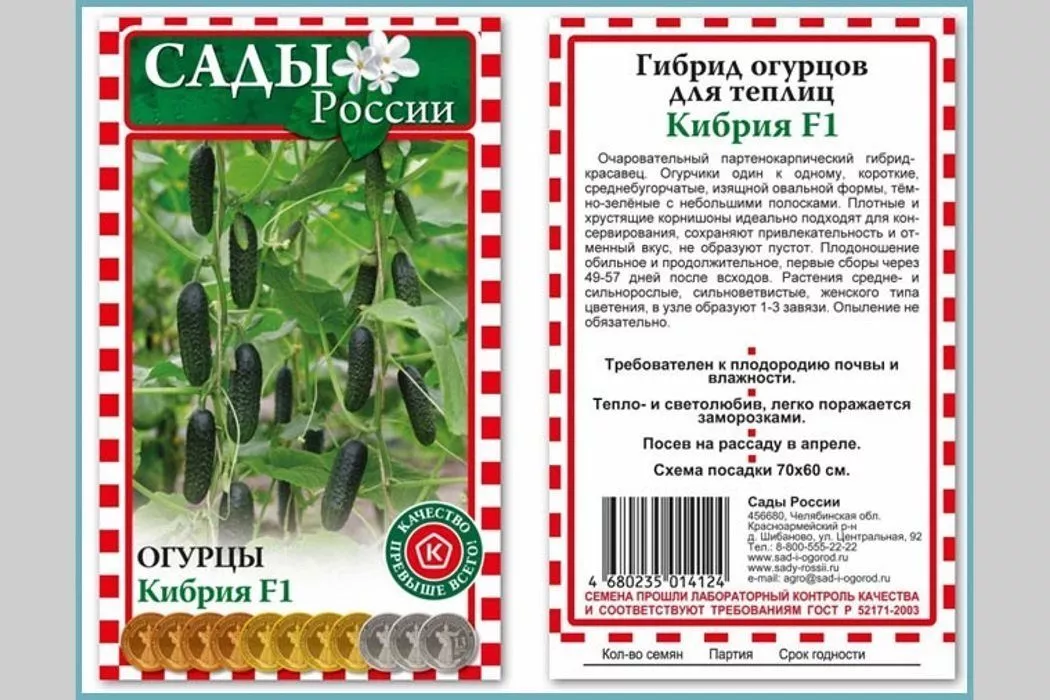
Cucumber seeds of the Kibriya variety
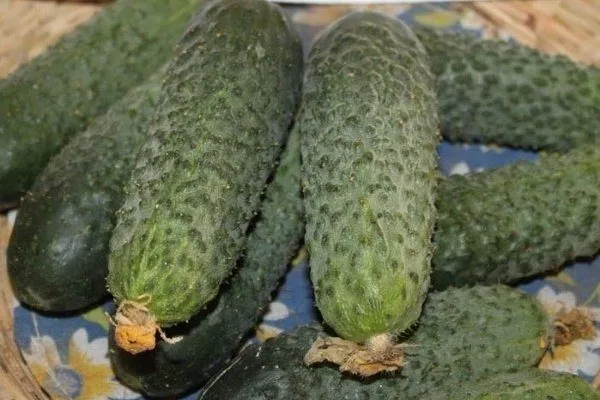
Cucumbers of the "Kibriya" variety
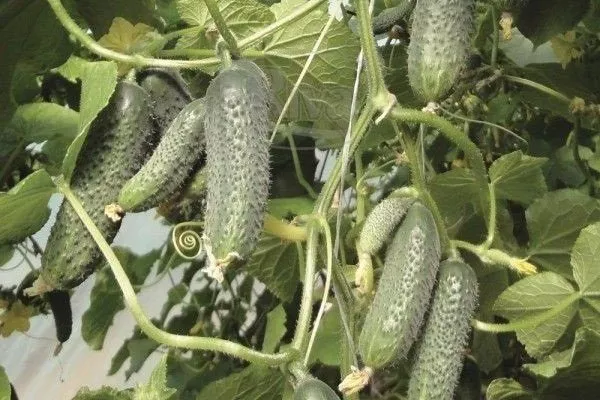
Kibria is a liana-like plant, and fruits grow on the main stem.
Description of the Kibriya cucumber variety
Kibria originates from Holland, where it was obtained through dihybrid crossing in 2009. This variety was bred for year-round fruiting in greenhouse conditions.
Thanks to its high yield and absolute safety, it was approved for cultivation in Russia. In 2011, the hybrid was added to the State Register of the Russian Federation. It is recommended for cultivation in the Central and Northwestern regions of the country.
High yields of Kibriya cucumbers are possible in nutrient-rich soils. Since the plant is self-pollinating (parthenocarpic), it is more suitable. grow in greenhouse bedsBut, as practice shows, cucumbers grow well in open areas, without greenhouse cover.
The Kibriya cucumber variety is a vine-like plant, with the main stem bearing fruit. Lateral shoots do not grow. The bush itself is large but compact. Growing rapidly, the main stem extends beyond the flower cluster. Because of this, the plant requires support. The Kibriya cucumber bush is highly resistant to various vegetable diseases, quickly recovers from stressful conditions, and is easy to care for.
The cucumbers themselves are short, medium-tuberous, and smoothly oval in shape. They are dark green with subtle light stripes. The crisp, dense fruits have a smooth, smooth texture and a slightly sweet flavor. Each cucumber is no more than 10-11 cm long and 4-5 cm thick. They are suitable for both fresh eating and pickling.
Advantages and disadvantages
The Dutch cucumber variety Kibriya has a number of advantages and disadvantages.
Positive characteristics include:
- an enviable yield: up to 2 kg of vegetables are usually harvested from 1 sq. m.;
- fast ripening: after 40-50 days you can already pick the first fruits;
- sweet pleasant taste without any bitterness;
- absence of voids inside cucumbers;
- the vegetable is versatile in gastronomy: it is salted, pickled or eaten fresh;
- the plant is resistant to many diseases;
- The harvested crop can withstand long-distance transportation without losing its taste.
No serious flaws were discovered during cultivation of Kibriya. Numerous reviews from gardeners indicate that the variety is ideal. However, there are still a few drawbacks:
- The seeds are expensive. Compared to domestically bred varieties, the Dutch hybrid is significantly more expensive.
- A vegetable bush can only grow in soil rich in nutrients.
These shortcomings are insignificant against the backdrop of a host of advantages.
Soil requirements
To plant this cucumber variety, use store-bought soil or prepare it yourself: equal parts garden soil and last year's compost. If the soil is too dense and heavy, add peat moss.
- ✓ The optimal soil pH level should be between 6.0-6.5 to ensure maximum yield.
- ✓ The soil must contain at least 3% organic matter to maintain the necessary structure and nutritional value.
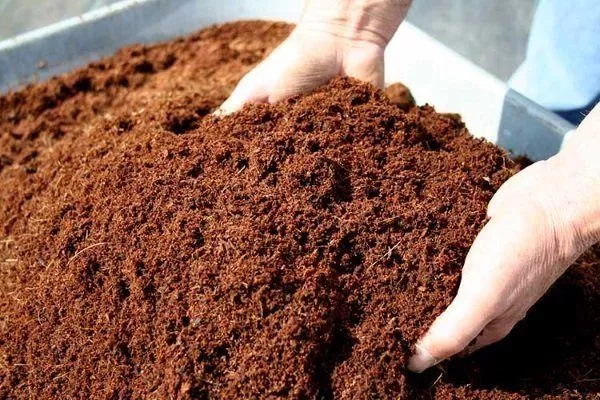
The main requirement is that the soil should be loose and breathable. Peat can be replaced with perlite or vermiculite.
If necessary, the soil should be fertilized with nutrients. Prepared soil (especially that taken from the garden with humus) should be disinfected. This can be done in three ways:
- watering with a solution of potassium permanganate;
- baking in an oven;
- pouring boiling water over.
Soil acidity should also be considered. A slightly acidic environment is ideal for the Kibriya cucumber variety. If the soil is highly acidic, it should be reduced with lime.
During the entire period of growing seedlings, the soil will require several fertilizations with mineral substances.
Rules for sowing seeds and planting seedlings
Having prepared the soil according to all the rules, you can proceed to sowing seeds and growing seedlings.
Both experts and gardeners with many years of experience recommend planting from seedlings, since seeds will not produce the desired amount of harvest.
The seeds are placed in small peat pots filled with soil or in special trays. The recommended quantity is no more than 2 seeds per container. They should be planted in the soil to a depth of no more than 1 cm. The optimal temperature until sprouts appear is 30°C (86°F). Once the first shoots appear, the pots are moved to a room with a temperature of 22°C (72°F).
Seedling cultivation typically lasts 2-3 weeks, until 3-4 leaves appear on the sprouts. After this, the seedlings can be safely planted in greenhouse soil: 2-3 plants per square meter. Dig holes that are the same size as the peat pots in which the sprouts are growing, as this is where the plants should be planted. Over time, the peat pots will dissolve, and the roots will penetrate into the greenhouse soil.
Next, you will need to regularly carry out simple but necessary care for cucumbers.
Caring for the bush after planting
General conditions: temperature, humidity, watering
Once the Kibriya cucumber seedlings are in the soil, the greenhouse will need to be set to a temperature suitable for the plants – 22-26 degrees.
Humidity is another adjustable factor. Initially, it should be between 90-95%; after the first mature leaves appear, it should be reduced to 80%.
Plants are watered when the topsoil has dried out. The water used should be settled and at a temperature of 20-21 degrees Celsius. Drip irrigation is preferred, as it's less damaging to the plants, but manual irrigation is also acceptable. After watering, the topsoil is loosened.
Bush formation
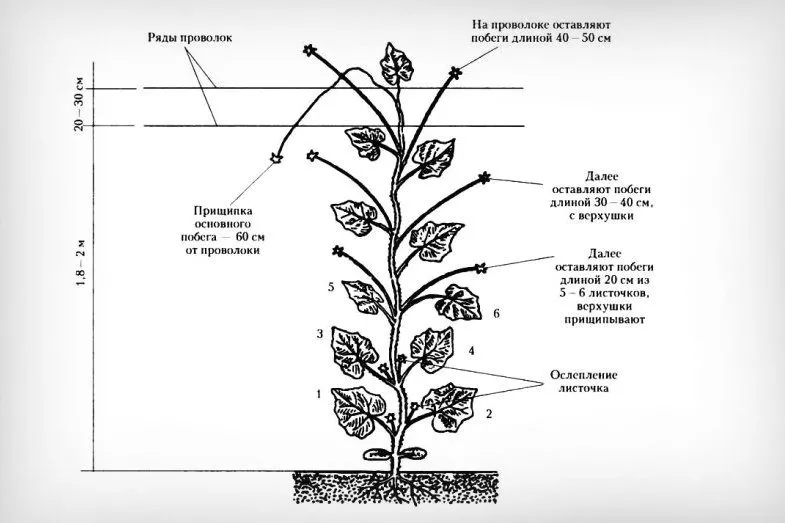
Two to three days after planting the seedlings in the greenhouse soil, a support, usually a 2.5-meter-tall trellis, is installed near each plant. The main stem of the bush is woven onto the trellis, with the top of the stem pointing downward.
Count 4-5 leaves from the top and pinch the shoot, repeating the process every 4-5 leaves. This will allow the main stem to grow rapidly, twining around the base and soaking up sunlight. This will result in a bountiful harvest.
Carefully remove side shoots and excess ovaries from the main stem. There should be no more than 2-3 of these in a single node.
Top dressing
Mineral fertilization should be done regularly: every two weeks. Fertilizers must contain potassium, phosphorus, calcium, nitrogen, and magnesium.
- The first feeding should be carried out 2 weeks after planting the seedlings, using a complex fertilizer with NPK 10-10-10.
- The second feeding should be carried out at the beginning of flowering, increasing the proportion of potassium (NPK 10-15-10).
- The third feeding should be carried out during the period of active fruiting, using fertilizer with a high content of potassium and phosphorus (NPK 5-15-30).
Instead of purchased fertilizer, you can use a substance of organic origin: cow or horse manure.
Diseases and their prevention
One of the advantages of the Kibriya variety is its high immunity to many plant diseases. However, the bushes can be affected by root rot. This occurs if watering is too regular and water accumulates in the root zone. To avoid this problem, water the bush as needed.
The plant can be attacked by pests such as aphids, whiteflies, spider mites, and thrips. These can be controlled in various ways:
- Contact insecticides are effective against aphid infestations.
- Systemic insecticides are used against thrips.
- Acaricides are introduced when spider mites appear.
- Whiteflies are very difficult to control; it's best to prevent them from appearing. To do this, maintain proper temperature and humidity levels, preventing them from becoming too high.
Harvesting and storage rules
Once the Kibriya cucumber plants begin actively bearing fruit, harvest them daily. Only those cucumbers that have reached 10-11 cm in length should be picked. You can leave two cucumbers on the branch for seed collection.
If you pick cucumbers even every other day, they will lose their marketable appearance and appeal. Vegetables harvested on time can be stored for a long time if they are stored in a cool, well-ventilated area.
The young hybrid cucumber variety Kibriya has already gained recognition among many gardeners. It's recommended for beginners because it's easy to grow, requires little maintenance, and produces an enviable harvest. If you're trying this variety for the first time, it's best to plant from seedlings to avoid disappointment.