
The Cascade cucumber is a true masterpiece, created by Russian agronomists. This variety boasts numerous positive characteristics, particularly its productivity and versatility. However, to achieve a bountiful harvest, careful care is required.
Introduction to the variety
Cascade thrives particularly well in the Far East, demonstrating its high adaptability to temperature fluctuations. When choosing a suitable planting site, choose areas protected from strong winds. Cucumbers require special attention to watering, which doesn't suggest they are drought-resistant.
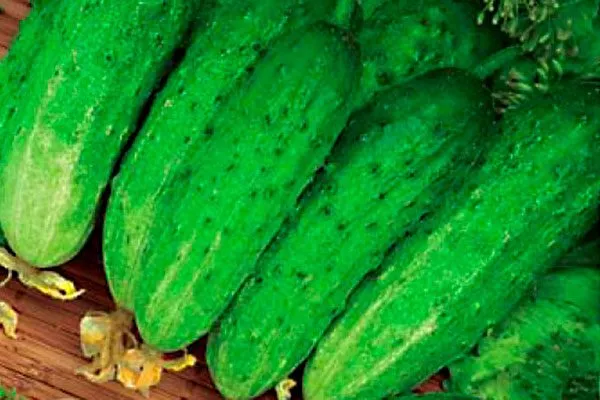
One of the key characteristics of this variety is its versatility. Although Cascade is not a hybrid, but a classic variety that requires bee pollination, it can be successfully grown both outdoors and in greenhouses (although its creators intended it for the garden).
Originators
Cascade was created in 1977 thanks to the efforts of Russian agronomists working at the Khabarovsk Research Center of the Far Eastern Branch of the Russian Academy of Sciences. In 1982, it received official recognition and was added to the state register of varieties.
External characteristics of the plant
Cascade cucumbers are distinguished by their moderately long stems (up to 130-150 cm) and dense pubescence, which is a genetically determined protective feature. Nodes are evenly spaced along the entire length of the branch, from which leaf blades, lateral shoots, flowers, or tendrils subsequently develop.
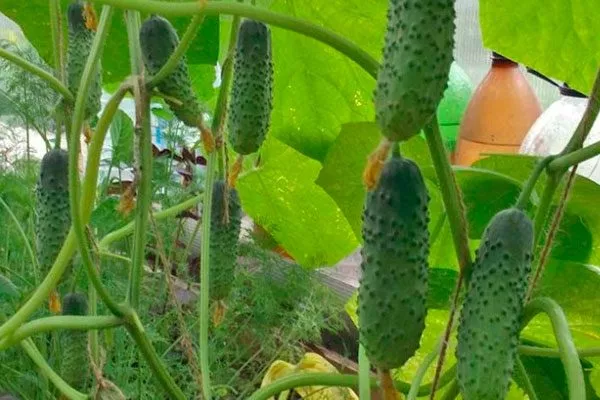
- ✓ Genetically determined density of pubescence on the stems, which is a protective feature.
- ✓ Predominance of female flowers, which contributes to high yields.
Other varietal characteristics of the bush:
- The development of lateral shoots is average, which indicates a moderate degree of climbing of this cucumber.
- The plant's leaves are a deep green with a shimmering emerald sheen and are rounded in shape with five pointed petals.
- The leaf surface is covered with fine hairs and spines, and small wrinkles and grooves are visible throughout the leaf blade.
- The leaf diameter can vary from 12 to 20 cm.
- The root system is well-branched, but its shoots do not penetrate deeply into the soil, reaching a depth of 25-35 cm. This indicates that the roots develop primarily in the upper soil layers.
- The inflorescences include both male and female buds, with the latter predominating.
- This variety is characterized by the formation of peduncles in groups, which corresponds to the concept of cluster ovary.
Fruits, taste and purpose
To fully appreciate the variety, it is important to pay attention to the characteristics of its fruits:
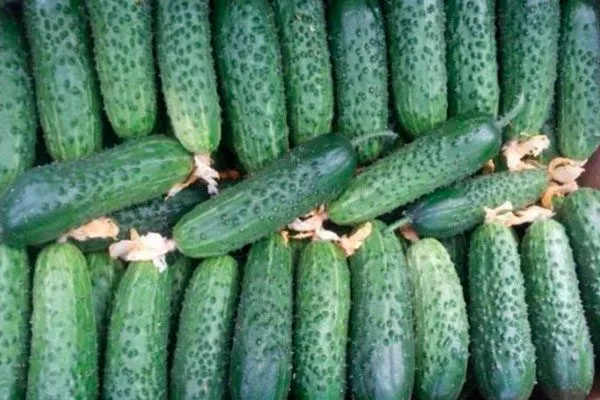
- They have an elongated elliptical shape with small tubercles decorated with small black spines.
- One of the key characteristics is the evenness of the fruit, the absence of breaks and bends.
- The color varies from light to dark green, sometimes with lines of milky green notes.
- These cucumbers are medium-sized: maximum length is 16 cm (minimum 13 cm), and diameter is no more than 4-4.5 cm. The weight of each fruit varies from 90 to 125 g, depending on growing conditions and care.
- The pulp is tender and crispy, without a sharp bitter taste.
- Vegetables can be eaten in a variety of forms: fresh, pickled, canned, or frozen. Before freezing, it's recommended to grate cucumbers to avoid them becoming soggy when defrosted.
When ripe, the yield
From sowing the seeds to harvesting the first fruits, it takes only 30-35 days, making it an ideal candidate among early varieties that also bear fruit simultaneously. Mass harvesting begins exactly six weeks later.
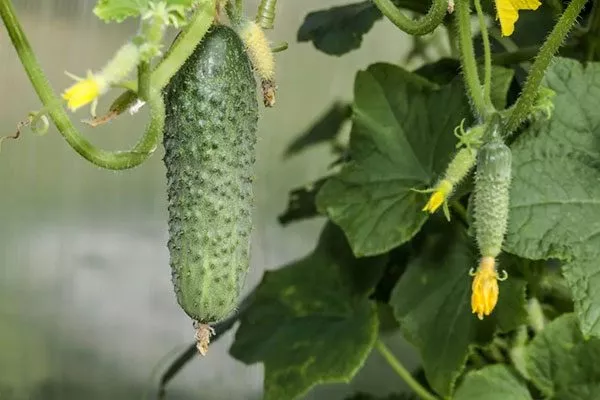
According to reviews, Cascade cucumbers offer a bountiful harvest, yielding up to 4 kg of fruit per bush. As for yield per square meter, it can vary depending on the cultivation method:
- When grown on land, the yield reaches 16 kg.
- If you use trellises, it will be about 12 kg.
- In industrial cultivation, the figures range from 127 to 290 centners per hectare.
Soil requirements
To thrive, Cascade requires loose, nutrient-rich soil. This variety prefers light soil types such as sandy loam and medium loam.
The optimal location for planting is a sunny area, preferably in the southwest of the site, protected from strong gusty winds.
Landing features
For this honeycomb, it's important that the soil be loose and retain moisture well, but not excessively soggy. Sowing time is also crucial, as it determines the germination and subsequent fertility of the plants.
Planting dates
The time for planting seeds depends on the weather: in a warm spring, sowing begins in mid-May, and in cool springs, from the end of the same month. For faster germination, the soil temperature should be around 14-15°C, and the air temperature should be at least 20-25°C, otherwise the seedlings may die from the cold. In southern regions, seeds are sown from May 5th or even April 25th.
Preparatory activities
Preparation of the garden bed begins in the fall:
- In September, clear the area of plant debris.
- Dig to a depth of 35-45 cm, removing weed roots.
- Then disinfect the soil with a solution of salt or copper sulfate.
- Next, apply fertilizer. Use urea or manure, as this variety requires nutritious soil.
- Three days before planting, loosen the soil again, break up clods, water, fertilize with humus and mulch with any dry material.

Planting seeds
When planting seeds for seedlings, follow these key rules:
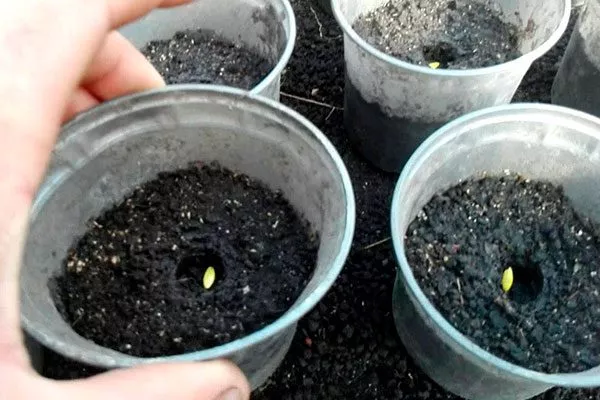
- Place the planting material in separate peat pots, two pieces each.
- Before sowing, enrich the soil with organic additives: humus, sand and rotted wood chips (take the components in equal proportions).
- Pre-soak the seeds in a light pink solution of potassium permanganate.
- The ideal temperature for germination is 25-26°C before emergence and 23-25°C after.
- During this period, water the seedlings daily, preferably in the morning.
Transplanting seedlings
Transplanting seedlings into open ground occurs later than with other varieties, usually around day 30-33. By this time, each plant has developed four true leaves. A week before transplanting into the garden, acclimatize the seedlings by placing them outside for 20-40 minutes.
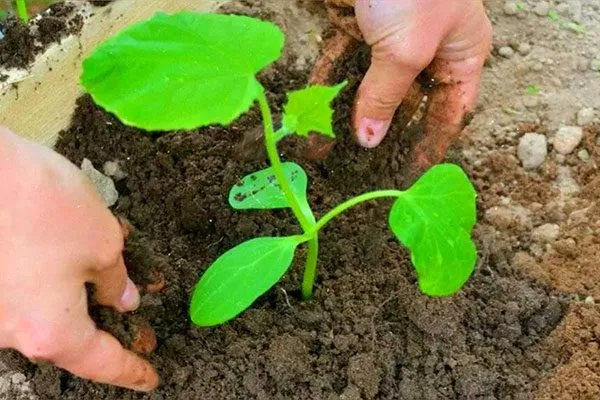
After planting, water generously, protect from the wind, root and cover with a plastic sheet at night.
Planting diagram
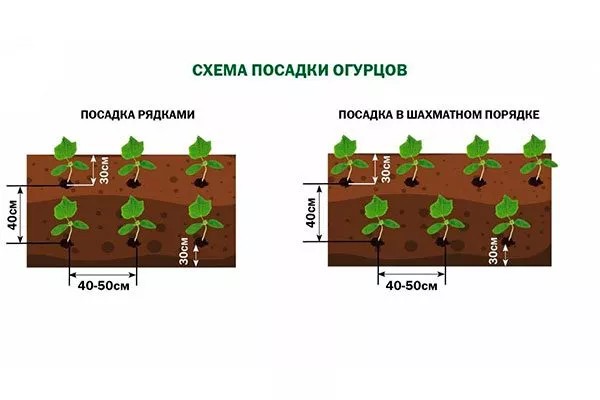
The plant's compact size allows for up to 4-5 bushes per square meter, provided they don't shade each other. Other guidelines:
- It is recommended to leave a distance of 30-35 cm between plants;
- the distance between rows should be about 60-70 cm;
- The beds for seedling cucumbers are dug to a depth of 25 cm.
Care
Caring for the Cascade cucumber requires simple but meticulous care. The plant requires consistent, high-quality fertilizer, gentle and light soil loosening, and consistent watering with appropriate water. It's important to maintain proper bush formation, otherwise the cucumber won't produce the desired abundant harvest.
Watering
Initially, before budding, water the plants twice a week with a water volume of approximately 4-4.5 liters per square meter. Once buds appear, increase the frequency to three times a week, while the watering rate increases to 8-10 liters per square meter.
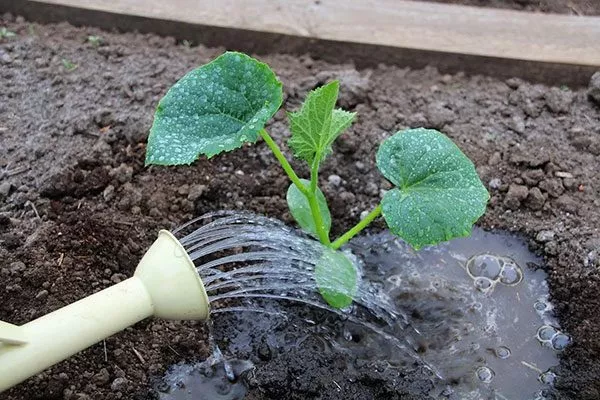
- ✓ The water temperature for irrigation should not be lower than 20°C to avoid stress on plants.
- ✓ Watering should be done early in the morning or late in the evening to minimize water evaporation.
As fruiting begins, you can return to your previous watering schedule, reducing the volume to 5-6 liters. Water should be settled and warm, as cold watering can lead to plant diseases.
Shaping, garter
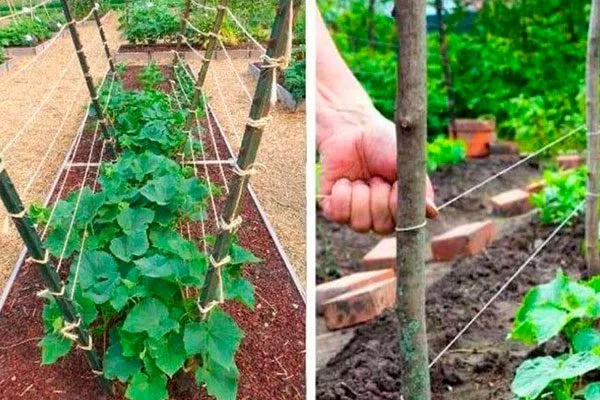
In open ground conditions, the Cascade variety can spread along the ground, which increases its fruiting. However, in greenhouses or hotbeds, it's important to ensure the plants are kept vertical. The Cascade cucumber should be handled as follows:
- When the plant reaches a height of 15-17 cm, secure the shoots to the trellis.
- Leave the main stem at the bottom until the fourth leaf.
- Form the central stem of the Cascade into an inverted pyramid shape.
- Leave only two ovaries on the lower branches.
Top dressing
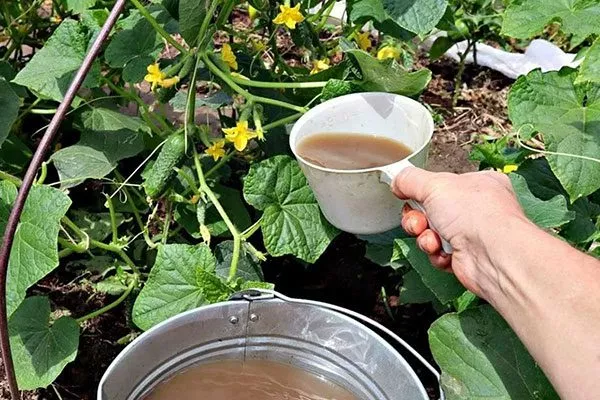
When gardening on loamy soils, fertilizing every two weeks is recommended:
- Apply the first fertilizer within the first week after transplanting the seedlings, using charcoal and humus.
- Subsequently, before budding begins, fertilize the bushes with solutions of cow manure, chicken manure or peat.
- When the formation of ovaries begins, add mineral compounds under the roots - superphosphate, potassium salt and sodium sulfate.
Hilling
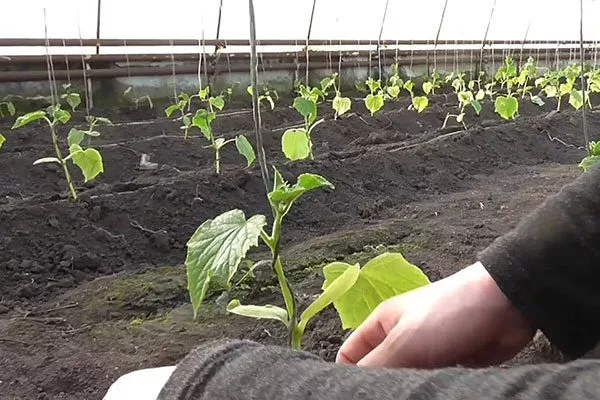
To protect against frost and during the summer heat, which this variety tolerates poorly, regularly hill the plants. The soil should be added to a depth of 20 cm. Repeat this procedure weekly. A thin layer of hay or peat can be spread around the hilled soil for additional protection.
Diseases and parasites
This variety has average immunity compared to newer hybrids. This cucumber is susceptible to viruses and insect attacks.
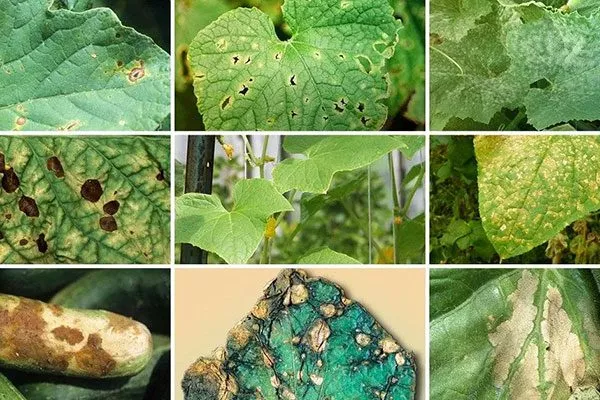
To minimize risks, it is necessary to treat seeds and soil with antibacterial agents before planting, and also ensure cleanliness around the seedlings afterwards.
What is the threat:
- Cucumber mosaic. This viral disease attacks cucumbers when humidity and high temperatures combine, as well as when plants are planted too close together. Symptoms include light-colored oval spots on the leaves and leaf curling.
In the early stages of the disease, its progression can be prevented by spraying with dandelion infusion or a milk-iodine mixture. For more severe infestations, Aktara and Actellic are used. Severely affected bushes are destroyed. - Black flea. This insect attacks cucumbers in warm and humid conditions, especially when there are many weeds around. Flea beetles can destroy a significant portion of a crop in just a couple of weeks. An effective flea beetle repellent is a mixture of tobacco powder and tree resin.
If there are numerous beetles on the bushes, use insecticides such as Sherpa or Aktara. As a preventative measure, it is recommended to plant bulbs or wormwood around the borage area. - Whitefly. The insect lays eggs on the foliage, which soon hatch into larvae that feed on plant sap. Cucumbers are particularly susceptible to attack by this pest in humid and warm conditions.
To protect plants in greenhouses, use sticky traps, and lay reflective film between rows of plants in open areas. As an additional protection measure, treat cucumbers with a mild soap solution.
Harvesting and storage
The cucumbers are harvested every two days, which prolongs their fruiting period. The morning hours before watering are ideal. The cucumbers are carefully cut with a sharp tool, leaving a small portion of the stem on the plant.
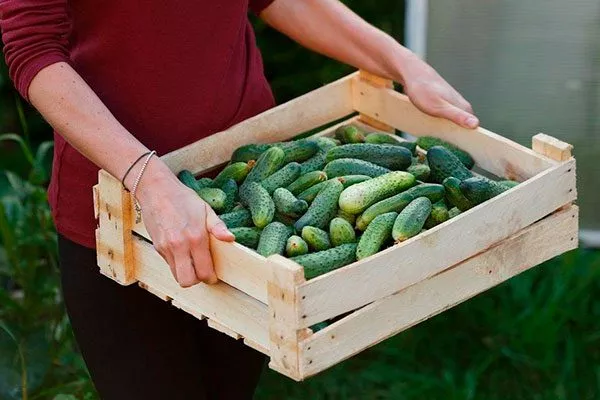
Harvested vegetables are not washed but placed directly on the top shelf of the refrigerator, where they can remain fresh for up to seven days without losing a drop of juice, aroma, or crispness. Thanks to its durable skin, the Cascade withstands transportation well, without fear of damage or deformation, even during long journeys.
Positive and negative qualities
Cascade is a classic cucumber variety that has proven itself to be reliable and highly valued by many gardeners. Key advantages:
Although the variety's shortcomings aren't fatal, they should be taken into account when cultivating. The Cascade variety has a number of characteristics that may impact its cultivation:
Reviews
The Cascade cucumber is easy to care for, but its main advantage is its ability to delight gardeners with a bountiful and early harvest of sweet, juicy fruit. Regular harvesting will provide you with the opportunity to prepare a variety of favorite dishes that you can enjoy even during the winter months.