
F1 Calendar is the name of an early-ripening cucumber variety, a hybrid. In addition to its early harvest, it delights gardeners with its excellent quality characteristics, disease resistance, and excellent adaptability to growing conditions. It is grown in spring and summer in greenhouses, open garden beds, and also indoors on windowsills, glazed balconies, or verandas.
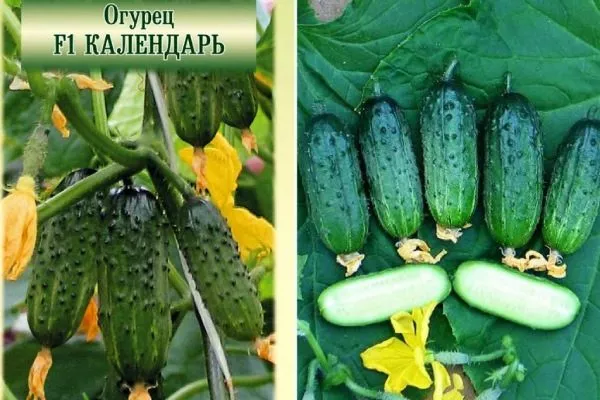
Introduction to the variety
The "Calendar" variety is the creation of the Manul breeding and seed company, and belongs to the "Balkonny" cultivar type. In 2010, it was added to the Russian Federation State Register.
This vegetable variety belongs to the gherkin cultivars and hybrids of the parthenocarpic (self-pollinating) type. It is distinguished by the following characteristics:
- cluster type of fruiting (a plant node forms from 2-3 to 5-6 cucumbers);
- early maturity (harvesting is possible 40-45 days after germination);
- high resistance to olive spot, cucumber mosaic virus, powdery mildew;
- moderate resistance to downy mildew;
- the possibility of cultivation in different climates, in closed and open ground;
- suitable for home cultivation in pots;
- increased shade tolerance (as with other representatives of the Balcony variety);
- decent output.
Characteristic features of the appearance of the plant and fruits
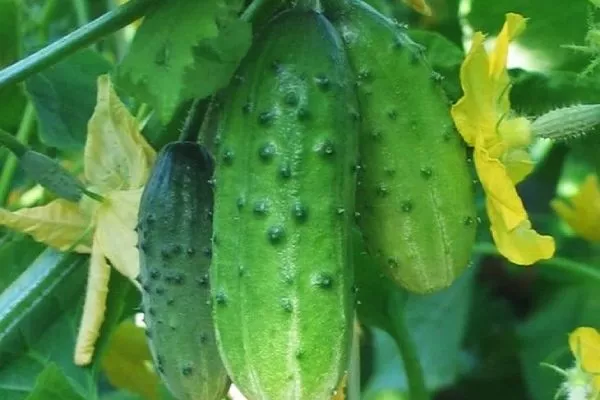
The Calendar hybrid bushes are characterized by vigorous growth of the main stem, moderate branching, and short internodes. The foliage covering them is small. They produce exclusively female flowers, so they do not require pollinators.
Fruit cucumber hybrid have the following characteristics:
- evenness;
- regular shape without thickening or constriction, resembling a spindle;
- small in size (8-10 cm in length, 3-3.5 cm in diameter);
- weight - 80-90 g;
- rich green glossy skin with a pattern of longitudinal stripes of a lighter shade;
- the presence of medium-sized tubercles on the surface of the skin (medium degree of tuberculation).
Purpose and taste
Taste gherkins The hybrid variety "Calendar" is excellent eaten fresh, salted, or pickled. They are juicy and crisp. They are ideal for adding to summer vegetable salads and for preserving for the winter.
Thanks to their small size and neat shape, these cucumbers look beautiful in jars. They easily fill even small glass containers intended for pickles and vegetable preserves.
Growing and care
Grow the F1 Calendar hybrid in one of two ways:
- direct sowing of seeds into the soil;
- through seedlings.
- ✓ Optimum soil temperature for sowing seeds: +15-18°С.
- ✓ Seeding depth: 0.5-1 cm.
- ✓ Distance between plants when planting: 30-40 cm.
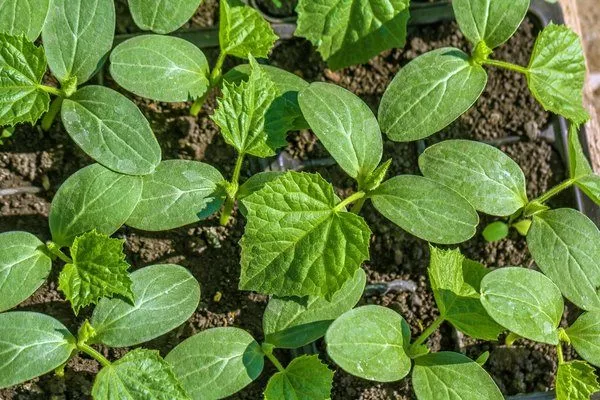
Sow seeds in an unheated greenhouse on May 15-20, in open ground on June 1-5 (in the central part of the Russian Federation) and in May (in the south of the country).
Grow seedlings in a warm room:
- the optimal temperature for germination is +25°C;
- +15°С — for sprouted shoots.
Plant the Calendar seedlings in an open bed or greenhouse after they have developed 2-3 true leaves. Make sure the soil has warmed to 15-18°C and the risk of frost has passed.
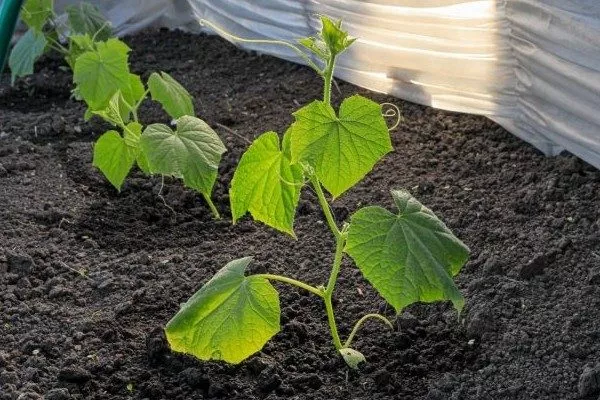
Set aside a plot of light, loose, and fertile soil for your cucumber planting, enriched with organic matter in the fall. If you didn't fertilize it last year, add humus or compost (5-6 kg per square meter) and wood ash (200 g per square meter) during spring digging.
When transplanting seedlings to the garden, do not exceed the planting density recommended for the hybrid:
- 2.5-3 plants per 1 sq. m - in a greenhouse;
- 3-5 seedlings per 1 sq. m - in an open bed.
Maintain your cucumber bed properly to ensure a bountiful harvest of gherkins and avoid complications like plant diseases. Follow these maintenance procedures:
- Formation of bushesWhen the plant is secured to a trellis, remove all flower buds and lateral shoots down to the axil of the fourth node. It is also possible to form a single stem by removing all branches.
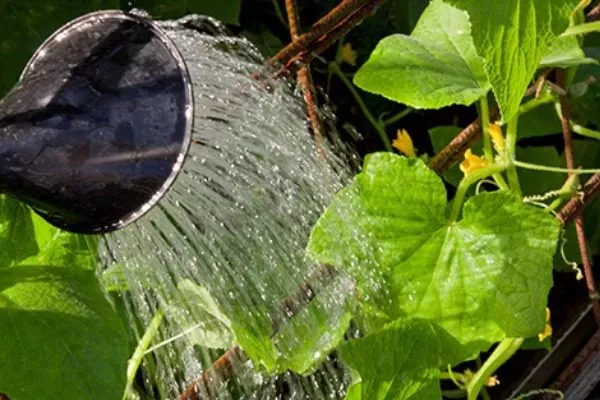
- WateringWater this moisture-loving vegetable planting once every 3-4 days. During dry seasons, the crop requires more frequent watering—every other day. Monitor the soil moisture. Avoid waterlogging, which can cause plant rot.
Water in the evening. Use settled, sun-warmed water. Maintain a consistent rate of 2 liters per plant. - LooseningHill up the bushes in early summer. Then, loosen the soil after watering and rain. Do this carefully to avoid damaging the cucumber roots. Till the soil to a depth of no more than 7 cm. This will ensure better aeration of the soil.
Combine this with the removal of weeds that interfere with the proper development of the bushes.
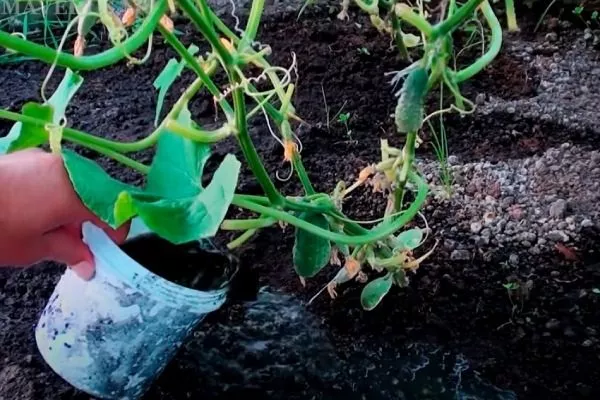
- Top dressingFertilize the crop 3-4 times per season. Two weeks after emergence, apply organic matter (chicken manure, manure) in a liquid solution or urea.
When the bushes are flowering, water them with herbal infusion. Mineral solutions are also suitable. Use nitrate (potassium, ammonium) and superphosphate.
During fruiting, fertilize the cucumber planting with green manure or potassium nitrate. If desired, apply additional fertilizer (such as wood ash) to prolong fruiting.
Reviews
The Calendar cucumber is a hybrid cucumber suitable for growing in both open and closed ground gardens, as well as on glassed-in balconies or verandas. It is characterized by shade-tolerant plants, self-pollination, high productivity, marketable yields, and versatility.