
Balconies are often used for growing flowers, herbs, and even vegetables. With a little effort, you can provide yourself with fresh, organic cucumbers year-round. Let's learn about the intricacies of growing cucumbers on the balcony and which varieties are suitable.
What type of balcony is suitable for growing crops?
The optimal option for growing cucumbers and other vegetables is a south-facing balcony. Under these conditions, vegetables can be grown for up to six months. If the balcony faces north, a greenhouse or hotbed is essential. A north-facing balcony should be insulated.
Vegetables require specific conditions to develop and bear fruit. The main factors for cucumber growth are light and warmth. A deficiency of either negatively impacts the harvest; in fact, the plants may not produce fruit at all.
A southern balcony is more suitable for growing vegetables, but a south-facing balcony is not a requirement – favorable conditions can be created under any circumstances.
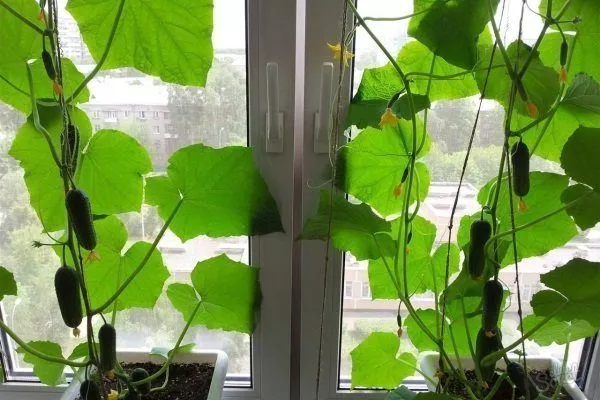
The best "balcony" cucumber varieties
| Name | Pollination type | Shade tolerance | Length of fruits |
|---|---|---|---|
| City cucumber | Self-pollinating | High | 10-12 cm |
| Swallowtail | Self-pollinating | Average | Up to 12 cm |
| Balcony miracle | Self-pollinating | High | 10 cm |
| April | Self-pollinating | Low | Up to 25 cm |
| Farce | Self-pollinating | High | Up to 10 cm |
| Debut | Self-pollinating | Average | 12-14 cm |
| Cuckoo | Self-pollinating | Low | 20-22 cm |
| Hummingbird | Self-pollinating | High | Up to 10 cm |
| Masha | Self-pollinating | Average | Up to 12 cm |
| Elegant | Bee-pollinated | Low | Up to 20 cm |
| Garland | Self-pollinating | Average | 13-16 cm |
Don't just plant any random variety on your balcony; instead, choose special balcony cucumbers. The packaging should indicate that these are seeds for indoor and balcony growing.
Requirements for varieties for growing on a balcony or windowsill:
- Self-pollination. When growing cucumbers on a balcony, it's hard to count on bees visiting. Varieties with cluster-forming flowers and female flowers are best suited for balconies. If you choose a non-self-pollinating variety, you'll have to pollinate the flowers by hand.
- Shade tolerance. Plants on the balcony receive less light than in their natural environment. Cucumbers only receive natural light in the morning or afternoon – the timing and duration of the light depends on the balcony's location.
- Small leaves. The small leaf surface area minimizes shading of plants.
- Bush type of plant. Plants with short lateral shoots and internodes are more suitable for balconies.
Balcony varieties produce fruits that are in no way inferior in taste to their counterparts grown in traditional garden beds or greenhouses.
Popular varieties of cucumbers for balconies:
- City cucumber. An easy-to-grow and hardy variety. The gherkins are cluster-type—the fruits grow in "clusters." The vines have short internodes and small leaves. It tolerates temporary shade well. The nodes contain 4 to 10 ovaries. The length is 10-12 cm, and the weight is 75-95 g. The fruits are delicious fresh and suitable for canning. This variety is suitable for both greenhouses and open ground cultivation.
- Swallowtail. A highly resistant variety distinguished by early fruit ripening. The hybrid produces female flowers. It is a gherkin, cluster-type, parthenocarpic variety. Internodes are shortened. The stems are short, densely covered with leaves. There are 2-11 leaves per node.
- Balcony miracle. An undemanding and viable variety. It requires minimal soil thanks to its dense and compact root system. The fruits have juicy flesh, without bitterness. It tolerates shade well. The flowers are female. The vines reach 2 m in length. They have many short internodes, each producing 3-5 ovaries. The fruits are 10 cm long and weigh up to 110 g. They are very tasty and suitable for pickling and canning. This versatile variety is suitable for growing in a greenhouse or open ground.
- April. A self-pollinating hybrid with female flowers. Low, bush-like plants, up to 30 cm tall, produce bumpy, white-spiked fruits. They weigh 220-250 g. The flavor is not bitter. Harvest the fruits promptly to prevent them from turning yellow or becoming overgrown. A 1 kg cucumber yield can reach up to 15 kg. When grown in beds, the yield increases to 40-50%.
- Fairy tale. A shade-tolerant, drought-resistant, early-ripening variety. It has a strong, compact root system. The leaves are small, the internodes are small, and each node contains 3-9 ovaries. The fruits are small and not prone to overgrowth. Ripening time is 40-42 days. Disease-resistant.
- Debut. A self-pollinating hybrid. Ripens early, produces fruit, and produces female flowers. Suitable for fresh consumption. Not suitable for preserves. Fruit length: 12-14 cm, weight: 100 g. Plants are short, with clustered ovaries. Lateral shoots grow rapidly. Disease-resistant, easy to care for.
- Cuckoo. A variety with high immunity and vigor. The bushes are small, not spreading. Fruit length is 20-22 cm, weight 220 g. Excellent flavor, with juicy, fragrant, and slightly sweet flesh. There is no bitterness in the taste. The variety produces fruit well under plastic wrap.
- Hummingbird. A gherkin-type hybrid. It requires no pollinators. Lateral shoots are short, and the leaves are small. Internodes are short, with 3-10 ovaries per internode. It tolerates shade well. Fruits are not prone to becoming overgrown.
- Masha. An early-ripening hybrid. The first fruits appear 36 days after planting. This variety is characterized by its vigor. The fruits are bumpy and have thick skin. The cucumbers are crisp, with a very good flavor, without bitterness.
- Elegant. This is the only bee-pollinated variety suitable for growing on a balcony. It yields up to 7 kg per square meter. The plants are spreading, and the fruits have a bumpy surface. They are eaten fresh and pickled. It is disease-resistant, cold-hardy, and can serve as a pollinator for other varieties.
- Garland. A very productive hybrid. The abundance of fruit makes the plants appear to be draped in cucumber garlands. The fruits reach 13-16 cm in length and weigh 125 g. The flavor is excellent and they can be eaten fresh, salted, or pickled.
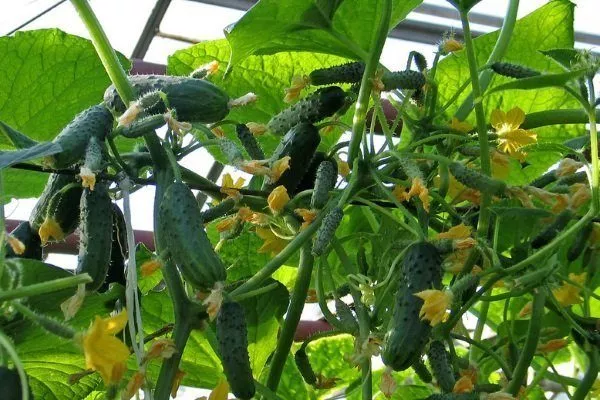
Variety "City Cucumber"
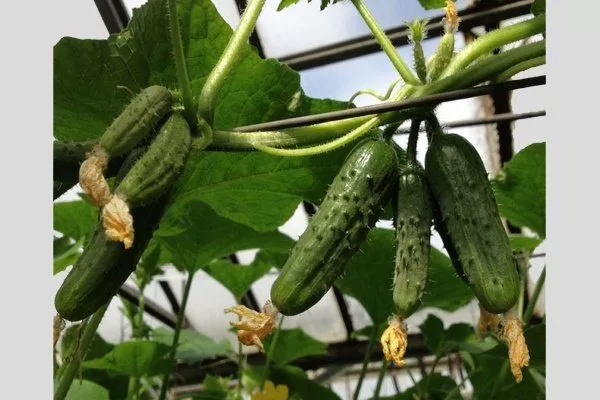
Swallowtail cucumbers
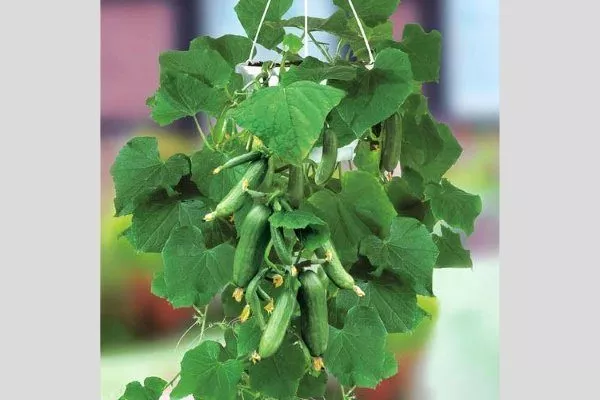
Cucumbers "Balcony Miracle"
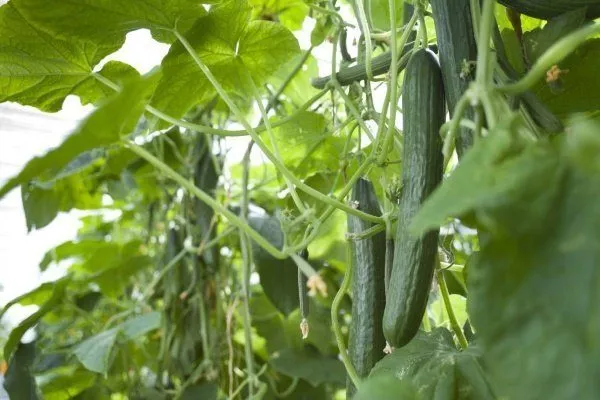
Cucumbers of the "April" variety
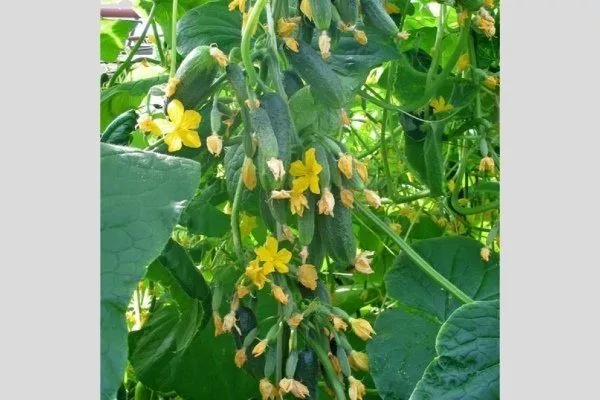
Cucumber variety "Balagan"
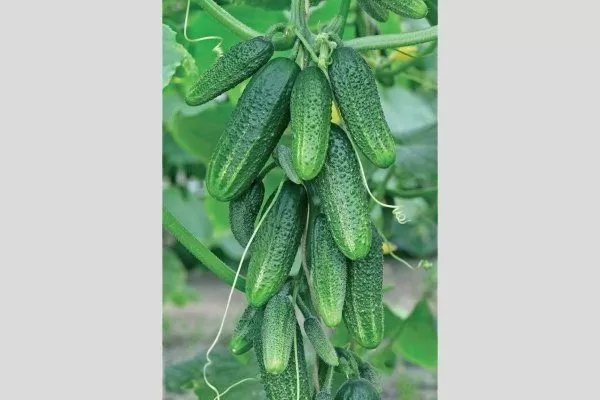
Cucumbers "Debut"
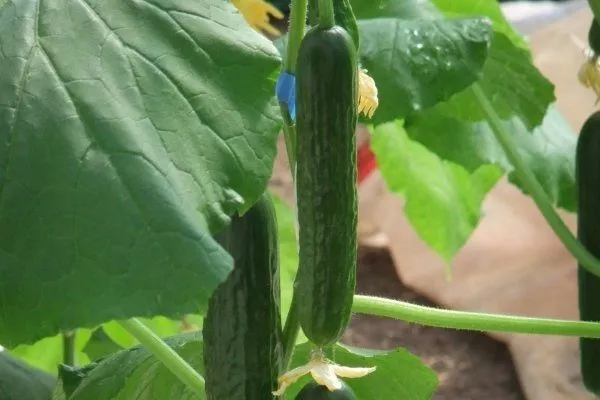
Cucumber variety "Zozulya"
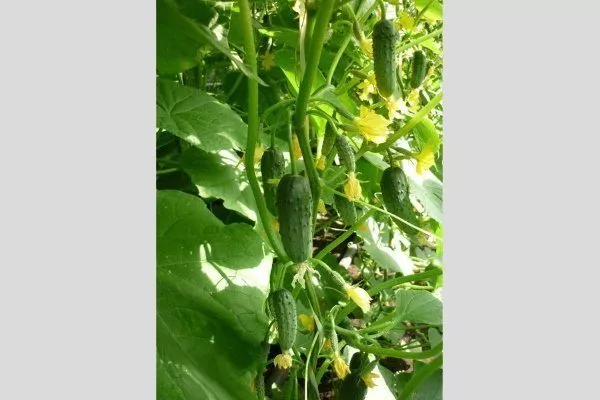
Hummingbird cucumbers
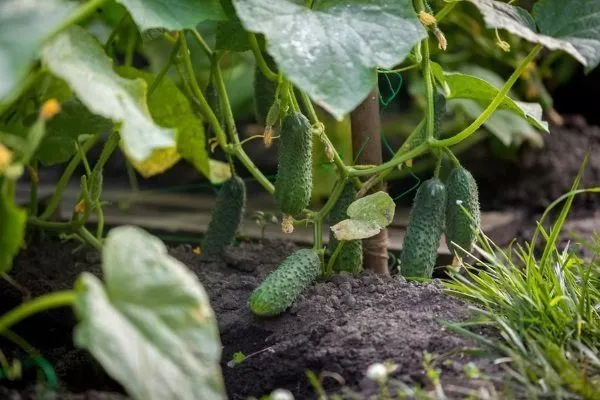
Cucumbers of the "Masha" variety
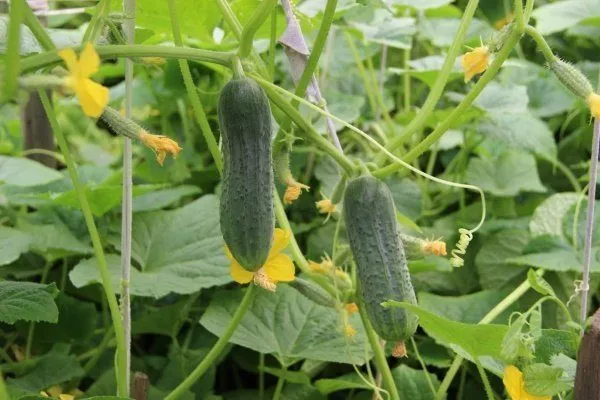
Cucumbers "Elegant"
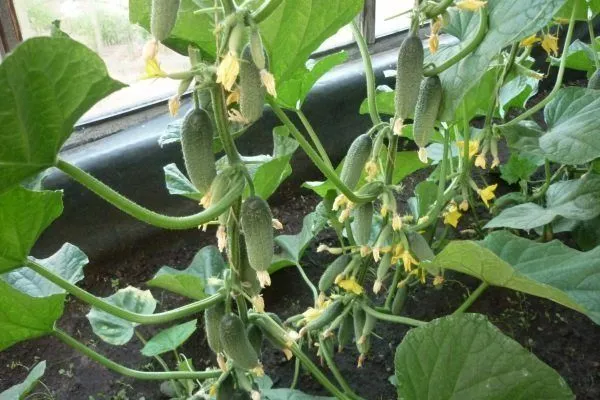
Cucumber variety "Garland"
Conditions for growing cucumbers on the balcony
The biggest challenges when growing cucumbers on a balcony are temperature and light. Cucumbers require a lot of light and warmth to grow and fruit.
- ✓ Light intensity should be at least 10,000 lux for optimal growth.
- ✓ Daylight hours should be 14-16 hours to stimulate fruiting.
Lighting
Good lighting is essential for cucumber growth. In summer, balconies and loggias receive ample light through double-glazed windows. This can become a problem in March, when natural light is insufficient for vegetable growth. To address this lack of light, greenhouse lamps are installed on the balcony and left on overnight.
Temperature
The ideal temperature for cucumber growth is 18-22°C (64-72°F). Standard glazing isn't enough to ensure this temperature on a balcony. Cucumbers are sown in February, when it's still very cold outside. To maintain a room-temperature environment on the balcony, additional insulation is necessary.
At temperatures above 22°C, plants wilt and the soil dries out, requiring more frequent watering, which promotes the development of fungal diseases. If the temperature drops below 18°C, the plants will grow, but will not produce fruit.
Preparing for landing
To ensure that cucumbers are not just balcony plants, but truly productive vegetables, it is necessary to properly prepare the planting site and cucumber "beds."
Prepare containers and place
To ensure cucumbers grow smoothly on the balcony, a meticulously designed control system is essential—the slightest frost will kill them. Depending on the growing season, optimal temperature and lighting are ensured.
Various containers will serve as "beds." Considerations for choosing containers:
- To grow seedlings, you need small containers, such as disposable plastic cups. Peat cups are even better. However, this is not suitable for early-ripening varieties—their root systems grow faster than the peat containers dissolve.
- Large boxes are suitable for planting seedlings. Cucumbers can also be grown in pots, trays, and buckets. Cucumber roots prefer ample space, so mature plants are grown in 5-10 liter containers. If using boxes, plastic or wooden ones should only serve as planters.
- Any container for growing cucumbers should have drainage holes. To prevent water from spilling onto the balcony, containers with seedlings and mature plants are placed on trays or pallets.
Seedlings grown in peat cups are transplanted into the soil along with the container – it will not only dissolve over time, but will also fertilize the soil.
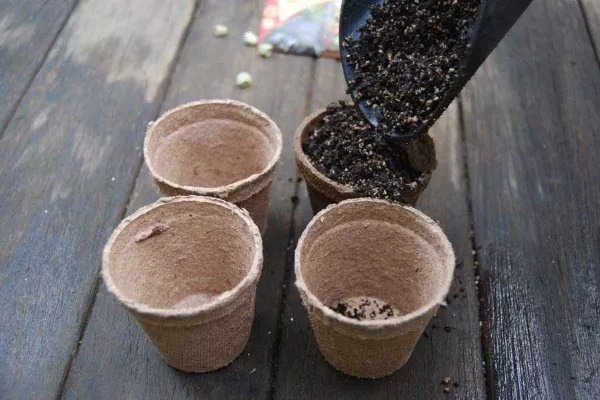
Also used as a container bags will doOne bag holds 2-3 bushes (3 plants per 1 sq. m).
Planting soil
Cucumbers require loose, fertile, and well-fertilized soil. You can buy a general-purpose soil "for seedlings." Dry peat soils should be enriched with black soil, humus, and sawdust. River sand, perlite, or vermiculite can be used to loosen the soil.
You can prepare the soil for cucumbers yourself by taking equal proportions
- humus;
- peat;
- sawdust;
- turf.
For each bucket of mixture prepared according to this recipe, add one teaspoon of urea and one tablespoon of nitrophoska. It is recommended to add 50 g of ash and a complex fertilizer to the soil mixture.
Seeds
Sowing seeds for seedlings They begin in March or even February. The time to plant the seedlings in the ground is April. Many balcony varieties are early maturing, with the average time from sowing to ripening being 2-2.5 months.
Seed preparation:
- The seeds are soaked in a weak solution of potassium permanganate.
- After 20 minutes, remove the seeds from the potassium permanganate solution and spread them on damp cheesecloth placed in a deep bowl. The cheesecloth is moistened with water heated to 60°C.
- The seeds are germinated for 2-3 days, periodically moistening the gauze.
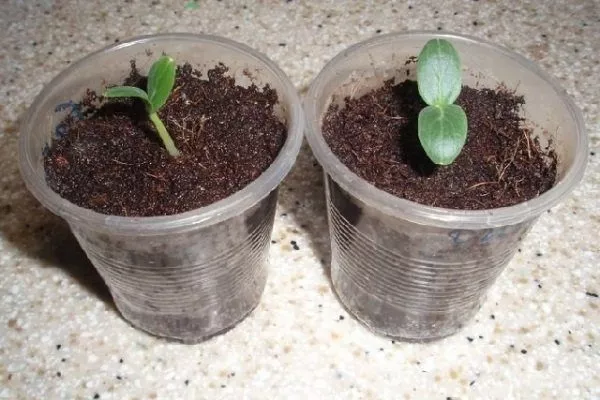
- Once the seeds have sprouted, carefully plant them in cups, being careful not to damage the sprouts. One seedling is grown per cup. Plant them at a depth of 1.5-2 cm.
To get good seedlings, the seeds need to be germinated. Keep the seeds indoors—they'll be cold on a glassed-in balcony.
Caring for young seedlings
Young seedlings are vulnerable to cold. The key is to provide them with an optimal temperature. The seeds can be placed on a windowsill 3-4 days after planting. Once the room has aired out, the cups with the seeds are moved to another location or covered with something.
Light
If the room in which the seedlings are grown experiences a lack of light, artificial lighting is turned on. Backlight lamps They are positioned so that the seedlings are at a sufficient distance from light sources.
The seedlings should not be exposed to direct sunlight.
Watering and fertilizing
Watering rules:
- The sprouts are watered daily.
- For watering, use water at 27°C (room temperature). It must be settled.
- If artificial lighting is used, the frequency of watering can double.
- If a lot of water flows out through the drainage holes, reduce the amount or frequency of watering.
To ensure the seedlings are strong and ready for transplanting to the balcony, they are grown indoors for about a month. During this time, it is recommended to feed the plants three times.
Composition of fertilizers for sprouts:
| When to fertilize | Compound |
| 10 days after sowing | Urea solution. 1 tablespoon per 3 liters of water. Half a glass of solution per plant. |
| 10 days after the first feeding | Dissolve in 8 liters of water:
|
| 10 days after the second feeding | Any of the two above compositions. |
Transplanting seedlings
Seedlings should be transplanted into containers 30 days after sowing. The final fertilizing should be done at least 7 days before transplanting.
The procedure for planting cucumber seedlings:
- One hour before transplanting, the seedlings are watered with warm water.
- Plant one plant per container—a pot or bucket. The approximate dimensions of the container are 30 x 30 x 30 cm. Each container should have drainage and a drain. The trays on which the pots are placed serve as the drain.
- A hole is made in the center of the container with soil.
- Water the depression with warm water.
- The roots of the seedling are moved into the hole along with a lump of soil.
- Sprinkle with soil and compact it carefully.
- Water again.
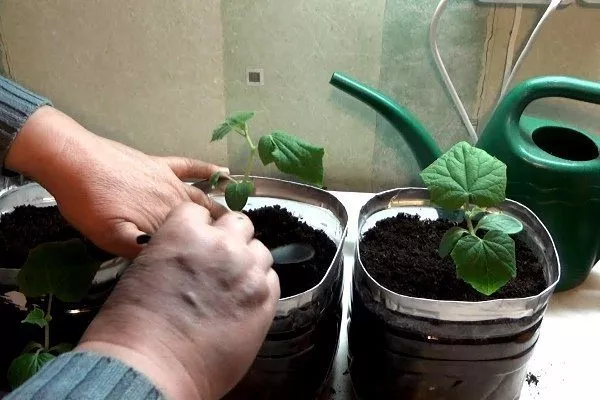
To ensure that seedlings take root and thrive better, it is recommended to transplant them into soil that is similar in composition to the soil in which the seedlings were grown.
Place the containers with the planted seedlings so they are not exposed to direct sunlight. Drafts are also averse. It's best to place the boxes and pots near the side walls of the balcony and in its corners. Immediately after placing the containers, you can install support structures for the vines, such as a trellis or net.
Caring for cucumbers on the balcony
To ensure plants grow well and bear fruit, they need optimal conditions. Cucumbers require watering, fertilizing, and soil loosening.
Irrigation scheme
Peculiarities watering cucumbers on the balcony:
- For watering, use settled, not cold water.
- Water the cucumbers every day. Make sure the soil doesn't dry out.
- If water stagnates in the trays, the rate or frequency of watering should be reduced.
- Do not over-water the soil, as this may cause the roots to rot.
It's important to moisturize not only the soil but also the air if low humidity is observed. To do this, install a humidifier or mist the area with a regular spray bottle. You can also increase humidity by adding containers of water.
When irrigating with air from a spray bottle, do not allow water to come into contact with the plants.
After the moisture has been absorbed, gently loosen the soil. If the soil in the pots and containers begins to settle, top it up to the original level.
Fertilizers for cucumbers
Some believe that overfertilizing cucumbers causes poor fruit production. However, if fertilizer is applied on time and in the right amounts, it will only be beneficial. Fertilizer should be applied carefully, avoiding contact with the leaves.
The first three feedings are carried out before planting the seedlings, and then the plants are fed every 10 days. To ensure abundant fruit production, it is recommended to vary the feeding schedule.
If plants begin to dry out, they are lacking nutrients. For the first two weeks after planting, feed them nitrogen fertilizer; after the first shoots appear, supplement with potassium.
There are many specialized fertilizers, but you can also use household items. Inexpensive but effective fertilizers for cucumbers:
- Infusion of wood ash. This fertilizer will provide plants with potassium and phosphorus, which are essential during flowering. Apply to the leaves and soil. Add 1 tablespoon of ash to 2 liters of water. Use boiled water. Strain the infusion before use.
- Eggshell. This is a source of microelements, essential throughout the growing season. The infusion has an unpleasant odor, so keep this in mind when using it. Use four eggshells per 3 liters of water. Keep the jar in the dark with the lid slightly ajar. When the infusion becomes cloudy and acquires a distinctive odor, it is ready for use.
- Banana peel. The dried and crushed peel is added to the soil – it is a good source of potassium.
- Onion peel. An infusion is used during flowering. Add 20 g of onion peel to 5 liters of water. Let it steep for 4 days. Strain before use.
| Fertilizer type | Validity period | Essential nutrients |
|---|---|---|
| Wood ash | 2-3 weeks | Potassium, phosphorus |
| Eggshell | 1-2 months | Calcium, magnesium |
| Banana peel | 3-4 weeks | Potassium |
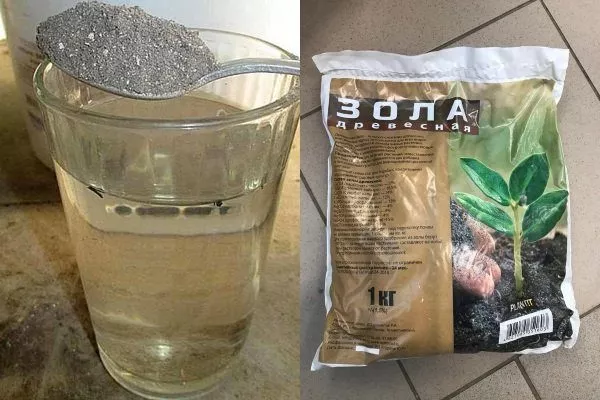
Wood ash infusion
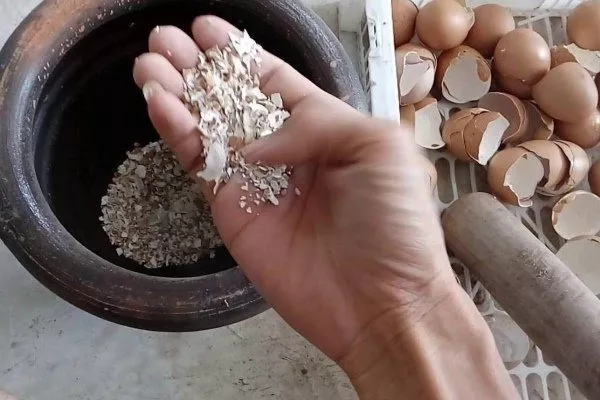
Crushed eggshells
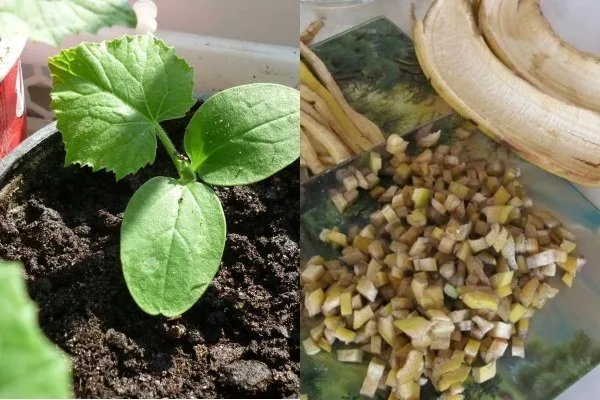
Banana peel as fertilizer
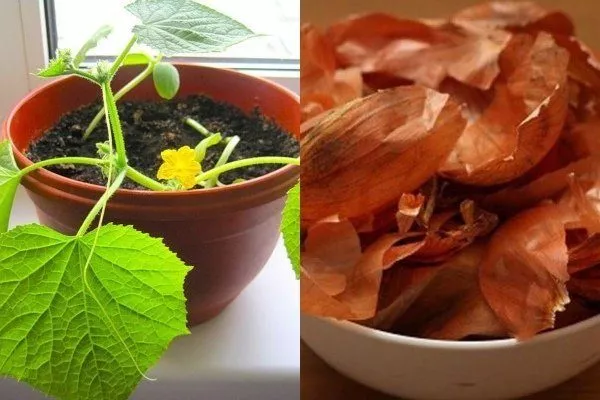
Fertilizer from onion peel infusion for flowering cucumbers
Foliar feeding:
- During flowering and fruit set, plants are sprayed with a 1% boric acid solution. Repeat treatments are carried out at 10-day intervals.
- After fruit set has begun, apply a potassium permanganate solution. This treatment improves the fruit's flavor. The solution is prepared at a rate of 10 crystals per 1 liter of water. An alternative is spraying with a urea solution at 5 g per 3 liters.
Root feeding schedule:
| Period of implementation | Composition of the fertilizer | Consumption per plant |
| Beginning of the fruit formation phase | ash infusion (1 liter of ash per 10 liters of water) | 1 glass |
| For growing season at intervals of 10 days | ROST-potassium concentrate NPK (6 ml of the preparation per 3 liters of water) | according to the manufacturer's recommendations - 20 g |
Formation of cucumber vines
To ensure the plant produces fruit well and doesn't waste energy on excess foliage, it is pinched. Pinching is done with consideration for the variety's characteristics.
How to pinch cucumbers depending on the variety:
- Self-pollinating. Pinch off the first two or three ovaries. Next, you can remove the side shoots above the third or fourth fruit. Self-pollinating varieties are easier to care for—they don't even always need pinching.
- Insect-pollinated. These varieties produce fruit primarily on lateral shoots. Therefore, the main stem is pinched off when the third true leaf appears, cutting it off at the growing point.
Pollination
To avoid the hassle of pollination, choose self-pollinating varieties. Or parthenocarpic varieties—they don't require pollination at all. All other varieties require pollination. In open ground, bees do this. On the balcony, you'll have to pollinate the flowers yourself.
First, you need to learn to distinguish the flowers. The female flowers have an ovary that resembles a micro cucumber. They have a large, brightly colored corolla.

Pollination order:
- Pick a male flower. It should be fresh and fully opened.
- Tear off all the petals from the male flower.
- Run the stamens along the female flower - along the stigma of its pistil.
Flowers should be pollinated in the morning. There must be sufficient pollen. If there is too little, large fruits cannot be expected. If pollination is successful, fruits will form in 10-12 days. Unpollinated ovaries will turn yellow and fall off.
Male flowers are open for one day, female flowers for 4 days.
Pest control
When growing cucumbers on the balcony, try to avoid chemicals. Most cucumber pests can be controlled with folk remedies. Balcony cucumbers have three main enemies:
- Aphid. A tobacco decoction is used against it. You'll need a pack of cigarettes. Add the tobacco extracted from them to 1 liter of water. Boil the mixture for 10 minutes. Then add another 1 liter of water to the decoction. Spray the leaves with the solution.
- Whitefly. This pest requires a stronger tobacco decoction than aphids. Whiteflies can also be killed with a vacuum cleaner—turn it on low and remove the pests from the plants.
- Spider mite. Treat with garlic infusion. Chop the head and steep it in 1 liter of water for 1.5 hours. Strain the resulting solution. To ensure better adhesion, dilute 15 grams of soap in the infusion.
Read more about cucumber pests and diseases Here.
Growing cucumbers on a balcony in winter
Cucumbers grown on balconies lack natural light. This problem is especially acute in winter. Lamps are needed during this period. When seedlings emerge, they are provided with light from 8:00 AM to midnight.
The best option for illuminating cucumber plantings is phytolamps. Fluorescent lamps can also be used. They are suspended directly above the plants, at a distance of 15 cm. As the seedlings grow, the lamps are raised.
Watch a video in which a home gardener shares his experience growing cucumbers on a balcony:
Harvesting
On the balcony, fruits should be picked as they reach the normal size for the variety. Fruit that is too large weakens the plant. Check the seed packet for the maximum fruit length. The more frequently the fruits are picked, the more they grow. After shedding their harvest, the plant refocuses its energy on fruiting—flowering, fruit set, etc.
Most varieties produce fruit 55-70 days after sowing. Ripe fruits should be deep green and firm when gently squeezed. Carefully cut the fruits with pruning shears; do not pick them, as this can damage the vines.
If you provide cucumbers with favorable conditions, the harvest will be enough not only for daily salads but even for small preserves. Each plant produces at least ten cucumbers, and with diligence, you can get 35-40.