
To ensure fruit set well and a presentable appearance, and to ensure a bountiful harvest, timely fertilization is essential. A lack of nutrients can negatively impact not only the plant's appearance but also significantly reduce yield.
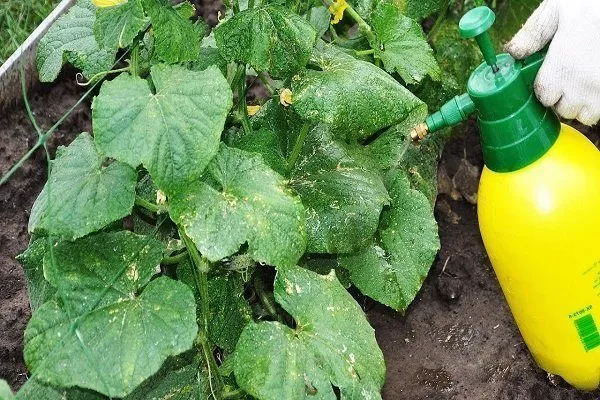
Signs of nutrient deficiency
Signs that fertilizing is needed include the absence or small number of ovaries after abundant flowering, and sluggish growth of shoots and leaves. In this case, the fruits are small, curved, or have other unusual shapes.
- ✓ The water temperature for irrigation should not be lower than 20°C, so as not to cause stress to the plants.
- ✓ The concentration of ash solution for spraying should not exceed 300 g per 10 l of water to avoid leaf burns.
A bitter taste in cucumbers indicates insufficient watering or recent temperature fluctuations, such as hot days and cold nights. In this case, water the plants with warm, settled water.
Read about the rules and methods of watering cucumbers in next article.
If large quantities of fruits have formed into bulbous shapes or curled into hooks, there's a potassium deficiency. Add an ash solution to your plant care routine and water more frequently—1 liter per root area. Alternatively, spray with a potassium phosphate water solution by adding 1 teaspoon to a liter of water.
Potassium deficiency looks like this:
- the stems and leaves are “spikeling” too vigorously;
- the foliage takes on a dark green hue;
- A yellow border appears on the leaves growing from below, and they become much lighter.
Timing and frequency of fertilizing
Cucumbers won't thrive without the right nutritional composition and beneficial ingredients, so follow the following root feeding plan:
- Immediately after planting in the garden or after permanent leaves appear.
- At the very beginning of flowering, when the buds have formed.
- At the beginning of fruiting.
- At the height of fruiting, in order to prolong this period as much as possible.
Foliar feeding is also done. This is done with a weak fertilizer solution. This solution is sprayed on the leaves and shoots 2-3 times per season.
- Apply the first foliar feeding 2 weeks after planting the seedlings.
- Perform the second feeding at the beginning of flowering.
- The third feeding should be carried out during the period of active fruiting.
Experienced gardeners say: if plants grow and bear fruit well without fertilizer support, apply it once or twice during the entire season.
Fertilizing cucumbers after planting in open ground
There's no need to prepare the garden soil in the spring: apply all the necessary fertilizers in advance, in the fall. Simply dig the beds with a shovel and treat them with potassium permanganate (water generously).
If the entire seedling adaptation process is going well, the plants have taken root, are growing quickly, and look healthy and strong, skip the first step of the cucumber fertilizing plan. Apply fertilizer for the first time only when the plant begins to bud.
If your bushes are looking poorly, are sick, aren't establishing themselves, or are growing slowly, help them with foliar feeding and nitrogen-rich fertilizers such as ammophoska or azophoska. Ash is also suitable: sprinkle it on the soil at a rate of 100-200 g per square meter, or dilute it with water and water.
Many agricultural companies now produce special complex fertilizers for spring, rich in nitrogen. A similar effect can be achieved by combining the ingredients yourself. Here's a spring feeding recipe (for 10 plants):
- 10 liters of water;
- 10 g potassium chloride;
- 10 g ammonium nitrate;
- 20 g superphosphate.
Pour a liter of this solution under each plant. Fertilize the crop again after fruit formation begins. Plants that produce large quantities of fruit need a boost.
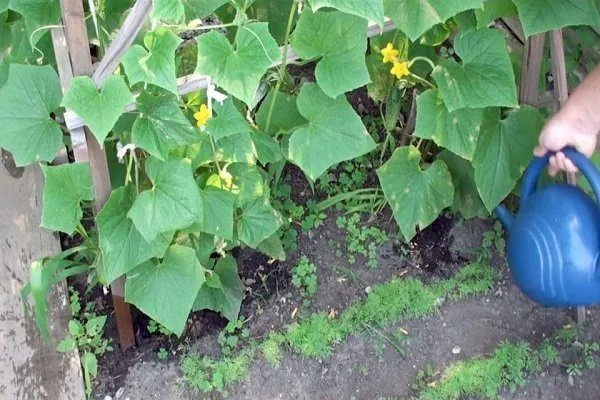
During the third stage, apply a nitrogen, potassium, and phosphorus fertilizer complex containing sulfur to promote proper development and growth. The stages of the third stage are:
- At the initial stage of growth, prepare and use a nitrophoska solution as directed: 12.5 g of powder per 5 liters of water.
- After seven days, dilute the mullein according to the following recipe: 0.5 liters of organic matter and 1 teaspoon of potassium sulfate per 10 liters of water.
When cucumbers are actively producing fruit, fertilize them with a special fertilizer (20 g per square meter). Also add humates and greenery.
Nitrogen fertilizers
If the cucumbers you planted are experiencing a nitrogen deficiency, the following signs will appear:
- the fruits of all varieties of the plant are very lightly colored, almost white;
- the part of the fruit from which the flower fell has a pointed shape, similar to a bird's beak;
- the foliage on the lower tier turns yellow;
- The shoots, main and lateral, grow slowly.
Before applying nitrogen fertilizer, make sure you're watering your plants adequately. When the soil is too dry, the beneficial microorganisms that live there are inactive, and the cucumber plants can't absorb the nitrogen.
If you notice a nitrogen deficiency in greenhouse fruits, apply either root or foliar feeding according to the following recipe:
- 10-15 g of ammonium sulfate or urea;
- 10 liters of water.
If your vegetables are experiencing nitrogen deficiency during the period of rapid ripening of fruits, it is better to feed greenhouse cucumbers with greenery rather than chemicals.
Recipe for green infusion:
- 1.5-2 kg of finely chopped leaves and stems of weeds;
- 10 liters of water.
Leave this infusion for a week to allow fermentation to begin, then water the cucumbers with it.
Mineral fertilizers
Apply the necessary mineral fertilizer in small quantities, as the green vegetable's root system is sensitive to overdosage. Regularly enrich the soil with nutrients throughout the gardening season. The average amount of nutrients for basic application per square meter is:
- 10 g urea;
- 20-30 g of superphosphate;
- 10-15 g of potassium sulfate.
Potassium and phosphorus are best used in the fall, when preparing the soil for winter, and nitrogen – before planting the garden. Organic fertilizers contain most elements in very small quantities, so those who prefer a natural approach to gardening should supplement their organics with mineral fertilizers. Nitrogen, phosphorus, and potassium are very important.
For information on fertilizing cucumbers with potassium fertilizers, watch the following video:
Phosphorus fertilizers
Signs of phosphorus deficiency:
- the stems on the sides and foliage grow poorly;
- newly grown leaves are very small;
- new leaves become increasingly darker and soon dry out.
In this situation, apply diluted ammonium phosphate and diammonium phosphate. You can also use this recipe for root feeding:
- 1 tbsp. l. superphosphate;
- 10 liters of water.
Organic fertilizers
These types of fertilizers are used by gardeners who do not want to use chemicals in fertilizers.
Ash
This type of organic fertilizer can be used during all four stages outlined in the plan above. Here's the recipe for the ash solution:
- 1 cup of ash, passed through a sieve;
- 1 bucket of water.
Feed your cucumbers with this mixture, pouring the fertilizer into the root area. Repeat once every 10 days.
To disinfect the soil and repel harmful insects, sprinkle sifted wood ash near each bush. This ash can be obtained by burning dry grass, straw, firewood, sawdust, dried leaves, etc. This substance contains all the micro- and macronutrients cucumbers need.
For foliar feeding, here is another recipe:
- Pour 300 g of ash into 300 ml of water, stir and boil for 30 minutes over high heat.
- Leave the resulting “broth” overnight (or just for 8 hours) to infuse.
- After a while, slowly add warm water until you reach 10 liters, and stir in a little more soap.
- Mix thoroughly and strain the solution, spray the leaves and stems.
Bird droppings, manure, green manure
Manure is considered the primary fertilizer for cucumbers. Per 1 square meter:
- 4-5 kg on fertile soil;
- 6-7 kg on depleted soil (sandy, sandy loam, gray forest, sod-podzolic areas).
Old compost and humus are also good organic fertilizers. However, only add them to the rows when sowing or to the holes when transplanting bushes from a container into the ground.
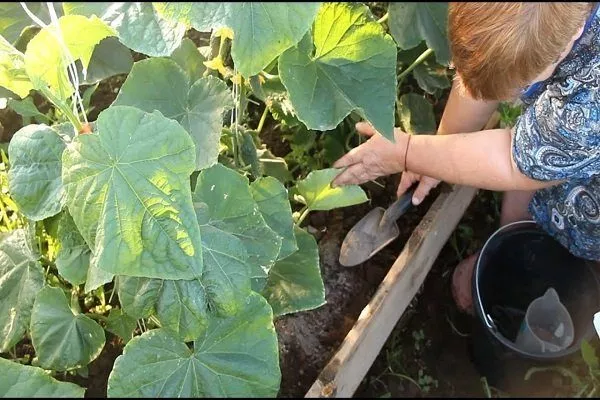
If signs of nitrogen deficiency appear as cucumbers begin to actively develop, use green fertilizer or herbal tea instead of chemicals. We described the recipe for this fertilizer above. When over-rotted, grass loses ammonia, which is harmful to cucumbers, faster than organic matter.
Bird manure contains phosphorus, potassium, magnesium, and nitrogen. It increases the vegetable crop's immunity to disease and promotes rapid growth.
Yeast
Yeast feeding recipe:
- Add 100g of fresh yeast to one bucket of water and let it ferment in a warm place. This will take 36 hours.
- Pour one and a half liters of this solution under the root of each plant.
- This is simply an aid to the basic mineral feeding with a 10-day break.
Dry yeast feed recipe:
- 10 g dry yeast per 10 l water plus 2 tbsp sugar.
- Let it stand for three hours.
- Stir and pour into a 40-liter barrel. You can then immediately water the cucumbers.
When applying yeast fertilizer, keep in mind that the maximum number of times is 2 times per summer.
Onion peel
Use onion peel infusion if vegetable leaves are turning yellow in large quantities. This indicates a nutrient deficiency or the onset of an infection.
Tincture recipe:
- Mix 1 cup of onion peel with 8 liters of water, heat on the stove until boiling, cover with a lid and let stand for 4 hours.
- Strain the mixture and you can water the cucumbers.
- This same solution can be used to spray the leaves. It's also suitable for the stems.
Features of fertilization in greenhouse conditions
It's important to begin preparing the soil in the greenhouse in the fall. Clear away all plant debris, dig up the soil, and treat it with diluted bleach.
When digging, be sure to add 1 bucket of manure, sifted humus, or compost per 1 square meter. Then add 500 g of slaked lime or dolomite flour to remove excess acidity.
In early spring, prepare the soil in the greenhouse by digging it up about a week before sowing cucumber seeds or planting established plants. Before digging, apply mineral fertilizer according to the following formula (per 1 square meter):
- 20-30 g of ammonium nitrate;
- 20-30 g of superphosphate;
- 20 g potassium sulfate.
After this, water the soil with a warm solution of potassium permanganate (2 g per 10 liters of water) and cover it with a thick, colorless film, leaving it until the seedlings are planted.
All the principles and timing of fertilizing are the same as for cucumbers in the garden. The difference is that the nutrient dosage should be reduced due to the sensitivity of greenhouse cucumbers. It's better to underfeed them than to overfeed them.
For information on when and how to fertilize cucumbers in a greenhouse, watch the following video:
Answers to frequently asked questions
Beginning gardeners have many questions about planting and fertilizing cucumbers. We'll answer them below.
How can you feed cucumbers after the first shoots appear?
During the development of the first shoots and leaves, cucumbers need to be given a nitrogen fertilizer. This will be the first fertilizer application according to the plan described at the beginning of the article. Use the following recipe:
- 20-25 g double superphosphate;
- 15-20 g of potassium sulfate or 10-15 g of potassium chloride;
- 10-15 g of ammonium nitrate.
This mixture should be enough for 10 bushes.
What kind of fertilizer do cucumber seedlings need after planting?
Apply the first fertilizer immediately after planting the seedlings in open ground, once 2-3 permanent leaves have emerged—nitrogen is needed. Use urea (a mineral fertilizer). The recipe: mix 1 tablespoon with 10 liters of water. Alternatively, you can use mullein, diluting it at a rate of 500 g per 10 liters of water. Apply both of these fertilizers directly to the roots.
How to feed cucumbers during fruiting?
Fertilize vegetables during the fruiting period with a soluble complex fertilizer at a rate of 20 g per square meter, or with humates or herbal infusions. During the fruiting period, these vegetables require nitrogen or potassium supplements.
What fertilizers do cucumbers that are not growing well need?
Use an infusion of onion peels. Fill a 3-liter jar with them. Then add boiling water (90°C) and let it sit for 24 hours, stirring occasionally.
If these conditions are met, you'll get an infusion that needs to be diluted with water. The ratio should be 1 to 10. Water the vegetables at the roots and also spray them, and they'll start growing faster.
How to feed cucumbers if the leaves turn yellow?
To effectively combat yellowing leaves, apply a fertilizer containing the required substance. This can be determined as follows:
- if the leaves dry out or turn yellow only at the edges, then this is a lack of potassium and magnesium;
- yellow top leaves – copper;
- yellowed leaves with green veins – iron;
- the old leaves at the bottom have turned colored - nitrogen.
Other possible causes of yellowing leaves include:
- excess of sun;
- incorrectly calculated watering;
- harmful insects.
How to feed pale cucumbers?
Light hues from the leaves sometimes spread to the cucumbers. This indicates a nitrogen deficiency:
- "First aid" is urea fertilizer, using the following formula: 1 tablespoon per 10 liters of water. Apply 3 liters per bush.
- The second option is ammonium sulfate (containing 20-21% nitrogen). Apply 25 to 40 g per square meter.
How to feed cucumbers after the cold weather?
After planting directly into the ground, temperatures may drop sharply, causing frost or snow. To protect against spoilage, stop watering and fertilizing cucumbers for a week. This will prevent the development of powdery mildew.
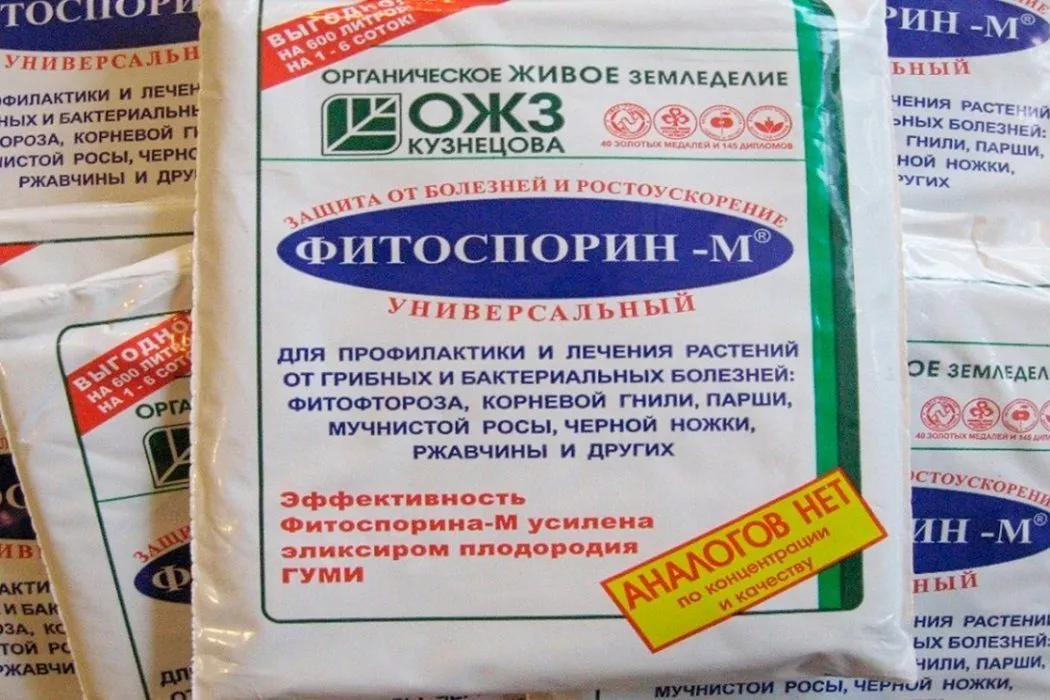
After this, spray the bushes with a mixture of 3 liters of whey, 1 teaspoon of copper sulfate, and at least 7 liters of water. Also apply Fitosporin-M (10 g of the mixture, 5 liters of water). Be sure to apply foliar treatment three times approximately every 10 days. Alternatively, use Ecosil, diluting 30-40 drops in 3 liters of water. Feed the bushes with this mixture twice, separated by two weeks.
If you follow these simple tips and understand the patterns and principles of supplemental feeding for this vegetable crop, success will not be long in coming. As a result, you'll be able to reap a bountiful harvest of delicious cucumbers.